


The Ministry of Defence has been criticised for refusing to carry out a “no-holds barred” inquiry into British involvement in Afghanistan including evacuation operations carried out as the Taliban retook power.
The review demanded by MPs would have only “limited” value while consuming “considerable” resources, the ministry said.
The “frustrating” refusal will prevent lessons being learnt, Defence Committee chairman Tobias Ellwood said, as he argued delays had been seen in the ongoing Sudan evacuation.
The cross-party group of MPs he leads called for an inquiry to be carried out into the 20-year deployment of troops in Afghanistan following the 9/11 terror attacks.
They wanted this to include the airlifts that rescued 15,000 people at risk from the Taliban storming back to power, but which left many behind.
The government responded to the committee by saying: “The MoD assesses that the value of a further wide-ranging review of the totality of the Afghanistan campaign is limited, would absorb considerable resource and does not coincide with the now-published Integrated Review.”
Mr Ellwood said it was clear that both the UK Parliament and the government are “equally dismayed and disheartened by the tragic outcome in Afghanistan”.
“However, it is frustrating that the government has not agreed to a no-holds barred review of the UK’s involvement in Afghanistan, as was recommended by the Defence Committee,” he said.
Taliban fighters celebrate a year in power — in pictures
-
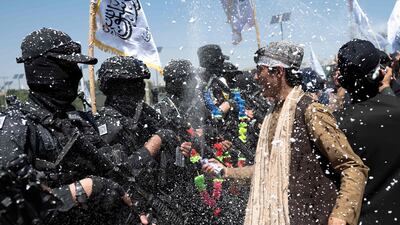
Taliban fighters and supporters celebrate at Ahmad Shah Massoud square in Kabul on August 31, 2022. AFP -
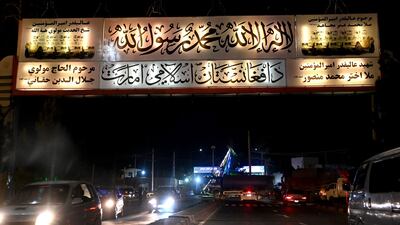
A banner hung in Kabul by Taliban authorities to mark the first anniversary of the departure of US-led foreign forces from Afghanistan. AFP -

Taliban fighters set off fireworks near the former US embassy in Kabul to celebrate the anniversary. AFP -
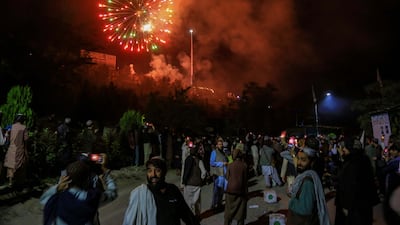
The Taliban government declared August 31 a national holiday in Afghanistan, as part of the celebrations marking the first anniversary of the end of two decades of foreign presence. EPA -
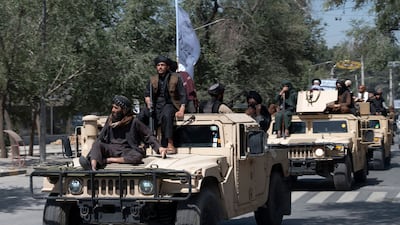
Taliban fighters take to the streets to celebrate. AFP -
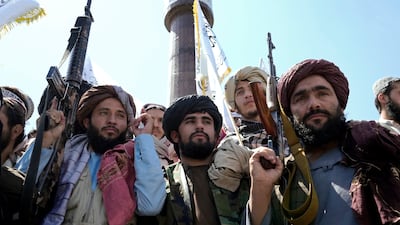
Taliban fighters in front of the US embassy in Kabul. AP Photo -

Children with Taliban flags celebrate the anniversary. AP Photo -

A Taliban convoy in Kabul on Wednesday. Reuters -
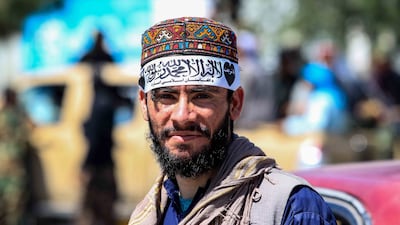
The Taliban celebrate the first anniversary of the US withdrawal outside the former US embassy in Kabul. EPA -
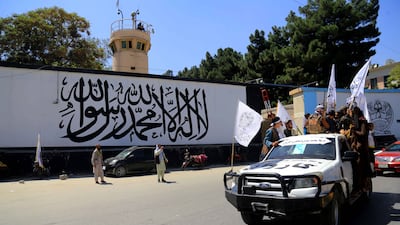
Taliban fighters celebrate the anniversary of the US withdrawal. EPA -
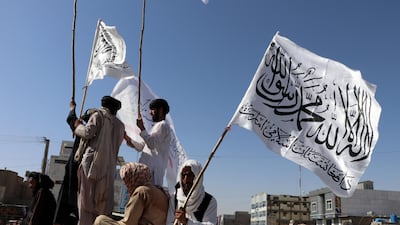
Celebrations in Kandahar. EPA -
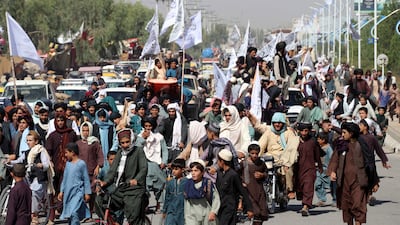
A celebratory parade in Kandahar. EPA -
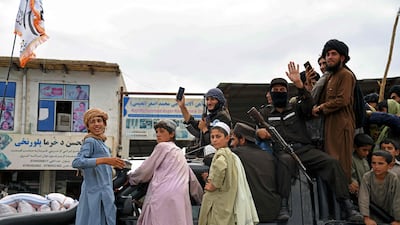
Taliban fighters and supporters during a parade in Kandahar. AFP -
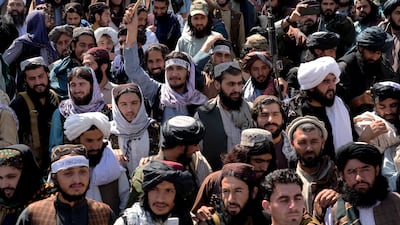
Taliban fighters and supporters in Kabul. AP Photo -
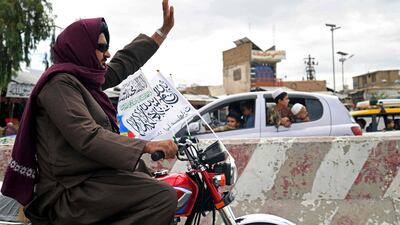
A Taliban fighter during the anniversary parade in Kandahar. AFP


The Tory MP said that without a public inquiry, the country will not learn from the “dark chapter in UK military history”.
“While there are significant differences between the fall of Afghanistan to the Taliban and the current crisis in Sudan, it is disappointing that it appears to have taken the UK longer than our allies to get vulnerable citizens to safety,” he added.
“Refusing to engage in a stand-alone review of the Afghanistan campaign prevents lessons from being consolidated and put into action for future risks.”

