


Polling shows there is significant support in Britain for the return of the Elgin Marbles to Greece, with many believing that such a move would pave the way for other major cultural artefacts such as the Rosetta Stone to also be sent home.
Athens has long demanded the return of the sculptures, which were removed from Greece by Lord Elgin in the early 19th century, when he was serving as the British ambassador to the Ottoman Empire.
Since then, the artefacts have been housed in the British Museum, where they remain among the most popular exhibits.
A recent poll of 1,100 people from across Britain found that more than a third believe important artefacts from abroad should be permanently returned to a museum in their country of origin.
Only 14 per cent of people “somewhat disagreed” with such a move, while a further 9 per cent said they “strongly disagreed”.
The findings show that there is appetite for the return of the prized marbles and other ancient items currently housed in the British Museum.
Despite this, the 1963 British Museum Act prevents the institution from giving away objects from its collection except in very limited circumstances.
Roughly half of poll respondents said it was unlikely that the marbles would be returned if they were ever sent back to Greece. Only four per cent said it was “very likely” that Greece would return them, revealing scepticism that the loan scheme would be temporary.
Asked if loaning the Elgin Marbles would encourage returns of other important artefacts, 17 per cent of respondents said it was “very likely”, while nearly 30 per cent it was “fairly likely”. Only 6 per cent believe that loans would not encourage the return of historic cultural artefacts.
The Elgin Marbles — in pictures
-
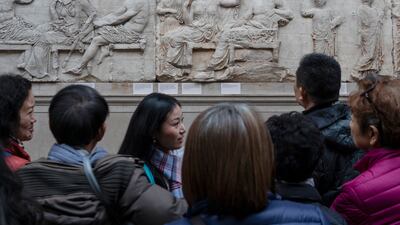
Sections of the Elgin Marbles, also known as the Parthenon Marbles, are displayed at The British Museum in London. Getty Images -

Greece has repeatedly called for the permanent return from the British Museum of the 2,500-year-old sculptures. AP -
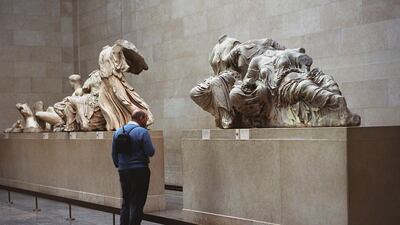
The British Museum has ruled out returning the marbles, which include about half of the 160-metre frieze that adorned the Parthenon, insisting that they were legally acquired. Getty Images -
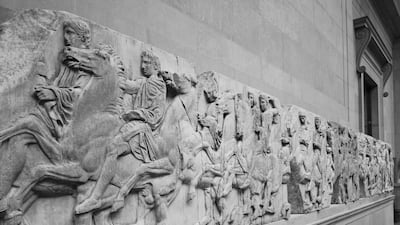
The Elgin Marbles on display in the Duveen Gallery at the British Museum in 1971. Getty Images -

Archaeologist Sir Mortimer Wheeler listens to the newly available audio guide in the Duveen Gallery of the British Museum in 1964. Getty Images -
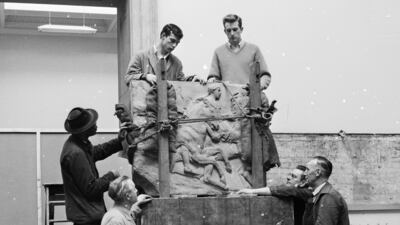
Workmen unload a portion of the Parthenon frieze before affixing it to the wall in the new Elgin Marbles room of the British Museum in 1961. Getty Images


The poll also found that 40 per cent of respondents thought that damage to British Museum items was “very likely” if they were lent out.
The Rosetta Stone, which was discovered in Egypt but is now housed in the British Museum, has also been at the centre of a controversy over its return.
Last year, more than 100,000 people in Egypt signed a petition for the recovery of the famous Egyptian treasure.
The item was presented to the British Museum by King George III in 1802. It is housed in a glass case in the museum’s Egyptian Sculpture Gallery.
The polling was released alongside a major report by Sir Noel Malcom, who said that Britain had “nothing to apologise for” over the acquisition of the marbles.
Sir Noel, an art expert and Oxford academic, described the items as “the Crown Jewels of the British Museum” and that their removal was legitimate and saved them from more serious damage.
Earlier this month, Prime Minister Rishi Sunak said there were “no plans” to change the law that blocks the Elgin Marbles from being given to Greece.
The Prime Minister said the UK had “cared for” the sculptures in the British Museum for generations and they were “shared with the world” at the London site.
He made the comments after British Museum chairman George Osborne, the former chancellor, said he was exploring ways for the Elgin Marbles to be displayed in Greece.

