


The new Illegal Migration Bill amounts to an “asylum ban” that will prevent people fleeing war and persecution from seeking refuge in the UK, the UN's refugee agency said on Tuesday.
The UNHCR has urged MPs and peers to block Prime Minister Rishi Sunak’s “profoundly” concerning plan to tackle small boat crossings.
“We urge the government, and all MPs and peers, to reconsider the bill and, instead, pursue more humane and practical policy solutions,” the agency said.
The equalities watchdog questioned the approach being adopted, saying it risks “undermining the core principle of the universality of human rights”.
“We welcome the government’s intention to remain within the European Convention on Human Rights,” the Equality and Human Rights Commission said.
“We are nonetheless concerned that the legislation risks breaching the UK’s legal obligations under the Refugee Convention and ECHR.”
Speaking on BBC Radio 4 on Wednesday, Home Secretary Suella Braverman said the measures had been "rigorously tested by an army of lawyers internally".
She added: "These measures do not take us out of the European Convention on Human Rights."
Earlier on Sky News she said: “We have made it very clear we are in compliance with all of our international obligations. For example, the Refugee Convention, the European Convention on Human Rights, other conventions to which we are subject,” she said.
“But what's important is we do need to take compassionate but necessary and fair measures now. Because there are people who are dying to try [to] get here.
“They are breaking our laws. They are abusing the generosity of the British people. And we now need to make sure that they are deterred from doing that.”
Sunak says Channel migrants will be removed 'within weeks'
Mr Sunak has said he is “up for the fight and will win” in response to lawyers looking to challenge his clampdown on immigration.
He accused the European Court of Human Rights of being “opaque, unfair and unjust” after his announcement on Tuesday that refugees who arrived in the UK by boat would be removed “within weeks”.
He said the Illegal Migration Bill, which would stop people from claiming asylum in the UK if they arrived through unauthorised means, would apply “retrospectively”.
“We are introducing legislation to make it clear that if you come here illegally, you can’t claim asylum,” Mr Sunak said.
“You can’t benefit from our modern slavery protection. You can’t make serious human rights claims and you can’t stay.
“We will detain those who come here illegally and then remove them in weeks, either to their own country if it is safe to do so, or to a safe third country like Rwanda.
“And once you are removed, you will be banned — as you are in America and Australia — from ever re-entering our country.”
Mr Sunak made the comments after he visited the Home Office joint control centre in Dover on England's south coast, where he promised to break the cycle of criminal people smugglers.
“The current situation is neither moral nor sustainable. It cannot go on,” he said at Downing Street.
-
The UK's Home Secretary Suella Braverman has unveiled new legislation to address small boats carrying migrants across the English Channel. AFP -
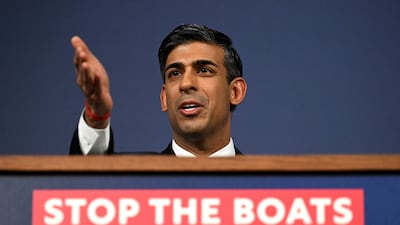
British Prime Minister Rishi Sunak unveiled the plans for new laws to curb crossings. PA -

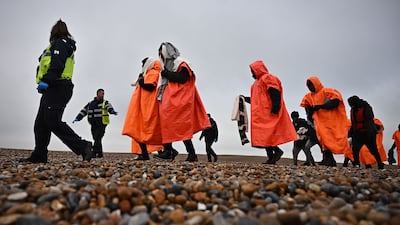
Migrants housed at Napier Barracks in Folkestone, Kent. Almost 3,000 migrants have made unauthorised crossings of the English Channel this year. PA -
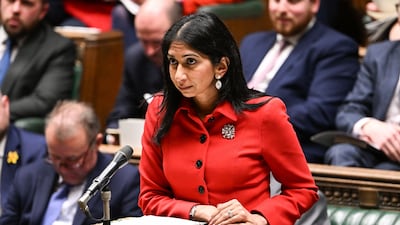
Ms Braverman said not responding to the problem would be to 'betray the will of the people we were elected to serve'. AFP -
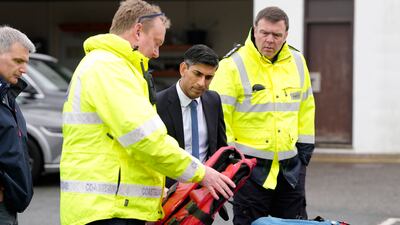
Mr Sunak met teams at the Home Office Joint Control Room in Dover, Kent. Getty Images -
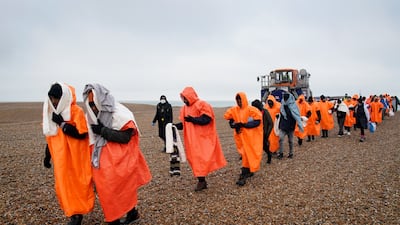
Critics have warned that the proposals are 'unworkable' and will leave thousands of migrants in limbo by banning them from claiming British citizenship. PA -
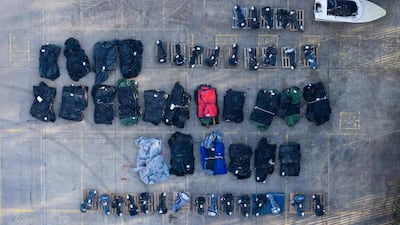
Inflatable dinghies and outboard engines, stored in a Port Authority yard in Dover. AFP -
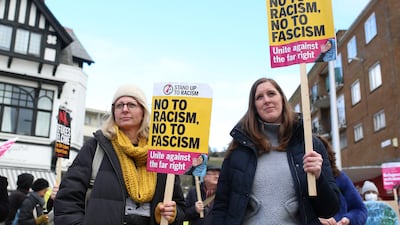
People gather in central Dover to attend a 'Refugees Welcome' rally. AFP -
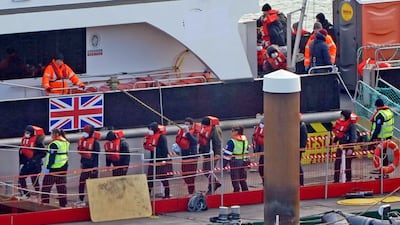
Ms Braverman said the UK's asylum system has been 'overwhelmed', with almost £7 million ($8.4 million) a day being spent on hotels to house people while their claims are processed. PA


He said that if the boats could not be stopped, then the UK's ability to help “genuine” migrants would be constrained.
Mr Sunak conceded that there would be debate about his new measures, but said the UK had “tried it every other way but it has not worked”.
Describing the move as “tough” but “necessary and fair”, he said: “This legislation will be retrospective. If you come on a small boat today, the measures in this bill will apply to you.”
British Prime Minister
Asked whether he was prepared to fight lawyers who were trying to challenge the proposed legislation, Mr Sunak said: “Of course we're up for the fight — I wouldn't be standing here if we weren't.
“But we're actually confident that we will win.”
Earlier, Ms Braverman unveiled the legislation in the House of Commons, telling MPs that asylum seekers arriving illegally would be detained and face a lifetime ban on returning after they were removed.
She said it would “betray” British voters not to tackle the “waves of illegal migrants breaching our border”.
Ms Braverman alluded to the bill’s “legal complexities” while announcing the plans in the House of Commons.
“Some of the nation’s finest legal minds have been, and continue to be, involved in its development,” she said.
Attorney General Victoria Prentis outlined some of the “legal measures” relating to the bill to ministers during a cabinet meeting earlier in the day.
Ms Braverman has previously called for the UK to leave the European Convention on Human Rights.
Mr Sunak is resisting such a move, despite coming under pressure from the Conservative right.
Enver Solomon, chief executive of the Refugee Council, said the move echoed similar moves by more authoritarian governments.
“It’s an admission by the government that it’s in effect behaving like those countries that show disregard to international human rights conventions, the likes of Myanmar, Russia, Belarus,” Mr Solomon said.
He said the legislation “ignores the fundamental point that most of the people in small boats are men, women and children escaping terror and bloodshed from countries including Afghanistan, Iran and Syria”.
Amnesty called for accessible programmes “so people seeking asylum do not have to rely on people smugglers and dangerous journeys”.

