


Prince Harry has used a UK charity video to highlight the “tremendous pressure” the cost-of-living crisis is putting on families caring for children who rely on life-saving equipment.
In his first UK charity video since the release of his controversial tell-all memoir Spare, the Duke of Sussex spoke of the “immense challenges” for families looking after youngsters with complex medical needs, and praised their “resilience and fortitude”.
Prince Harry called for nominations for the annual WellChild Awards and hailed carers, doctors, nurses and teachers for the “life-changing support” they give to seriously ill children across the UK.
“WellChild … creates a network of support for families who are facing countless medical, logistical and mental health challenges, compounded by a cost-of-living crisis that adds tremendous pressure in caring for their children who are dependent on life-saving equipment," he said in the footage released on Tuesday.
“And I’d be remiss if I didn’t mention the carers and health professionals, doctors, nurses, teachers, play specialists and many more, who are part of the WellChild family as well.
“They deliver life-changing support each and every day.
“Despite facing immense challenges, WellChild families continue to display a resilience and fortitude that is nothing short of inspiring.”
Prince Harry and Meghan Duchess of Sussex through the years - in pictures
-
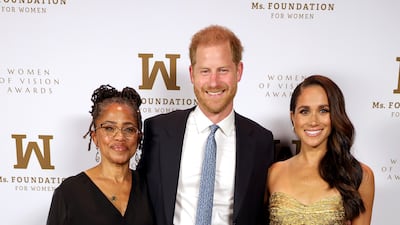
Doria Ragland, Prince Harry and Meghan, Duchess of Sussex, attend the Ms Foundation Women of Vision Awards in New York City. Getty -
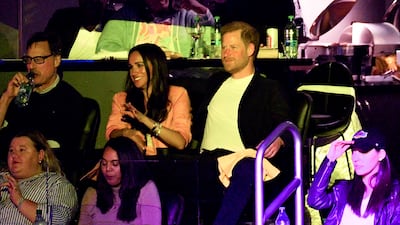
Prince Harry and his wife Meghan attend a basketball game between the Los Angeles Lakers and the Memphis Grizzlies in Los Angeles in April. Getty -
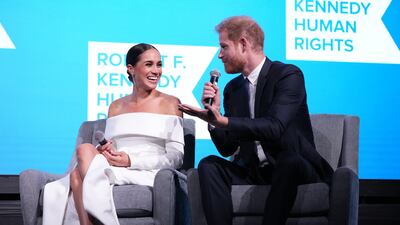
The royal couple speak onstage at the Robert F Kennedy Human Rights Ripple of Hope Gala in New York in December 2022. Getty -
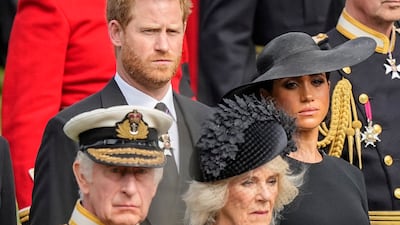
Prince Harry and Meghan watch as the coffin of Queen Elizabeth II is placed into the hearse following the state funeral service at Westminster Abbey in central London in September 2022. AP -
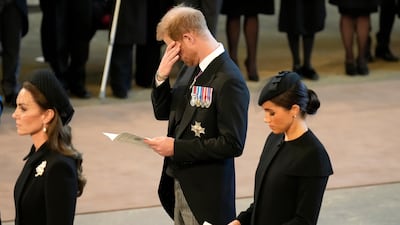
Prince Harry and Meghan pay their respects at the Palace of Westminster. Getty -
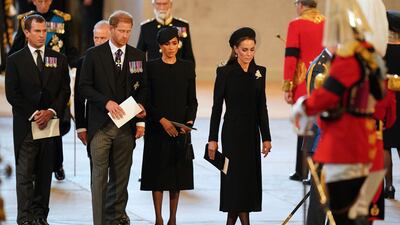
Prince Harry, Meghan and Kate, Princess of Wales, attend a service for the reception of Queen Elizabeth's coffin at Westminster Hall. AFP -
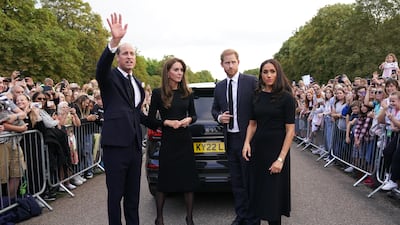
The Princess of Wales, Prince William, Prince Harry and Meghan meet members of the public outside Windsor Castle. Getty -
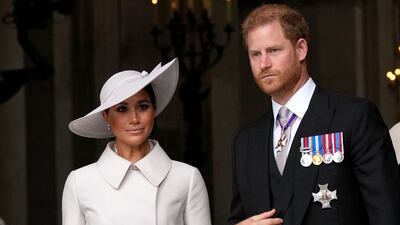
Prince Harry and Meghan leave after a service of thanksgiving for the queen. Getty -
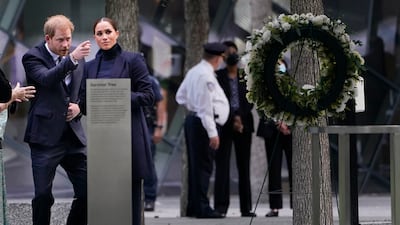
Prince Harry and Meghan at the National September 11 Memorial and Museum in New York in September 2021. AP -
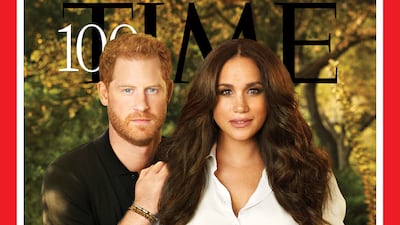
Prince Harry and Meghan on the cover of Time magazine's 100 most influential people in the world edition, in September 2021. Reuters -
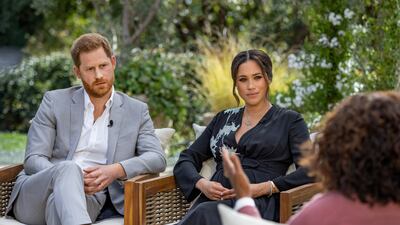
Prince Harry and Meghan are interviewed by Oprah Winfrey in March 2021. Reuters -
Prince Harry and Meghan shared this image on social media in February 2021 to announce they were expecting their second child. AFP -
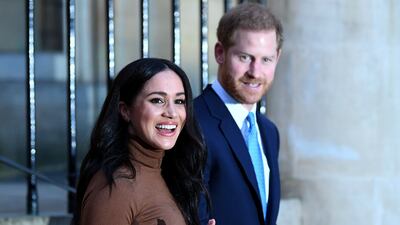
Prince Harry and Meghan visit Canada House, London, in January 2020. Getty -
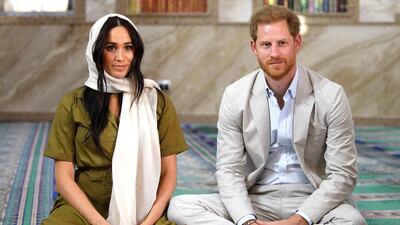
Prince Harry and Meghan visit Auwal Mosque on Heritage Day during their royal tour of South Africa in September 2019. Getty -
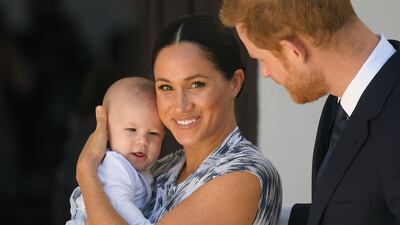
Prince Harry, Meghan and their son Archie Mountbatten-Windsor in South Africa in September 2019. Getty -
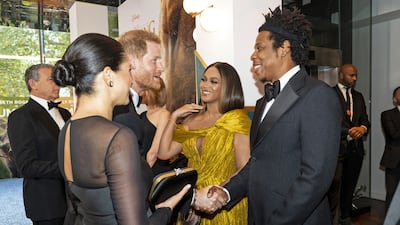
Prince Harry and Meghan meet Beyonce Knowles-Carter and Jay-Z at the European Premiere of Disney's The Lion King at Odeon Luxe Leicester Square, London, in July 2019. Getty -
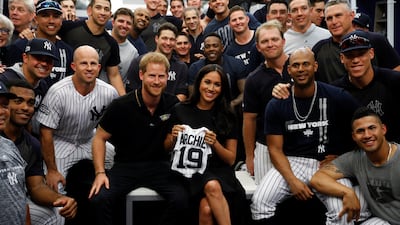
Prince Harry and Meghan pose for a photo with the New York Yankees before their baseball game against the Boston Red Sox at London Stadium in June 2019. Getty -
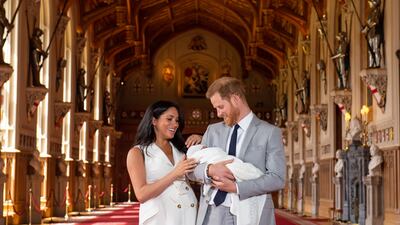
Prince Harry and Meghan pose with their newborn son Archie in St George's Hall at Windsor Castle in May 2019. Getty -
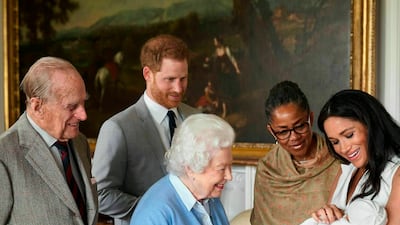
Meghan, joined by her mother Ms Ragland, shows her new son to Queen Elizabeth and Prince Philip at Windsor Castle in May 2019. AP -
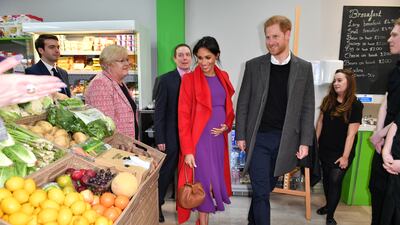
Prince Harry and Meghan officially open Number 7, a Feeding Birkenhead citizen’s supermarket and community cafe in Merseyside in January 2019. Getty -

Prince William, the Princess of Wales, Meghan and Prince Harry attend a Christmas Day church service at the Church of St Mary Magdalene on the Sandringham estate in December 2018. Getty -

Prince William, Prince Harry, Meghan and the Duchess of Cambridge attend a service marking the centenary of the First World War armistice at Westminster Abbey in November 2018. Getty -
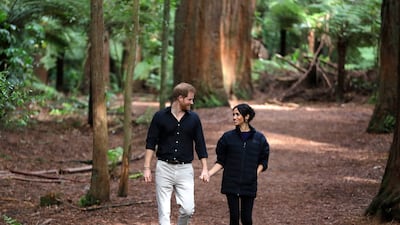
Prince Harry and Meghan visit Redwoods Tree Walk in October 2018 in Rotorua, New Zealand. Getty -
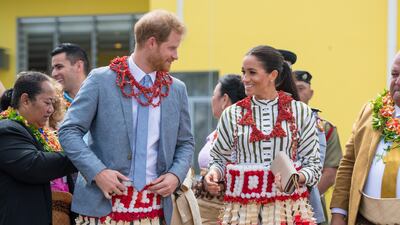
Prince Harry and Meghan visit an exhibition of Tongan handicrafts at the Fa'onelua Convention Centre in October 2018 in Nuku'alofa, Tonga. Getty -
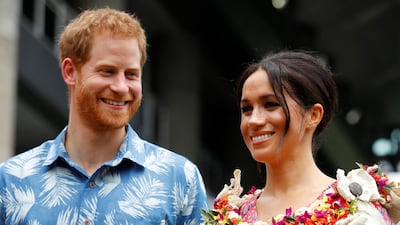
Prince Harry and Meghan visit the University of the South Pacific in October 2018 in Suva, Fiji. Getty -
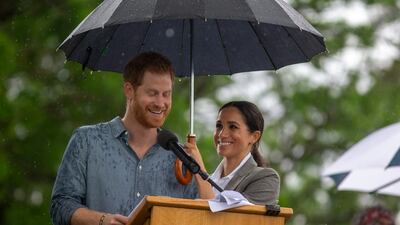
Prince Harry and Meghan address the public during a Community Event at Victoria Park in October 2018 in Dubbo, Australia. Getty -

Prince Harry and Meghan meet a koala during a visit to Taronga Zoo in October 2018 in Sydney, Australia. Getty -
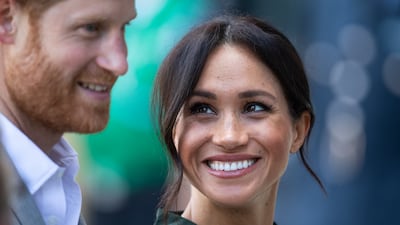
Prince Harry and Meghan arrive at the University of Chichester's Engineering and Digital Technology Park during an official visit to West Sussex in October 2018. Getty -
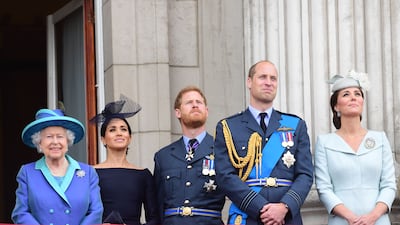
The queen, Meghan, Prince Harry, Prince William and the Duchess of Cambridge watch the RAF 100th anniversary fly-past from the balcony of Buckingham Palace in July 2018. Getty -
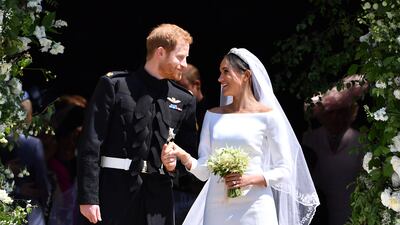
Prince Harry and Meghan on their wedding day in May 2018. Getty -
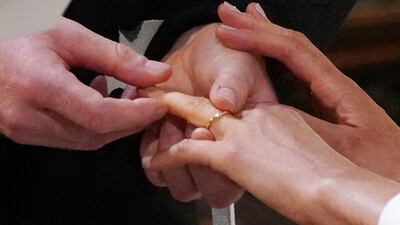
Prince Harry places a wedding ring on his new wife's finger. Getty -
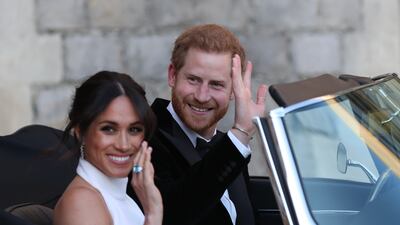
Meghan and Prince Harry head to their evening wedding reception at Frogmore House. Getty -
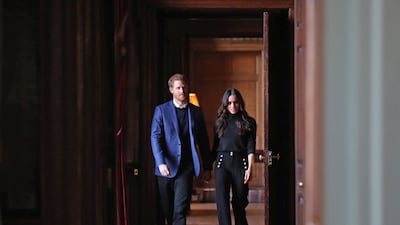
Prince Harry and Meghan walk through the corridors of the Palace of Holyroodhouse on their way to a reception for young people at the Palace in February 2018 in Edinburgh, Scotland. Getty -
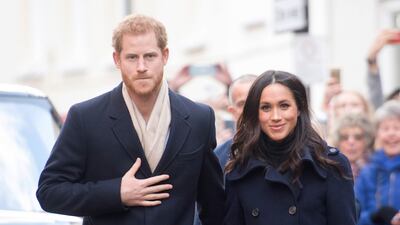
Prince Harry and his then-fiancee Meghan visit Nottingham for their first official public engagement together in December 2017. Getty


The duke, dressed in a pale blue open-necked shirt, appeared to be wearing the necklace he accused Prince William of ripping while physically attacking him.
Prince Harry wrote in his book that the Prince of Wales knocked him to the floor at Nottingham Cottage after calling the Duchess of Sussex “difficult”, “rude” and “abrasive”.
The ghost-written autobiography — which became the fastest-selling non-fiction book in the UK since records began — laid bare Prince Harry’s frustrations with his family.
He claimed King Charles put his own interests above Prince Harry’s and was jealous of Meghan and the Princess of Wales, and that Queen Consort Camilla sacrificed him on “her personal PR altar”.
The video, which was recorded recently, appears to show Prince Harry standing outside and looking relaxed as he delivers his message.
The duke lives in California after moving to the US in 2020.
Prince Harry's ghostwriter JR Moehringer - in pictures
-
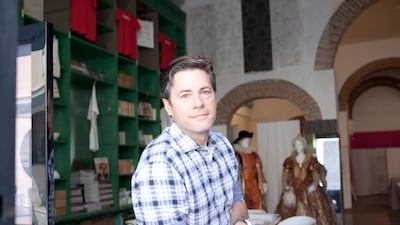
JR Moehringer is the US writer, Pulitzer Prize-winning journalist and novelist who ghostwrote Prince Harry's memoir, Spare. Getty -
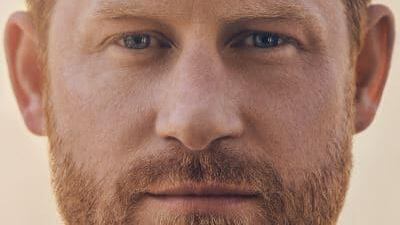
Spare was released globally on January 10 -
Moehringer moved to Las Vegas to work on tennis star Andre Agassi's memoir -

Moehringer said he turned Agassi down several times before agreeing to work with him on Open. Getty / AFP -
Moehringer worked with Nike creator Phil Knight on his best-selling memoir, Shoe Dog -

Moehringer's own memoir about his childhood growing up on Long Island is called The Tender Bar, which was made into a film -
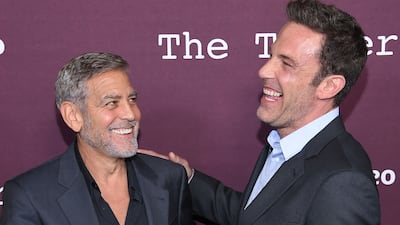
George Clooney directed the Hollywood version of Moerhinger's memoir The Tender Bar. Ben Affleck starred in it as Uncle Charlie. AFP -
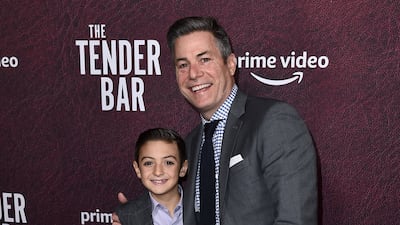
Moehringer with actor Daniel Ranieri, who played his younger self in the fictionalised film version of his memoir. AP -
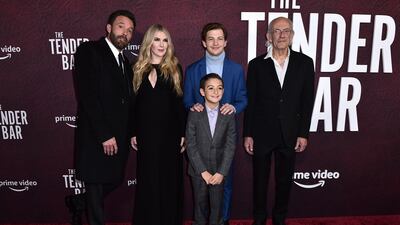
From left, Affleck, Lily Rabe, Daniel, Tye Sheridan and Christopher Lloyd arrive at the premiere of The Tender Bar in Los Angeles. AP -
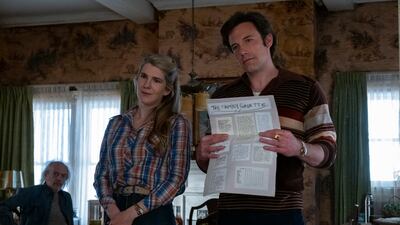
Rabe and Affleck played a fictionalised version of Moehringer's mother and uncle in The Tender Bar. AP -
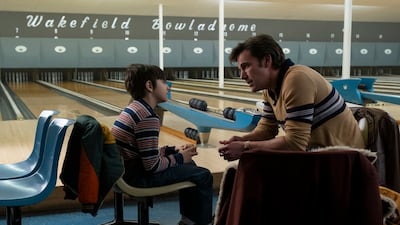
Daniel and Affleck in a scene from The Tender Bar. AP


Prince Harry remained patron of WellChild, a role he has held for more than 15 years, when he stepped down from the working monarchy.
He said he was looking forward to meeting the award winners later in the year, which suggested he will make a return to the UK for the annual award ceremony.
“Each year, I so look forward to meeting with the award winners and spreading awareness about this incredible charity,” Prince Harry said.
It has not been confirmed yet whether he will be invited to or attend his father’s coronation in May.
The duke has revealed he has enough material for two books, but held back because he does not think his father and brother would “ever forgive” him.

