


A whistleblower fired after revealing details of the British government’s chaotic response to the fall of Kabul has warned that the traditionally-neutral Civil Service has become dangerously politicised.
Civil servants increasingly saw it as their job to protect ministers rather than to serve the public,” Josie Stewart said.
Ms Stewart, a former senior official at the Foreign, Commonwealth and Development Office (FCDO), is taking the Government to court in a case to test the legal protections for whistle-blowers.
“I increasingly saw senior officials interpreting their role as doing what ministers say and providing protections to ministers,” she told the Guardian.
“It was almost as if their first loyalty (was) to their political leaders rather than to the public.
“Essentially people who said ‘yes’ and went along with it and bought into this shift in culture and approach were those whose careers went well. Those who resisted either found themselves buried somewhere or looking for jobs elsewhere.”
-

Taliban guards stand outside the Ministry of Information in Kabul. Stefanie Glinski / The National -

A taliban guard sits in Hairatan, at the northern border with Uzbekistan. Stefanie Glinski / The National -
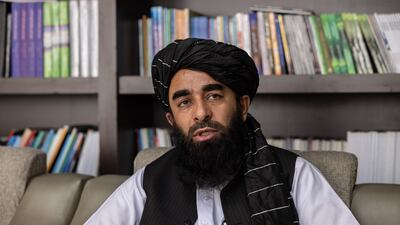
Taliban spokesperson Zabiullah Mujahid. Stefanie Glinski / The National -

Women queue outside Western Union for a chance to access cash as banks remain closed. Stefanie Glinski / The National -
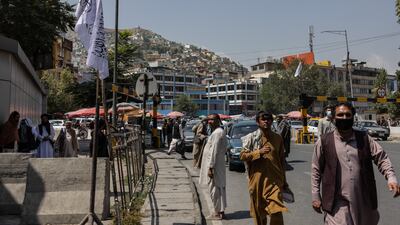
The streets of Kabul one day after the US fully withdrew. Stefanie Glinski / The National -
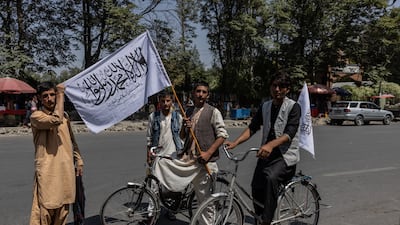
People mark the dawn of a new era in Kabul. Stefanie Glinski / The National -
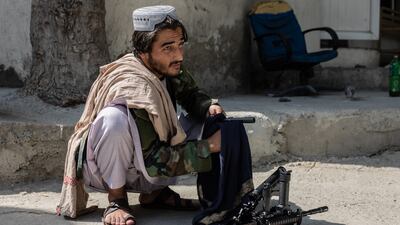
A Taliban member cleans his weapons in Kabul. Stefanie Glinski / The National -

Taliban guards stand outside the Ministry of Information in Kabul. Stefanie Glinski / The National -

At Shar-e-Naw Park in Kabul, around 200 families still live in the tents they pitched weeks ago. Most parents have taken to begging. Stefanie Glinski / The National -
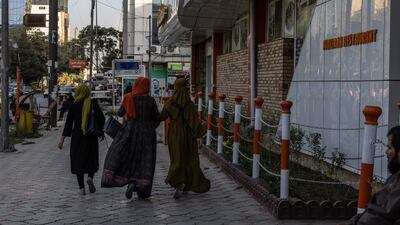
Kabul streets a day after the US forces left. Stefanie Glinski / The National -

A quiet, empty street in the once-bustling city of Kabul. Stefanie Glinski / The National -

Families from the northern provinces of Kunduz, Badakhshan and Takhar now live in tents at Shar-e-Naw Park. Stefanie Glinski / The National -
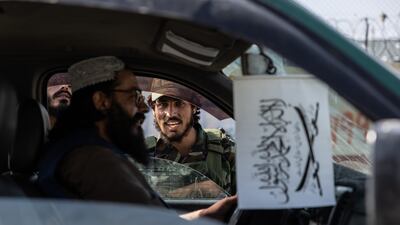
Taliban guards patrol Kabul's roads. Stefanie Glinski / The National -
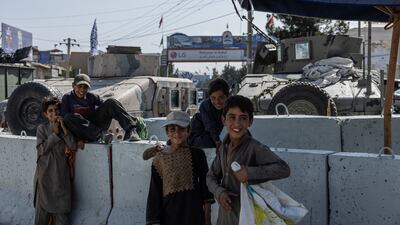
Life on Kabul's streets after US troops left Afghanistan. Stefanie Glinski / The National -
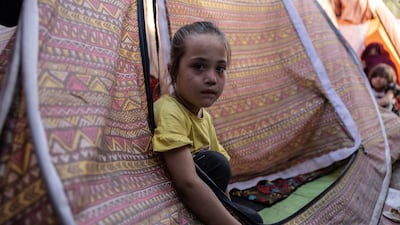
At Shar-e-Naw park, one of the city centre’s main recreational areas, children watch as their parents beg for food. Stefanie Glinski / The National -
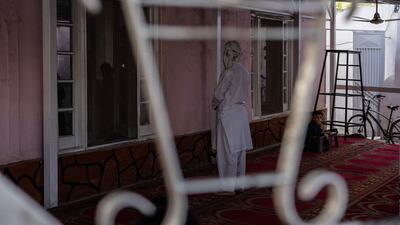
The Taliban are preparing to set out their new Islamic government imminently. Stefanie Glinski / The National -
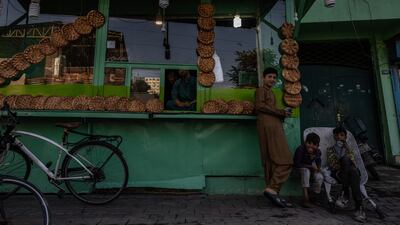
Afghans have been struggling with a surge in food prices and malnutrition – a situation made worse by the US stopping funds. Stefanie Glinski / The National -
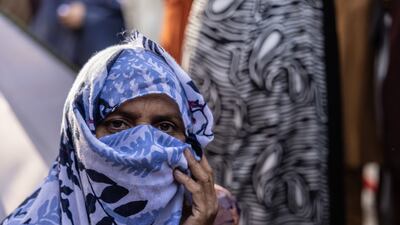
'We want to return, but we don’t have the money to do so,' explains Gul Shirin, a mother of five from Kunduz. Stefanie Glinski / The National -

Basic services like electricity are now under threat. Stefanie Glinski / The National -

Growing humanitarian and economic crises have forced Afghans to flee. Stefanie Glinski / The National -
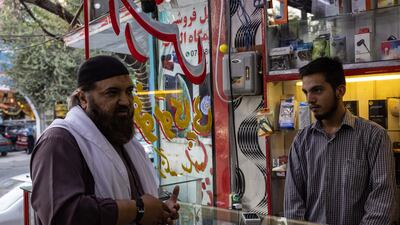
Street vendors struggle to make a living. Stefanie Glinski / The National -
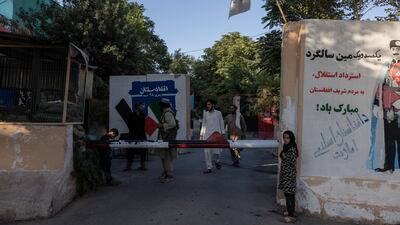
The city's streets are now largely deserted. Stefanie Glinski / The National -

Unemployment rates have risen dramatically as businesses close. Stefanie Glinski / The National -
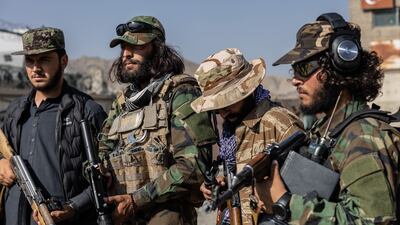
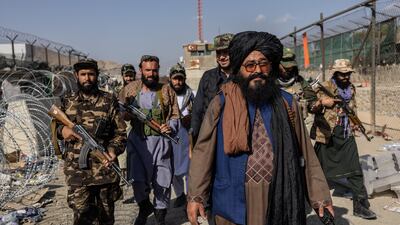
Taliban guards patrol the streets of Kabul. Stefanie Glinski / The National -
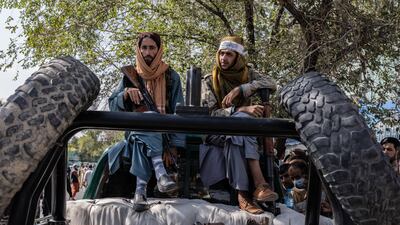
Taliban members make their presence felt throughout the city. Stefanie Glinski / The National -
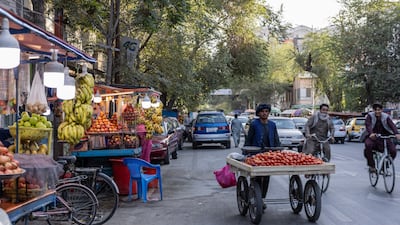
Reports suggest the capital is facing a deep poverty crisis. Stefanie Glinski / The National -
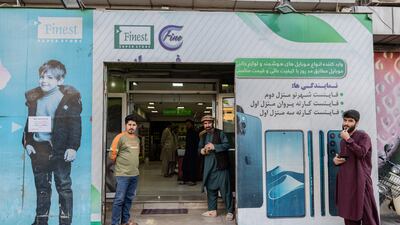
Working women have been told to stay at home. Stefanie Glinski / The National -
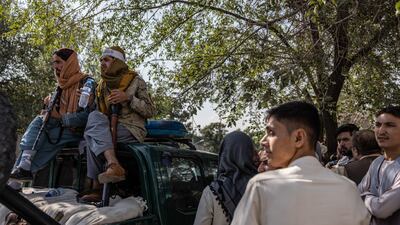
The Taliban have claimed they would recognise women’s rights. Stefanie Glinski / The National -
Yet, very few women can be seen in public. Stefanie Glinski / The National -
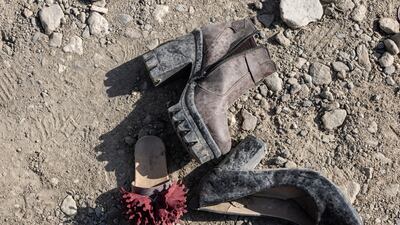
People's belongings left behind at Kabul airport serve as a reminder of what was a frantic struggle for many to flee Afghanistan. Stefanie Glinski / The National


Ms Stewart, who now works for the organisation Transparency International, lost her job after giving an interview to the BBC.
She said the change in civil service priorities could be traced back to Boris Johnson’s time as prime minister.
Ms Stewart, who was head of illicit finance at the FCDO, said it was particularly striking in the summer of 2021 as the Afghan capital, Kabul, fell in the face of the Taliban advance.
“The almost entire objective politically was to come out of it looking OK to the UK public, rather than to save lives or fulfil a responsibility to the Afghan people,” she said.
“It was shocking in terms of the scale and how brazen and obvious it was to civil servants working on it.”
She is challenging her dismissal after she spoke anonymously to the BBC only for her identity to be revealed when her unredacted emails were accidentally posted on social media.
In response, a Cabinet Office spokesman said: “The Cabinet Secretary is proud to lead a Civil Service that works day-in, day-out to deliver the Government’s priorities for the people of this country.
“His focus is on ensuring the whole of government is working together to put in place the very best public services for the British people.”
An FCDO spokesman said: “We are rightly proud of our staff who worked tirelessly to evacuate more than 15,000 people from Afghanistan within a two weeks.
“This was the biggest mission of its kind in generations and the second largest evacuation carried out by any country. We implemented lessons learnt from the Afghanistan response in our response to Russia’s invasion of Ukraine.”

