


Russia’s new war general in Ukraine is “increasingly seen as out of touch” by troops due to a discipline drive that requires soldiers to be clean shaven, according to the UK's Ministry of Defence.
Gen Valery Gerasimov, Russia’s Chief of the General Staff and the newly-appointed commander in Ukraine, is seen as “focused on presentation over substance” amid operational deadlock, said the UK Ministry's daily intelligence update.
The new rules clamp down on non-regulation uniform, travel in civilian vehicles, the use of mobile phones, and non-standard haircuts, said the ministry.
“The measures have been met with sceptical feedback,” it tweeted.
“However, some of the greatest derision has been reserved for attempts to improve the standard of troops’ shaving.”
Officials in the occupied parts of the Donetsk region of eastern Ukraine said it was a “farce” that would “hamper the process of destroying the enemy,” Britain's Ministry of Defence reported.
Yevgeny Prigozhin, who controls a network of companies including Wagner Group, a Russian state-backed mercenary group operating in Africa, Syria, and Ukraine, said war was the “time of the active and courageous, and not of the clean-shaven.”

Britain's MoD said: “The Russian force continues to endure operational deadlock and heavy casualties; Gerasimov’s prioritisation of largely minor regulations is likely to confirm the fears of his many sceptics in Russia."
It added: “Along with Defence Minister Sergey Shoigu, he is increasingly seen as out of touch and focused on presentation over substance.”
Russia is expected to launch a new offensive in the months ahead, prompting Ukraine’s western allies to step up support in recent days.
Drones and weapons supplied to Ukraine - in pictures
-
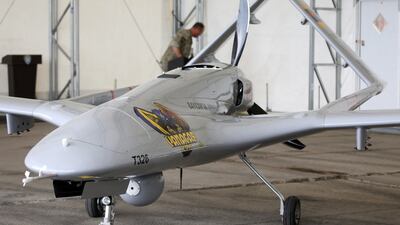
Turkeysold its Bayraktar TB2 armed drones to Ukraine. They can fly at an altitude of 7,500 metres and swoop down to attack targets. AFP -
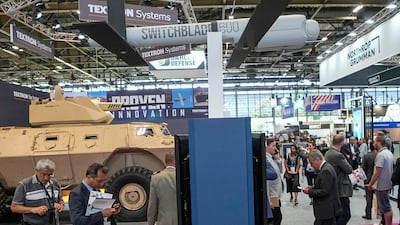
The US also gave 700 of its Switchblade kamikaze drones. AP -
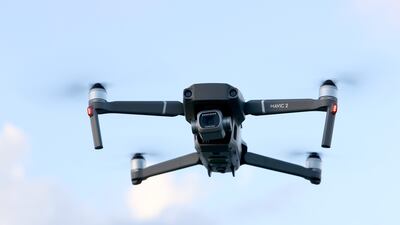
Cheap commercial drones like the DJI Mavic series have been modified in Ukraine. AFP -
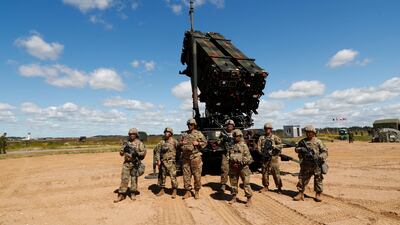
Germany will follow the US in providing a Patriot missile defence system, pictured above, to Ukraine. Reuters -
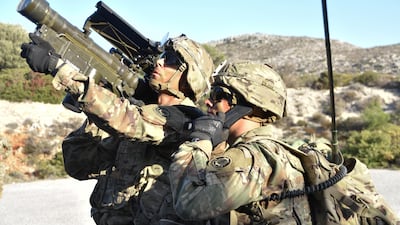
FIM-92 Stinger rockets have been donated to help Ukrainian infantry engage aircraft and drones. The shoulder-launched missiles can shoot down aircraft. Photo: US Army -
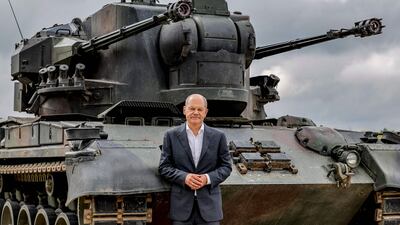
Germany donated 25 Flakpanzer Gepard all-weather-capable self-propelled anti-aircraft gun. AFP -
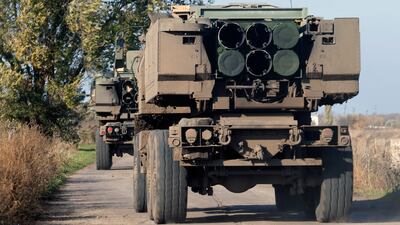
The High-Mobility Artillery Rocket System, or Himars, can simultaneously launch several precision-guided missiles. The US has given Ukraine projectiles with a range of about 130 kilometres. EPA -
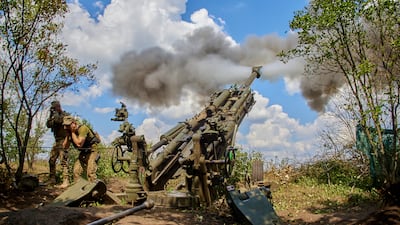
M777 howitzers and about 300,000 shells have been donated to give Ukraine an accurate artillery platform with a range of 50 kilometres. EPA -
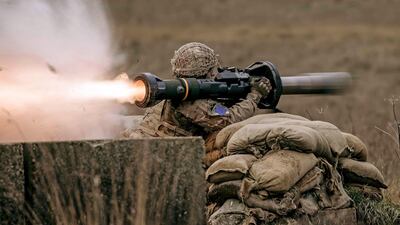
Ukraine has been sent at least 5,000 of the anti-tank weapons known as NLAWs. These shoulder-launched rockets have proved deadly in the field. PA -
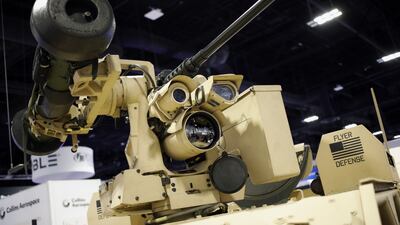
Ukrainian troops have also received thousands of Javelin anti-tank missiles. Bloomberg -
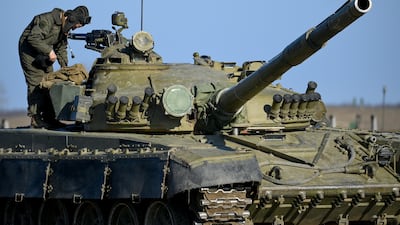
Poland and the Czech Republic sent Russian-made T72 tanks, which Ukraine has used for decades, to ease integration and cut down training time. EPA -
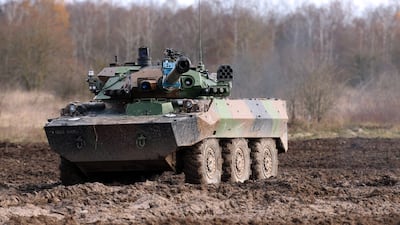
France as announced its plan to give AMX-10 RC “scout tanks” to Ukraine. "This is the first time that western-made armoured vehicles are being delivered in support of the Ukrainian army," a French official said. AFP -
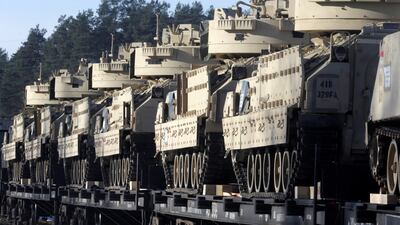
Shortly after the French, the US said it would send Bradley fighting vehicles to provide "a level of firepower and armour that would bring advantages on the battlefield”. Reuters -

The UK sent their phased-out Saxon armoured vehicles. They found new life protecting infantry units in transit and dealing with tough off-road conditions. Getty Images -
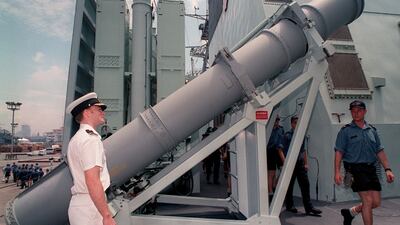
Denmark has supplied Harpoon anti-ship launchers to help Ukraine defend its coasts. AFP -

The US sent 20 Soviet and Russian made Mi-17 helicopters to Ukraine that had initially been bought for the Afghan government in 2010. AP -
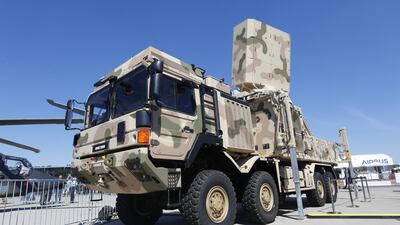
Germany has also supplied its latest version of the IRIS-T air defence system designed to shoot down missiles at altitudes up to 20 kilometres. Getty Images -
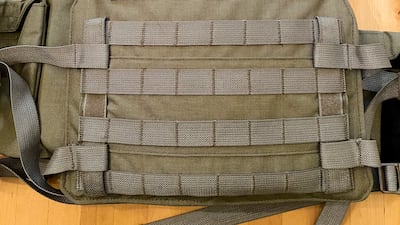
Ukraine has also been given thousands of small arms, bullet proof vests, medical kits, litres of fuel, granades and other weapons systems. Reuters


Senior western diplomats met on Friday at a US military base in Ramstein, Germany, at the invitation of US Secretary of Defence Lloyd Austin, to discuss new “heavier weapons” for Ukraine.
And on Monday Poland said it will officially ask Germany for permission to send its Leopard 2 tanks.
Ukraine is in desperate need of heavily armoured battle tanks to provide more mobility and protection for its troops on the ground before Russia stages the new offensive.
But because Leopards are made in Germany, the government in Berlin has the final say on how and where they are used — even if other countries are offering to send their own.
Mateusz Morawiecki said Poland was building a “coalition of nations” ready to send Leopards, and that even without German permission Warsaw would make its own decisions.

