



Britain's police will be given more powers to take action against protests before they cause disturbance by broadening the definition of what counts as “serious disruption”.
The change, which will be made in legislation currently going through parliament, targets “guerrilla tactics” used by environmental protesters, such as walking slowly and bringing traffic to a standstill, and climbing motorway gantries.
UK Prime Minister Rishi Sunak said: “We cannot have protests conducted by a small minority disrupting the lives of the ordinary public: it’s not acceptable and we’re going to bring it to an end.
“The police asked us for more clarity to crack down on these guerrilla tactics, and we have listened.”
The legislation is aimed at strengthening the police’s ability to deal with protests such as those in recent years by environmental activists at Just Stop Oil and Extinction Rebellion.
Matthew Scott, Kent's Police and Crime Commissioner, said the change in legislation is the “right thing to do”.
Speaking on BBC Radio 4 on Monday, he said: “Rishi promised before Christmas to act to give the police the power they need to tackle serious disruption caused by persistent groups of protesters.
“And this delivers upon that. This will enable the police to prevent serious disruption from taking place, to consider separate incidents as one stand-alone campaign and that will I think help the police to bring the disruption to a halt much quicker and even prevent it from happening in the first place.”
Extinction Rebellion protest at Tower Bridge — in pictures
-
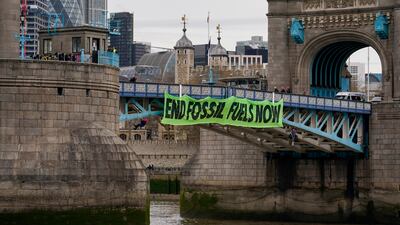
Climate activists from Extinction Rebellion hung a banner from Tower Bridge in London. AP Photo -
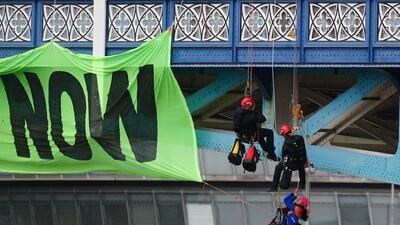
Police officers remove activists who were protesting on Tower Bridge. PA -
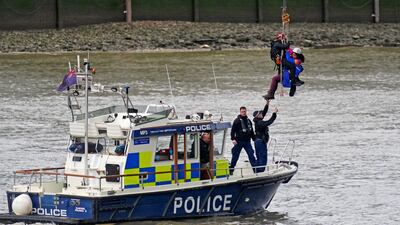
A protester from Extinction Rebellion is lowered into a police boat on the Thames. PA -
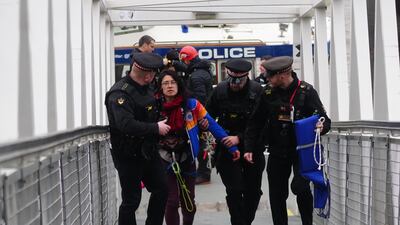
Police officers with an activist from Extinction Rebellion. PA -
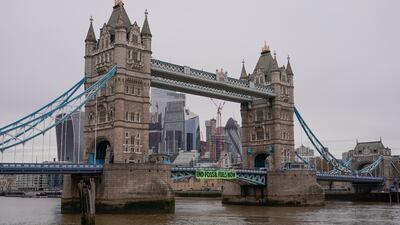
The bridge, a main traffic artery across the Thames, was closed to vehicles, causing long queues. AP Photo -
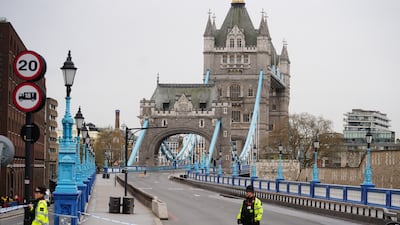
Police officers block access to Tower Bridge. PA -
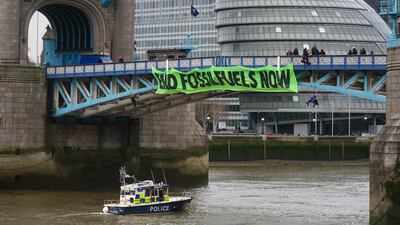
Activists hanging from the bridge by suspension cords unfurled a banner that reads: 'End fossil fuels now'. PA


However, it has provoked the ire of civil liberty groups and of the opposition Labour Party.
Labour’s policing spokeswoman Sarah Jones said the police already have powers to deal with disruptive protests.
She criticised Mr Sunak for not focusing instead on tackling “the epidemic of violence against women and girls”, or on prosecuting criminals.
And Labour peer Baroness Chakrabarti said the “draconian” Public Order Bill could treat all peaceful dissent as “effectively terrorism”.
The former shadow attorney general and ex-director of civil rights group Liberty told BBC Radio 4’s Today programme: “This is a very draconian bill, it is a blank cheque of police powers at a time when there are considerable concerns about public trust in the police.
“This, I fear, is treating all peaceful dissent as effectively terrorism and this bill looks very similar to anti-terror legislation we’ve seen in the past.“
"This degree of pre-emption will basically shut down what isn’t even causing disruption at all because their definition will set such a low bar.”
The amendment will include allowing police to consider the total impact of a series of protests rather than treating them as a single incident; giving officers the right to step in even before a protest has resulted in disruption, and letting them deal with long-running campaigns designed to cause chaos repeatedly, according to the statement.
Extinction Rebellion recently vowed to end acts of public disruption, with seven members of the group facing possible prison sentences for criminal damage.
Seven Extinction Rebellion protesters will be sentenced on January 27 for causing almost £100,000 of damage to glass panels at Barclays' headquarters in April 2021.
Barclays Protest — in pictures
-

An activist from Extinction Rebellion, a global environmental movement, damages a window at the Barclays offices in Canary Wharf, London. Reuters -
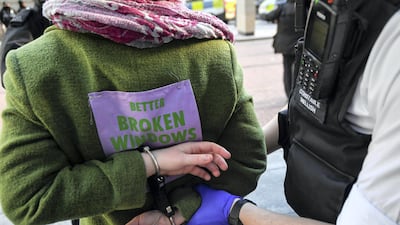
A police officer detains an Extinction Rebellion activist in Canary Wharf. Reuters -
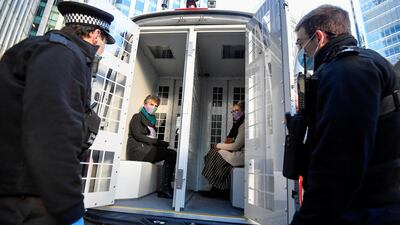
Activists from Extinction Rebellion sit inside a police car after being detained. Reuters -
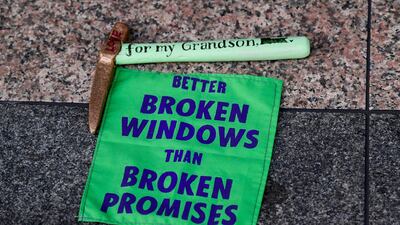
A slogan reading 'Better Broken Windows Than Broken Promises' is displayed during the protest. Reuters -

An activist is led away from the Barclays offices. Reuters -
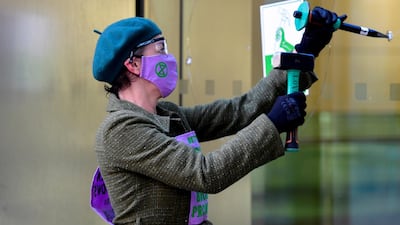
An activist hammers the windows of the Barclays offices. Reuters -
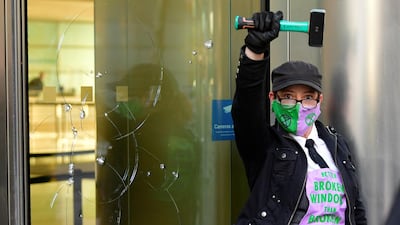
An activist raises her hammer during the protest. Reuters


The group recently launched a 100-day countdown to a large protest outside the Houses of Parliament on April 21, in a switch in tactics triggered by tougher enforcement.
Just Stop Oil has said it will continue with its disruptive tactics.
“XR might have quit but for us this isn’t an option,” it said in a notice. “Our country is becoming unrecognisable, we are barrelling towards the loss of ordered civil society.
Prof Ian Acheson of the Counter Extremism Project has called on the UK to use existing laws and set up special courts to expedite the arrest, prosecution and punishment of people whose actions have a disproportionate effect on the public.
He said Just Stop Oil, which recently staged a wave of disruption that included group members gluing themselves to art masterpieces and spray-painting buildings, were “certainly a nuisance”.
The group’s “distributed leadership” struggles to mobilise national action, he said. And there is equal difficulty in policing it, he added.
“But perhaps there’s a dawning realisation that defacing memorials and art or sitting in front of ambulances simply alienates people and makes it harder to project a core message of environmental responsibility,” he said.
He told The National he worries that radicalised individuals may feel the only way to keep their case alive “is through a high profile act of violence”.

