IRGC troops attend a rally for Quds Day on the last Friday of Ramadan, in Tehran in 2022. Wana / Reuters

UK government to designate Iran’s Revolutionary Guard a terror group


Damien McElroy
  • English
  • Arabic

The UK Security Minister Tom Tugendhat and Home Secretary Suella Braverman are supporting a move to officially declare Iran’s Islamic Revolutionary Guard Corps a terrorist group, reports say.

The announcement is expected to be made within weeks, The Daily Telegraph reported, and follows UK officials building the case against the IRGC and security services sharing intelligence.

When the group has been proscribed as a terrorist organisation it will become a criminal offence to belong to the IRGC, attend its meetings, carry its logo in public or encourage support of its activities.

Whitehall clearly regards the Corps as a substantial threat to the UK as the designation would place it on a similar legal footing to Al Qaeda and ISIS.

The move would follow action by the US and Canada, two of the UK’s partners in the Five Eyes intelligence-sharing alliance, which also includes Australia and New Zealand.

Action against the IRGC could complicate obtaining a new nuclear deal with Iran to curb its pursuit of nuclear weapons, and marks a hardening of the UK’s policy towards Tehran.

Ken McCallum, the MI5 Director General, gave a rare public speech last November on Iran and its threat to the UK, which included detailing past plots.

“Iran projects threat to the UK directly, through its aggressive intelligence services,” Mr McCallum said.

“At its sharpest, this includes ambitions to kidnap or even kill British or UK-based individuals perceived as enemies of the regime.

“We have seen at least 10 such potential threats since January alone.”

Iran's nuclear programme - in pictures

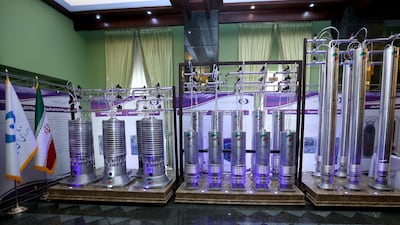
  • New generation Iranian centrifuges on display for Iran's National Nuclear Energy Day in Tehran, in April 2021. Iranian Presidency Office / Wana
    New generation Iranian centrifuges on display for Iran's National Nuclear Energy Day in Tehran, in April 2021. Iranian Presidency Office / Wana
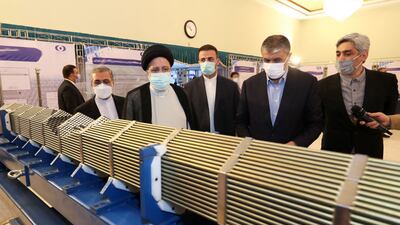
  • President Ebrahim Raisi, second right, is accompanied by Atomic Energy Organisation of Iran chief Mohammad Eslami, at Nuclear Technology Day in Tehran in April 2022. Iranian presidency / AFP
    President Ebrahim Raisi, second right, is accompanied by Atomic Energy Organisation of Iran chief Mohammad Eslami, at Nuclear Technology Day in Tehran in April 2022. Iranian presidency / AFP
  • Mr Raisi and Mr Eslami at the April 2022 event. Iranian presidency / AFP
    Mr Raisi and Mr Eslami at the April 2022 event. Iranian presidency / AFP
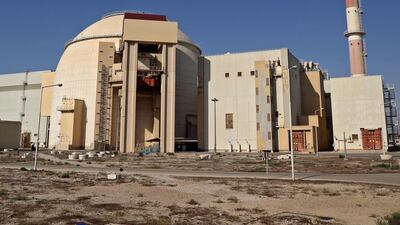
  • The Bushehr Nuclear Power Plant during a visit by Mr Raisi in October 2021. Iranian Presidency / AFP
    The Bushehr Nuclear Power Plant during a visit by Mr Raisi in October 2021. Iranian Presidency / AFP
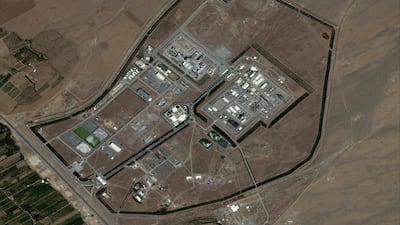
  • Iran's Arak Heavy Water Reactor complex, south of the capital Tehran in January 2020. Maxar Technologies / AFP
    Iran's Arak Heavy Water Reactor complex, south of the capital Tehran in January 2020. Maxar Technologies / AFP
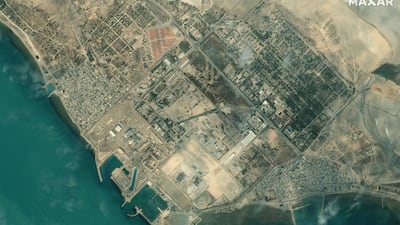
  • A satellite image of Iran's Bushehr Nuclear Power Plant in January 2020. Maxar Technologies / AFP
    A satellite image of Iran's Bushehr Nuclear Power Plant in January 2020. Maxar Technologies / AFP
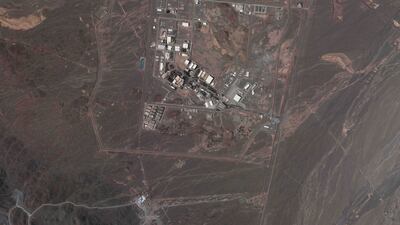
  • A satellite image of Iran's underground Natanz nuclear site in May 2022. Planet Labs PBC / AP
    A satellite image of Iran's underground Natanz nuclear site in May 2022. Planet Labs PBC / AP
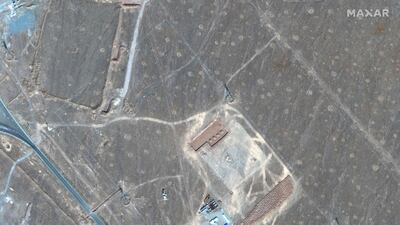
  • A satellite image in January 2020 of Iran's Fordow Fuel Enrichment Plant, north-east of the city of Qom. Maxar Technologies / AFP
    A satellite image in January 2020 of Iran's Fordow Fuel Enrichment Plant, north-east of the city of Qom. Maxar Technologies / AFP
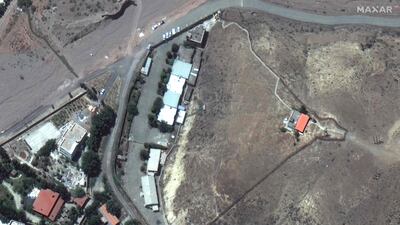
  • The Sanjarian nuclear centre, east of Tehran, in May 2021. Maxar Technologies / AFP
    The Sanjarian nuclear centre, east of Tehran, in May 2021. Maxar Technologies / AFP

Mr Tugendhat is regarded as a driver of the designation and said last month that Iran had continued plotting against British targets despite Mr McCallum’s speech.

A Farsi-language TV station based in the UK claimed last November that an Iranian hit squad in London aimed to murder two of its British-Iranian journalists.

The channel accused the IRGC of aiming to attack its journalists, who were not identified. Scotland Yard declined to comment at the time.

The IRGC was formed after Iran’s 1979 revolution as an ideological custodian of the country’s new religious values.

The organisation has since grown to be a major military, political and economic force in the country.

The IRGC now controls Iran’s elite armed and intelligence forces, and provides support to militant groups in places such as Syria, Iraq, Lebanon and Afghanistan.

When Donald Trump was president of the US, he pulled the country out of a nuclear deal with Iran and designated the IRCG a terrorist organisation, in April 2019.

The move caused Hassan Rouhani, who was Iranian president at the time, to accuse Mr Trump of being a “leader of world terrorism”.

Canada also banned more than 10,000 IRCG officers and senior members from entering the country last October and followed with the promise of more sanctions.

It also classified the group under the Immigration and Refugee Protection Act, which Canada usually implements for those accused of the most serious war crimes.

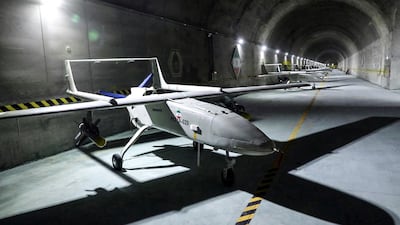
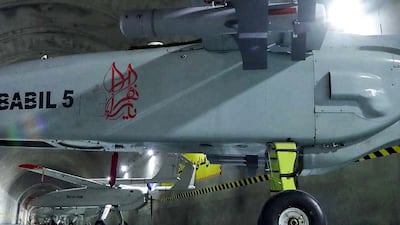
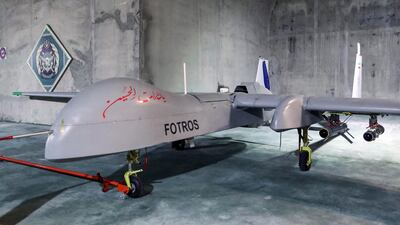
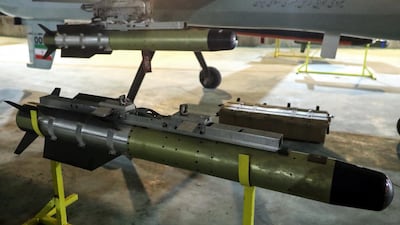
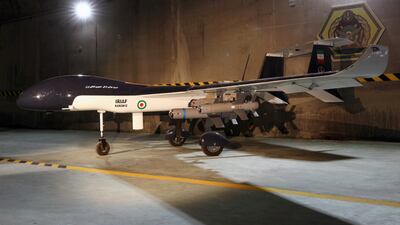
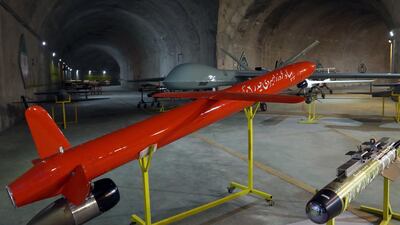
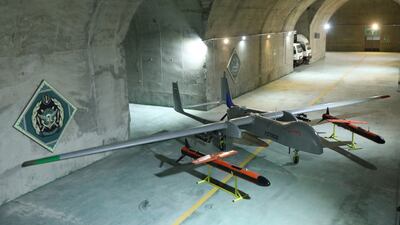
Iran displays drones at secret underground base - in pictures

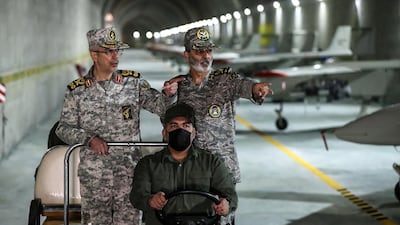
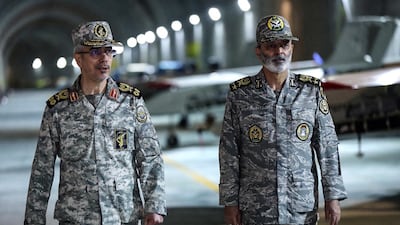
  • Maj Gen Mohammad Bagheri, left, Iran's Armed Forces Chief of Staff, and Maj Gen Abdolrahim Mousavi, Army Commander-in-Chief, visit an underground drone base at an undisclosed location in Iran. AFP
    Maj Gen Mohammad Bagheri, left, Iran's Armed Forces Chief of Staff, and Maj Gen Abdolrahim Mousavi, Army Commander-in-Chief, visit an underground drone base at an undisclosed location in Iran. AFP
  • Iranian state media revealed the existence of a drone base, said to be in the Zagros Mountains, in reports on a visit to the facility by Maj Gen Mohammad Bagheri, left, Iran's Armed Forces Chief of Staff. Reuters
    Iranian state media revealed the existence of a drone base, said to be in the Zagros Mountains, in reports on a visit to the facility by Maj Gen Mohammad Bagheri, left, Iran's Armed Forces Chief of Staff. Reuters
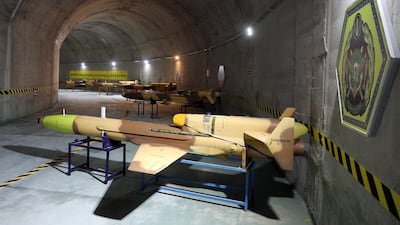
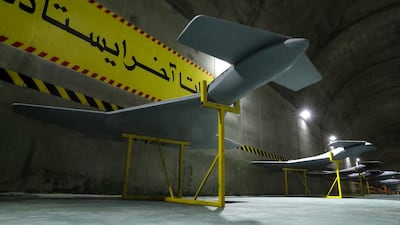
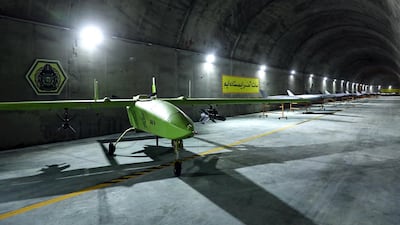
  • The Iranian Army released photos of a wide variety of drones lined up in long tunnels. AFP
    The Iranian Army released photos of a wide variety of drones lined up in long tunnels. AFP
  • Iranian Army drones believed to be held at an underground facility in the Zagros Mountains, a range that runs 1,600 kilometres through Iran, Iraq and Turkey. AFP
    Iranian Army drones believed to be held at an underground facility in the Zagros Mountains, a range that runs 1,600 kilometres through Iran, Iraq and Turkey. AFP
  • An army drone at an underground drone base somewhere in Iran. AFP
    An army drone at an underground drone base somewhere in Iran. AFP
  • An army drone at an underground drone base somewhere in Iran. Senior officers in the Iranian military say its drone force gives it regional leadership. AFP
    An army drone at an underground drone base somewhere in Iran. Senior officers in the Iranian military say its drone force gives it regional leadership. AFP
  • An Iranian military drone is inspected at a secret underground site. Reuters
    An Iranian military drone is inspected at a secret underground site. Reuters
  • Iran's unmanned aircraft programme has come up with dozens of kinds of drones since the middle of the 1980s. AFP
    Iran's unmanned aircraft programme has come up with dozens of kinds of drones since the middle of the 1980s. AFP
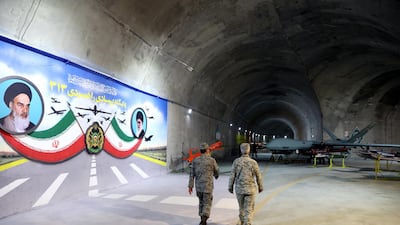
  • Reminders of the Iranian Army's revolutionary heritage are seen at an underground facility when drones are stored. AFP
    Reminders of the Iranian Army's revolutionary heritage are seen at an underground facility when drones are stored. AFP
  • An army drone at an underground base somewhere in Iran. AFP
    An army drone at an underground base somewhere in Iran. AFP
  • An army drone at an underground base somewhere in Iran. AFP
    An army drone at an underground base somewhere in Iran. AFP
  • An army drone at an underground base somewhere in Iran. AFP
    An army drone at an underground base somewhere in Iran. AFP
  • Iran's missile development has come along in tandem with programmes to developed military drones. AFP
    Iran's missile development has come along in tandem with programmes to developed military drones. AFP
  • Iran's Armed Forces Chief of Staff Maj Gen Mohammad Bagheri and Army Commander-in-Chief Maj Gen Abdolrahim Mousavi. AFP
    Iran's Armed Forces Chief of Staff Maj Gen Mohammad Bagheri and Army Commander-in-Chief Maj Gen Abdolrahim Mousavi. AFP
  • Photos from an underground Iranian military base show development of several drone platforms. AFP
    Photos from an underground Iranian military base show development of several drone platforms. AFP
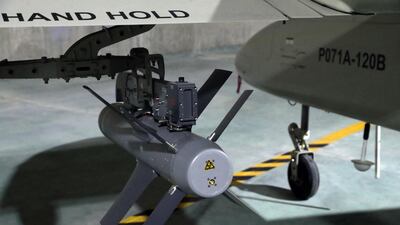
  • A heavy payload for a drone at a secret underground base somewhere in Iran. AFP
    A heavy payload for a drone at a secret underground base somewhere in Iran. AFP
  • Iran introduced the IAIO Fotros surveillance drone late in 2013. AFP
    Iran introduced the IAIO Fotros surveillance drone late in 2013. AFP
  • Iran's developing missile technology has been used by Tehran's allies around the Middle East. AFP
    Iran's developing missile technology has been used by Tehran's allies around the Middle East. AFP
  • An army drone at an underground base somewhere in Iran. Reuters
    An army drone at an underground base somewhere in Iran. Reuters
  • An army drone at an underground base somewhere in Iran. AFP
    An army drone at an underground base somewhere in Iran. AFP
  • An army drone at an underground base somewhere in Iran. Reuters
    An army drone at an underground base somewhere in Iran. Reuters

In Britain, public displays in support of the IRGC have become more common, but they would become illegal if the group were proscribed.

In May 2021, an IRGC flag was unfurled during an anti-Israel demonstration in Trafalgar Square. One Iranian news agency repeatedly ran footage showing the flag.

The event prompted calls for action to be taken against the Corps, including from Mr Tugendhat, who at the time was on the backbench and chairman of the Commons foreign affairs committee.

Stephen Crabb, the Tory MP and parliamentary Commons chairman of Conservative Friends of Israel, said he supports proscribing the IRGC.

“This would be a very welcome move. It is a step that a number of our key allies have already taken,” Mr Crabb said.

“The Islamic Revolutionary Guard Corps is playing a key role supporting and facilitating the Iranian regime’s destabilising activities in the Middle East and beyond.

“It is very, very clear that the international community needs to take much stronger and clear-sighted action against Iran.”

Canada declares Iran's IRGC a ‘terrorist organisation’ - video

“Proscribing the IRGC would demonstrate to Iran that it can’t be business as usual,” said Lord Eric Pickles, the parliamentary Lords chairman of the Conservative Friends of Israel.

Suggestions that the IRGC is a terrorist group has always been played down by Iranian politicians and officials, who have repeatedly defended its actions as a legitimate extension of the state.

Under the Terrorism Act 2000, the home secretary has the right to proscribe an organisation if it is reasonably believed that the body is involved in terrorism and it is proportionate to do so.

So far, 78 terrorist organisations have been proscribed under law.

“While the government keeps the list of proscribed organisations under review, we do not comment on whether a specific organisation is or is not being considered for proscription,” a government spokesman said.


Where to donate in the UAE

The Emirates Charity Portal

You can donate to several registered charities through a “donation catalogue”. The use of the donation is quite specific, such as buying a fan for a poor family in Niger for Dh130.

The General Authority of Islamic Affairs & Endowments

The site has an e-donation service accepting debit card, credit card or e-Dirham, an electronic payment tool developed by the Ministry of Finance and First Abu Dhabi Bank.

Al Noor Special Needs Centre

You can donate online or order Smiles n’ Stuff products handcrafted by Al Noor students. The centre publishes a wish list of extras needed, starting at Dh500.

Beit Al Khair Society

Beit Al Khair Society has the motto “From – and to – the UAE,” with donations going towards the neediest in the country. Its website has a list of physical donation sites, but people can also contribute money by SMS, bank transfer and through the hotline 800-22554.

Dar Al Ber Society

Dar Al Ber Society, which has charity projects in 39 countries, accept cash payments, money transfers or SMS donations. Its donation hotline is 800-79.

Dubai Cares

Dubai Cares provides several options for individuals and companies to donate, including online, through banks, at retail outlets, via phone and by purchasing Dubai Cares branded merchandise. It is currently running a campaign called Bookings 2030, which allows people to help change the future of six underprivileged children and young people.

Emirates Airline Foundation

Those who travel on Emirates have undoubtedly seen the little donation envelopes in the seat pockets. But the foundation also accepts donations online and in the form of Skywards Miles. Donated miles are used to sponsor travel for doctors, surgeons, engineers and other professionals volunteering on humanitarian missions around the world.

Emirates Red Crescent

On the Emirates Red Crescent website you can choose between 35 different purposes for your donation, such as providing food for fasters, supporting debtors and contributing to a refugee women fund. It also has a list of bank accounts for each donation type.

Gulf for Good

Gulf for Good raises funds for partner charity projects through challenges, like climbing Kilimanjaro and cycling through Thailand. This year’s projects are in partnership with Street Child Nepal, Larchfield Kids, the Foundation for African Empowerment and SOS Children's Villages. Since 2001, the organisation has raised more than $3.5 million (Dh12.8m) in support of over 50 children’s charities.

Noor Dubai Foundation

Sheikh Mohammed bin Rashid Al Maktoum launched the Noor Dubai Foundation a decade ago with the aim of eliminating all forms of preventable blindness globally. You can donate Dh50 to support mobile eye camps by texting the word “Noor” to 4565 (Etisalat) or 4849 (du).

Ten tax points to be aware of in 2026

1. Domestic VAT refund amendments: request your refund within five years

If a business does not apply for the refund on time, they lose their credit.

2. E-invoicing in the UAE

Businesses should continue preparing for the implementation of e-invoicing in the UAE, with 2026 a preparation and transition period ahead of phased mandatory adoption. 

3. More tax audits

Tax authorities are increasingly using data already available across multiple filings to identify audit risks. 

4. More beneficial VAT and excise tax penalty regime

Tax disputes are expected to become more frequent and more structured, with clearer administrative objection and appeal processes. The UAE has adopted a new penalty regime for VAT and excise disputes, which now mirrors the penalty regime for corporate tax.

5. Greater emphasis on statutory audit

There is a greater need for the accuracy of financial statements. The International Financial Reporting Standards standards need to be strictly adhered to and, as a result, the quality of the audits will need to increase.

6. Further transfer pricing enforcement

Transfer pricing enforcement, which refers to the practice of establishing prices for internal transactions between related entities, is expected to broaden in scope. The UAE will shortly open the possibility to negotiate advance pricing agreements, or essentially rulings for transfer pricing purposes. 

7. Limited time periods for audits

Recent amendments also introduce a default five-year limitation period for tax audits and assessments, subject to specific statutory exceptions. While the standard audit and assessment period is five years, this may be extended to up to 15 years in cases involving fraud or tax evasion. 

8. Pillar 2 implementation 

Many multinational groups will begin to feel the practical effect of the Domestic Minimum Top-Up Tax (DMTT), the UAE's implementation of the OECD’s global minimum tax under Pillar 2. While the rules apply for financial years starting on or after January 1, 2025, it is 2026 that marks the transition to an operational phase.

9. Reduced compliance obligations for imported goods and services

Businesses that apply the reverse-charge mechanism for VAT purposes in the UAE may benefit from reduced compliance obligations. 

10. Substance and CbC reporting focus

Tax authorities are expected to continue strengthening the enforcement of economic substance and Country-by-Country (CbC) reporting frameworks. In the UAE, these regimes are increasingly being used as risk-assessment tools, providing tax authorities with a comprehensive view of multinational groups’ global footprints and enabling them to assess whether profits are aligned with real economic activity. 

Contributed by Thomas Vanhee and Hend Rashwan, Aurifer

The%20specs
%3Cp%3E%0D%3Cstrong%3EEngine%3A%20%3C%2Fstrong%3E4.0-litre%20twin-turbo%20V8%0D%3Cbr%3E%3Cstrong%3EPower%3A%20%3C%2Fstrong%3E666hp%20at%206%2C000rpm%0D%3Cbr%3E%3Cstrong%3ETorque%3A%20%3C%2Fstrong%3E850Nm%20at%202%2C300-4%2C500rpm%0D%3Cbr%3E%3Cstrong%3ETransmission%3A%20%3C%2Fstrong%3E8-speed%20auto%0D%3Cbr%3E%3Cstrong%3EOn%20sale%3A%20%3C%2Fstrong%3EQ1%202023%0D%3Cbr%3E%3Cstrong%3EPrice%3A%20%3C%2Fstrong%3Efrom%20Dh1.15%20million%20(estimate)%3C%2Fp%3E%0A
Sheer grandeur

The Owo building is 14 storeys high, seven of which are below ground, with the 30,000 square feet of amenities located subterranean, including a 16-seat private cinema, seven lounges, a gym, games room, treatment suites and bicycle storage.

A clear distinction between the residences and the Raffles hotel with the amenities operated separately.

Who's who in Yemen conflict

Houthis: Iran-backed rebels who occupy Sanaa and run unrecognised government

Yemeni government: Exiled government in Aden led by eight-member Presidential Leadership Council

Southern Transitional Council: Faction in Yemeni government that seeks autonomy for the south

Habrish 'rebels': Tribal-backed forces feuding with STC over control of oil in government territory

Anghami
Started: December 2011
Co-founders: Elie Habib, Eddy Maroun
Based: Beirut and Dubai
Sector: Entertainment
Size: 85 employees
Stage: Series C
Investors: MEVP, du, Mobily, MBC, Samena Capital

Updated: January 03, 2023, 8:54 AM