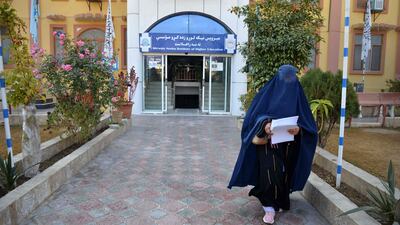
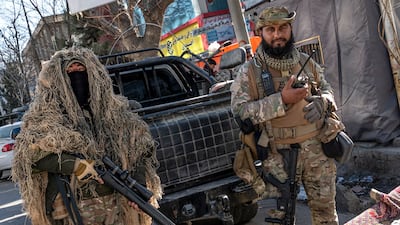
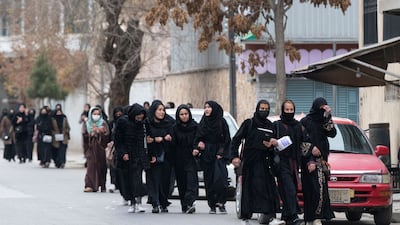
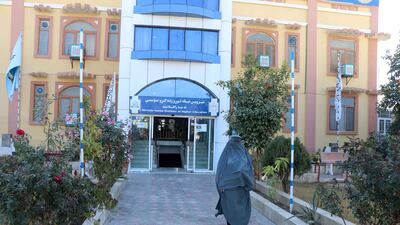
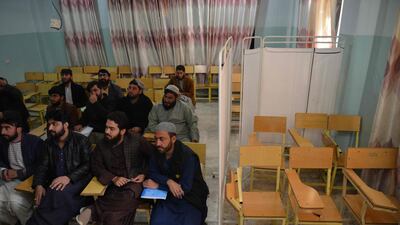
Aid agencies including Save the Children have suspended operations in Afghanistan after the Taliban barred women from working for foreign non-governmental organisations.
On Sunday, after the hardline rulers warned organisations their operating licences will be suspended if they continue to employ women, Humanitarian Country Team met in Kabul to discuss how to respond. The group comprises top UN officials and representatives of dozens of Afghan and foreign NGOs.
A joint statement was released by the Norwegian Refugee Council, Save the Children and CARE.
"We cannot effectively reach children, women and men in desperate need in Afghanistan without our female staff," the statement read.
"Whilst we gain clarity on this announcement, we are suspending our programmes, demanding that men and women can equally continue our lifesaving assistance in Afghanistan."
Jan Egeland, secretary general of the Norwegian Refugee Council, called the decision a "humanitarian red line".
Dozens of organisations work across remote areas of Afghanistan and many of their employees are women, with several warning the ban would stymie their work.
"The ban is going to impact all aspects of humanitarian work as women employees have been key executors of various projects focussing on the country's vulnerable women population," said a top official of a foreign NGO in Kabul.
The economy ministry, which issues the licences, said it had received "serious complaints" that women working in NGOs were violating a strict dress code that the theocracy insists women adhere to.
On Saturday, the Taliban's Economy Minister Qari Din Mohammed Hanif announced the ruling in a letter.
The European Union, a major funder of aid organisations that work in Afghanistan, denounced the latest ban.
"The EU strongly condemns the Taliban's recent decision to ban women from working in national and international NGOs," a spokeswoman for EU foreign policy chief Josep Borrell said.
"We are assessing the situation and the impact it will have on our aid on the ground."
The International Rescue Committee said its more than 3,000 female staff in Afghanistan were "critical for the delivery of humanitarian assistance" in the country.
US Secretary of State Antony Blinken said women were "central to humanitarian operations around the world" and that the ban would be "devastating" to Afghans.
The latest ban comes as the Taliban also barred female students from attending universities on Tuesday, effective immediately.
Afghan women have since demonstrated in major cities against the ban.
Witnesses in the western city of Herat said about two dozen women were heading to the provincial governor’s house to protest against the ban on Saturday, chanting “education is our right”, when they were pushed back by security forces.
The same day, Taliban forces used a water cannon to disperse groups of female demonstrators.
There has been widespread international condemnation of the university ban.
An official in the Taliban administration, Minister of Higher Education Nida Mohammad Nadim, spoke about the ban for the first time on Thursday in an interview with Afghan state TV.
He said the ban was necessary to prevent the mixing of genders in universities and because he believes some subjects being taught breached the principles of Islam.
He said the ban would be in place until further notice.

Quick pearls of wisdom
Focus on gratitude: And do so deeply, he says. “Think of one to three things a day that you’re grateful for. It needs to be specific, too, don’t just say ‘air.’ Really think about it. If you’re grateful for, say, what your parents have done for you, that will motivate you to do more for the world.”
Know how to fight: Shetty married his wife, Radhi, three years ago (he met her in a meditation class before he went off and became a monk). He says they’ve had to learn to respect each other’s “fighting styles” – he’s a talk it-out-immediately person, while she needs space to think. “When you’re having an argument, remember, it’s not you against each other. It’s both of you against the problem. When you win, they lose. If you’re on a team you have to win together.”
Five%20calorie-packed%20Ramadan%20drinks
%3Cp%3E%3Cstrong%3ERooh%20Afza%3C%2Fstrong%3E%0D%3Cbr%3E100ml%20contains%20414%20calories%0D%3Cbr%3E%3Cstrong%3ETang%20orange%20drink%3C%2Fstrong%3E%0D%3Cbr%3E100ml%20serving%20contains%20300%20calories%0D%3Cbr%3E%3Cstrong%3ECarob%20beverage%20mix%3C%2Fstrong%3E%0D%3Cbr%3E100ml%20serving%20contains%20about%20300%20calories%0D%3Cbr%3E%3Cstrong%3EQamar%20Al%20Din%20apricot%20drink%3C%2Fstrong%3E%0D%3Cbr%3E100ml%20saving%20contains%2061%20calories%0D%3Cbr%3E%3Cstrong%3EVimto%20fruit%20squash%3C%2Fstrong%3E%0D%3Cbr%3E100ml%20serving%20contains%2030%20calories%3C%2Fp%3E%0A
APPLE IPAD MINI (A17 PRO)
Display: 21cm Liquid Retina Display, 2266 x 1488, 326ppi, 500 nits
Chip: Apple A17 Pro, 6-core CPU, 5-core GPU, 16-core Neural Engine
Storage: 128/256/512GB
Main camera: 12MP wide, f/1.8, digital zoom up to 5x, Smart HDR 4
Front camera: 12MP ultra-wide, f/2.4, Smart HDR 4, full-HD @ 25/30/60fps
Biometrics: Touch ID, Face ID
Colours: Blue, purple, space grey, starlight
In the box: iPad mini, USB-C cable, 20W USB-C power adapter
Price: From Dh2,099
ETFs explained
Exhchange traded funds are bought and sold like shares, but operate as index-tracking funds, passively following their chosen indices, such as the S&P 500, FTSE 100 and the FTSE All World, plus a vast range of smaller exchanges and commodities, such as gold, silver, copper sugar, coffee and oil.
ETFs have zero upfront fees and annual charges as low as 0.07 per cent a year, which means you get to keep more of your returns, as actively managed funds can charge as much as 1.5 per cent a year.
There are thousands to choose from, with the five biggest providers BlackRock’s iShares range, Vanguard, State Street Global Advisors SPDR ETFs, Deutsche Bank AWM X-trackers and Invesco PowerShares.
Breast cancer in men: the facts
1) Breast cancer is men is rare but can develop rapidly. It usually occurs in those over the ages of 60, but can occasionally affect younger men.
2) Symptoms can include a lump, discharge, swollen glands or a rash.
3) People with a history of cancer in the family can be more susceptible.
4) Treatments include surgery and chemotherapy but early diagnosis is the key.
5) Anyone concerned is urged to contact their doctor
Jeff Buckley: From Hallelujah To The Last Goodbye
By Dave Lory with Jim Irvin
COMPANY%20PROFILE
%3Cp%3E%3Cstrong%3EName%3A%3C%2Fstrong%3E%20SupplyVan%3Cbr%3E%3Cstrong%3EBased%3A%3C%2Fstrong%3E%20Dubai%2C%20UAE%3Cbr%3E%3Cstrong%3ELaunch%20year%3A%3C%2Fstrong%3E%202017%3Cbr%3E%3Cstrong%3ENumber%20of%20employees%3A%3C%2Fstrong%3E%2029%3Cbr%3E%3Cstrong%3ESector%3A%3C%2Fstrong%3E%20MRO%20and%20e-commerce%3Cbr%3E%3Cstrong%3EFunding%3A%3C%2Fstrong%3E%20Seed%3C%2Fp%3E%0A
The biog
Title: General Practitioner with a speciality in cardiology
Previous jobs: Worked in well-known hospitals Jaslok and Breach Candy in Mumbai, India
Education: Medical degree from the Government Medical College in Nagpur
How it all began: opened his first clinic in Ajman in 1993
Family: a 90-year-old mother, wife and two daughters
Remembers a time when medicines from India were purchased per kilo
Mohammed bin Zayed Majlis
Ten tax points to be aware of in 2026
1. Domestic VAT refund amendments: request your refund within five years
If a business does not apply for the refund on time, they lose their credit.
2. E-invoicing in the UAE
Businesses should continue preparing for the implementation of e-invoicing in the UAE, with 2026 a preparation and transition period ahead of phased mandatory adoption.
3. More tax audits
Tax authorities are increasingly using data already available across multiple filings to identify audit risks.
4. More beneficial VAT and excise tax penalty regime
Tax disputes are expected to become more frequent and more structured, with clearer administrative objection and appeal processes. The UAE has adopted a new penalty regime for VAT and excise disputes, which now mirrors the penalty regime for corporate tax.
5. Greater emphasis on statutory audit
There is a greater need for the accuracy of financial statements. The International Financial Reporting Standards standards need to be strictly adhered to and, as a result, the quality of the audits will need to increase.
6. Further transfer pricing enforcement
Transfer pricing enforcement, which refers to the practice of establishing prices for internal transactions between related entities, is expected to broaden in scope. The UAE will shortly open the possibility to negotiate advance pricing agreements, or essentially rulings for transfer pricing purposes.
7. Limited time periods for audits
Recent amendments also introduce a default five-year limitation period for tax audits and assessments, subject to specific statutory exceptions. While the standard audit and assessment period is five years, this may be extended to up to 15 years in cases involving fraud or tax evasion.
8. Pillar 2 implementation
Many multinational groups will begin to feel the practical effect of the Domestic Minimum Top-Up Tax (DMTT), the UAE's implementation of the OECD’s global minimum tax under Pillar 2. While the rules apply for financial years starting on or after January 1, 2025, it is 2026 that marks the transition to an operational phase.
9. Reduced compliance obligations for imported goods and services
Businesses that apply the reverse-charge mechanism for VAT purposes in the UAE may benefit from reduced compliance obligations.
10. Substance and CbC reporting focus
Tax authorities are expected to continue strengthening the enforcement of economic substance and Country-by-Country (CbC) reporting frameworks. In the UAE, these regimes are increasingly being used as risk-assessment tools, providing tax authorities with a comprehensive view of multinational groups’ global footprints and enabling them to assess whether profits are aligned with real economic activity.
Contributed by Thomas Vanhee and Hend Rashwan, Aurifer