


Looted Benin bronzes will be returned to Nigeria by the University of Cambridge.
The 116 items are mainly made of brass but also include ivory and wooden objects and were taken by British soldiers during the sacking of Benin City in 1897.
The British burnt the city’s palace and exiled Benin’s Oba, or king, with thousands of brasses and other works — collectively known as the "Benin bronzes" — taken and later sold off in London to recoup the costs of the military mission.
The artefacts, which are considered to be of exceptional artistic quality and significance, ended up in museums in the UK, Europe and US, with claims for their return dating to the mid-20th century.
The university supported a formal claim this year from Nigeria’s National Commission for Museums and Monuments for the return of the items.
France to return looted artefacts to Benin - in pictures
-
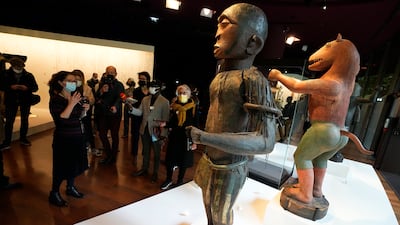
The Quai Branly Museum in Paris is exhibiting over a dozen colonial-era treasures taken from Benin, the last time they will be shown in France before being returned to the African nation. AP -
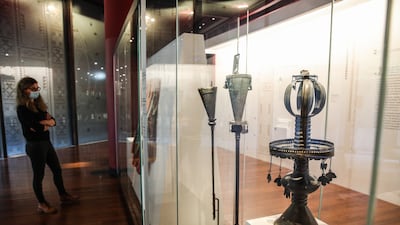
Artworks from the collection on display inside the Quai Branly Museum. The 26 pieces, from a trove of objects taken by French forces in 1892, are being shown for only six days at the museum before being shipped to Benin. EPA -
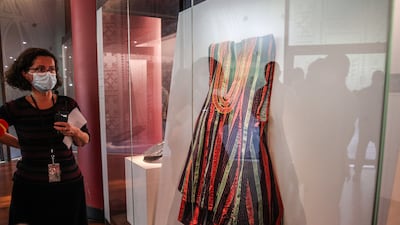
The treasures are from the kingdom of Dahomey in the south of present-day Benin. EPA -
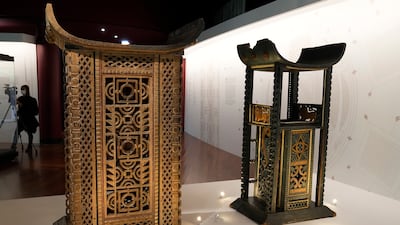
The 19th century throne of King Ghezo, left, and the throne of King Glele, from Benin, are part of the exhibit. AP -
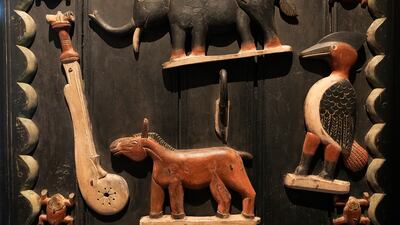
A close-up view of the detail on one of King Glele's palace doors. AP -
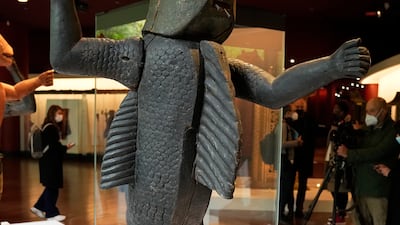
A statue of Benin's 19th century King Behanzin on display. AP -
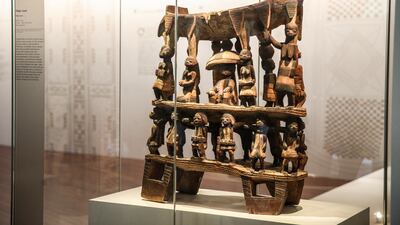
A sculpture entitled 'Royal Seat'. EPA


“The Charity Commission has considered and approved the return of 116 historical objects, often referred to as the Benin bronzes, from the University of Cambridge’s Museum of Archaeology and Anthropology to the National Commission of Museums and Monuments of Nigeria," a university spokeswoman said on Wednesday.
“The university is now working with the Commission to finalise the next steps regarding these Benin bronzes and we will communicate these in due course.
“Some artefacts will remain in Cambridge on extended loan, ensuring that this West African civilisation continues to be represented in the museum’s displays, and in teaching for school groups.
“Those that return physically will be transferred to the National Commission for Museums and Monuments, as is required legally by the Republic of Nigeria, and an approach formally supported by the Oba of Benin.”

Last month, the Horniman Museum, in south London, returned looted Benin bronzes to Nigeria, while the Wellcome Collection closed its Medicine Man gallery because it “perpetuates a version of medical history that is based on racist, sexist and ableist theories and language”.
But Downing Street has said there is no plans to change the law that prevents the British Museum handing the Elgin Marbles, also known as the Parthenon Marbles, back to Greece.
The Elgin Marbles - in pictures
-
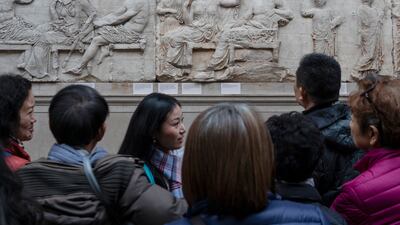
Sections of the Elgin Marbles, also known as the Parthenon Marbles, are displayed at The British Museum in London. Getty Images -

Greece has repeatedly called for the permanent return from the British Museum of the 2,500-year-old sculptures. AP -
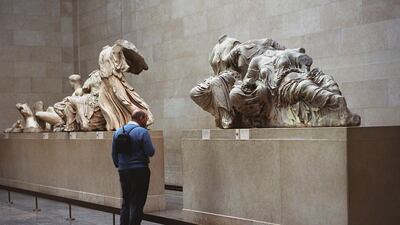
The British Museum has ruled out returning the marbles, which include about half of the 160-metre frieze that adorned the Parthenon, insisting that they were legally acquired. Getty Images -
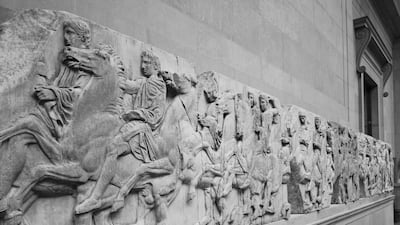
The Elgin Marbles on display in the Duveen Gallery at the British Museum in 1971. Getty Images -

Archaeologist Sir Mortimer Wheeler listens to the newly available audio guide in the Duveen Gallery of the British Museum in 1964. Getty Images -
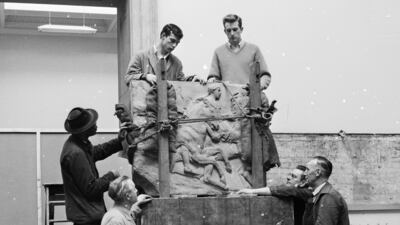
Workmen unload a portion of the Parthenon frieze before affixing it to the wall in the new Elgin Marbles room of the British Museum in 1961. Getty Images



