


Passengers at Heathrow Airport have been told to “brace for disruption” as hundreds of workers go on strike on Friday, adding to Britain’s month of misery as millions of employees walk out over pay disputes.
About 400 Unite members employed by ground-handling contractor Menzies will walk out for 72 hours from 4am after rejecting a pay offer, followed by further industrial action later in the month.
Strikes are due to take place on almost every day for the rest of the month, across a range of sectors as workers fight for pay rises that better reflect double-digit levels of inflation.
Nurses walked out on Thursday for the first time, with some on picket lines complaining how their low salaries are forcing them to turn to food banks to feed their children.
Nurses strike in the UK — in pictures
-
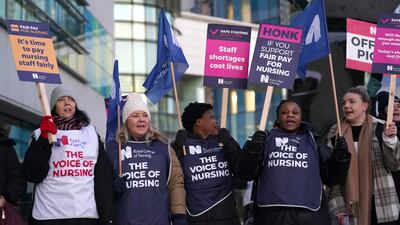
Members of the Royal College of Nursing on the picket line outside Queen Elizabeth Hospital in Birmingham, as nurses in England, Wales and Northern Ireland strike over pay. PA -
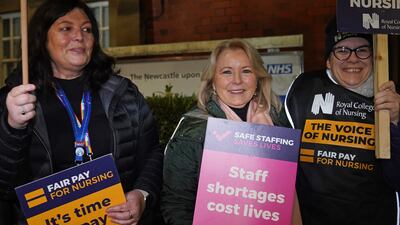
Royal College of Nursing (RCN) General Secretary Pat Cullen joins members on the picket line outside the Royal Victoria Infirmary in Newcastle. PA -
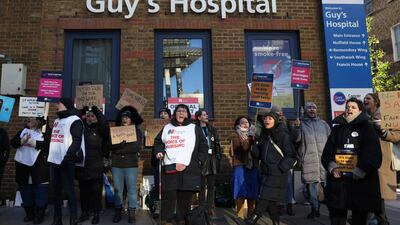
NHS nursing staff outside Guy's Hospital in London. Bloomberg -

Demonstrators outside St Thomas' Hospital in London. Bloomberg -
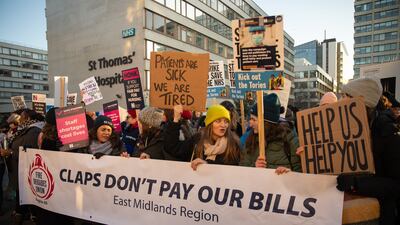
The picket line outside St Thomas' Hospital. PA -
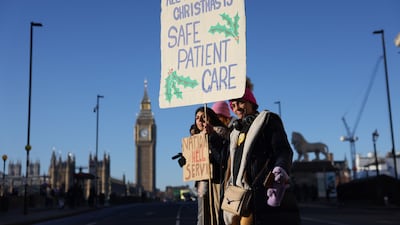
About a quarter of hospitals and community teams in England are striking, alongside all trusts in Northern Ireland and all but one health board in Wales. Bloomberg -
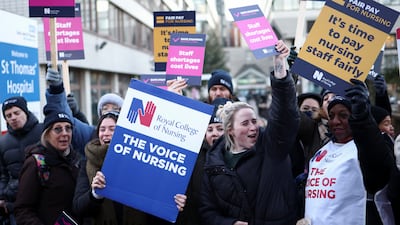
RCN members outside St Thomas' Hospital. Reuters -
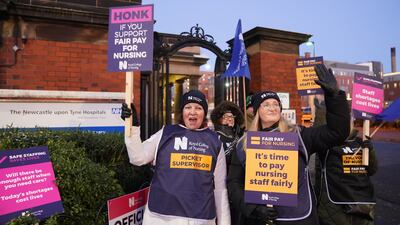
Nurses on strike outside Royal Victoria Infirmary in Newcastle. PA -

A message to the government outside St Thomas' Hospital. Reuters -
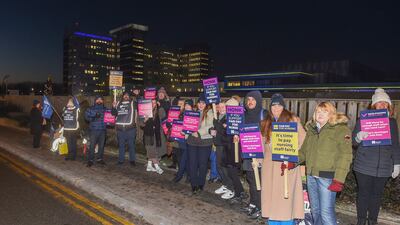
Nurses on the picket line outside Aintree University Hospital in Liverpool. PA -

Nurses brave the cold for the strike in London. Reuters -
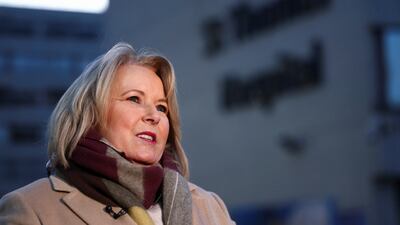
Ms Cullen, head of the RCN union, speaks to the media outside St Thomas' Hospital. Reuters -

A sign, right, referring to the Clap for our Carers campaign during the Covid-19 pandemic. Many nurses say they would rather be rewarded with a pay rise. Reuters


Outside Aintree University Hospital in Liverpool, nurses began joining the picket line from 7.30am, with many holding placards with slogans such as 'Short staffing costs lives' and 'If nurses are out here, there's something wrong in there'.
Nurses are set to strike again next Tuesday for 12 hours.
The leader of the opposition, Keir Starmer, called the nurses’ strike a “badge of shame” for the government on Wednesday.
However, it has insisted it cannot afford to give public sector workers pay rises that keep pace with inflation.
Prime minister Rishi Sunak said the government was standing by the offers recommended by the independent pay review body and claimed the strikes were “Labour's nightmare before Christmas” because of the party's links with the unions.
Strikes are escalating across the UK with walkouts maximising disruption in the run-up to Christmas.
The government is planning to bring in the military and civil servants to help ease the situation.
Rail workers, bus drivers, motorway workers and driving examiners will all walk out on Friday.
Menzies Unite members’ protest action the same day will be followed by another 72-hour period of action from Thursday, December 29, ending at 3.59am on Sunday, January 1.
The post-Christmas stoppage will coincide with a planned walkout by Border Force Staff.
Unite general secretary Sharon Graham said: “This is a classic case of an employer that can fully afford to pay workers a fair pay increase but has chosen not to.
UK strikes — in pictures
-
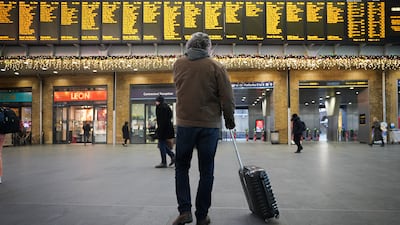
Passengers view departure boards at Kings Cross station in London on Wednesday, during a strike by the Rail, Maritime and Transport union. PA -
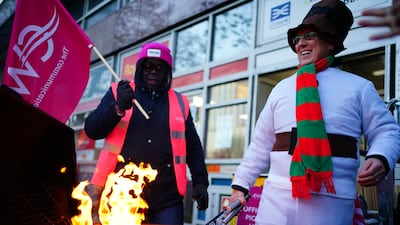
Members of the Communication Workers Union on the picket line in Whitechapel, East London, as Royal Mail workers strike over jobs, pay and conditions. PA -
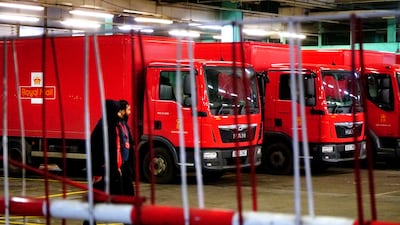
Royal Mail delivery lorries parked idle in the Whitechapel delivery depot. PA -
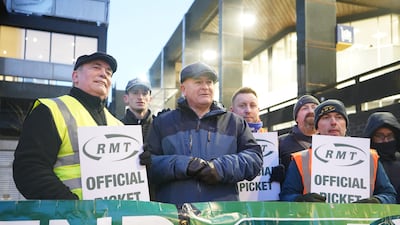
Mick Lynch, centre, general secretary of the RMT union, joins members on the picket line outside Euston station in London. PA -
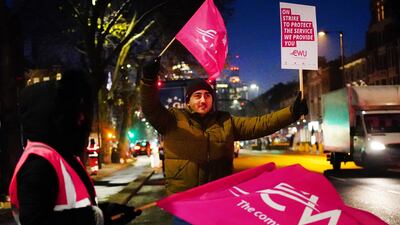
CWU members on the picket line in Whitechapel. PA -
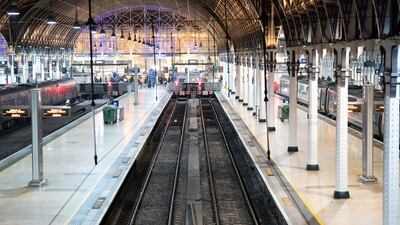
Empty platforms at Paddington station in London. PA -
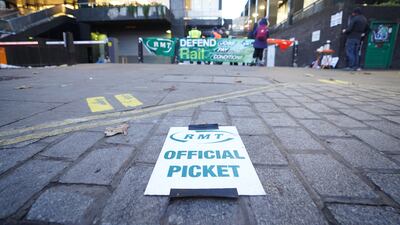
The RMT picket line at Euston station. PA


“Menzies needs to stop making excuses and make a pay offer that meets our members' expectations.”
The workers rejected Menzies' latest proposal which Unite said was for 4 per cent backdated to May and then a further 6.5 per cent from January 1.
The workers are seeking an increase of 13 per cent for this year alone.
Unite regional officer Kevin Hall said: “Heathrow passengers need to brace themselves for fresh disruption at the airport purely because of Menzies' intransigence.
“Strike action is being taken as a last resort because Menzies has only been prepared to offer our members a miserable pay increase that in no way reflects the cost of living.”
Heathrow Airport has stressed it does not employ the workers, while Menzies says it has contingency plans in place for the strikes.
Miguel Gomez Sjunnesson of Menzies Aviation said: “We are extremely disappointed that Unite has rejected the pay increase despite GMB accepting the offer.
“Our offer of a 10.5 per cent salary increase is extremely competitive and reflects feedback from our employees.
“It is a great shame that as a result of Unite rejecting the offer, strike action will now fall on one of the busiest weekends of the year as people travel to meet family and friends for Christmas.
“We are well prepared for industrial action and have been working closely with key partners to put in place robust contingency plans.
“We remain committed to ensuring that our employees receive their increase as soon as possible and hope to be able to resolve this matter soon.”
A Heathrow representative said the “vast majority of passengers will not be affected” by this weekend's planned strike.
“We have not been informed of any flight cancellations as a direct result of this action and encourage passengers due to fly with the small number of affected airlines to check with their airline directly for the latest information.”
A planned strike by about 700 workers employed by Emirates Group's airport services subsidiary dnata was called off last month after agreeing a new pay deal.
Alex Doisneau, managing director at dnata UK, told The National the package included “both a pay increase and immediate support for the short term”, to support employees during the cost-of-living crisis.
Data released on Wednesday showed the rate of consumer price rises was slowing, with inflation at 10.7 per cent last month.
That represents a slight fall from October, when the rate was 11.1 per cent.

