



Kate, Princess of Wales, dazzled in a sequinned red full-length gown and the Lotus Flower Tiara as the royal family welcomed diplomats to Buckingham Palace on Tuesday.
King Charles III, Queen Consort Camilla and the Prince of Wales also attended the first Diplomatic Corps reception in three years, greeting hundreds of guests at the glittering affair in London.
The Buckingham Palace event was the first Diplomatic Corps reception of the king’s reign, and the monarch, the queen consort and the Prince and Princess of Wales welcomed foreign ambassadors to the grand occasion in the royal residence’s state rooms.
The Princess of Wales, with her hair worn down and straightened without her trademark waves, was dressed in a floor-length scarlet Jenny Packham dress decorated in sequinned flower motifs, as well as a blue Royal Victorian Order sash and the late Queen Elizabeth II’s Family Order, which sits on a yellow ribbon.
Her drop diamond earrings belonged to the queen.
The princess has worn the Lotus Flower Tiara — also known as the Queen Mother’s Papyrus Tiara — previously.
Made of diamonds in fanned motifs and crowned by floating diamond arches, it belonged to Princess Margaret.
Kate, Princess of Wales fashion in Boston — in pictures
-

Britain's Prince William and his wife Kate arrive for the second annual The Earthshot Prize Awards Ceremony at MGM Music Hall on December 2, 2022, in Boston, US. All photos: AP -

Kate, Princess of Wales, wears a bright green off-the-shoulder gown from Solace London with an emerald choker and matching earrings that belonged to Princess Diana -

The Princess of Wales visits the Centre on the Developing Child at Harvard University in Cambridge wearing a houndstooth dress from Emilia Wickstead -
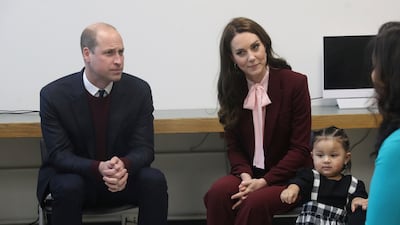
Prince William and Kate visit the Young Mothers programme at the anti-violence group Roca in Boston -
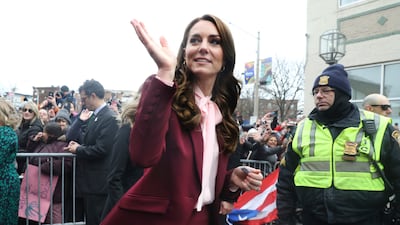
The Princess of Wales waves as she leaves after a visit to Roca -

Prince William and Kate visit the Harbor Defences of Boston -

The Princess of Wales wears a wool coat from Alexander McQueen over a ribbed orange turtleneck and a matching midi skirt from Gabriela Hearst -
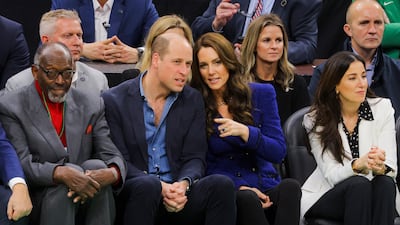
From left, former Celtics player and coach Tom 'Satch' Sanders; Britain's Prince William and his wife Kate; and Emilia Fazzalari, wife of Celtics owner Wyc Grousbeck watch an NBA basketball game between the Boston Celtics and the Miami Heat -

The Princess of Wales wears a vintage Chanel blazer -
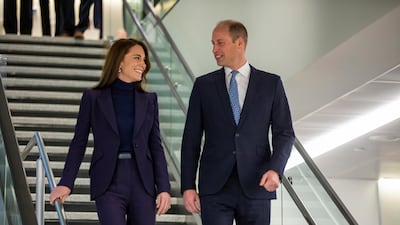
The Prince and Princess of Wales arrive at Boston Logan International Airport at the start of their US trip -
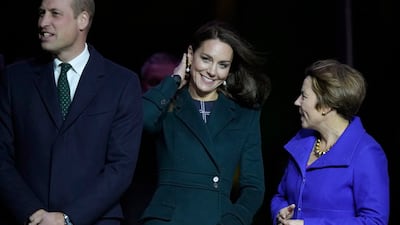
Prince William and Kate, Princess of Wales speak with Massachusetts Governor-Elect Maura Healey -
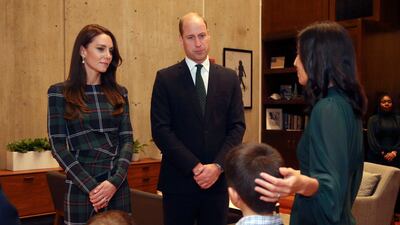
The Princess of Wales chose a green Burberry dress for a meeting with Boston's Mayor Michelle Wu


She also wore it to the diplomatic reception at the palace in 2013 and to her first state banquet in the UK in 2015 during a Chinese state visit.
The queen consort once again wore the late queen’s diamond and sapphire tiara and necklace, which she chose for the South African state banquet last month, and an Anna Valentine gown.
Queen Consort Camilla fashion — in pictures
-

Queen Consort Camilla wearing a black shift dress and pearl choker, arrives at a party in London in June 1996. Photo: UK Press -
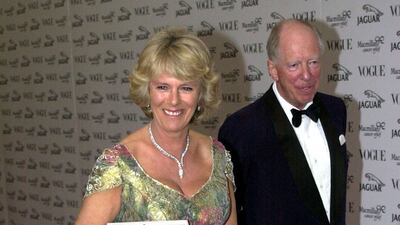
The queen consort in a green floral gown, arrives at the Vogue & Jaguar It's Fashion charity gala on June 11, 2001 in Buckinghamshire, England. Getty Images -
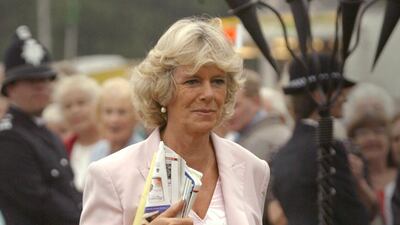
The queen consort in a pink floral dress and coat, arrives at the Sandringham Flower Show in Norfolk on July 31, 2002. Getty Images -
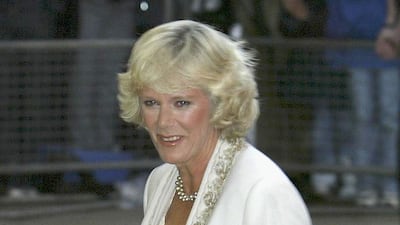
The queen consort, in a gold dress with a co-ordinated coat, arrives at the Globe Theatre for The Prince's Trust Shakespeare Gala Performance Evening in London on September 1, 2003. Getty Images -

The queen consort, in a black dress and velvet coat, at the UK film premiere of Merchant Of Venice in London on November 29, 2004. Getty Images -

The queen consort after marrying Prince Charles, wears an Anna Valentine set for her civil ceremony at The Guildhall, Windsor on April 9, 2005. Getty Images -
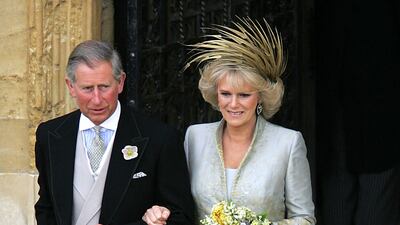
The queen consort, in Anna Valentine, and Prince Charles leave the Service of Prayer and Dedication after their marriage at Windsor Castle on April 9, 2005. Getty Images -

The queen consort, wearing a light-blue set, visits a mosque in Cairo on the second day of a 12-day royal tour visiting Egypt, Saudia Arabia and India in 2006. Getty Images -

The queen consort, wearing a blue printed dress, and King Charles after a Falklands War flypast on June 17, 2007 in London. Getty Images -

The queen consort dances with Craig Revel Horwood during a visit to St Clement Danes School in London on October 20, 2009. Getty Images -
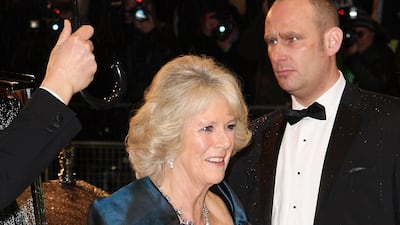
The queen consort, in a teal gown, arrives at the Royal World Premiere of Alice In Wonderland on February 25, 2010, in London. Getty Images -
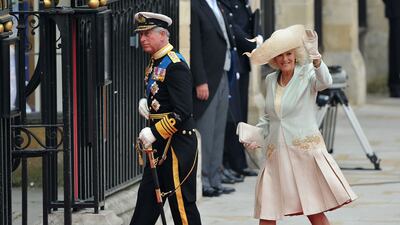
The queen consort, in a cream silk chiffon dress with a matching coat and a wide-brimmed straw hat by Philip Treacy, with King Charles at the wedding of Prince William and wife Katherine at Westminster Abbey on April 29, 2011. Getty Images -

The queen consort attends the London 2012 Olympics Equestrian Eventing at Greenwich Park wearing a blue animal print dress on July 6, 2011. Getty Images -
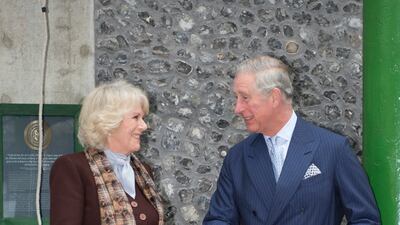
The queen consort, in a brown dress, cardigan and scarf, during a visit to Borough Market in London on February 13, 2013. Getty Images -
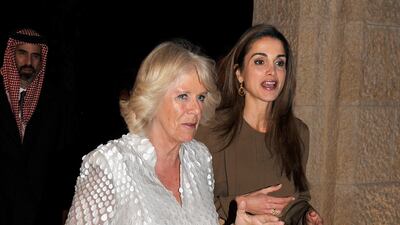
The queen consort, in a silvery blue sequinned top and trousers, with Queen Rania of Jordan arrive for a private dinner in Amman, Jordan on March 11, 2013. Getty Images -
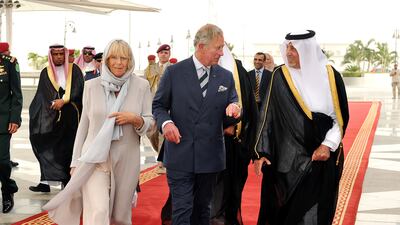
The queen consort and King Charles are met at Jeddah Airport by the Governor of Makkah Prince Khalid al Faisal on March 16, 2013. Getty Images -
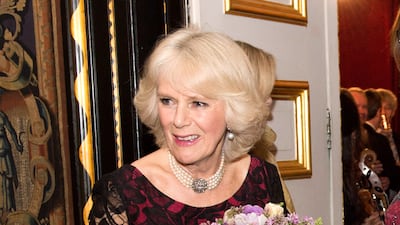
The queen consort, dressed in a black and red lace gown, attends a Gala Concert and Reception to mark the 125th Anniversary of ICAN at St James's Palace on January 21, 2014 in London. Getty Images -
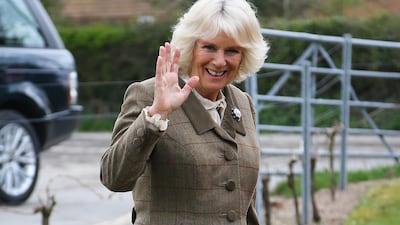
The queen consort wearing a tweed coat and black boots for an official visit to the new Wine Research Centre at Plumpton College on March 26, 2014. Getty Images -
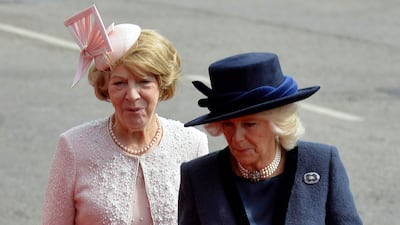
The queen consort, in a navy dress and coat, walks with Sabina Coyne during a ceremonial welcome at Windsor Castle on April 8, 2014. Getty Images -
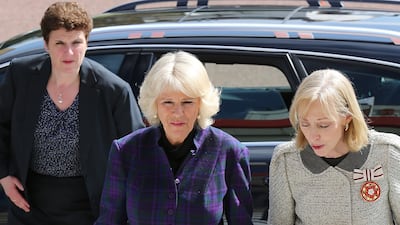
The queen consort, in a purple tartan jacket and skirt, attends an official visit to The London Book Fair at Earls Court on April 9, 2014. Getty Images -
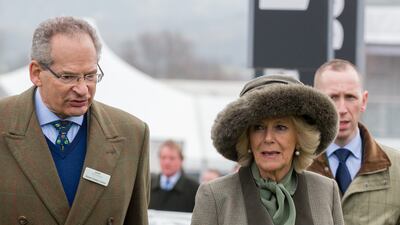
The queen consort in a tweed coat and fur hat at the Cheltenham racecourse on March 11, 2015. Getty Images -
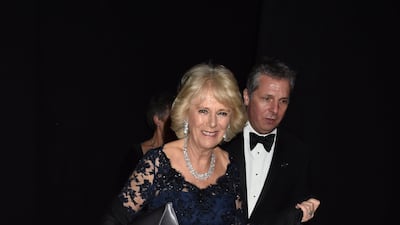
The queen consort wearing a black and navy lace gown for a reception for supporters of The British Asian Trust at Natural History Museum on February 2, 2016 in London. Getty Images -
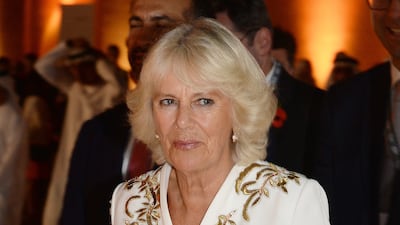
The queen consort, in a white and gold coat, in Al Ain on the second day of a Royal tour of the UAE on November 7, 2016. Getty Images -

The queen consort, in a light yellow salwar kameez with a parasol, tours the Humanitarian City in Dubai on November 8, 2016. Getty Images -

The queen consort, in a navy polka dot dress and coat, with King Charles attends a service for the VC and GC Association at St Martin-in-the-Fields in London on May 10, 2016. Getty Images -
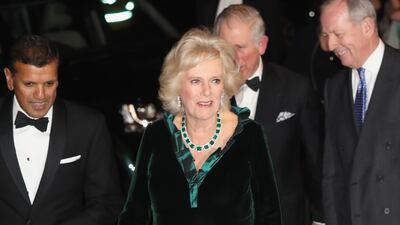
The queen consort, in a green velvet gown, attends a reception for supporters of The British Asian Trust on February 2, 2017 in London. Getty Images -
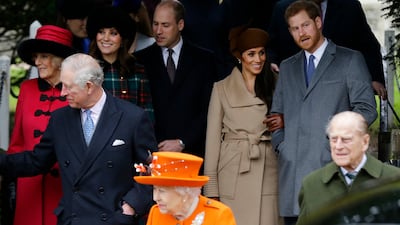
The queen consort, in a red coat and hat, attends a Christmas Day church service with King Charles, Queen Elizabeth II, Prince Philip, the Duchess of Cambridge, Prince William, Meghan Markle and Prince Harry on December 25, 2017. Getty Images -
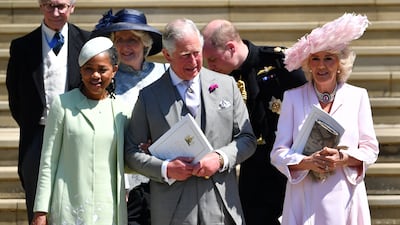
The queen consort, in a pink dress and a feathered hat, with Meghan's mother Doria Ragland and King Charles, leaves St George's Chapel in Windsor after the wedding of Prince Harry and Meghan on May 19, 2018. Getty Images -

The queen consort has an ice cream with Dame Judi Dench on July 24, 2018 in Cowes, Isle of Wight. Getty Images -
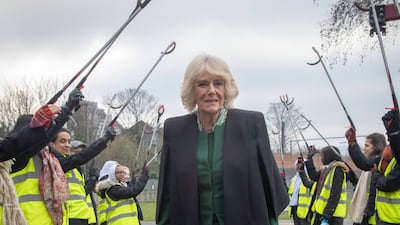
The queen consort, in a green dress and black cape, is greeted by a Guard of Honour during her visit to the Malmesbury Residents Association on January 23, 2019 in London. Getty Images -
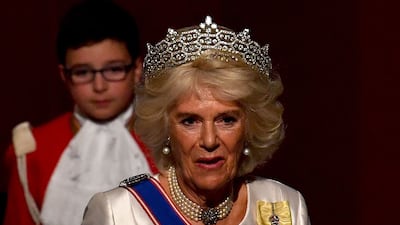
The queen consort, in a cream silk gown and tiara, attends the State Opening of Parliament in London on on October 14, 2019. AFP -
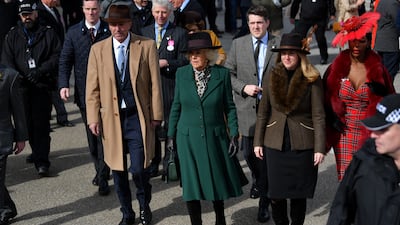
The queen consort, in a dark green coat, arrives for ladies day at Cheltenham Racecourse on March 11, 2020. Getty Images -
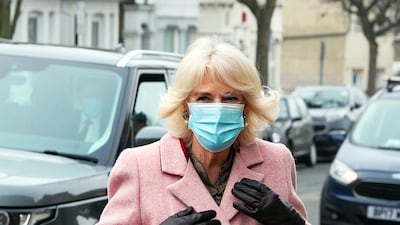
The queen consort, in a pink tweed coat and black boots, visits the Community Vaccination Centre at St Paul's Church on March 3, 2021 in Croydon, England. Getty Images -
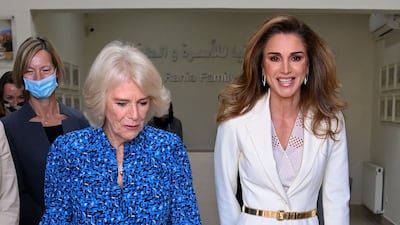
The queen consort, in a blue Fiona Clare dress, and Jordan's Queen Rania visit the Children Centre in Amman on November 16, 2021. Reuters -
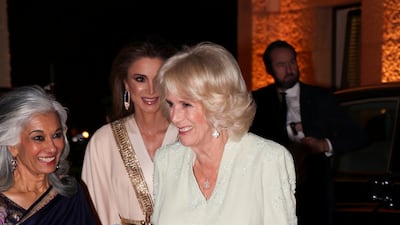
The queen consort, in a white Anna Valentine gown, attends a private dinner at the Al Husseiniya Palace in Amman on November 16, 2021. Reuters -

King Charles and the queen consort, wearing a green floral dress, at the of Umm Qais in Jordan on November 17, 2021. Getty Images -
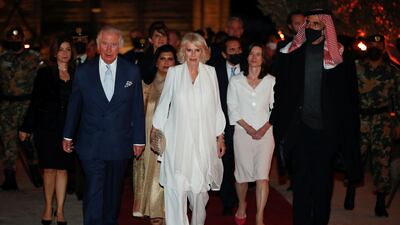
King Charles and the queen consort, who is dressed in white Anna Valentine piece, attend a centenary celebration of the founding of the Jordanian state, at the Jordan Museum in Amman on November 17, 2021. Reuters -
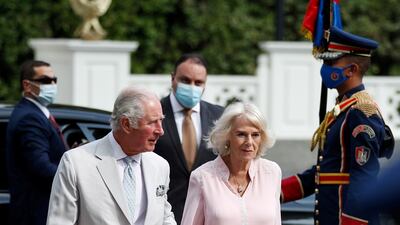
King Charles and the queen consort, who is wearing a light pink Anna Valentine outfit, arrive at the presidential palace in Cairo on November 18, 2021. Getty Images -
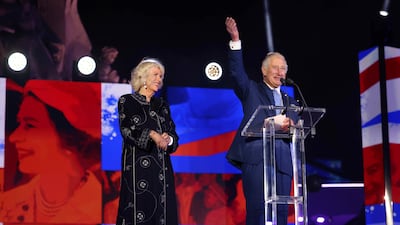
King Charles and the queen consort, wearing a wool and cashmere blend robe by Saudi designer Yahya Al Bishri, on stage during the platinum jubilee concert on June 4, 2022. AP -
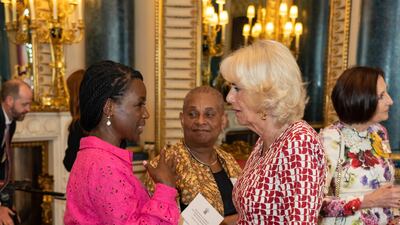
The queen consort, wearing a red and white Max Mara dress and Chanel pumps, at a reception at Buckingham Palace in London on June 9, 2022. PA -
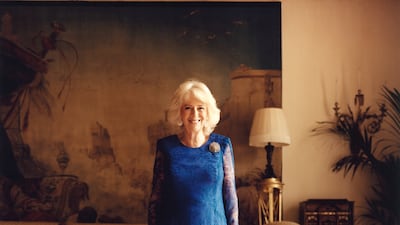
The queen consort, wearing a blue Bruce Oldfield gown, in photo taken for British Vogue at Clarence House for the magazine's July issue. AP -
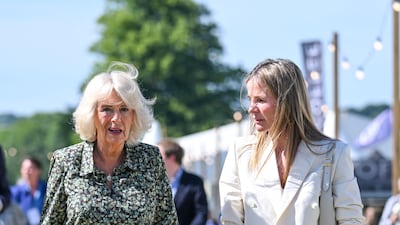
The queen consort, wearing a green floral Fiona Clare dress, walks with Lady Rothermere at the Daily Mail Chalke Valley History Festival on June 20, 2022. Getty Images -
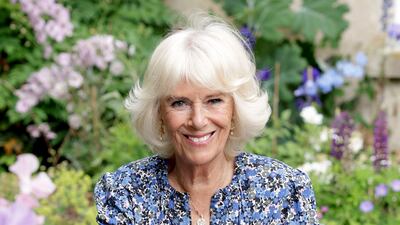
The queen consort, wearing a blue floral dress from Sophie Dundas, poses for an official portrait to mark her 75th birthday, at her home in Wiltshire, England. AP -
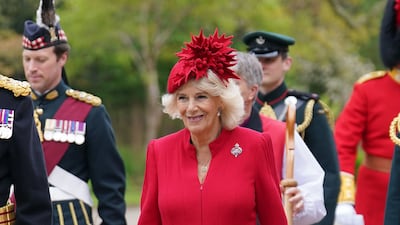
The queen consort in a red coat dress by Fiona Clare and a striking beret by Philip Treacy at a Royal Navy ceremony in April 2023. AFP -
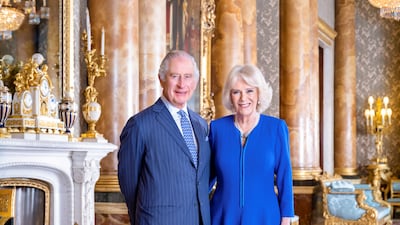
King Charles III and the queen consort, wearing a blue wool crepe coat dress by Fiona Clare, in a portrait released in April 2023 ahead of the coronation. Reuters


The late queen was set to host the white-tie gathering in March this year at Windsor Castle, but it was postponed due to Russian’s invasion of Ukraine.
It is usually held every December, but there were no receptions in 2020 and 2021 due to the Covid pandemic.
The reception traditionally includes a buffet supper and dancing.
Kate Middleton fashion on Royal Caribbean Tour — in pictures
-

The Duke and Duchess of Cambridge, wearing yellow Alessandra Rich, attend a departure ceremony at Lynden Pindling International Airport as they depart the Bahamas on March 26. PA -

The Duchess of Cambridge, in a pink Rixo dress, visits Daystar Evangelical Church Abaco in The Bahamas on March 26. PA -

The Duchess of Cambridge, wearing a satin blue Phillipa Lepley gown, attends a reception hosted by the Governor General of the Bahamas on March 25. PA -

The Duchess of Cambridge, wearing shorts and a polo shirt, onboard a boat from the Bahamas Platinum Jubilee Sailing Regatta at Montagu Bay on March 25. PA -

The Duchess of Cambridge, wearing pale green Self Portrait, visits Sybil Strachan Primary School in Nassau, Bahamas on March 25. Reuters -

The Duchess of Cambridge, wearing a tourquoise Emilia Wickstead dress, arrives for a private meeting with the Prime Minister of The Bahamas in Nassau on March 24. PA -

The Duchess of Cambridge, wearing a green Emilia Wickstead dress and Queen Elizabeth II's Hummingbird Brooch, stands with Jamaica's Minister of Foreign Affairs and Foreign Trade, Kamina Johnson Smith, as she departs Jamaica on March 24. AFP -

A closer look at the brooch the Duchess of Cambridge wore. Borrowed from the Queen, the piece was a gift from Jamaica to the monarch on the occasion of her golden jubilee in 2002. The hummingbird is Jamaica's national animal. AFP -

The Duchess of Cambridge, wearing white lace Alexander McQueen, attends the inaugural Commissioning Parade for service personnel completing the Caribbean Military Academy's Officer Training Programme in Kingston, Jamaica, on March 24. Reuters -

Catherine, Duchess of Cambridge wears a green bespoke Jenny Packham gown to attend a dinner hosted by the Governor General of Jamaica Patrick Allen and his wife Patricia in Kingston, Jamaica on March 23. Reuters -

Duchess of Cambridge, in a white Alexander McQueen suite and orange Ridley London blouse, attends a meeting with the Prime Minister of Jamaica on March 23. Getty Images -

Catherine, Duchess of Cambridge, wears a vintage striped Willow Hilson dress to visit Trench Town with Prince William on March 22. Reuters -

Duchess of Cambridge wears a yellow Roksanda dress to arrive in Kingston, Jamaica on March 22. Getty Images -

Catherine wears a vintage red YSL jacket and white trousers to board the plane in Belize on March 22. AFP -

Catherine in a metallic pink The Vampire's Wife dress to attend a reception in celebration of the queen's platinum jubilee at the Mayan ruins in Cahal Pech, Belize on March 21. Reuters -

Prince William and Duchess of Cambridge, wearing a white John Lewis T-shirt with G-Star Raw cargo pants, visit the ancient Mayan archaeological site and temple at Caracol, Belize on March 21. Reuters -

The duchess later added a Scotch and Soda belted safari shirt to visit the British Army Training Support Unit in the Chiquibul Forest Reserve, Belize. AFP -

Catherine wearing a blue patterned Tory Burch dress to attend Festival of Garifuna Culture in Hopkins, Belize on March 20. AP -

Catherine in a blue lace Jenny Packham dress to arrive in Belize to begin the Royal Caribbean Tour on on behalf of Queen Elizabeth II on March 19. Reuters



