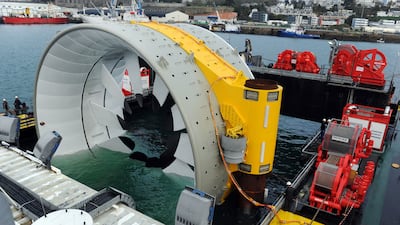
It is hoped the Mersey Tidal Power Project will be up and running within a decade. PA

Mersey plans for world's largest tidal power project inspired by South Korea


Soraya Ebrahimi
  • English
  • Arabic

South Korea is the inspiration for UK plans to build the world’s largest tidal power project on the River Mersey after an agreement was signed with the country’s state water company.

Korea Water Resources Corporation owns and operates the Sihwa Lake tidal range power programme, currently the world’s largest.

An agreement was signed on Tuesday between Liverpool City Region Mayor Steve Rotheram and Jeong Kyeong-yun, vice president of Korea Water Resources Corporation.

The agreement will allow for close co-operation between the two projects, with reciprocal visits and information sharing.

It is hoped the Mersey Tidal Power Project will generate enough energy to power up to one million homes, and it could be up and running within a decade.

“There are still huge technical and financial challenges to overcome but Mersey Tidal Power has the potential to provide enough clean, green, predictable energy to power up to one million homes for over a century,” said Mr Rotheram.

“The case for tidal has never been clearer — both for our economy and our planet, especially given the importance of energy security following [Russian President Vladimir] Putin’s murderous invasion of Ukraine.”

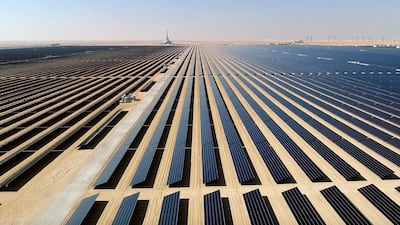
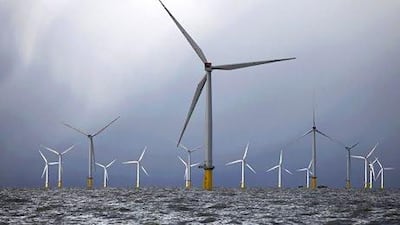
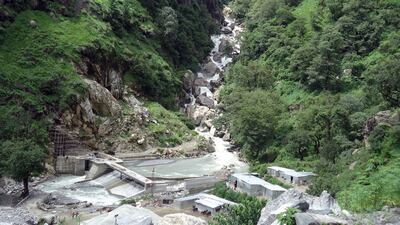
Green energy sources — in pictures

He added that the Liverpool region's target to reach net zero by 2040 — a decade before the national government — was an ambitious one, but “with an abundance of natural assets and advantages on our doorstep”, it is more than possible.

“We want to take inspiration from trailblazers around the world, who are already leading the way in tidal energy, and our agreement with K-water is a massive step on our journey to bringing this project to life,” Mr Rotheram continued.

“I am very hopeful that this partnership will flourish and, hopefully, help to position the Liverpool City Region as Britain’s Renewable Energy Coast.”


Mercer, the investment consulting arm of US services company Marsh & McLennan, expects its wealth division to at least double its assets under management (AUM) in the Middle East as wealth in the region continues to grow despite economic headwinds, a company official said.

Mercer Wealth, which globally has $160 billion in AUM, plans to boost its AUM in the region to $2-$3bn in the next 2-3 years from the present $1bn, said Yasir AbuShaban, a Dubai-based principal with Mercer Wealth.

Within the next two to three years, we are looking at reaching $2 to $3 billion as a conservative estimate and we do see an opportunity to do so,” said Mr AbuShaban.

Mercer does not directly make investments, but allocates clients’ money they have discretion to, to professional asset managers. They also provide advice to clients.

“We have buying power. We can negotiate on their (client’s) behalf with asset managers to provide them lower fees than they otherwise would have to get on their own,” he added.

Mercer Wealth’s clients include sovereign wealth funds, family offices, and insurance companies among others.

From its office in Dubai, Mercer also looks after Africa, India and Turkey, where they also see opportunity for growth.

Wealth creation in Middle East and Africa (MEA) grew 8.5 per cent to $8.1 trillion last year from $7.5tn in 2015, higher than last year’s global average of 6 per cent and the second-highest growth in a region after Asia-Pacific which grew 9.9 per cent, according to consultancy Boston Consulting Group (BCG). In the region, where wealth grew just 1.9 per cent in 2015 compared with 2014, a pickup in oil prices has helped in wealth generation.

BCG is forecasting MEA wealth will rise to $12tn by 2021, growing at an annual average of 8 per cent.

Drivers of wealth generation in the region will be split evenly between new wealth creation and growth of performance of existing assets, according to BCG.

Another general trend in the region is clients’ looking for a comprehensive approach to investing, according to Mr AbuShaban.

“Institutional investors or some of the families are seeing a slowdown in the available capital they have to invest and in that sense they are looking at optimizing the way they manage their portfolios and making sure they are not investing haphazardly and different parts of their investment are working together,” said Mr AbuShaban.

Some clients also have a higher appetite for risk, given the low interest-rate environment that does not provide enough yield for some institutional investors. These clients are keen to invest in illiquid assets, such as private equity and infrastructure.

“What we have seen is a desire for higher returns in what has been a low-return environment specifically in various fixed income or bonds,” he said.

“In this environment, we have seen a de facto increase in the risk that clients are taking in things like illiquid investments, private equity investments, infrastructure and private debt, those kind of investments were higher illiquidity results in incrementally higher returns.”

The Abu Dhabi Investment Authority, one of the largest sovereign wealth funds, said in its 2016 report that has gradually increased its exposure in direct private equity and private credit transactions, mainly in Asian markets and especially in China and India. The authority’s private equity department focused on structured equities owing to “their defensive characteristics.”

Updated: December 06, 2022, 10:52 PM