


A meteorite that crashed on to a driveway in Winchcombe, Gloucestershire last year contains important information about how oceans — and life — formed on Earth, scientists say.
Analysis of the space rock has revealed it contains 11 per cent water and 2 per cent carbon.
Findings show that asteroids played a key role in “delivering the ingredients needed to kickstart oceans and life on the early Earth”, said experts who published the discovery in the journal Science Advances.
Dr Luke Daly, a lecturer in planetary geoscience at the University of Glasgow and co-author of the paper, said: “One of the biggest questions asked of the scientific community is, 'how did we get here?'
“This analysis on the Winchcombe meteorite gives insight into how the Earth came to have water — the source of so much life.
“Researchers will continue to work on this specimen for years to come, unlocking more secrets into the origins of our solar system.”
Space tourism flights 'could soon cost as much as a sportscar' - in pictures
-

Private astronaut Hamish Harding at a Blue Origin event at The Arts Club Dubai. Photos: Ruel Pableo / The National -

Blue Origin's Logan Ware, Mr Harding and AzurX's Anna Hazlett on stage at the event. -

Mr Ware is Blue Origin’s commercial director for Europe, Middle East and Africa. -
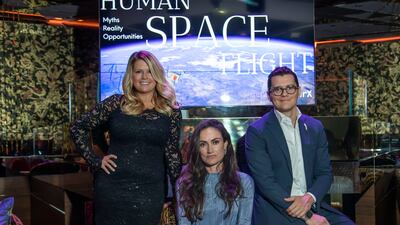
Blue Origin's Britt Tucker, Anna Hazlett and Mr Ware at the Human Space Flight event.


The Winchcombe meteorite belongs to a rare class of rocks known as carbonaceous chondrites.
Carbonaceous chondrites comprise about 3 per cent of all meteorites collected on Earth and are thought to contain unaltered chemicals from the formation of the solar system more than four billion years ago.
Dr Ashley King, of the Natural History Museum and co-author of the paper, said the analysis gave scientists “a tantalising glimpse back through time to the original composition of the solar system 4.6 billion years ago”.
Largest image by James Webb space telescope shows glittering galaxies - in pictures
-
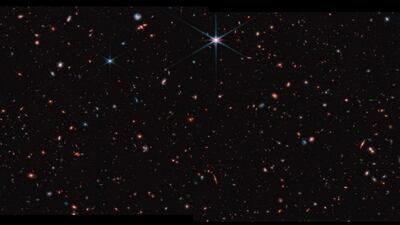
An enormous colour mosaic made up of images captured by the James Webb Space Telescope has been released. This image shows only a small part of the mosiac. All photos: Nasa -
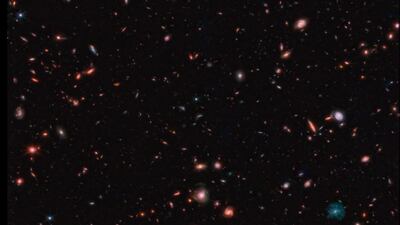
The mosaic is made up 690 individual frames taken with the telescope’s near infrared camera – an instrument that captures radiant energy from objects invisible to the human eye. -

Collectively known as Epoch 1, the image is the largest one yet made using data from the world’s largest space observatory. -
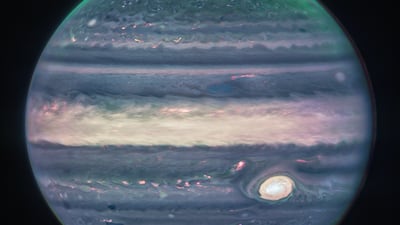
Jupiter as seen by the James Webb telescope. -
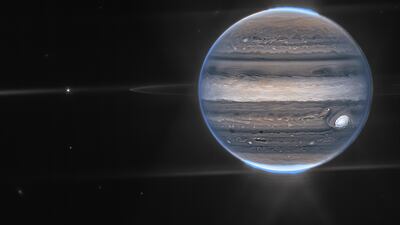
The James Webb telescope captures Jupiter.


Analysis of the meteorite sample revealed extraterrestrial water that the researchers say “is locked up in minerals that formed during chemical reactions between fluids and rocks on its parent asteroid in the earliest stages of the solar system”.
Chemical analysis revealed this water to closely resemble the composition of water on Earth.
The samples were also found to contain amino acids — molecules that are among the essential components for the origin of life.
The researchers said rapid recovery of the meteorite allowed experts to analyse its composition in pristine state.
Images of space – in pictures
-
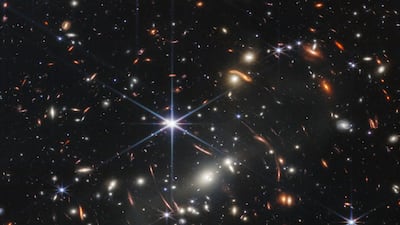
The galaxy cluster SMACS 0723 was captured by the James Webb Space Telescope. Photo: Nasa / AP -
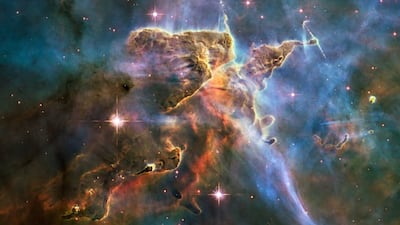
An interplanetary dust cloud. Photo: European Space Agency -
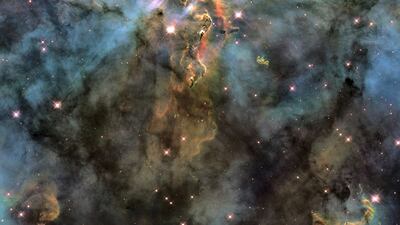
The Hubble captured chaotic activity at the top of a three-light-year-tall pillar of gas and dust that is being eaten away by light from bright stars nearby. Photo: Nasa -
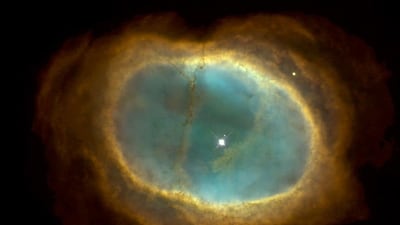
The Southern Ring Nebula is nearly half-a-light-year in diameter and 2,000 light years from Earth. Photo: AFP / Nasa / The Hubble Heritage Team -
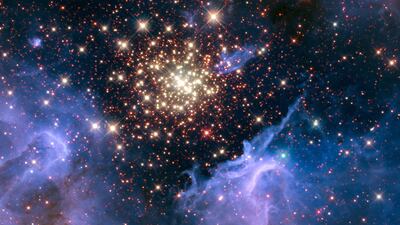
A cluster of young stars surrounded by clouds of interstellar gas and dust in nebula NGC 3603 in the Carina constellation. Reuters -
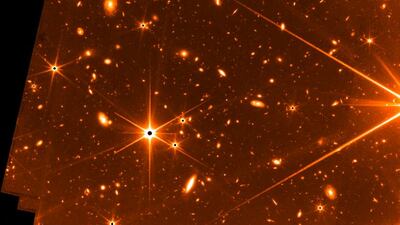
A Fine Guidance Sensor test image acquired in parallel with NIRCam imaging of the star HD147980. AFP -
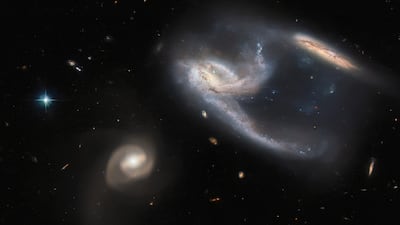
Rare image of three galaxies in one photo frame. Photo: Hubble Space Telescope / European Space Agency -
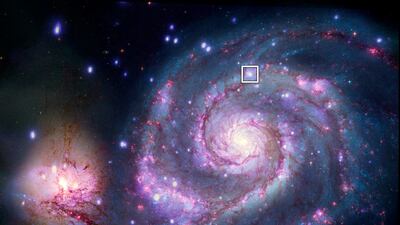
A composite image of M51 with X-rays from Chandra and optical light from Nasa's Hubble Space Telescope contains a box that marks the location of a possible planet. Photo: Nasa -
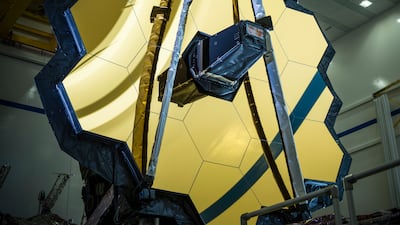
The main mirror assembly of the James Webb Space Telescope during testing at a Northrop Grumman complex in Redondo Beach, California. Photo: Nasa / AP -
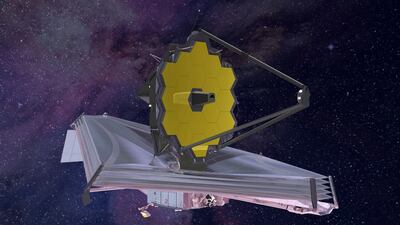
An artist's rendering of the James Webb Space Telescope. Photo: Northrop Grumman / Nasa / AP


“We’re still reeling from our good fortune to have such an important meteorite fall in the UK, and are so grateful to the local community for their donations and the UK’s cosmochemistry network for coming together to produce this extensive study," said Dr Natasha Almeida from the Natural History Museum, another co-author.
“The combination of such a quick recovery, careful collection and our ongoing curation of Winchcombe in a nitrogen atmosphere means this incredibly fresh specimen will remain one of the most pristine meteorites in collections worldwide.”

