UK banks have warned against a reported multibillion-pound tax raid on sector profits which is reportedly being planned by new Chancellor of the Exchequer Jeremy Hunt.
Shares in Britain's biggest lenders fell on Wednesday in response to the rumoured levies, as industry executives said any tax rises would challenge competitiveness.
Shares in Lloyds Banking Group, the UK’s biggest lender, were down about 3.5 per cent, while fellow British lending giants NatWest and Barclays saw their shares slip by about 1.5 per cent.
Windfall taxes on the banking sector would be “ludicrous” and further deter international investment into the UK economy, according to analyst Michael Hewson of CMC Markets.
Mr Hunt is thought to be weighing up new tax measures in anticipation that high-street banks will report big profits for the year, the Financial Times reported.
Higher interest rates mean that lenders are raking in unusually high earnings from customers paying back more on their debt, yet find the prospect of redistributing the profits via taxation unpalatable.
Mr Hunt has said he is not opposed to windfall taxes as the country fights rampant inflation and the fallout from the now-discredited mini-budget that prompted markets into a selloff and the pound to slide.
The Office for Budget Responsibility had indicated that Mr Hunt is looking for up to £30 billion ($33.9bn) to show markets he can balance the budget and bring debt down.
Mr Hunt stepped into the finance job after Kwasi Kwarteng was fired for the mini-budget that caused markets to panic, hitting pension funds and forcing mortgage rates to rise.
He is now looking to develop a new budget to tackle the crises hitting Britain.
Mr Hunt has confirmed corporation tax will rise to 25 per cent next April but he appeared to be undecided on whether to keep the banking surcharge, currently at 8 per cent.
If he cuts the surcharge to 5 per cent, that means an effective rate of 30 per cent which could raise £500 million per year, according to Financial Times sources.
Banks warn taxes deter foreign investment
Mr Hewson criticised the potential “short-sighted” behaviour of the chancellor to impose heavier levies on banks when the economy is “crying out” for international investment.
“This comes across as incredibly short-sighted at a time when the government should be looking to encourage investment into the UK economy,“ he said.
"It is true that banks look set to make higher profits from the rise in interest rates as well as reserves from overnight deposits held overnight at the Bank of England, but they are also likely to have to make further provision for impairments as the UK economy deteriorates over the next 12 months.
"It seems ludicrous to double down on windfall taxes on a sector that dares to make too much in the way of profit. It is also an odd way to encourage longer term investment into the UK economy, which is crying out for inward investment.”
David Postings, chief executive of trade body UK Finance, urged the government “to not put at risk the competitiveness of the UK’s banking and finance industry”.
“Two thirds of those jobs are outside London. The industry pays a higher rate of taxation overall than any other sector because of the bank surcharge and the bank levy,” he said.
“The government’s decision to increase corporation tax, when it was originally planned, included a reduction in the surcharge levied on banks.”
The Treasury is due to announce what will happen to the bank surcharge when its medium-term fiscal plan is unveiled on October 31.
Ben Zaranko, from the Institute for Fiscal Studies, said Mr Hunt is likely to want “a combination of tax rises, savings on social security and squeezing public services a bit more to make the numbers add up”.
“The only one not already done is [value-added tax], so that would be an obvious place to look, but it would obviously add to the cost of living squeeze so might not be incredibly popular,” Mr Zaranko said.
Mr Hunt has warned of hard decisions coming as the budget approaches.
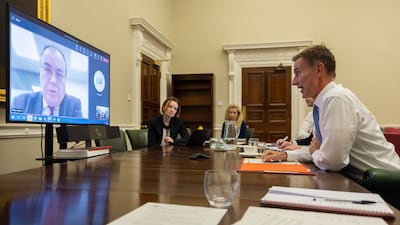
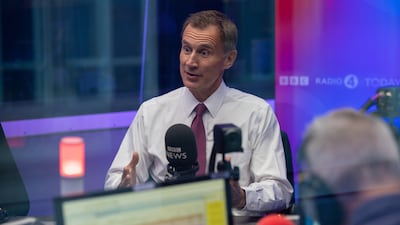
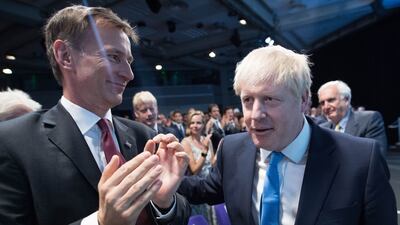
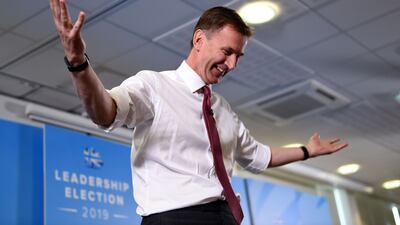
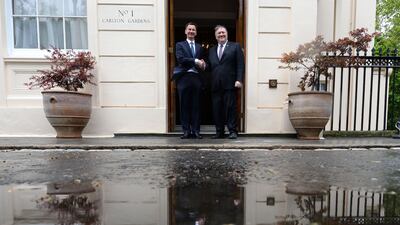
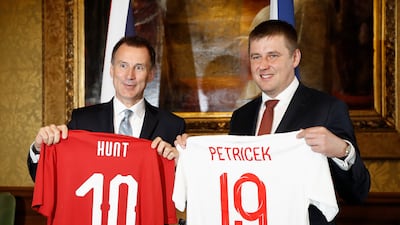
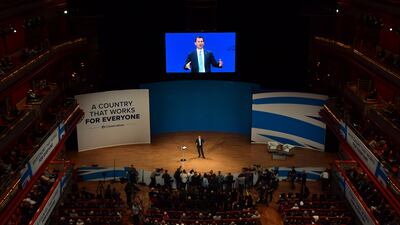
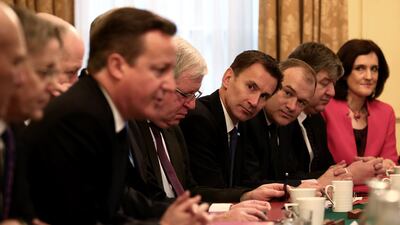
UK Chancellor Jeremy Hunt - in pictures
TO%20CATCH%20A%20KILLER
%3Cp%3E%3Cstrong%3EDirector%3A%20%3C%2Fstrong%3EDamian%20Szifron%3C%2Fp%3E%0A%3Cp%3E%3Cstrong%3EStars%3A%3C%2Fstrong%3E%20Shailene%20Woodley%2C%20Ben%20Mendelsohn%2C%20Ralph%20Ineson%3C%2Fp%3E%0A%3Cp%3E%3Cstrong%3ERating%3A%3C%2Fstrong%3E%202%2F5%3C%2Fp%3E%0A
MATCH INFO
Southampton 0
Manchester City 1 (Sterling 16')
Man of the match: Kevin de Bruyne (Manchester City)
Analysis
Members of Syria's Alawite minority community face threat in their heartland after one of the deadliest days in country’s recent history. Read more
Zayed Sustainability Prize
In numbers: China in Dubai
The number of Chinese people living in Dubai: An estimated 200,000
Number of Chinese people in International City: Almost 50,000
Daily visitors to Dragon Mart in 2018/19: 120,000
Daily visitors to Dragon Mart in 2010: 20,000
Percentage increase in visitors in eight years: 500 per cent
Mercer, the investment consulting arm of US services company Marsh & McLennan, expects its wealth division to at least double its assets under management (AUM) in the Middle East as wealth in the region continues to grow despite economic headwinds, a company official said.
Mercer Wealth, which globally has $160 billion in AUM, plans to boost its AUM in the region to $2-$3bn in the next 2-3 years from the present $1bn, said Yasir AbuShaban, a Dubai-based principal with Mercer Wealth.
“Within the next two to three years, we are looking at reaching $2 to $3 billion as a conservative estimate and we do see an opportunity to do so,” said Mr AbuShaban.
Mercer does not directly make investments, but allocates clients’ money they have discretion to, to professional asset managers. They also provide advice to clients.
“We have buying power. We can negotiate on their (client’s) behalf with asset managers to provide them lower fees than they otherwise would have to get on their own,” he added.
Mercer Wealth’s clients include sovereign wealth funds, family offices, and insurance companies among others.
From its office in Dubai, Mercer also looks after Africa, India and Turkey, where they also see opportunity for growth.
Wealth creation in Middle East and Africa (MEA) grew 8.5 per cent to $8.1 trillion last year from $7.5tn in 2015, higher than last year’s global average of 6 per cent and the second-highest growth in a region after Asia-Pacific which grew 9.9 per cent, according to consultancy Boston Consulting Group (BCG). In the region, where wealth grew just 1.9 per cent in 2015 compared with 2014, a pickup in oil prices has helped in wealth generation.
BCG is forecasting MEA wealth will rise to $12tn by 2021, growing at an annual average of 8 per cent.
Drivers of wealth generation in the region will be split evenly between new wealth creation and growth of performance of existing assets, according to BCG.
Another general trend in the region is clients’ looking for a comprehensive approach to investing, according to Mr AbuShaban.
“Institutional investors or some of the families are seeing a slowdown in the available capital they have to invest and in that sense they are looking at optimizing the way they manage their portfolios and making sure they are not investing haphazardly and different parts of their investment are working together,” said Mr AbuShaban.
Some clients also have a higher appetite for risk, given the low interest-rate environment that does not provide enough yield for some institutional investors. These clients are keen to invest in illiquid assets, such as private equity and infrastructure.
“What we have seen is a desire for higher returns in what has been a low-return environment specifically in various fixed income or bonds,” he said.
“In this environment, we have seen a de facto increase in the risk that clients are taking in things like illiquid investments, private equity investments, infrastructure and private debt, those kind of investments were higher illiquidity results in incrementally higher returns.”
The Abu Dhabi Investment Authority, one of the largest sovereign wealth funds, said in its 2016 report that has gradually increased its exposure in direct private equity and private credit transactions, mainly in Asian markets and especially in China and India. The authority’s private equity department focused on structured equities owing to “their defensive characteristics.”
Five films to watch
Castle in the Sky (1986)
Grave of the Fireflies (1988)
Only Yesterday (1991)
Pom Poki (1994)
The Tale of Princess Kaguya (2013)
Mohammed bin Zayed Majlis
Who's who in Yemen conflict
Houthis: Iran-backed rebels who occupy Sanaa and run unrecognised government
Yemeni government: Exiled government in Aden led by eight-member Presidential Leadership Council
Southern Transitional Council: Faction in Yemeni government that seeks autonomy for the south
Habrish 'rebels': Tribal-backed forces feuding with STC over control of oil in government territory
Zayed Sustainability Prize
Timeline
2012-2015
The company offers payments/bribes to win key contracts in the Middle East
May 2017
The UK SFO officially opens investigation into Petrofac’s use of agents, corruption, and potential bribery to secure contracts
September 2021
Petrofac pleads guilty to seven counts of failing to prevent bribery under the UK Bribery Act
October 2021
Court fines Petrofac £77 million for bribery. Former executive receives a two-year suspended sentence
December 2024
Petrofac enters into comprehensive restructuring to strengthen the financial position of the group
May 2025
The High Court of England and Wales approves the company’s restructuring plan
July 2025
The Court of Appeal issues a judgment challenging parts of the restructuring plan
August 2025
Petrofac issues a business update to execute the restructuring and confirms it will appeal the Court of Appeal decision
October 2025
Petrofac loses a major TenneT offshore wind contract worth €13 billion. Holding company files for administration in the UK. Petrofac delisted from the London Stock Exchange
November 2025
180 Petrofac employees laid off in the UAE
The biog
Marital status: Separated with two young daughters
Education: Master's degree from American Univeristy of Cairo
Favourite book: That Is How They Defeat Despair by Salwa Aladian
Favourite Motto: Their happiness is your happiness
Goal: For Nefsy to become his legacy long after he is gon
Secret Nation: The Hidden Armenians of Turkey
Avedis Hadjian, (IB Tauris)
Tonight's Chat on The National
Tonight's Chat is a series of online conversations on The National. The series features a diverse range of celebrities, politicians and business leaders from around the Arab world.
Tonight’s Chat host Ricardo Karam is a renowned author and broadcaster who has previously interviewed Bill Gates, Carlos Ghosn, Andre Agassi and the late Zaha Hadid, among others.
Intellectually curious and thought-provoking, Tonight’s Chat moves the conversation forward.
Facebook | Our website | Instagram
The biog
Name: Salvador Toriano Jr
Age: 59
From: Laguna, The Philippines
Favourite dish: Seabass or Fish and Chips
Hobbies: When he’s not in the restaurant, he still likes to cook, along with walking and meeting up with friends.
What vitamins do we know are beneficial for living in the UAE
Vitamin D: Highly relevant in the UAE due to limited sun exposure; supports bone health, immunity and mood.
Vitamin B12: Important for nerve health and energy production, especially for vegetarians, vegans and individuals with absorption issues.
Iron: Useful only when deficiency or anaemia is confirmed; helps reduce fatigue and support immunity.
Omega-3 (EPA/DHA): Supports heart health and reduces inflammation, especially for those who consume little fish.
Company Fact Box
Company name/date started: Abwaab Technologies / September 2019
Founders: Hamdi Tabbaa, co-founder and CEO. Hussein Alsarabi, co-founder and CTO
Based: Amman, Jordan
Sector: Education Technology
Size (employees/revenue): Total team size: 65. Full-time employees: 25. Revenue undisclosed
Stage: early-stage startup
Investors: Adam Tech Ventures, Endure Capital, Equitrust, the World Bank-backed Innovative Startups SMEs Fund, a London investment fund, a number of former and current executives from Uber and Netflix, among others.
The Byblos iftar in numbers
29 or 30 days – the number of iftar services held during the holy month
50 staff members required to prepare an iftar
200 to 350 the number of people served iftar nightly
160 litres of the traditional Ramadan drink, jalab, is served in total
500 litres of soup is served during the holy month
200 kilograms of meat is used for various dishes
350 kilograms of onion is used in dishes
5 minutes – the average time that staff have to eat