


The statement from Buckingham Palace saying that Britain’s Queen Elizabeth II has been placed under medical supervision at Balmoral, her Scottish residence, means that the Platinum monarch is under the continual care of a team lead by her personal doctor.
Members of the royal family flew to be with her on Thursday, as leading figures expressed concern for her as her condition had deteriorated beyond the “mobility” issues she has been experiencing in recent months.
At 96, she has spent 70 years on the throne, the longest of any British monarch. The short note from Buckingham Palace offered no details on her condition but one person will be at the centre of all medical calls.
Sir Huw Thomas, head of the medical household and physician to the queen, is the man in charge of looking after the monarch's health.
Serving in his position since 2014, Sir Huw was knighted last year after being invested with the Insignia of a Knight Commander of the Royal Victorian Order.
The honour was seen as a personal thank you to Sir Huw for the care he has provided for the queen and the royal family.
-

Media gather outside Balmoral Castle in Scotland, where the UK's Queen Elizabeth II is under medical supervision. PA -

Buckingham Palace says the monarch's doctors are concerned about her health. PA -
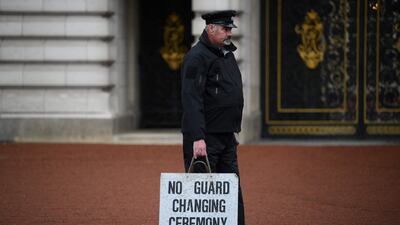
A member of staff crosses the courtyard at Buckingham Palace in London. AFP -

People gather outside the palace after the announcement. Bloomberg -
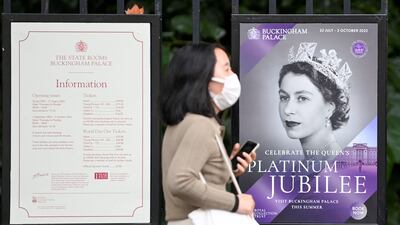
Queen Elizabeth is the longest-reigning monarch in the UK's history. Reuters -

Members of the public outside Balmoral as concerns grow over the queen's health. Reuters -
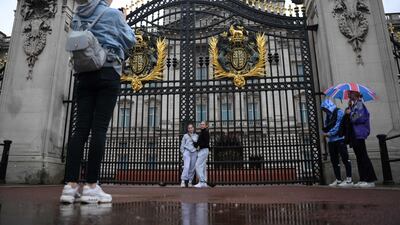
Tourists at Buckingham Palace. AFP


Sir Huw, a professor of gastrointestinal genetics at Imperial College London’s department of surgery and cancer, has previously spoken of how grateful he was to be recognised for his service.
“It’s been a busy couple of years in this role, so I feel very grateful to have been recognised for my service to date,” he said.
“You very much become part of that organisation and become the personal doctor to the principal people in it, who are patients just like other patients.
“With the pandemic, the key priority of the medical household is trying to make sure that the people under its care are kept safe.”
Sir Huw has also been involved in delivering some of the younger members of the royal family.
He was part of the team who looked after Kate, the Duchess of Cambridge, when she gave birth to daughter Charlotte in 2015 and her youngest son Louis in 2018 at St Mary’s Hospital, Paddington, alongside Guy Thorpe-Beeston, the surgeon gynaecologist to the royal household, and consultant gynaecologist Alan Farthing, surgeon gynaecologist to the queen.

