

Conservative leadership candidate Liz Truss’s campaign is airing details of a possible cut in VAT to address the cost-of-living crisis as she also pushes for increases in defence spending.
Ms Truss is the favourite to win the vote of Conservative party members in the race with Rishi Sunak to become party leader and prime minister.
Mr Sunak's team, who has said he will provide additional support for the most vulnerable, attacked Ms Truss's plans to cut value added tax, saying it would be “regressive” and cost tens of billions of pounds
As the UK reels from runaway inflation, the departing prime minister Boris Johnson said that the winner of the leadership race would announce “another huge package of financial support”.
Mr Johnson acknowledged the next few months will be difficult — “perhaps very tough” — as “eye-watering energy bills take their toll”.
“Next month — whoever takes over from me — the government will announce another huge package of financial support,” he said.
A 5 per cent reduction in VAT across the board is being considered by Ms Truss as one of a series of possible strategies to ease the cost-of-living crisis if she wins the race, according to The Sunday Telegraph.
-
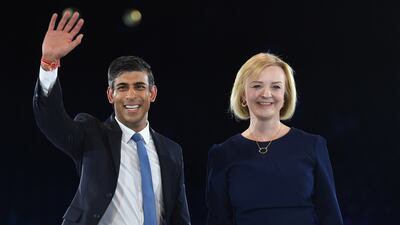
Candidates Rishi Sunak and Liz Truss at the Conservative Party leadership election hustings at Wembley Arena, London. This was the final hustings attended by Tory Party members who will vote for the new leader and next prime minister. EPA -
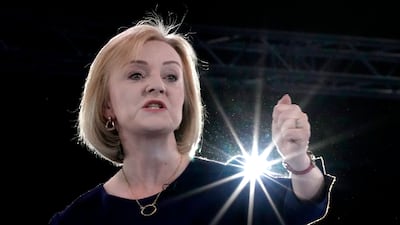
Liz Truss addresses Conservative Party members at Wembley Arena. AP -
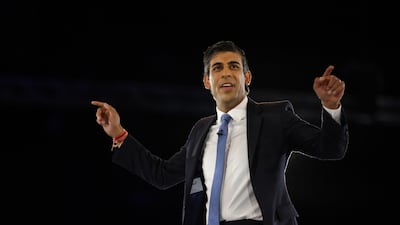
Mr Sunak puts forward his case to be leader while speaking at Wembley Arena. Bloomberg -
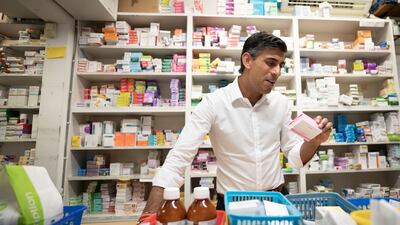
Mr Sunak visits his family's old business, Bassett Pharmacy in Southampton, while on the campaign trail. Reuters -

Ms Truss speaks to staff at Condimentum Ltd at the Food Enterprise Park in Norwich. Getty Images -
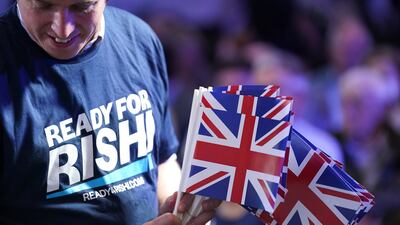
A Rishi Sunak supporter at a hustings event in Norfolk. PA -
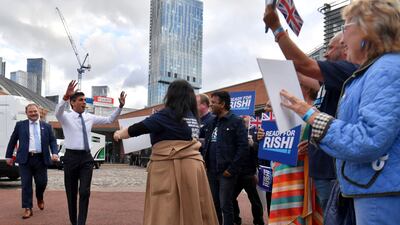
Mr Sunak greets people at a leadership hustings in Manchester. Bloomberg -
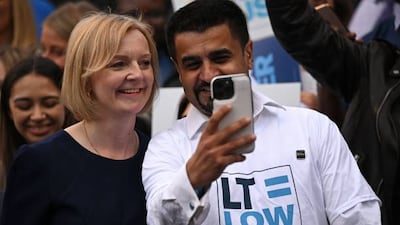
Ms Truss poses for a selfie with a supporter as she arrives for the event in Manchester. Getty -
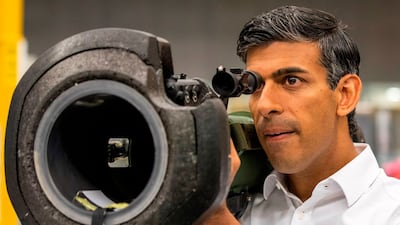
Rishi Sunak looks through the sights of an anti-tank missile launcher, supplied to Ukraine, during a visit to the Thales Defence System plant in Belfast, Northern Ireland. AP -
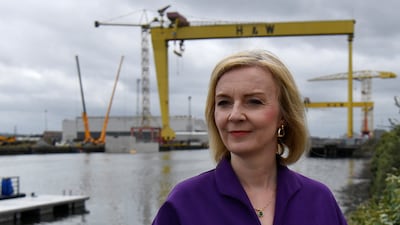
Liz Truss at a Conservative Party leadership campaign event in Belfast. Getty -
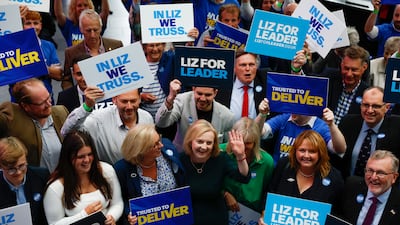
Liz Truss meets supporters before a hustings in Perth, Scotland. Getty -
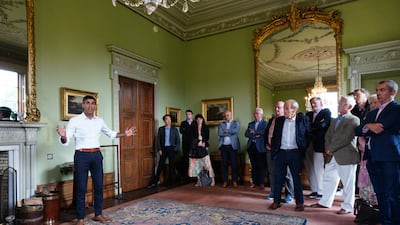
Rishi Sunak speaks during a campaign visit to Cluny Castle in Inverurie, Scotland. Getty -
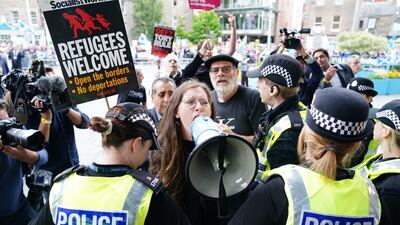
Police hold back protesters outside Perth Concert Hall, Scotland, where Conservative leadership candidates Liz Truss and Rishi Sunak were speaking. PA -
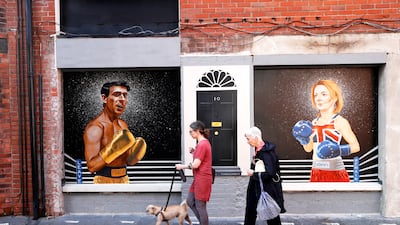
A mural showing the two leadership contestants appears on a wall in Belfast, Northern Ireland. AP -
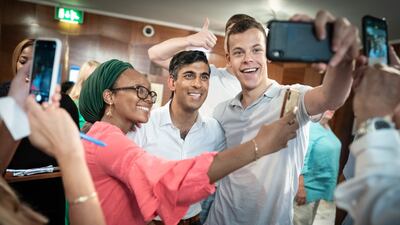
Rishi Sunak during a visit to St John's Wood Synagogue, north London. PA -
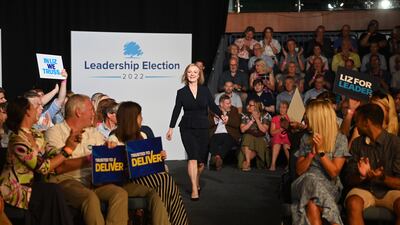
Liz Truss at the Conservative Party leadership election hustings in Cheltenham. EPA -
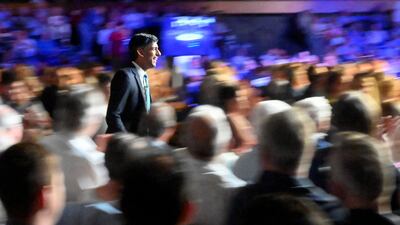
Rishi Sunak during a hustings event in Cheltenham. Reuters -
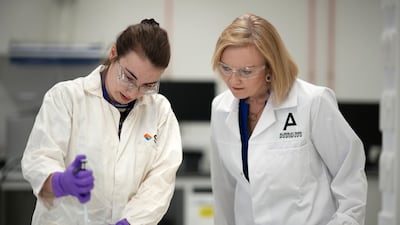
Liz Truss speaks to scientists during a campaign visit to a life sciences laboratory at Alderley Park in Manchester. PA -
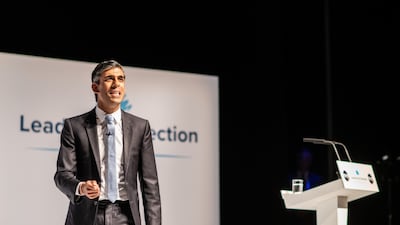
Rishi Sunak during a campaign hustings in Darlington, England. Bloomberg -
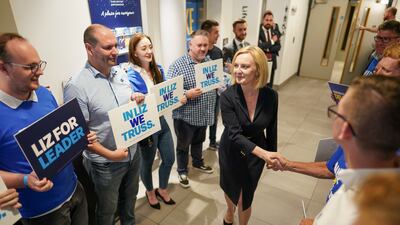
Liz Truss meets party members before she speaks at the Darlington campaign hustings. Getty -
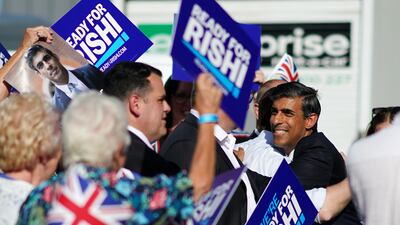
Rishi Sunak arrives for the Darlington hustings. Getty -
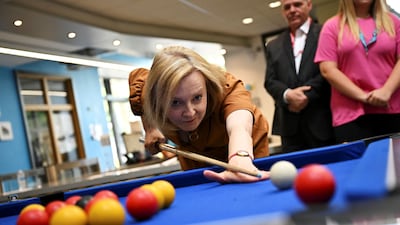
Liz Truss plays pool during a visit to the Onside Future Youth Zone in London. Reuters -
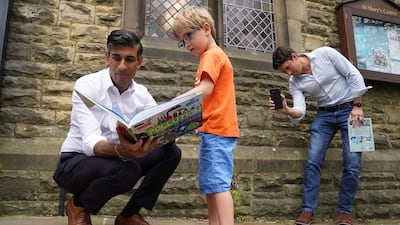
Rishi Sunak looks at a book with Teddy Openshaw, 4, as his father, Henry, looks on after a Conservative leadership campaign event in Ribble Valley, Lancashire, England. Getty -
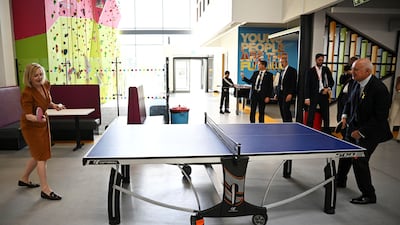
Liz Truss plays table tennis with former Conservative party leader Iain Duncan Smith during a visit to the Onside Future Youth Zone in London. Reuters -
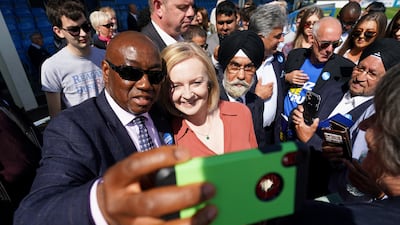
Liz Truss with supporters at a campaign event in Solihull, England. Reuters -
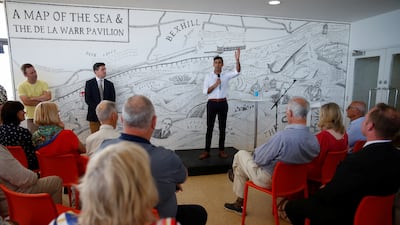
Rishi Sunak attends a campaign event held by his party in Bexhill, England. Reuters -
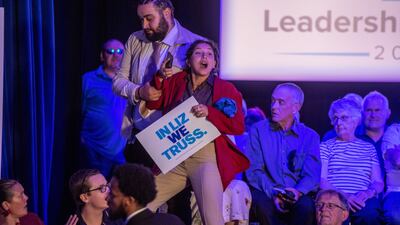
A protester is removed as Ms Truss speaks during the Conservative Party leadership hustings in Eastbourne. Bloomberg -
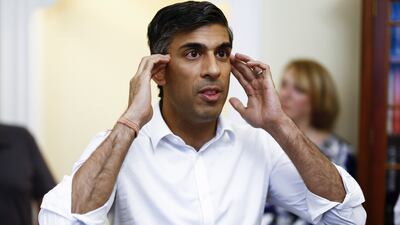
Mr Sunak speaks at an event in Edinburgh. PA -
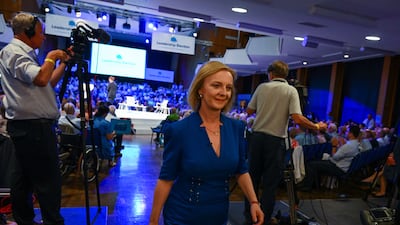
Ms Truss leaves the hall in Exeter, south-west England, after her speech to a Conservative Party membership hustings. Getty -
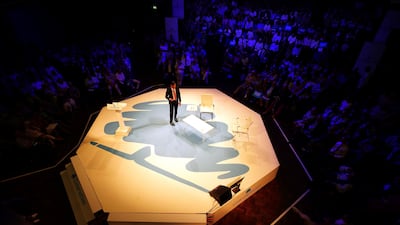
Mr Sunak speaks at the University of Exeter in south-west England. AP -

A supporter of Ms Truss at a Conservative Party hustings in Exeter, south-west England. Getty -
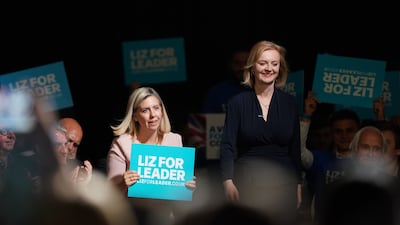
Ms Truss at a hustings event at the Pavilion conference centre at Elland Road in Leeds. PA -
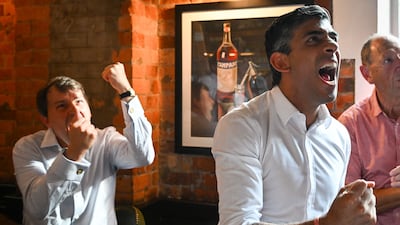
Mr Sunak in Salisbury watching a screening of the Uefa Women's Euro 2022 final between England and Germany at Wembley stadium. England won 2-1 in extra time. PA -
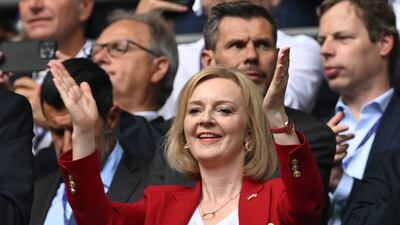
Ms Truss before the Uefa Women's Euro 2022 final at Wembley stadium in London. AFP -
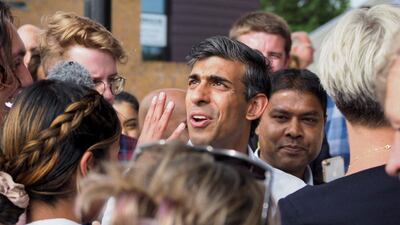
Mr Sunak meets Tory members at Fontwell Park Racecourse. Reuters -
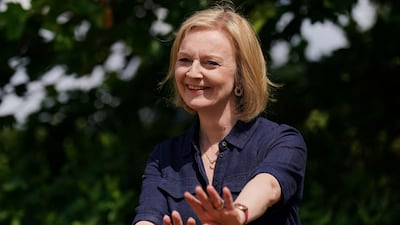
Ms Truss at an event in Dereham, Norfolk. AFP -
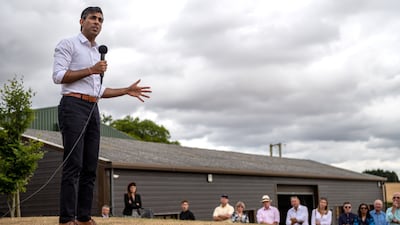
Mr Sunak in Ropley, near Winchester, Hampshire. PA -
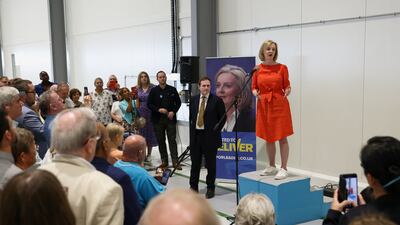
Ms Truss speaks as Conservative Member of Parliament Tom Tugendhat looks on at a Conservative Party leadership campaign event at Biggin Hill Airport. Getty -
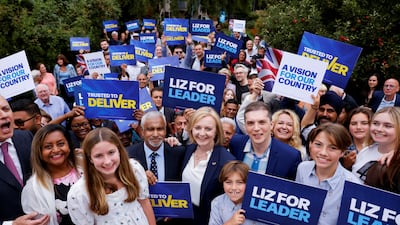
Ms Truss on the campaign trail in Woodford Green, on the outskirts of London. Reuters -
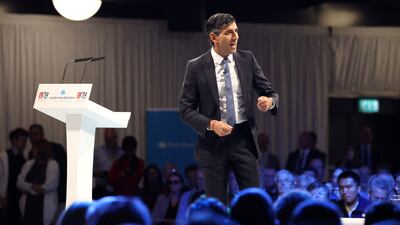
Mr Sunak at a Conservative Party hustings event in Leeds. AFP -
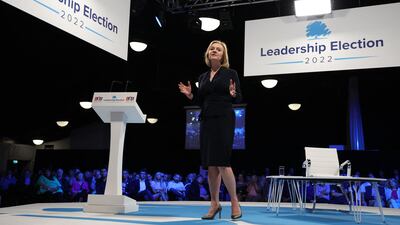
Ms Truss speaks at the hustings event in Leeds. AFP -
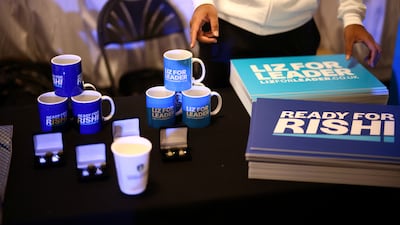
Sunak and Truss-themed souvenirs at a stand during the Leeds hustings event. Reuters -
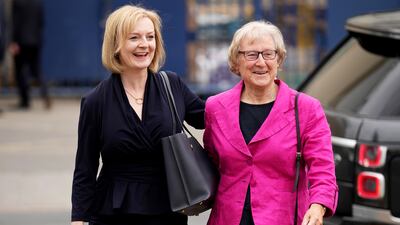
Ms Truss, and her mother, Patricia, arrive for the hustings event. Getty -
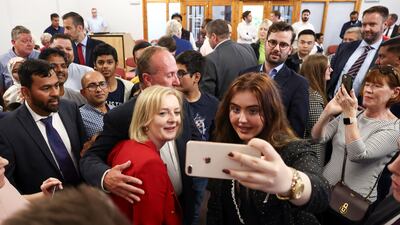
Ms Truss poses with supporters in Morley, England. Getty -

Mr Sunak delivers a speech during a campaign event in Newmarket. AFP -
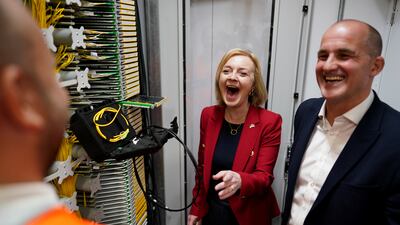
Ms Truss and Jake Berry, MP for Rossendale and Darwen, during a visit to a broadband interchange company in Leeds. PA -
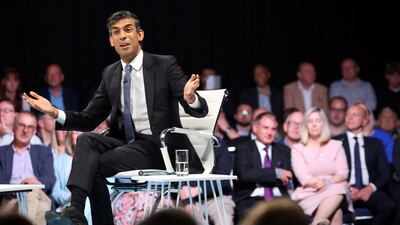
Mr Sunak answers questions as he takes part in the hustings in Leeds. AFP -
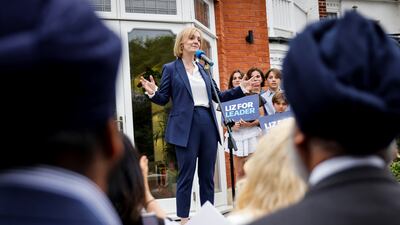
Ms Truss speaks at an event at a private house with members of the Conservative Party in Woodford Green. PA -
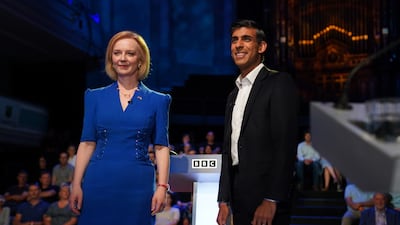
Ms Truss and Mr Sunak pose for a picture before a BBC leadership debate at Victoria Hall in Hanley. Getty -
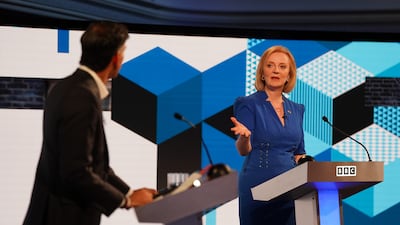
Ms Truss addresses Mr Sunak during the televised debate. Getty -
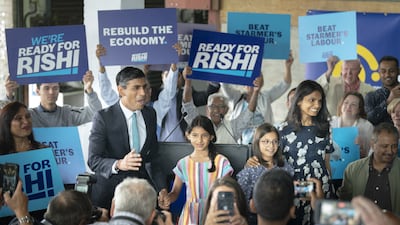
Mr Sunak, with daughters Krishna and Anushka, and wife Akshata Murthy, during a visit to Vaculug tyre specialists at Gonerby Hill Foot, Grantham. PA -
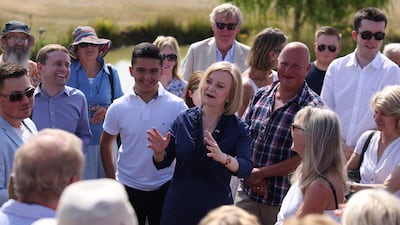
Ms Truss speaks to people while campaigning in Marden. Getty -
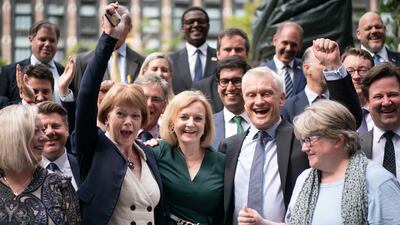
Ms Truss celebrates after being named, along with Mr Sunak, one of the final two candidates in the race to become the UK's next prime minister. PA -
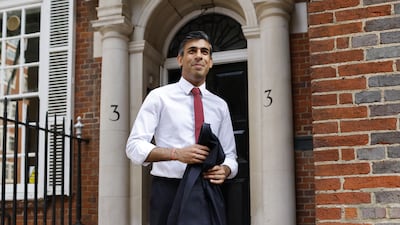
Mr Sunak outside his campaign office in central London. EPA -
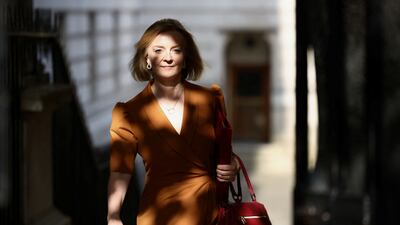
Ms Truss outside Downing Street in London. Reuters -
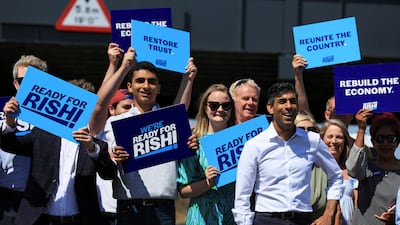
Rishi Sunak meets Conservative Party members and activists, in Teesport, Redcar. Reuters -
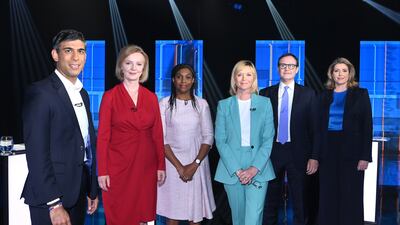
Conservative leadership candidates Mr Sunak, Ms Truss, Kemi Badenoch, presenter Julie Etchingham, Tom Tugendhat and Penny Mordaunt during 'Britain's Next Prime Minister: The ITV Debate' in London. EPA -
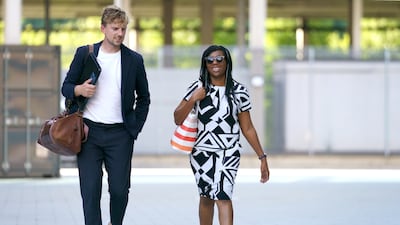
Ms Badenoch arrives at Here East studios in Stratford, east London, before a live television debate. PA -
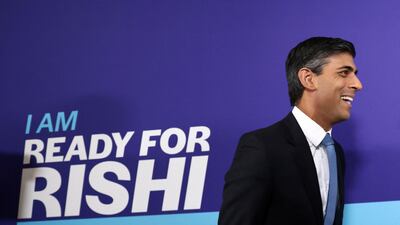
Mr Sunak arrives at a London event to launch his campaign to be the next Conservative Party leader and UK prime minister. Reuters -
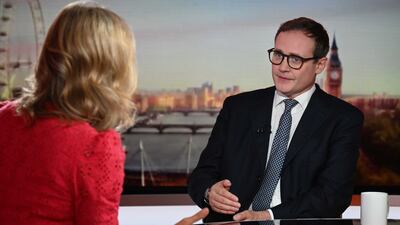
Mr Tugendhat appears on the BBC One current affairs programme, 'Sunday Morning'. PA -
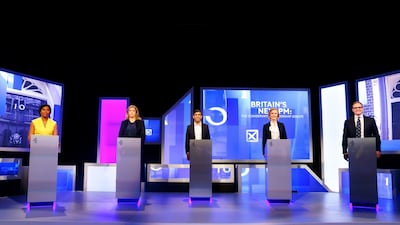
Ms Badenoch, Ms Mordaunt, Mr Sunak, Ms Truss and Mr Tugendhat before the live television debate. PA -
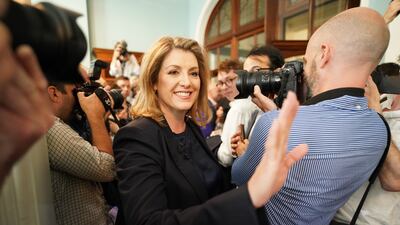
Ms Mordaunt arrives for the launch of her Conservative leadership campaign at the Cinnamon Club in Westminster. PA -
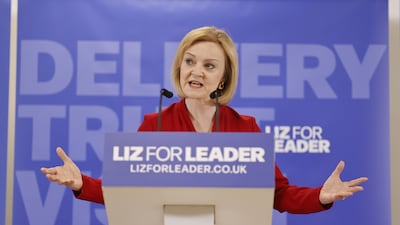
Ms Truss speaks at the launch event for her campaign to become the next leader of the Tory Party and Britain's prime minister, in London. EPA -

Chancellor of the Exchequer Nadhim Zahawi, one of the candidates who has been knocked out of the race, giving a speech at the Churchill War Rooms. PA -
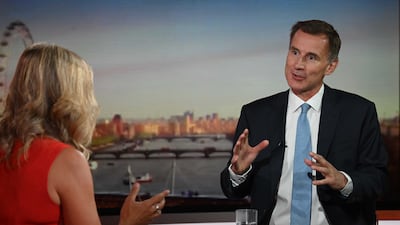
Former leadership candidate Jeremy Hunt appearing on the BBC One current affairs programme, 'Sunday Morning'. PA -

Sajid Javid attending the launch of his campaign to be Conservative Party leader and prime minister, at the Cinnamon Club in London. He has since been knocked out of the contest. PA -
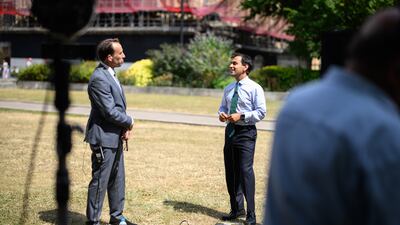
Rehman Chishti is interviewed after announcing his bid to become the next prime minister. Mr Chishti is no longer in the race. Getty -
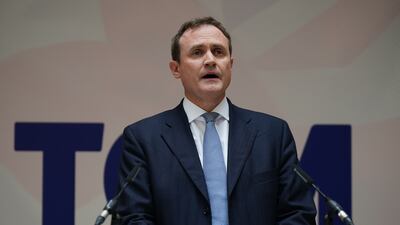
Mr Tugendhat speaking at the launch of his campaign. PA -
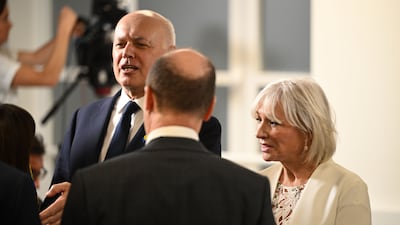
Culture Secretary Nadine Dorries and Conservative MP Iain Duncan Smith arrive for the Truss campaign launch event. Getty -
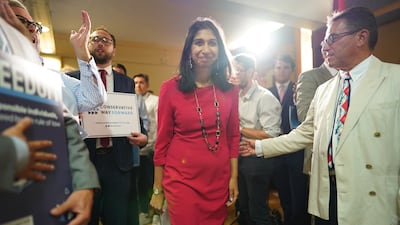
Former leadership candidate Attorney General Suella Braverman at the Churchill War Rooms in central London. PA -
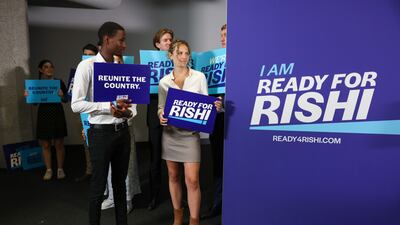
Supporters of Mr Sunak wait for his arrival ahead of the campaign launch. Bloomberg -
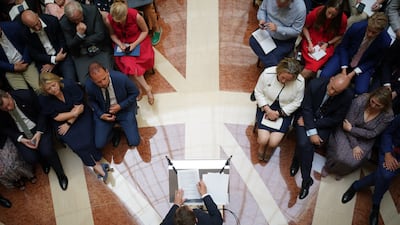
Mr Tugendhat makes a speech at the launch of his campaign. PA -
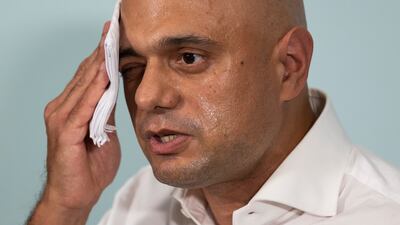
Mr Javid mops his brow while launching his campaign. Getty -
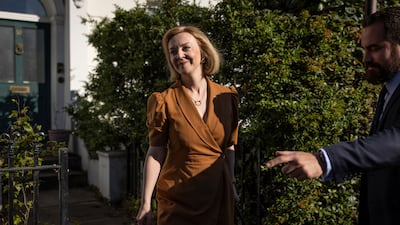
Ms Truss leaves for work after her announcement that she would be running for the leadership of the Conservative Party. Getty


Her leadership campaign says the plan is a “nuclear” option, the Telegraph quoted an unnamed source as saying, with other options including a 2.5 per cent cut in VAT, from the current standard rate of 20 per cent.
A source in Mr Sunak's team called the plan “flawed on many levels” and “regressive”, claiming it would benefit richer households with “very little to no benefit for lower income households who will need the most help this winter”.
The source dismissed the idea as “yet another addition to Liz’s spending black hole” — adding to the “existing £60 billion of other unfunded permanent tax cuts … all paid for through borrowing money we don’t have, and risking stoking inflation further”.
The Sunday Times also reported that Ms Truss is considering cutting VAT.
Another option being weighed up by the foreign secretary is a cut to income tax, the paper said, with proposals from allies including increasing the level above which people start paying the levy.
A 5 per cent cut on VAT would save the average household more than £1,300 ($1,527) a year, and cost taxpayers £3.2bn a month, according to analysis by the Institute for Fiscal Studies think tank.
Others supporters of Ms Truss suggested raising the tipping point for the higher rate of 40 per cent and cutting the basic rate below 20 per cent, the paper said.
A Treasury spokesman said the department is making the “necessary preparations” to ensure the next government has options to deliver extra help “as quickly as possible”.
The British government has been facing growing calls to provide immediate financial support to households, with energy bills set to jump to an average of £3,549 a year from October — the latest in a line of above inflation increases.
Soaring energy bills, made worse by the decision to boycott Russian energy imports in response to the conflict in Ukraine, have driven British inflation to 40-year-highs but the government's response has been hampered by the race to replace Mr Johnson that runs until September 5.
Mr Sunak, in an article for The Times on Saturday, said efforts should be focused on low-income households and pensioners, with help delivered through the welfare system, winter fuel and cold weather payments.
He said it is “right to caution against providing definitive answers before getting into Downing Street”, as it is “responsible” to first have “full command of the fiscal situation”.
However, he also acknowledged that providing “meaningful support” would be a “multibillion-pound undertaking”.
On Sunday, Mr Sunak supporter and former Cabinet minister Simon Hart acknowledged the current situation is “frustrating” for people.
But he told Sky News: “To speculate now about what the extent of the challenge would be and then come up with a solution is, I think, slightly unreasonable.
“Is there going to be a specific number? Are we going to say ‘We are going to give you this amount of money on September 7’? No, I think that would be irresponsible to do that.
“What we can say is — like the prime minister has — there is a package on its way.”
Mr Hart later said he would not commit to backing Ms Truss’s planned fiscal event if she wins the keys to No 10.
The government has said it is preparing options on a cost-of-living support package for the next prime minister to consider.
Ms Truss has also vowed to bolster Britain's defences if she is made prime minister, including by pushing ahead with renewing the Trident nuclear weapons system, as she warned “the era of complacency is over”.
She said her “number one priority” as PM would be to keep the nation safe.
“We thought that peace and stability were inevitable — but they aren't,” she said. “The era of complacency is over. We are living in an increasingly dangerous world and our security is under more threat than it has been in decades.
“We need to make sure that Britain has the deterrents it needs to lead the global efforts to tackle aggression from the likes of Russia and other authoritarian regimes.”
Mr Sunak has said he views the Nato defence spending target of 2 per cent of GDP as a “floor and not a ceiling” and noted that spending is set to rise to 2.5 per cent “over time”, but has refused to set “arbitrary” goals.
Speaking at the penultimate leadership hustings in Norwich, eastern England, on Thursday, he said: “If Liz is here, as she probably said in her speech, she will invest 3 per cent of GDP.
“Now, I'm not going to say that, not because I don't believe in investing in our armed forces, of course I do, and my record demonstrates that.
“It's just I don't believe in arbitrary targets when it comes to something as serious as the security of our realm.”

