


The British Conservatives would suffer a defeat at the next general election under Liz Truss’s leadership, Rishi Sunak has claimed.
As one of two candidates running to succeed Boris Johnson as UK prime minister, the former chancellor also told LBC that a “huge borrowing spree” would only “make the situation worse” when it comes to inflation.
Mr Sunak promised that “one of the first” things he would do if he is made prime minister is to appoint an independent ethics adviser.
“If you look at all the polling evidence that we have … it’s pretty clear that I am the person who is best placed to defeat [Labour Party leader] Keir Starmer in the next election,” he told LBC.
Mr Sunak said the evidence showed that the Conservative Party would probably be defeated if its members chose Ms Truss as its next leader.
"And that’s what our members will need to consider,” he said.
Earlier, Ms Truss said she was Labour’s worst nightmare at the next election.
“Yes, I am and I always have been, because what Labour don’t like about me is I’m not from a traditional Conservative background.
“I was brought up in Paisley and Leeds, I went to a comprehensive school. I know how Labour failed kids.”
She said Leeds City Council in the 1980s and 1990s was “utterly useless” and “let kids down”.
“This is why Labour do fear me, because I’m prepared to take them on, I’m prepared to challenge their orthodoxy and I’m prepared to get things done,” Ms Truss said.
Earlier, she said her tax cut plans, costing at least £30 billion ($35.6bn) a year, were “affordable” as the economic policies of the two candidates came under scrutiny.
Ms Truss has said the first tax she would cut as prime minister is national insurance.
“I didn’t support it in Cabinet in the first place and I think it’s wrong to be putting a burden on hard-working families in what is a very difficult time," she said in a campaign visit to Peterborough.
“I will at the same time do a temporary moratorium on the green levy, saving people money on their fuel bills.
"I’m not going to write the whole first budget now, that’ll be a matter for the chancellor, but what I can say is that we need to reduce the tax burden. It’s the highest level it’s been for 70 years.
"If we have rises in corporation tax as is currently being planned, that will put off people investing in Britain and that will make it harder to attract the businesses we need to drive the economy.”
But Mr Sunak was understood to not be considering cutting personal taxes until at least autumn next year to avoid fuelling inflation.
He defended his planned rise in corporation tax, saying the increase was “perfectly reasonable”.
“What we are doing is actually combining that with some other reforms to make the system much more generous for the things that we know actually drive growth, and that’s businesses to actually invest,” Mr Sunak said.
“It’s all very well businesses making a profit, and that’s something fantastic that I support. But what I want them to do with that is to invest that in the economy. That’s how we help drive growth in this country.
“So even though the corporation tax will go up, I think that’s really perfectly reasonable because everyone knows we’ve spent a fortune during Covid to help get the country through it.
"Businesses got a lot of support.”
The financial plans of the final candidates for prime minister were growing ever more divided as they vied for the votes of the Tory membership.
Robert Joyce, the deputy director of the Institute for Fiscal Studies think tank, put Ms Truss’s tax cuts at “more than £30 billion a year – and possibly considerably more”.
The plans “mean higher borrowing or less public spending, or some combination”, he said, although their effects remained unclear because Ms Truss’s plans were “yet to be fleshed out”.
“Without spending reductions, the tax promises would likely lead to the current fiscal rules being broken, and Ms Truss has hinted that the fiscal rules may change,” Mr Joyce said.
She defended her plans to scrap the scheduled corporation tax rise and suspend green levies on energy bills as “not a gamble”.
Ms Truss also said she would go ahead with spending on social care despite reversing the national insurance rise, although she did not specify how she would pay for it.
She was asked in Peterborough where the money would come from to tackle the National Health Service backlog, which was meant to be covered by the insurance rise.
“I am going to proceed with that spending on social care," Ms Truss said.
“We can afford it within our budgets. We didn’t have to do the national insurance rise.
“It’s still the case that under my plans we can start paying back the debt within three years.”
Asked how her cuts could be introduced without affecting public services, she said: “The problem we’ve had is we’ve had two decades of low growth…
“That has squeezed what has been available. I’m very clear I’m not planning public spending reductions.
"What I am planning is public service reforms to get more money to the front line, to cut out a lot of the bureaucracy that people face.
“I’m certainly not talking about public spending cuts. What I’m talking about is raising growth.”
“I’m not the slickest out there, I’ll be honest, but I am somebody who when I say I’ll do something I get it done."
In his pitch to Conservative members after MPs selected the final two candidates, Mr Sunak said that he was the only one capable of beating Labour in a general election.
But Ms Truss said the Tories would struggle to win under the current economic policy written by Mr Sunak when he was chancellor.
He has vowed not to cut taxes until the soaring rates of inflation are under control, fearing such a move could make the crisis worse.
But he told LBC that “of course” he wanted to put more money in people’s pockets.
“I think I’ve demonstrated over the past couple of years that as and when the situation demands it, I will act to help people get through it,” Mr Sunak said.
-
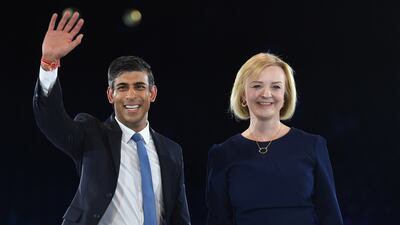
Candidates Rishi Sunak and Liz Truss at the Conservative Party leadership election hustings at Wembley Arena, London. This was the final hustings attended by Tory Party members who will vote for the new leader and next prime minister. EPA -
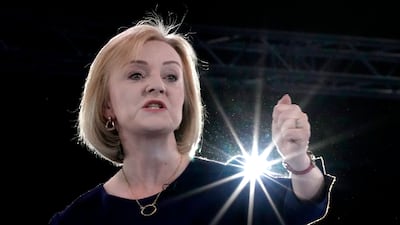
Liz Truss addresses Conservative Party members at Wembley Arena. AP -
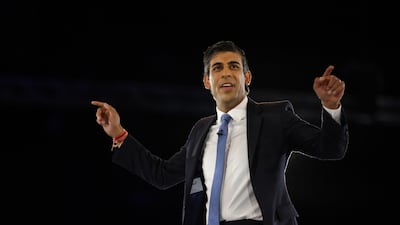
Mr Sunak puts forward his case to be leader while speaking at Wembley Arena. Bloomberg -
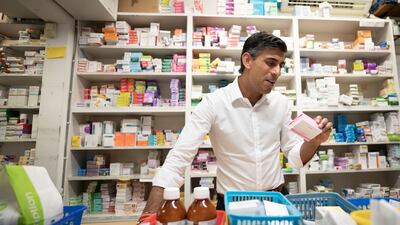
Mr Sunak visits his family's old business, Bassett Pharmacy in Southampton, while on the campaign trail. Reuters -

Ms Truss speaks to staff at Condimentum Ltd at the Food Enterprise Park in Norwich. Getty Images -
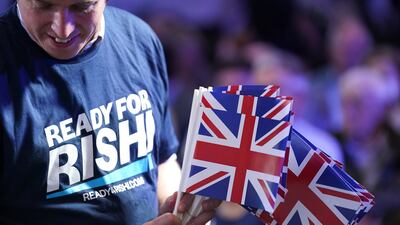
A Rishi Sunak supporter at a hustings event in Norfolk. PA -
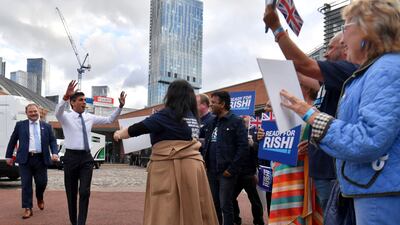
Mr Sunak greets people at a leadership hustings in Manchester. Bloomberg -
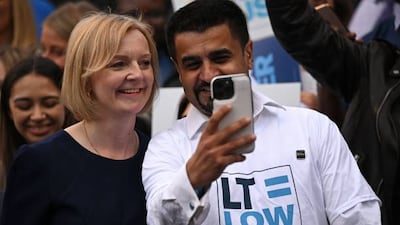
Ms Truss poses for a selfie with a supporter as she arrives for the event in Manchester. Getty -
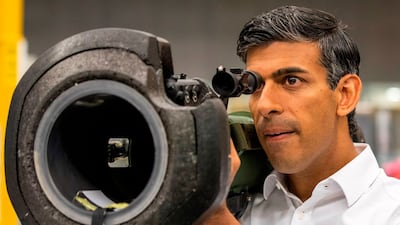
Rishi Sunak looks through the sights of an anti-tank missile launcher, supplied to Ukraine, during a visit to the Thales Defence System plant in Belfast, Northern Ireland. AP -
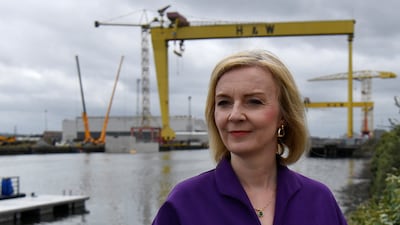
Liz Truss at a Conservative Party leadership campaign event in Belfast. Getty -
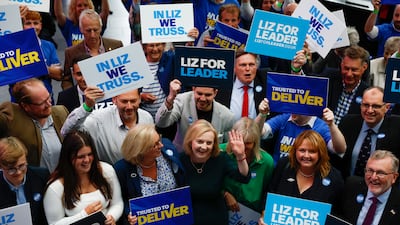
Liz Truss meets supporters before a hustings in Perth, Scotland. Getty -
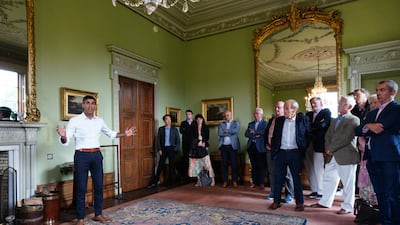
Rishi Sunak speaks during a campaign visit to Cluny Castle in Inverurie, Scotland. Getty -
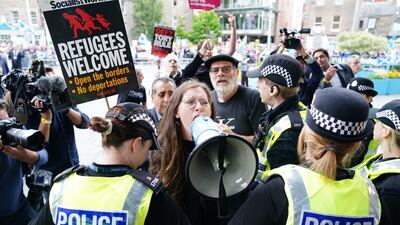
Police hold back protesters outside Perth Concert Hall, Scotland, where Conservative leadership candidates Liz Truss and Rishi Sunak were speaking. PA -
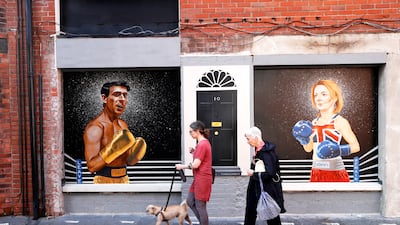
A mural showing the two leadership contestants appears on a wall in Belfast, Northern Ireland. AP -
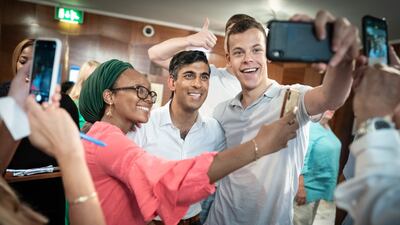
Rishi Sunak during a visit to St John's Wood Synagogue, north London. PA -
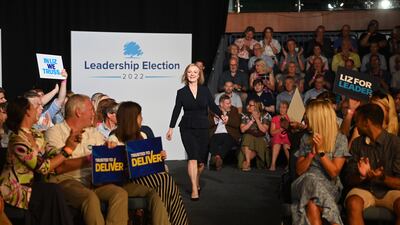
Liz Truss at the Conservative Party leadership election hustings in Cheltenham. EPA -
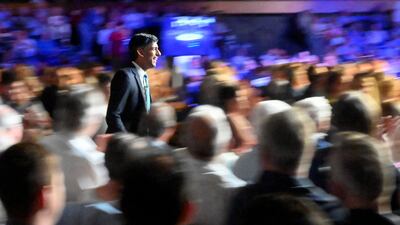
Rishi Sunak during a hustings event in Cheltenham. Reuters -
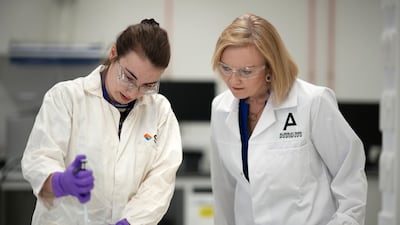
Liz Truss speaks to scientists during a campaign visit to a life sciences laboratory at Alderley Park in Manchester. PA -
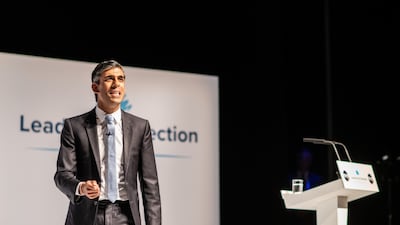
Rishi Sunak during a campaign hustings in Darlington, England. Bloomberg -
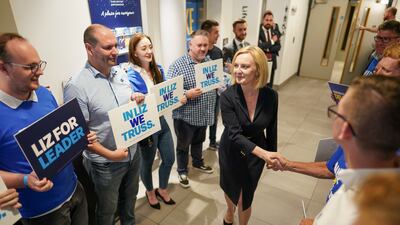
Liz Truss meets party members before she speaks at the Darlington campaign hustings. Getty -
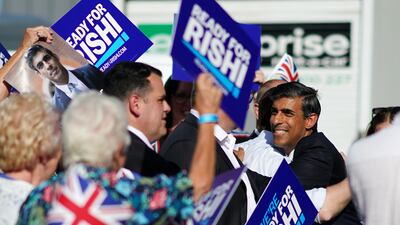
Rishi Sunak arrives for the Darlington hustings. Getty -
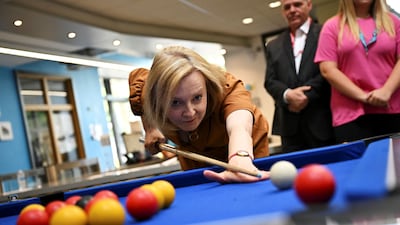
Liz Truss plays pool during a visit to the Onside Future Youth Zone in London. Reuters -
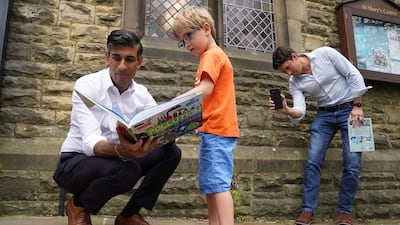
Rishi Sunak looks at a book with Teddy Openshaw, 4, as his father, Henry, looks on after a Conservative leadership campaign event in Ribble Valley, Lancashire, England. Getty -
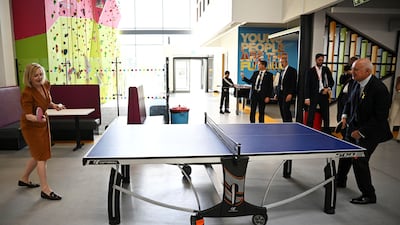
Liz Truss plays table tennis with former Conservative party leader Iain Duncan Smith during a visit to the Onside Future Youth Zone in London. Reuters -
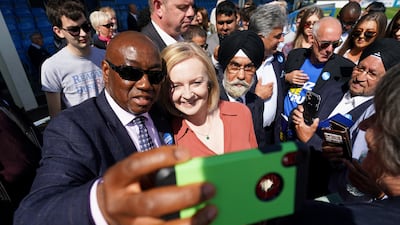
Liz Truss with supporters at a campaign event in Solihull, England. Reuters -
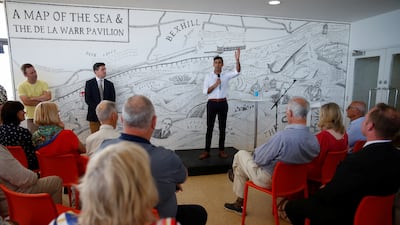
Rishi Sunak attends a campaign event held by his party in Bexhill, England. Reuters -
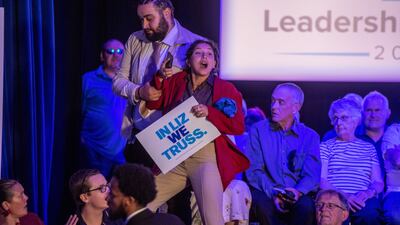
A protester is removed as Ms Truss speaks during the Conservative Party leadership hustings in Eastbourne. Bloomberg -
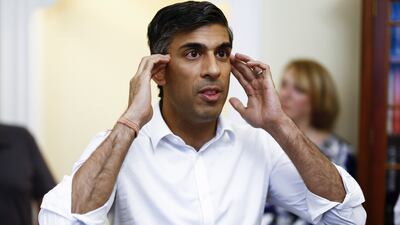
Mr Sunak speaks at an event in Edinburgh. PA -
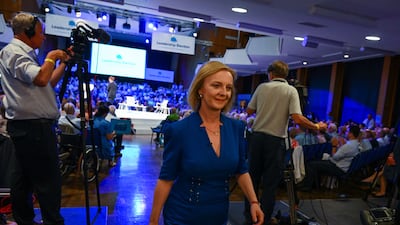
Ms Truss leaves the hall in Exeter, south-west England, after her speech to a Conservative Party membership hustings. Getty -
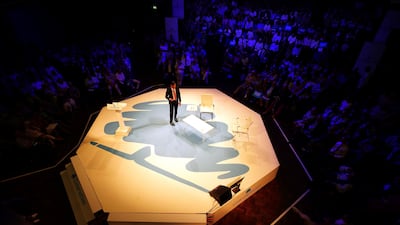
Mr Sunak speaks at the University of Exeter in south-west England. AP -

A supporter of Ms Truss at a Conservative Party hustings in Exeter, south-west England. Getty -
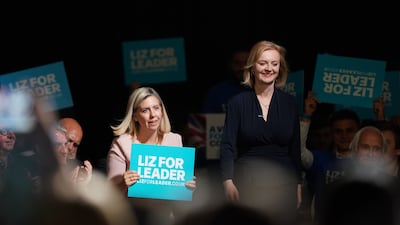
Ms Truss at a hustings event at the Pavilion conference centre at Elland Road in Leeds. PA -
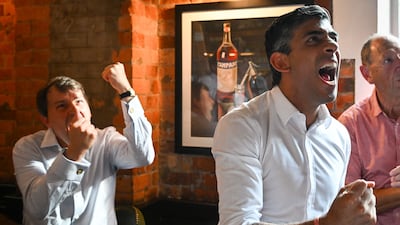
Mr Sunak in Salisbury watching a screening of the Uefa Women's Euro 2022 final between England and Germany at Wembley stadium. England won 2-1 in extra time. PA -
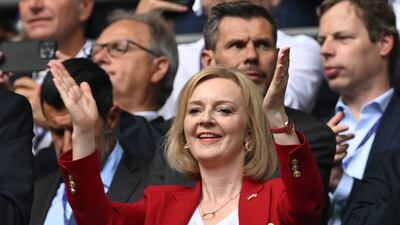
Ms Truss before the Uefa Women's Euro 2022 final at Wembley stadium in London. AFP -
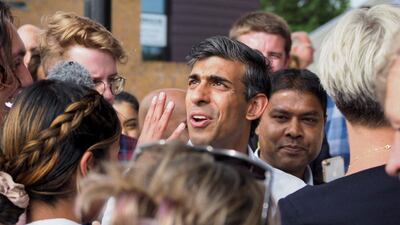
Mr Sunak meets Tory members at Fontwell Park Racecourse. Reuters -
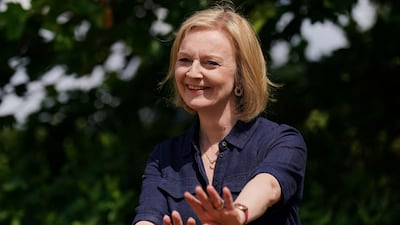
Ms Truss at an event in Dereham, Norfolk. AFP -
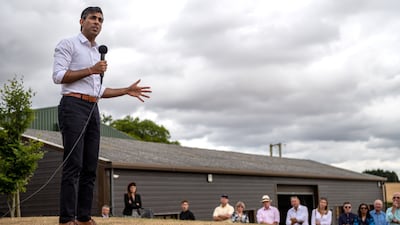
Mr Sunak in Ropley, near Winchester, Hampshire. PA -
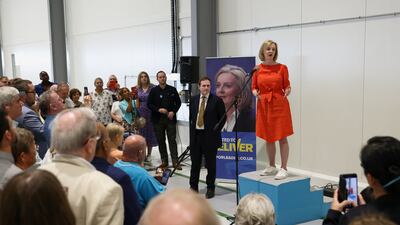
Ms Truss speaks as Conservative Member of Parliament Tom Tugendhat looks on at a Conservative Party leadership campaign event at Biggin Hill Airport. Getty -
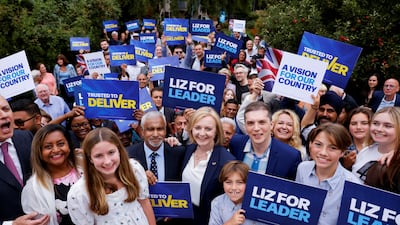
Ms Truss on the campaign trail in Woodford Green, on the outskirts of London. Reuters -
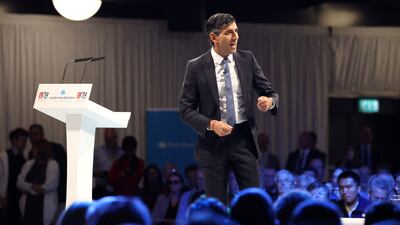
Mr Sunak at a Conservative Party hustings event in Leeds. AFP -
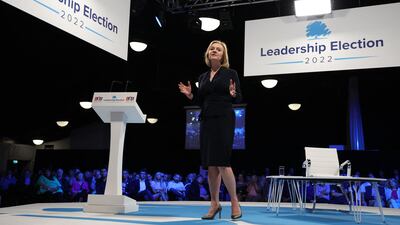
Ms Truss speaks at the hustings event in Leeds. AFP -
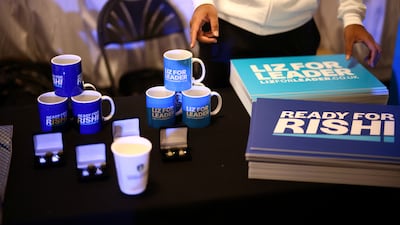
Sunak and Truss-themed souvenirs at a stand during the Leeds hustings event. Reuters -
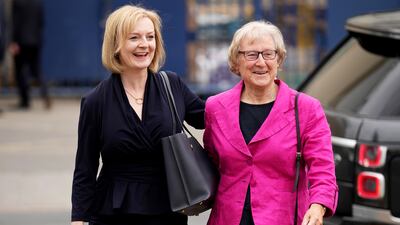
Ms Truss, and her mother, Patricia, arrive for the hustings event. Getty -
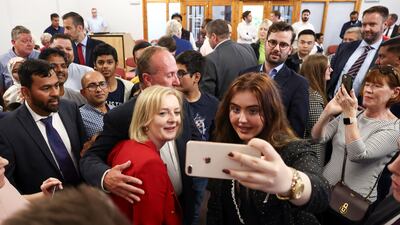
Ms Truss poses with supporters in Morley, England. Getty -

Mr Sunak delivers a speech during a campaign event in Newmarket. AFP -
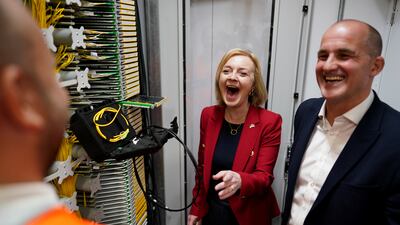
Ms Truss and Jake Berry, MP for Rossendale and Darwen, during a visit to a broadband interchange company in Leeds. PA -
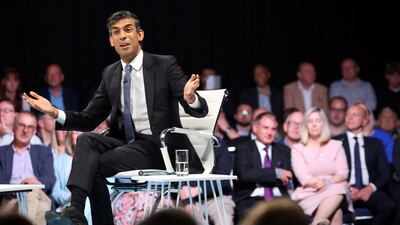
Mr Sunak answers questions as he takes part in the hustings in Leeds. AFP -
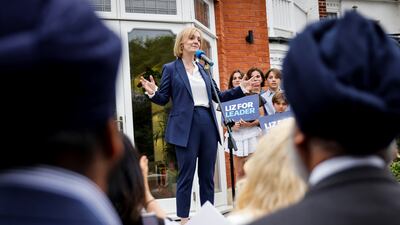
Ms Truss speaks at an event at a private house with members of the Conservative Party in Woodford Green. PA -
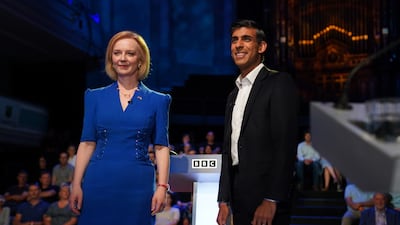
Ms Truss and Mr Sunak pose for a picture before a BBC leadership debate at Victoria Hall in Hanley. Getty -
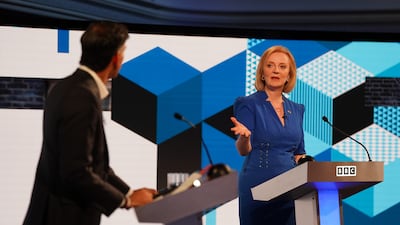
Ms Truss addresses Mr Sunak during the televised debate. Getty -
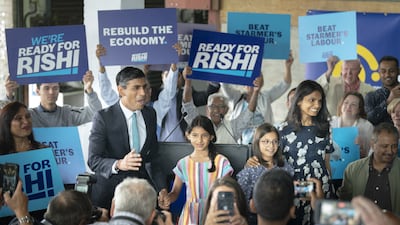
Mr Sunak, with daughters Krishna and Anushka, and wife Akshata Murthy, during a visit to Vaculug tyre specialists at Gonerby Hill Foot, Grantham. PA -
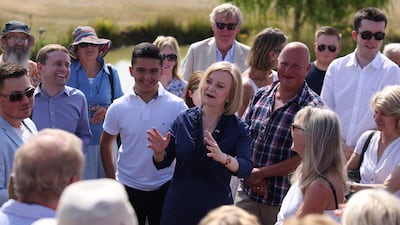
Ms Truss speaks to people while campaigning in Marden. Getty -
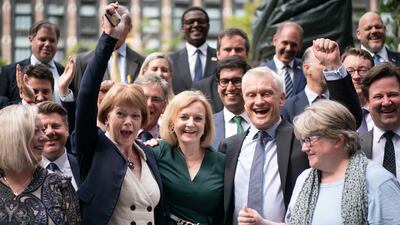
Ms Truss celebrates after being named, along with Mr Sunak, one of the final two candidates in the race to become the UK's next prime minister. PA -
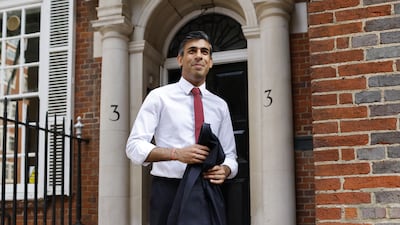
Mr Sunak outside his campaign office in central London. EPA -
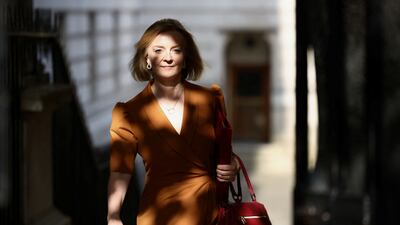
Ms Truss outside Downing Street in London. Reuters -
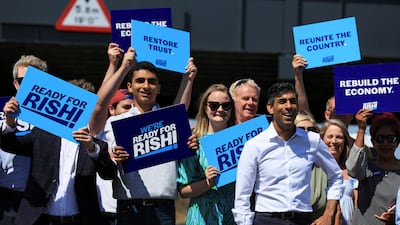
Rishi Sunak meets Conservative Party members and activists, in Teesport, Redcar. Reuters -
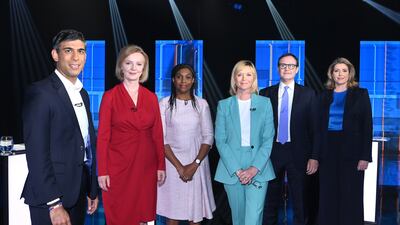
Conservative leadership candidates Mr Sunak, Ms Truss, Kemi Badenoch, presenter Julie Etchingham, Tom Tugendhat and Penny Mordaunt during 'Britain's Next Prime Minister: The ITV Debate' in London. EPA -
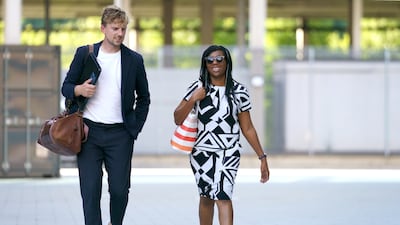
Ms Badenoch arrives at Here East studios in Stratford, east London, before a live television debate. PA -
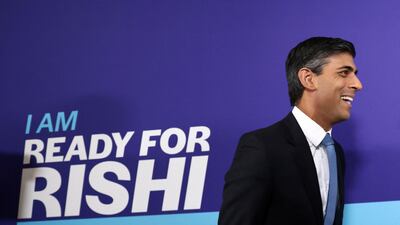
Mr Sunak arrives at a London event to launch his campaign to be the next Conservative Party leader and UK prime minister. Reuters -
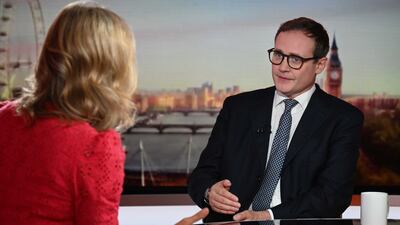
Mr Tugendhat appears on the BBC One current affairs programme, 'Sunday Morning'. PA -
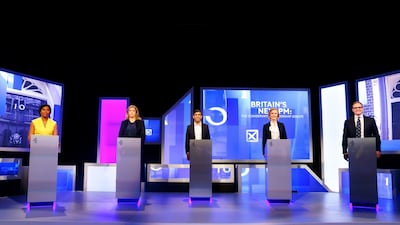
Ms Badenoch, Ms Mordaunt, Mr Sunak, Ms Truss and Mr Tugendhat before the live television debate. PA -
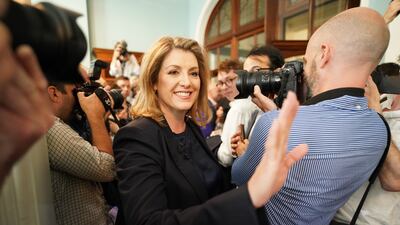
Ms Mordaunt arrives for the launch of her Conservative leadership campaign at the Cinnamon Club in Westminster. PA -
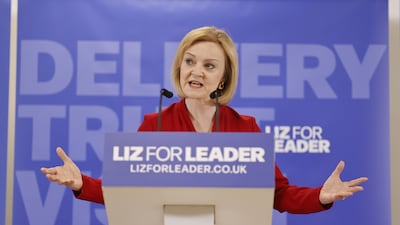
Ms Truss speaks at the launch event for her campaign to become the next leader of the Tory Party and Britain's prime minister, in London. EPA -

Chancellor of the Exchequer Nadhim Zahawi, one of the candidates who has been knocked out of the race, giving a speech at the Churchill War Rooms. PA -
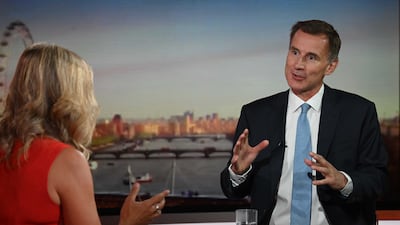
Former leadership candidate Jeremy Hunt appearing on the BBC One current affairs programme, 'Sunday Morning'. PA -

Sajid Javid attending the launch of his campaign to be Conservative Party leader and prime minister, at the Cinnamon Club in London. He has since been knocked out of the contest. PA -
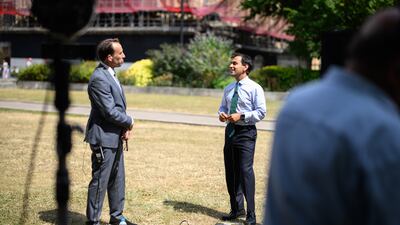
Rehman Chishti is interviewed after announcing his bid to become the next prime minister. Mr Chishti is no longer in the race. Getty -
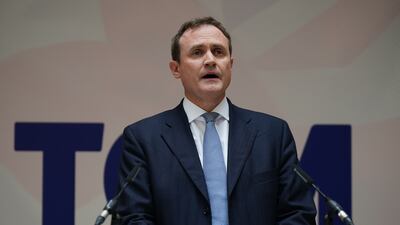
Mr Tugendhat speaking at the launch of his campaign. PA -
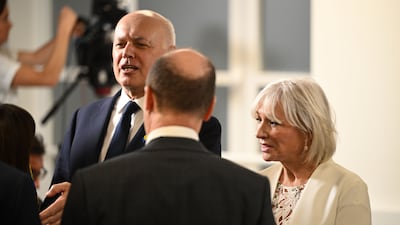
Culture Secretary Nadine Dorries and Conservative MP Iain Duncan Smith arrive for the Truss campaign launch event. Getty -
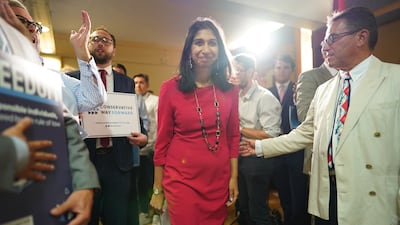
Former leadership candidate Attorney General Suella Braverman at the Churchill War Rooms in central London. PA -
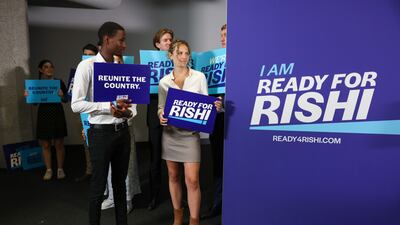
Supporters of Mr Sunak wait for his arrival ahead of the campaign launch. Bloomberg -
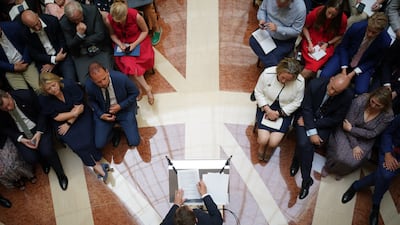
Mr Tugendhat makes a speech at the launch of his campaign. PA -
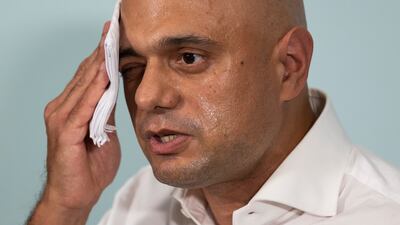
Mr Javid mops his brow while launching his campaign. Getty -
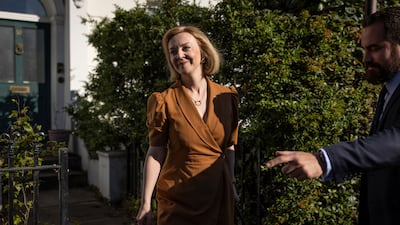
Ms Truss leaves for work after her announcement that she would be running for the leadership of the Conservative Party. Getty


He said he wanted to “restore trust in government” as prime minister.
“That starts with being honest with people, honest about the challenges that we face, but also the change that I will bring to grip them," Mr Sunak said.
"But it also means not promising things that can’t be delivered."
He said his life would be easier if he vowed to do “this lovely sounding thing and this lovely sounding thing”, but that would not be leadership.
“I think it would damage trust, because part of rebuilding trust is for the government and politicians to deliver the things that they say, and sitting here promising you a bunch of things that I don’t think are right or deliverable would be wrong,” Mr Sunak said.
He was the parliamentary party’s favourite, winning 137 votes to Ms Truss’s 113 among Tory MPs.
But bookmakers placed the foreign secretary as the frontrunner, with early indications suggesting she is more popular with Tory members before a summer of campaigning.
A small, unrepresentative poll of 730 members on Wednesday and Thursday again saw Ms Truss in the lead.
Sixty-two per cent of respondents said they would back the foreign secretary, while 38 per cent chose Mr Sunak.
The pair battled to win the support of local politicians on Thursday when they took part in a private campaign event for the Conservative Councillors’ Association.
They will tour the UK to take part in 12 events for Tory members who will vote for their next leader, with the result being announced on September 5.

