

Britain was counting the cost of the hottest day in its history on Wednesday after fires destroyed dozens of buildings in unprecedented 40ºC weather.
London Mayor Sadiq Khan said Tuesday was the fire brigade's busiest day since the Second World War as the extreme heat and bone-dry grass set homes and warehouses ablaze.
There were 16 firefighters injured and 41 properties destroyed in London as firefighters struggled to respond to 2,600 calls and major fires that needed 10 or more fire engines to douse them, Mr Khan told Sky News.
Dramatic footage showed smoke and flames erupting around the country as temperatures hit a peak of 40.3ºC in Coningsby, Lincolnshire. The previous record of 38.7ºC was beaten in 34 places and equalled in another five.
Six sites, mostly in Greater London, had temperatures reach or exceed 40ºC. Scotland experienced its hottest day on record, with the temperature reaching 34.8ºC in Charterhall in the Scottish Borders, Met Office provisional figures showed.
The temperature is set to drop by up to 10ºC in some areas on Wednesday, with heavy showers and thunderstorms to lash parts of the country, with a risk of localised flooding.
But two “large-scale” incidents took place in Upminster and the village of Wennington, east London, where black smoke billowed into the air as flames destroyed buildings and ravaged nearby fields.
Other significant incidents also occurred in the capital, as people were urged not to have barbecues or bonfires because of the “unprecedented” challenges crews faced.
One resident in Wenninngton said it was “like a scene from the Blitz” after around 19 houses were destroyed.
An entire street became engulfed in flames, with neighbours gathering together to seek refuge in a local church, residents said.
Resident Tim Stock said his family home of 60 years was destroyed by the fire.
“It’s heartbreaking. I’ve been there 41 years but my granddad was there before me, so we’ve been there 60-odd years,” he told BBC Radio 5 Live.
“And to see it all fall apart yesterday, it’s really sad. But we’ll get the site cleared, fit up a kind of mobile home there, and we’ll start again.”
Mr Stock added: “It was like a warzone. Down the actual main road, all the windows had exploded out, all the rooves had caved, it was like a scene from the Blitz really.”
The resident managed to rescue his dog as he escaped the blaze but lost eight chickens and two beehives, instead prioritising banging on neighbours’ doors to alert them to the emergency as it escalated.
He then led smoke-covered residents to a local church, which he holds keys to, where they washed and caught their breath before being forced to evacuate again when the churchyard started smoking.

New smaller fires, related to the hot weather, were continuing to crop up in different corners of the city by 11pm on Tuesday.
Elsewhere, a serious blaze broke out in Barnsley when a row of houses in the Moorland Avenue area was consumed by flames. Crews continued to battle fires elsewhere in the area.
Doncaster Council said a major blaze in Clayton also spread to three residential properties and there were reports of houses on fire in the Kiverton Park and Maltby areas of Rotherham.
“We have declared a major incident due to high demand across Leicester, Leicestershire and Rutland," Leicestershire Fire and Rescue tweeted.
“We will not be attending automatic fire alarms. Please only call us if it’s an emergency.”
It stood down its major incident warning later in the day.
-

A residential area after a large fire in Wennington, Greater London. Several fires broke out across England as the UK experienced a record-breaking heatwave. Getty Images -

Residents look at buildings destroyed by fire in Wennington. Getty -

Firefighters tackle a grass fire during the heatwave in Mow Cop, Staffordshire. Reuters -
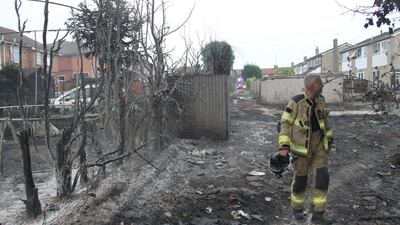
Firefighters in Maltby, after a fire started on scrubland before spreading to outbuildings, fences and homes in South Yorkshire. PA -
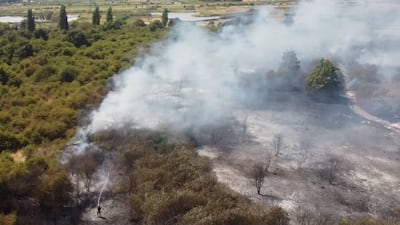
The scene after a fire at Dartford Marshes. PA -
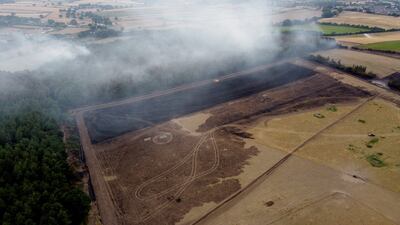
Burnt woodland is seen as smoke rises from the trees following a fire in Blidworth. Getty Images -
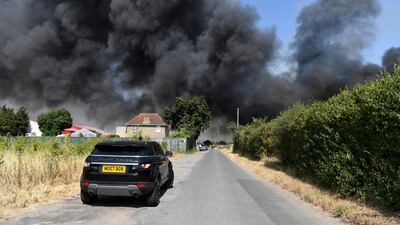
A car drives towards a fire in East London. Reuters -
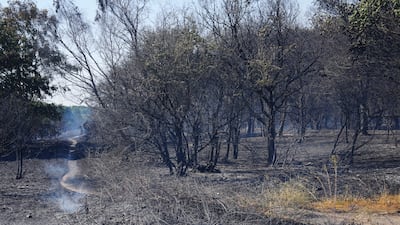
Burnt woodland in Dartford Heath, England, after a fire on Tuesday. Getty -
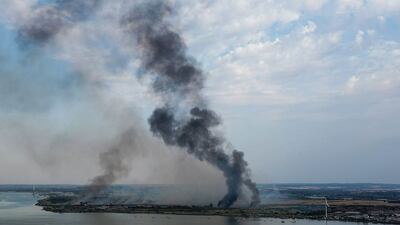
Smoke columns rise from Dartford, Kent, where a fire erupted earlier in the day. AFP -
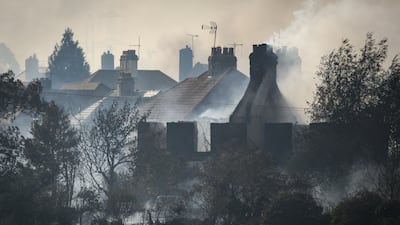
Smoke rises from Wennington neighbourhood fires in England on Tuesday. Getty -
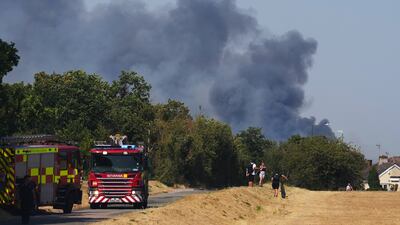
Emergency services tackle a fire on Dartford Heath. Grass fires broke out around the country during an intense heatwave. Getty -
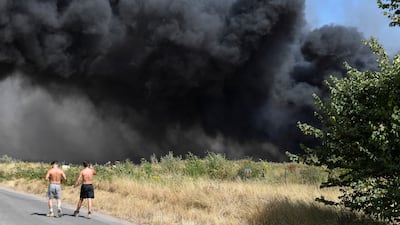
People look on as a fire burns in East London. Reuters -
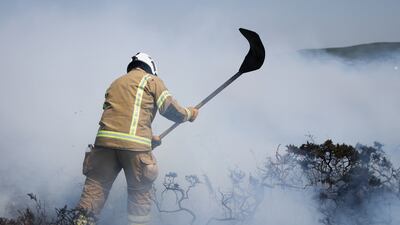
A firefighter attends a gorse bush fire during a heatwave near Zennor, Cornwall. Reuters -

Smoke pours from a blaze in the village of Wennington, east London. PA -
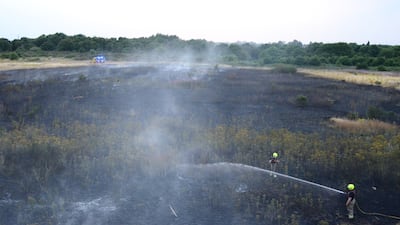
Firefighters hose down a grass fire in Ravenswood in Suffolk. PA -
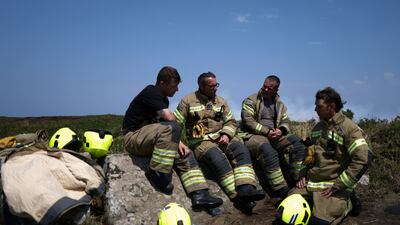
Firefighters rest after attending a gorse bush fire near Zennor in Cornwall. Reuters -
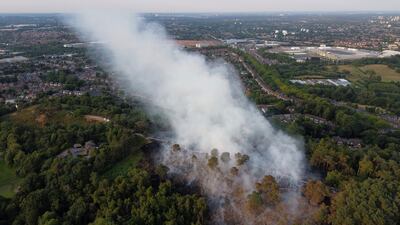
A large wildfire in woodland at Lickey Hills Country Park on the edge of Birmingham. AP -
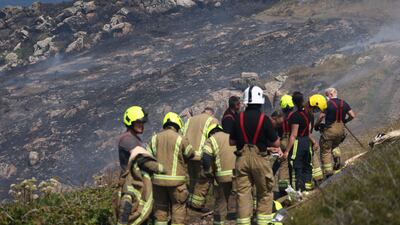
Smoke from the fire near Zennor, Cornwall. Reuters -
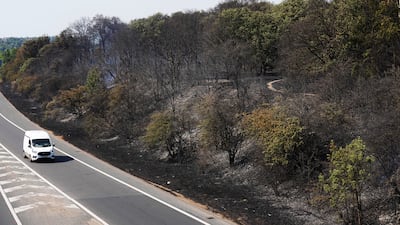
Burnt woodland alongside a motorway near Dartford Heath. Getty -
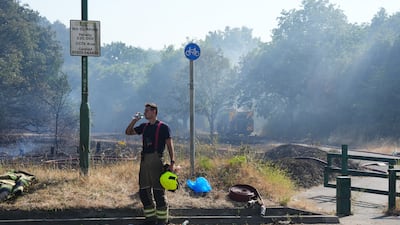
A firefighter has a drink of water after the major blaze on Dartford Heath. Getty


Nine people have died since Saturday in swimming accidents and there has been widespread disruption to train services.
As temperatures soared, interim deputy chief executive of NHS Providers, Miriam Deakin, said the heatwave was forcing hospitals to reduce the number of planned operations, install cooling units and try to cool down IT server rooms.
An East of England Ambulance Service spokesman said the service had an above-average number of calls since Monday afternoon and it expected to still be seeing an impact from heat-related illness into the weekend.
Road congestion in several cities, including Birmingham, London and Manchester, was down on Tuesday, as people heeded advice not to travel.
Commuter numbers were also down on the Tube and bus services in the capital.
Sales of fans, ice cream, paddling pools and burgers rocketed as the heatwave sparked a spending spree on summer essentials, according to retailers.
Tech experts urged smartphone users to keep their gadgets out of the sun to ensure they continued to work properly.
Heatwaves are being made more intense, frequent and longer by climate change, and scientists said it would be “virtually impossible” for the UK to have experienced temperatures reaching 40ºC without human-driven global warming.

However, the Met Office said there would be a showery and thundery breakdown of the heat on Wednesday, with a yellow warning for thunderstorms in place for parts of south east, east and central England in the afternoon and evening.
It warns people to expect flooding or lightning strikes, delays and some cancellations to train and bus services, spray and sudden flooding, road closures and possible power cuts.
It will be fresher for most places, although some parts of East Anglia will still see temperatures reach as high as 30C.
Wednesday’s rain, where it occurs, will be much heavier than on Tuesday.
Europe feels the heat
In mainland Europe, forest fires were raging in Spain, France and Portugal and temperatures were heading for possible records in parts of Belgium and Germany as the heatwave edged east.
About 34,000 people have left their homes in the French countryside surrounding Bordeaux and firefighters were battling to contain the region's biggest wildfires for more than 30 years.

In Spain, a man trying to protect his town from fire had a close brush with death when the blaze engulfed his digger, forcing him to run for his life while patting out flames on his clothes.
Almost 600 heat-related deaths have been reported in Spain and Portugal.
Europe's Copernicus monitoring service said tinder-dry conditions were exacerbating the risk of wildfires and said ozone pollution was rising to unhealthy levels, particularly over Spain, Portugal and northern parts of Italy.

