



Heathrow Airport has announced a cap on passenger numbers in an attempt to reduce chaotic scenes of baggage mountains, long queues and flight cancellations.
The airport said it has ordered airlines to “stop selling summer tickets to limit the impact on passengers”.
The west London airport has been plagued by problems since travel resumed once most pandemic restrictions were removed. Most of the issues involve a shortage of staff including airline ground crew, security and baggage handlers. Strikes are also planned by some workers.
Its social media channels have been inundated with angry passengers trying to be reunited with their luggage, some of them more than a week after their flights. Today, passengers were forced to queue outside terminals as temperatures soared beyond 30C.
The new measure will lead to more cancellations on top of the thousands of flights axed in recent months.
Affected passengers will not be entitled to compensation as the reason for the cancellations will be classified as being outside the control of airlines.
It has limited numbers to 100,000 passengers a day, meaning an excess of 4,000 seats will be scrapped daily. This comes on top of tens of thousands of passengers whose flights have already been cancelled. On Monday alone, Heathrow ordered airlines to ditch 61 flights, affecting about 10,000 passengers.
About 131,000 passengers departed the airport on Heathrow’s busiest day on record, August 4, 2019.
In an open letter to passengers on the capacity cap, Heathrow chief executive John Holland-Kaye, who has previously said problems could last 18 months, apologised again and admitted that scenes in terminals had been unacceptable.
He said the government move to suspend its 'use it or lose it' rules on flight routes had helped by allowing flights to be cancelled in advance, but it had not been enough — some airlines were still scheduling too many flights, he said. The policy had led to ghost flights as most airlines would rather fly empty than lose lucrative routes.
The government ordered airports to review their schedules to give passengers confidence that their travel plans would not be disrupted.
Decades of flight: Heathrow through the years — in pictures
-

Heathrow Airport in London, the UK's busiest, has been a travel hub for decades. Here The National takes a look back at Heathrow through the years. All photos: Getty Images -
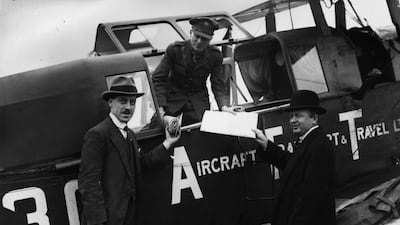
An Airco De Havilland biplane of the British airline, Aircraft Transport and Travel Limited, about to leave on the company’s inaugural flight from Hounslow Heath Aerodrome, later known as Heathrow, to Le Bourget, Paris, in August 1919 -
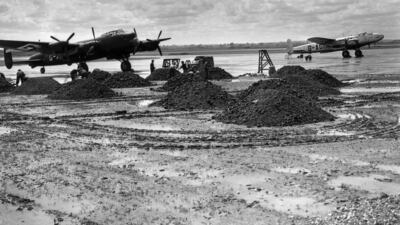
Waterlogged runways at London Airport - Heathrow's original name - one week before it became Britain's main aerial gateway to the US in 1946 -
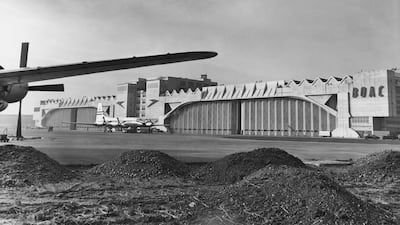
The new BOAC maintenance headquarters at London Airport circa 1955 -
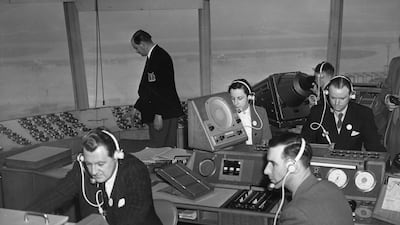
The air traffic control room at the airport's new terminal in 1955 -

US film star Marilyn Monroe with her husband, playwright Arthur Miller, after arriving at the airport in July 1956 -
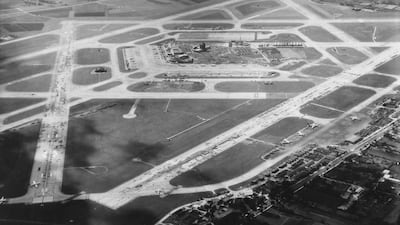
An aerial view showing the runways in 1958 -

The arrivals and departures board in 1960 -

A new airport gift shop, selling items by Chanel, Wedgwood and Pringle of Scotland, in 1961 -
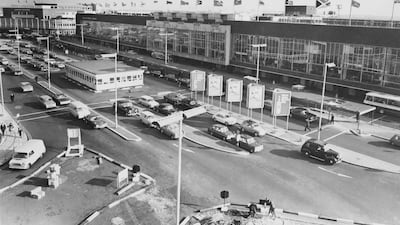
The Queen's Building and the No. 1 Building Europa at Heathrow in 1965 -
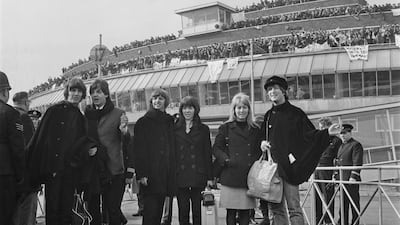
The Beatles leave Heathrow for Salzburg in Austria, to resume filming of the movie Help!, in 1965 -
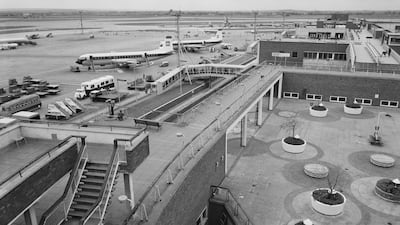
Passenger terminal gates at Heathrow in 1966 -
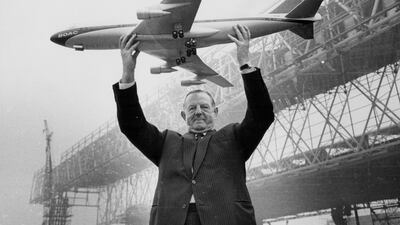
Keith Granville, managing director of BOAC, holding up a model of the Boeing 747 jet, with the new aircraft hangars under construction in the background, at Heathrow in 1969 -
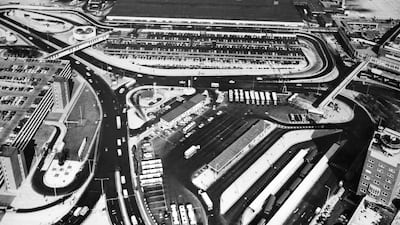
An aerial view of Heathrow in 1970 -
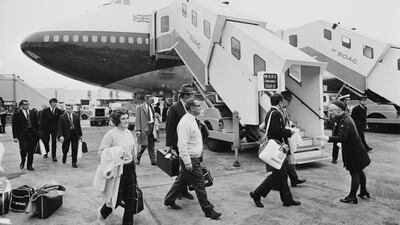
Passengers boarding the first BOAC Jumbo Jet 747 used for a commercial flight, from London Heathrow to New York, in 1971 -
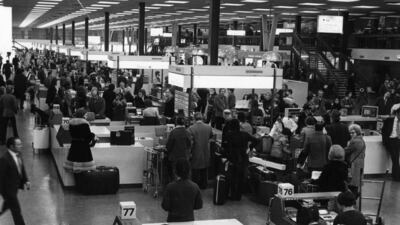
Passengers going through the departure lounge at Heathrow in 1973 -
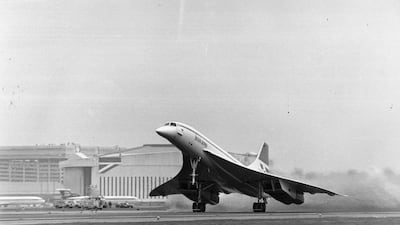
Concorde takes off from Heathrow on her first commercial flight for British Airways in 1976 -
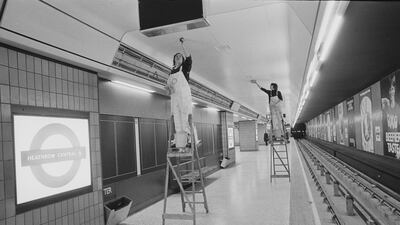
Men at work finalising the Heathrow Central underground station before its opening in 1977 -
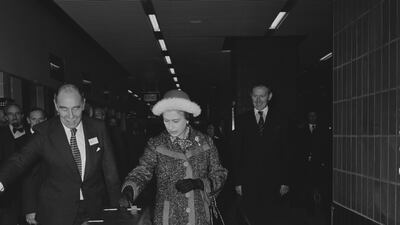
Queen Elizabeth II passing though the Tube gates at Heathrow Central station on its opening in 1977 -
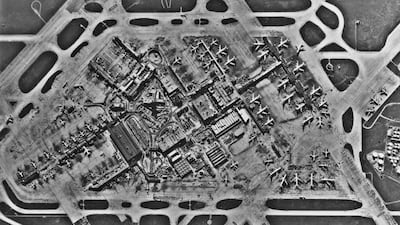
An aerial view of Heathrow in 1978 -

Passengers waiting near a departures board in 1979 -
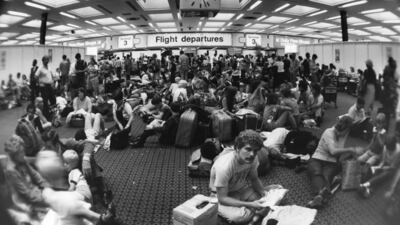
Holidaymakers waiting in the departure lounge at Terminal 3 of Heathrow in 1981 -
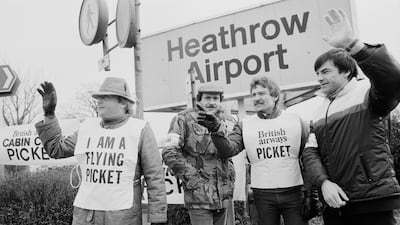
British Airways employees protesting at Heathrow in 1984 -
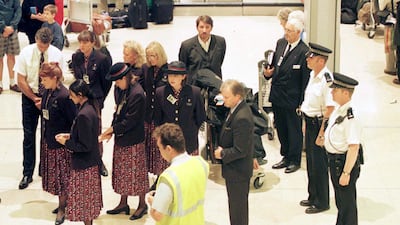
Passengers and staff observe a silence in Heathrow's Terminal One to mark the beginning of the funeral of Diana, Princess of Wales, in 1997 -
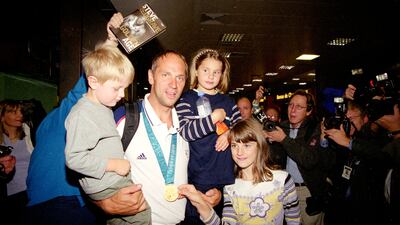
Rower Steve Redgrave at Heathrow with daughters Sophie and Natalie and son Zak after returning from the Sydney 2000 Olympic Games with his gold medal -
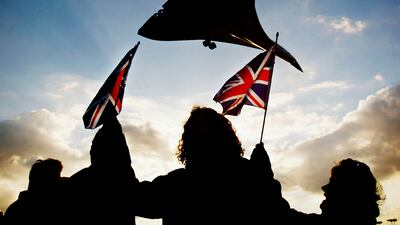
Spectators watch the last Concorde land at Heathrow in 2003 -
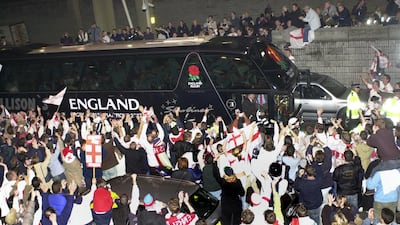
Fans surround the coach carrying the England rugby team at Heathrow, as they arrived from Sydney after winning the World Cup in 2003 -
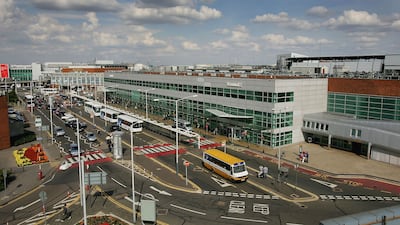
Heathrow's Terminal 2 in 2004 -
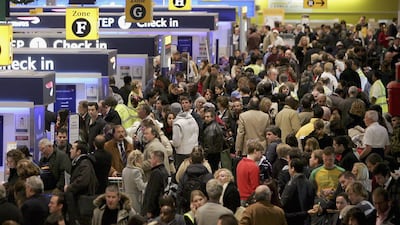
Passengers queue to check in at Terminal 1 of Heathrow Airport during the Christmas 2006 and New Year period -
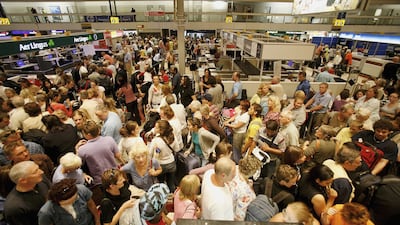
Passengers wait at Terminal 1 on August 10, 2006, after airport security was raised to critical when a terrorist plot to blow up planes in mid-flight from the UK to the US was disrupted by police -
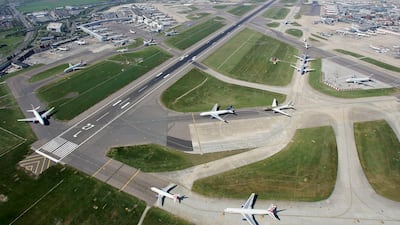
Planes queueing to take off at Heathrow in 2007 -
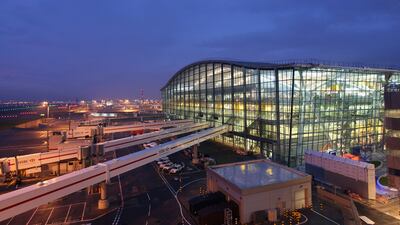
The new Terminal 5 at Heathrow in 2008 -
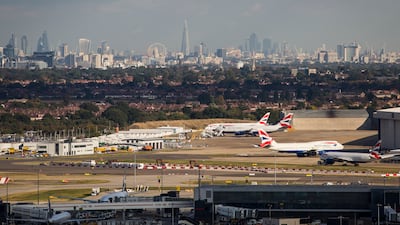
Aircraft at Heathrow Airport in front of the London skyline in 2016 -
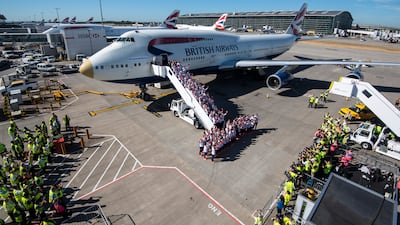
Members of Team GB arrive from Rio de Janeiro at Heathrow, after returning from the 2016 Olympics, which saw Great Britain's strongest performance at the Games in over a century -

A composite photo shows planes taking off from Heathrow in November 2016. Forty-two planes were captured between 10.17am and 11.17am and a montage was created from those single images -
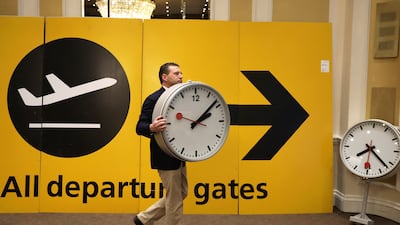
Items are arranged during an auction preview at Heathrow in 2018. The contents of Terminal 1, which closed in 2015, were being sold -
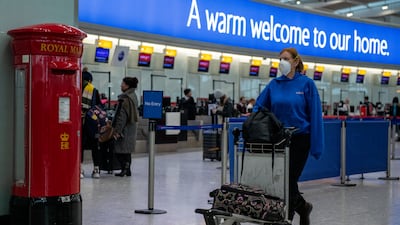
An airline passenger wearing a face mask pushes her bags through Heathrow's Terminal 5 during the coronavirus pandemic in 2020 -
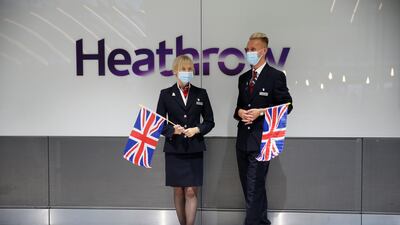
British Airways employees welcome Olympians returning from the Tokyo Olympics in 2021 -
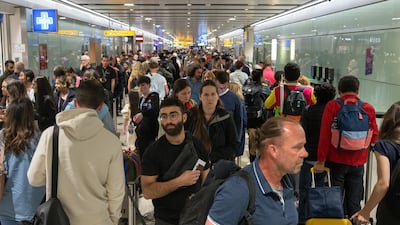
Travellers wait in a long queue to pass through the security check in 2022


Mr Holland-Kaye said: “New colleagues are learning fast but are not yet up to full speed. However, there are some critical functions in the airport which are still significantly under-resourced, in particular ground handlers, who are contracted by airlines to provide check-in staff, load and unload bags and turnaround aircraft.
“They are doing the very best they can with the resources available and we are giving them as much support possible, but this is a significant constraint to the airport's overall capacity.
“However, over the past few weeks, as departing passenger numbers have regularly exceeded 100,000 a day, we have started to see periods when service drops to a level that is not acceptable: long queue times, delays for passengers requiring assistance, bags not travelling with passengers or arriving late, low punctuality and last-minute cancellations.
“Our colleagues are going above and beyond to get as many passengers away as possible, but we cannot put them at risk for their own safety and well-being.”

Mr Holland-Kaye said that because some airlines had taken action but others had not, it had been time to intervene with what he called a “capacity cap”, running from July 12 to September 11.
“Our assessment is that the maximum number of daily departing passengers that airlines, airline ground handlers and the airport can collectively serve over the summer is no more than 100,000,” he said.
“The latest forecasts indicate that even despite the amnesty, daily departing seats over the summer will average 104,000 — giving a daily excess of 4,000 seats. On average only about 1,500 of these 4,000 daily seats have currently been sold to passengers, and so we are asking our airline partners to stop selling summer tickets to limit the impact on passengers.”
He said the move was needed to protect the safety of staff and passengers.
Guy Hobbs, Acting Editor of Which? Travel, said: “While this cap may ease the unacceptable chaos passengers are facing at the UK's biggest airport, thousands of people will now be worrying about whether their flight or holiday plans are about to fall apart.
“Heathrow must work with airlines to quickly provide clarity on which flights are being cut, and airlines need to be upfront with those passengers affected about their right to be rebooked at the earliest opportunity.”
Willie Walsh, director general of the International Air Transport Association and former head of British Airways, panned moves to tell airlines to limit the number of seats they sell to limit summer disruption.
He said the airport underestimated the speed of the pandemic recovery and was focused on profit at the expense of airlines that must now foot the bill.
Europe relaxes rules
Meanwhile, the European Commission proposed to make the bloc's “use-it-or-lose-it” airport slot rule more flexible to respond to unexpected developments in the future, such as pandemic or war.
Airlines normally have to use 80 per cent of their prescribed airport slots to avoid losing them to rivals, but the EU executive suspended the rule during the Covid-19 crisis and set the threshold at 64 per cent for the 2022 summer season.
The Commission announced on Tuesday that the standard slot use rate of 80 per cent would return on October 30, while also prolonging the possibility of applying the “justified non-use of slots” (JNUS) exemption created during the pandemic.
“Maintaining this tool will give us sufficient flexibility — an insurance — to act in case of a new deterioration of the public health situation, or indeed if we are faced with further fallout from the Russian war in Ukraine,” EU Transport Commissioner Adina Valean said in a statement.
Under the proposal, which will need approval by the European Parliament and EU governments, airlines would be allowed to use exemptions due to health emergencies, natural disasters or political unrest.
The Commission would be able to lower the use rate if air traffic falls below 80 per cent, compared with 2019 figures, for four consecutive weeks due to Covid-19 or as a result of Russia's invasion of Ukraine.
The EU executive said it was also proposing measures to mitigate the consequences of the Ukraine war and to restore air connectivity between the EU and Ukraine when possible, including a 16-week recovery period before slot-use requirements become applicable again.

