



British Airways will cancel flights for more than 100,000 holidaymakers to try to avoid the travel disruption recently at UK airports.
BA will pull an estimated 800 more flights from its summer schedule as it looks to reduce last-minute cancellations while staffing shortages and long queues continue.
“As the entire aviation industry continues to face the most challenging period in its history, regrettably it has become necessary to make some further reductions,” a BA spokesman said.
“We’re in touch with customers to apologise and offer to rebook them or issue a full refund.”
More than 76,000 seats are being cancelled from Heathrow and 29,400 from Gatwick on flights to more than 70 destinations, including Malaga, Ibiza, Palma, Faro and Athens.
This week, the government is allowing airlines a one-off amnesty on airport slots rules, letting them cancel flights without being penalised until Friday.
Slots are used to manage capacity at the busiest airports, authorising airlines to take off or land at a particular airport at a certain time.
Airlines must use slots a specified number of times each season to keep them, and this “amnesty” is giving them the leeway to put a more manageable schedule in place without losing slots by cancelling flights.
____________________________________
How flyers fell out of love with British Airways
____________________________________
It comes after ministers told airlines to review their plans after months of travel chaos.
In May, BA announced that it would cancel 10 per cent of flights between April and October in an effort to avoid having to cut flights on the day of departure.
But the latest cancellations take this figure to about 11 per cent.
The cancelled flights represent 14 per cent of those scheduled from Gatwick and nearly 7 per cent from Heathrow.
“We took pre-emptive action earlier this year to reduce our summer schedule to provide customers with as much notice as possible about any changes to their travel plans,” BA said.
The airline welcomed the slot amnesty, saying it was “making it easier to consolidate some of our quieter daily flights to multi-frequency destinations well in advance, and to protect more of our holiday flights”.
Long queues, cancellations and baggage problems have plagued the travel sector’s comeback from coronavirus restrictions. There have also been strikes across Europe adding to the problems.
Part of the problem in the UK is a shortage of security-cleared staff who can handle baggage and use X-ray machines, which is slowing take-offs and creating long queues.
A spokesman for Heathrow said the slot amnesty was “good news for passengers” and would help.
“This amnesty will enable airlines to make early choices to consolidate their schedules, boosting the resilience of summer operations and giving passengers the confidence they deserve before their journeys,” he said.
“We encourage airlines to take this opportunity to reconsider their summer schedules without penalty and inform passengers as early as possible of any changes.”
____________________________________
Decades of flight at Heathrow
-
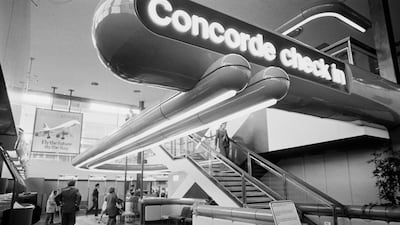
Heathrow Airport in London, the UK's busiest, has been a travel hub for decades. Here The National takes a look back at Heathrow through the years. All photos: Getty Images -
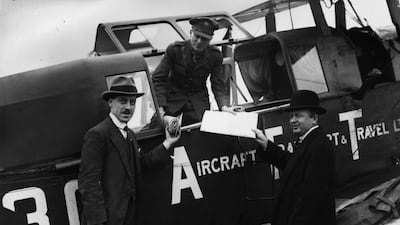
An Airco De Havilland biplane of the British airline, Aircraft Transport and Travel Limited, about to leave on the company’s inaugural flight from Hounslow Heath Aerodrome, later known as Heathrow, to Le Bourget, Paris, in August 1919 -
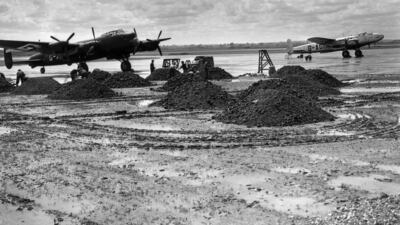
Waterlogged runways at London Airport - Heathrow's original name - one week before it became Britain's main aerial gateway to the US in 1946 -
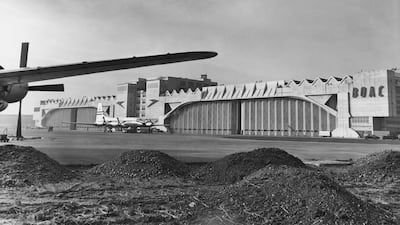
The new BOAC maintenance headquarters at London Airport circa 1955 -
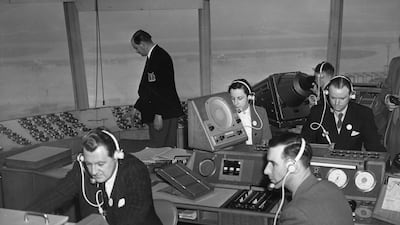
The air traffic control room at the airport's new terminal in 1955 -
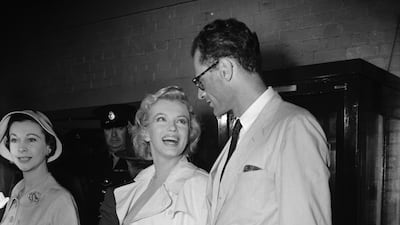
US film star Marilyn Monroe with her husband, playwright Arthur Miller, after arriving at the airport in July 1956 -
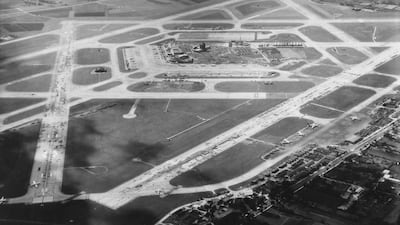
An aerial view showing the runways in 1958 -

The arrivals and departures board in 1960 -

A new airport gift shop, selling items by Chanel, Wedgwood and Pringle of Scotland, in 1961 -
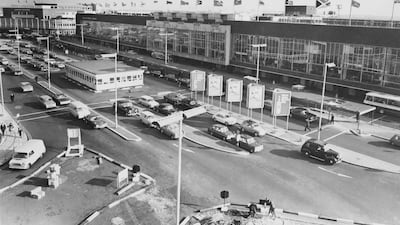
The Queen's Building and the No. 1 Building Europa at Heathrow in 1965 -
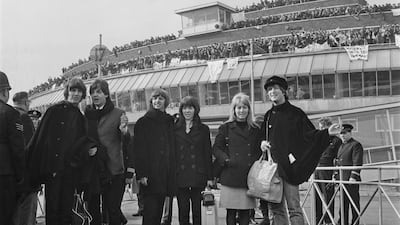
The Beatles leave Heathrow for Salzburg in Austria, to resume filming of the movie Help!, in 1965 -
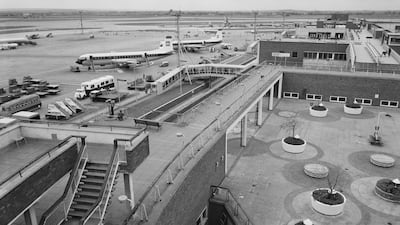
Passenger terminal gates at Heathrow in 1966 -
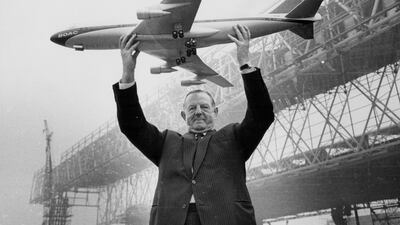
Keith Granville, managing director of BOAC, holding up a model of the Boeing 747 jet, with the new aircraft hangars under construction in the background, at Heathrow in 1969 -
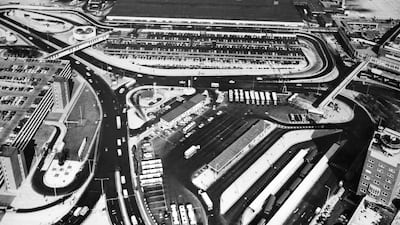
An aerial view of Heathrow in 1970 -
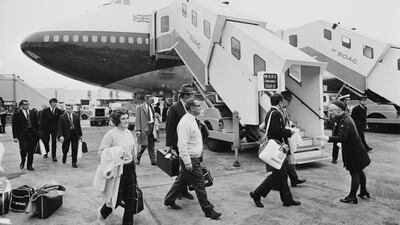
Passengers boarding the first BOAC Jumbo Jet 747 used for a commercial flight, from London Heathrow to New York, in 1971 -
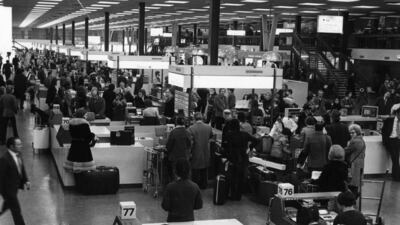
Passengers going through the departure lounge at Heathrow in 1973 -
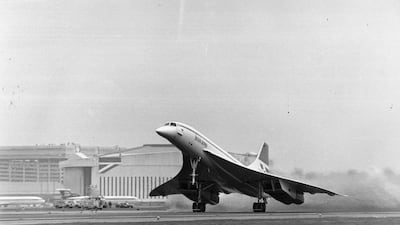
Concorde takes off from Heathrow on her first commercial flight for British Airways in 1976 -
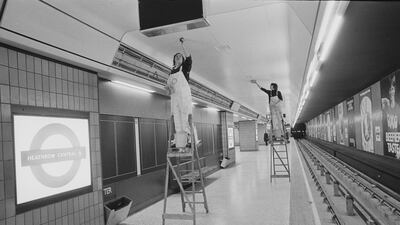
Men at work finalising the Heathrow Central underground station before its opening in 1977 -
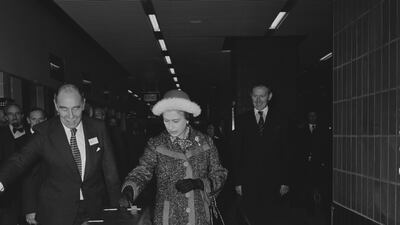
Queen Elizabeth II passing though the Tube gates at Heathrow Central station on its opening in 1977 -
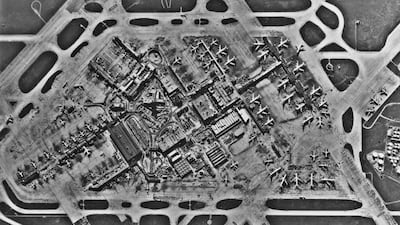
An aerial view of Heathrow in 1978 -

Passengers waiting near a departures board in 1979 -
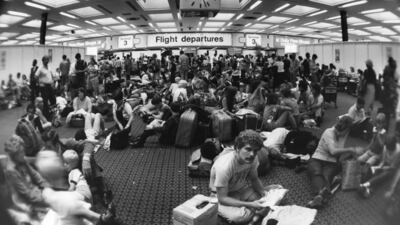
Holidaymakers waiting in the departure lounge at Terminal 3 of Heathrow in 1981 -
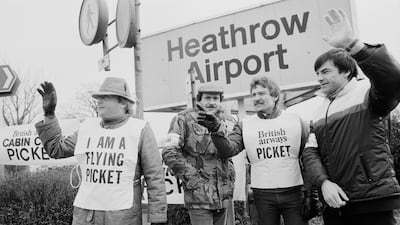
British Airways employees protesting at Heathrow in 1984 -
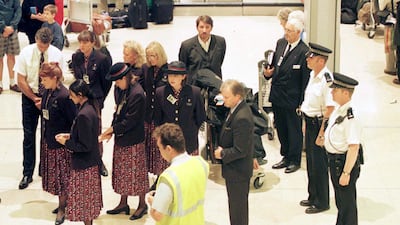
Passengers and staff observe a silence in Heathrow's Terminal One to mark the beginning of the funeral of Diana, Princess of Wales, in 1997 -
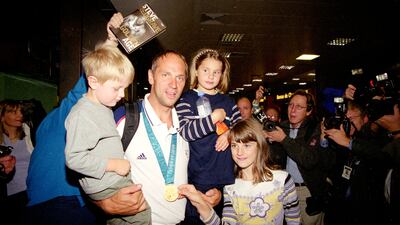
Rower Steve Redgrave at Heathrow with daughters Sophie and Natalie and son Zak after returning from the Sydney 2000 Olympic Games with his gold medal -
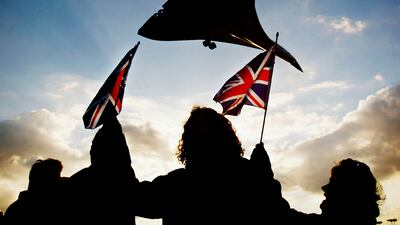
Spectators watch the last Concorde land at Heathrow in 2003 -
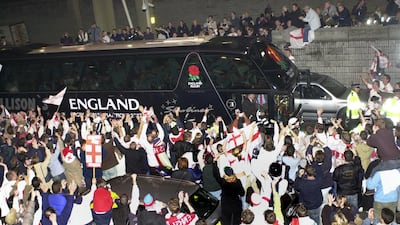
Fans surround the coach carrying the England rugby team at Heathrow, as they arrived from Sydney after winning the World Cup in 2003 -
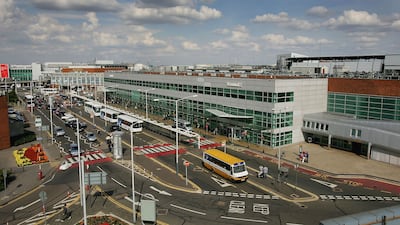
Heathrow's Terminal 2 in 2004 -
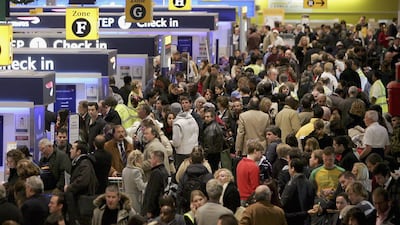
Passengers queue to check in at Terminal 1 of Heathrow Airport during the Christmas 2006 and New Year period -
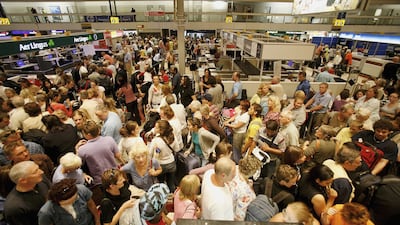
Passengers wait at Terminal 1 on August 10, 2006, after airport security was raised to critical when a terrorist plot to blow up planes in mid-flight from the UK to the US was disrupted by police -
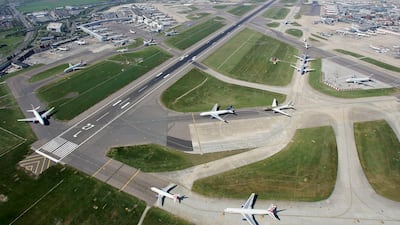
Planes queueing to take off at Heathrow in 2007 -
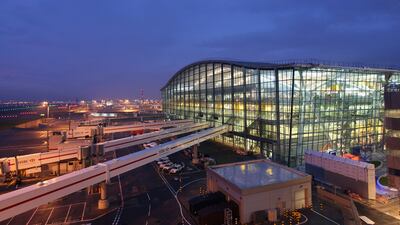
The new Terminal 5 at Heathrow in 2008 -
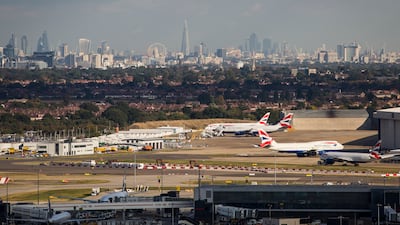
Aircraft at Heathrow Airport in front of the London skyline in 2016 -
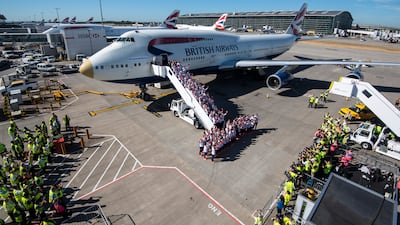
Members of Team GB arrive from Rio de Janeiro at Heathrow, after returning from the 2016 Olympics, which saw Great Britain's strongest performance at the Games in over a century -

A composite photo shows planes taking off from Heathrow in November 2016. Forty-two planes were captured between 10.17am and 11.17am and a montage was created from those single images -
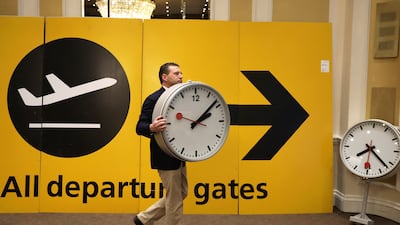
Items are arranged during an auction preview at Heathrow in 2018. The contents of Terminal 1, which closed in 2015, were being sold -
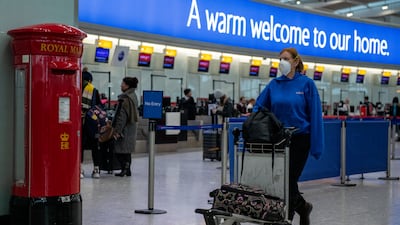
An airline passenger wearing a face mask pushes her bags through Heathrow's Terminal 5 during the coronavirus pandemic in 2020 -
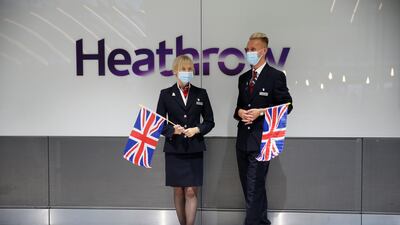
British Airways employees welcome Olympians returning from the Tokyo Olympics in 2021 -
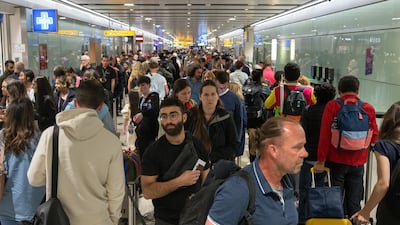
Travellers wait in a long queue to pass through the security check in 2022


____________________________________
Heathrow ordered 30 flights for the morning of June 30 to be cancelled at short notice in a rare “schedule intervention” because it would have been unable to handle the passengers.
BA workers based at the west London airport are deciding on strike dates, which are likely to be during the peak summer holiday period.
Members of the GMB and Unite unions, including check-in staff, voted in favour of industrial action in a dispute over pay.
“An amnesty on slot rules is potentially good news for passengers, as it should encourage airlines who need to cancel more flights to do so now rather than at the last minute, and could ease disruption this summer by letting better-staffed airlines step in and fly routes,” Rory Boland, editor of Which? Travel, said.
“For this to work, carriers must surrender their slots to other airlines if they are unable to fulfil them.
"This will help reduce cancellations and end the unsustainable practice of airlines flying near-empty planes to retain slots.”

