


On the 40th anniversary of the end of the UK’s conflict with Argentina, Royal Air Force Typhoon jets, hundreds of soldiers and a Royal Navy ship are among the British military presence still on the islands.
Tuesday marks the 40th anniversary of when Argentina surrendered in 1982, following weeks of fighting.
These are the forces that are still stationed on the remote archipelago in the South Atlantic.
Mount Pleasant
Now a British Overseas Territory, the Falkland Islands’ defence is provided by the United Kingdom.
After the conflict a permanent military base, RAF Mount Pleasant, was built on the Falklands and opened in 1985 by the Duke of York.
The base is now the centre of the British military’s presence in the South Atlantic, with between 1,300 and 1,700 military and civilian personnel based there at any time.
Royal Air Force
At the heart of the base is its airfield and two runways. Four Typhoon jets are based here, and they carry out “deterrence patrols” in an effort to ensure the security of the Falklands, the South Sandwich Islands and South Georgia, according to the Royal Air Force.
A Voyager air-to-air refuelling tanker is also permanently based in the Falklands, supporting the Typhoon jets, along with an A400M Atlas transport aircraft.
An early warning and airspace control network is maintained by the British military, designed to monitor the skies above the Falkland Islands.
-

Catherine, Duchess of Cambridge, meets those who supported the UK's rescue of civilians from Afghanistan at RAF Brize Norton. Photos Getty Images -
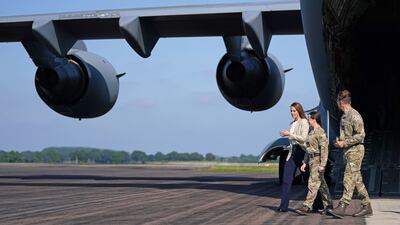
The Duchess of Cambridge walks near an RAF C17 Globemaster at RAF Brize Norton. Operation Pitting involved every unit at the military base. -
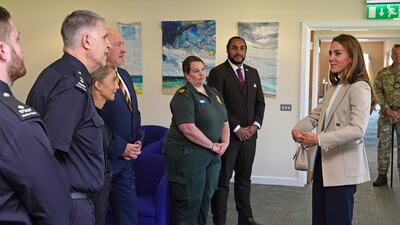
The Duchess of Cambridge met RAF aircrews and medics who helped rescue thousands of Afghans following the Taliban takeover. -
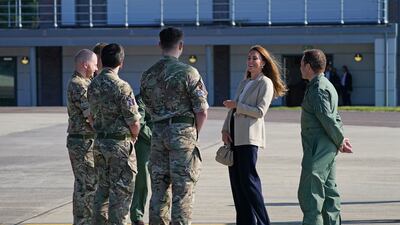
Servicemen and women greeted the Duchess of Cambridge with a salute before she was seen laughing and chatting with them. -
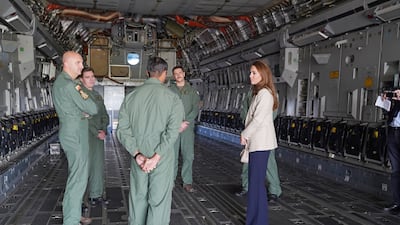
The Duchess of Cambridge stands in the fuselage of an RAF C17 Globemaster at RAF Brize Norton. -
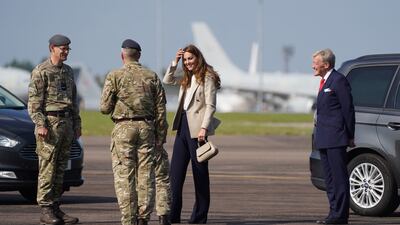
The Duchess of Cambridge arrives at RAF Brize Norton. -
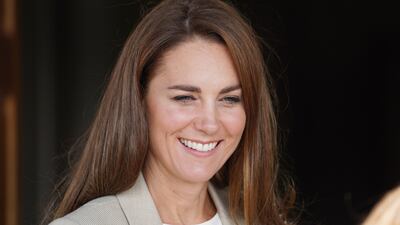
The duchess smiles as she greets RAF aircrews and medics.


Royal Navy
The Falkland Islands has a Royal Navy vessel permanently assigned to it, which is currently HMS Forth.
One of the Royal Navy’s second batch of offshore patrol vessels, it is armed with a 30mm cannon and patrols the South Atlantic.
-
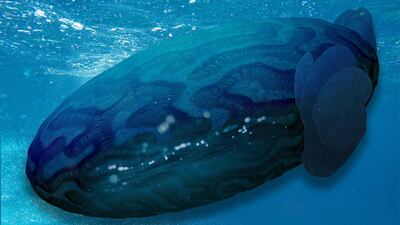
Britain's underwater platform mothership, a minimally manned vessel with a brain coral outer skin. All photos: Royal Navy -
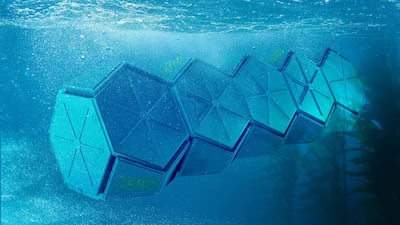
The underwater platform has 'hex blocks' - drones for underwater transport. They can be stowed away within the fold of the brain coral skin. -
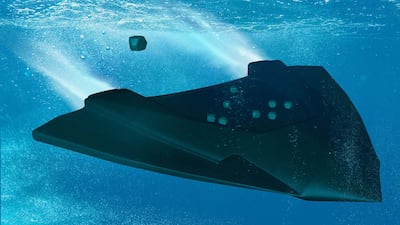
An autonomous vessel with the underwater platform. -
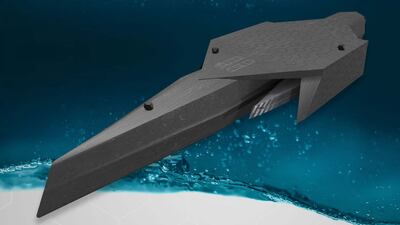
The navy's future fleet also includes a 'surface combatant mother ship'. -
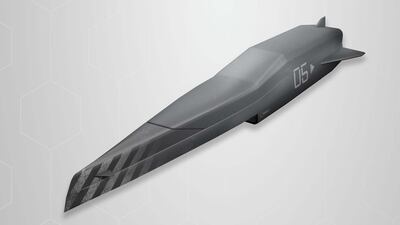
A drone ship, which is stowed under the mother ship. -
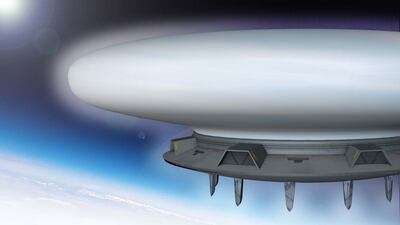
A base station where fast strike vehicles will dock. -
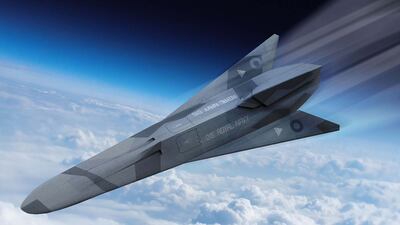
A fast strike vehicle. -
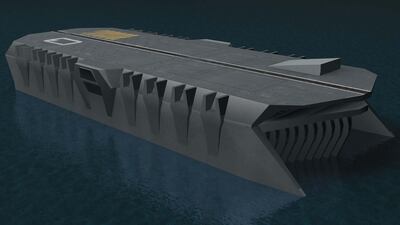
The carrier vessel. -
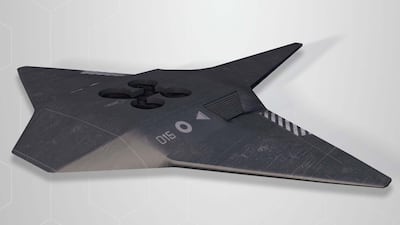
The carrier vessel's unmanned craft.


British Army
The British Army also maintains a permanent presence, with hundreds of troops training on the Falklands at all times.
They have a working relationship with the Falkland Islands Defence Force, a small volunteer unit comprising residents and funded by the Falkland Islands government.
In March 2022, Armed Forces minister James Heappey said in response to a parliamentary written question: “The Ministry of Defence undertakes regular assessments of possible threats to the Falkland Islands to ensure that an appropriate defensive capability is maintained.
“Our forces in the South Atlantic are at the appropriate level to ensure the defence of the islands.”

