

A parliamentary committee has warned the Ministry of Defence that it must fix or scrap its troubled Ajax armoured vehicle programme this year or risk compromising national security.
The Ajax programme has been running for 12 years at a cost of £3.2 billion ($4bn) and is aiming to provide a state-of-the-art reconnaissance vehicle for the British Army, but it has so far failed to deliver a single deployable vehicle.
Ajax has been repeatedly delayed since 2017 due to what the House of Commons Public Accounts Committee has described as “a litany of failures” including noise and vibration problems that injured soldiers testing the vehicles.
In a report published on Friday, the committed said that the ministry still did not know when Ajax would enter service or whether the noise and vibration issues could even be fixed two years after they were first raised.
The committee said management of the programme had been “flawed from the outset” and the ministry had “made fundamental mistakes” in planning and managing the major equipment programme.
As a result, the committee said that the ministry was “failing to deliver” the vehicles the army needed “to better protect the nation and meet Nato commitments”.
“Enough is enough — the ministry must fix or fail this programme before more risk to our national security and more billions of taxpayers’ money wasted,” said chairwoman Dame Meg Hillier.
“These repeated failures are putting strain on older capabilities which are overdue for replacement and are directly threatening the safety of our service people and their ability to protect the nation and meet Nato commitments.”
-
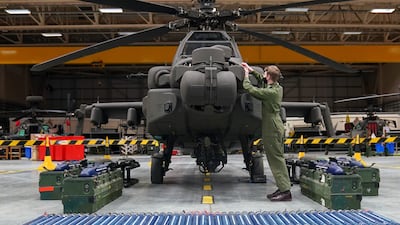
One of the British Army's new AH-64E Apache attack helicopters goes on display at Wattisham Airfield, in Suffolk, eastern England. All photos: PA -
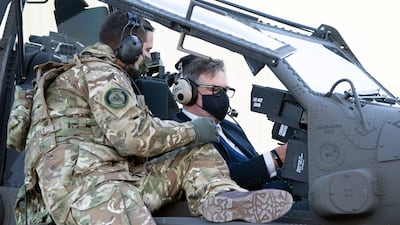
UK Minister for Defence Procurement Jeremy Quinn MP gets a tour of the cockpit of the AH-64E Apache, which is made by US aviation company Boeing. -
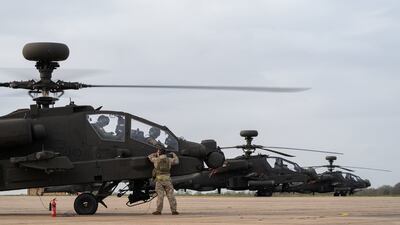
The AH-64E, which detect 256 potential targets simultaneously and prioritise threats in seconds, is undergoing test flights with the British Army. -
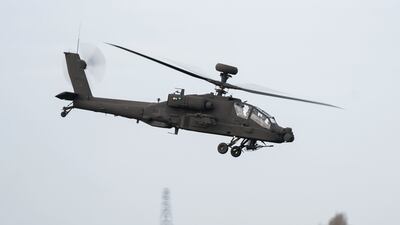
Boeing has delivered 14 AH-64E Apaches to Wattisham. The manufacturer says the AH-64E will be in production until at least 2028, and serve as the world’s primary attack helicopter into the 2060s. -

30mm ammunition and 70mm rockets for the AH-64E. -
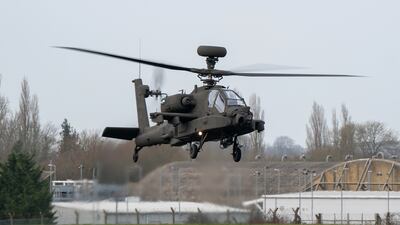
The new Apache can detect targets up to a range of 16 kilometres.


The ministry said any delays would not come at extra cost to the taxpayer due to the nature of the contract and added that no further payments would be made to manufacturer General Dynamics until the department was “satisfied with the future trajectory of the programme”.
The committee's report said delays to the Ajax programme had forced the army to make “operational compromises” including prolonging the use of the Warrior armoured vehicle, which entered service in 1987.
Although the army is “cautiously optimistic” that Ajax can enter service by 2030, the committee said that any further delays would increase the risk of missing even this target and urged the ministry to explore alternatives should the contract with General Dynamics collapse.
The ministry agreed a fixed-price contract with General Dynamics worth £5.5bn ($6.9bn) for 589 Ajax armoured vehicles, but so far, only 26 have been delivered and these can only be used for training purposes.
The committee said it doubted that the programme could be delivered within existing arrangements and that it expected a decision on whether to persevere with Ajax or scrap the programme entirely by the end of the year.
“The UK contributes more than its force requirements and readiness levels asked of it by Nato,” said a ministry representative.
“The defence secretary has been clear that Ajax is a troubled programme. We agree with many of the committee’s recommendations and are actively taking steps to correct these.
“Our firm price contract means any delays will not cost the taxpayer more. General Dynamics have received no payments under the contract in 2021 and 2022. No further payments will be made until we are satisfied with the future trajectory of the programme.”
General Dynamics has been approached for comment.

