British Home Secretary Priti Patel speaks on Ukraine at the House of Commons on March 1. Reuters

Economic Crime Bill: UK MPs back reforms aimed at seizing oligarchs’ assets


Soraya Ebrahimi
  • English
  • Arabic

Live updates: follow the latest news on Russia-Ukraine

New laws designed to tackle “dirty money” hidden in the UK have cleared the House of Commons, amid calls for ministers to go further in seizing oligarchs’ assets.

The Economic Crime (Transparency and Enforcement) Bill received an unopposed third reading after it was rushed through the Commons on Monday.

Reforms contained in the Bill have been delayed for months and only moved up the government’s list of priorities after the Ukraine-Russia crisis.

They will undergo further scrutiny in the House of Lords, with Business Minister Paul Scully committing the government to making further amendments that deal with concerns over potential loopholes in the Bill.

These include dealing with what Conservative former leader Sir Iain Duncan Smith called a “back door” for those hoping to avoid reporting requirements under the new register of overseas entities.

The legislation is set to establish a new register of overseas entities requiring foreign owners of property in the UK to declare their true identity.

The register would need to be updated each year and punishments for failing to declare details, or submitting false information, would result in the asset being frozen and it cannot be sold or rented out.

The Bill states an offence is committed if a person acts “knowingly or recklessly” when submitting false information to the register, although Mr Smith and others warned this could set the threshold too high and not result in any court action.

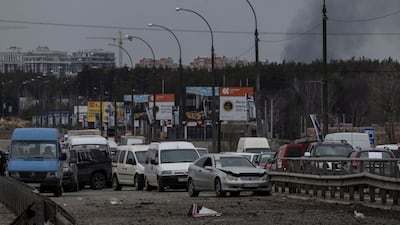
  • Cars are left abandoned on a road as residents flee the town of Irpin, Ukraine after days of heavy shelling. Reuters
    Cars are left abandoned on a road as residents flee the town of Irpin, Ukraine after days of heavy shelling. Reuters
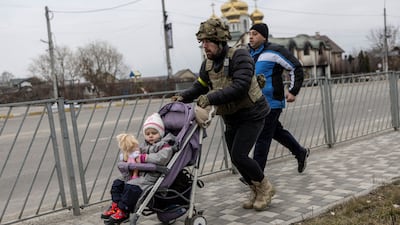
  • A Ukrainian soldier helps a family fleeing from Irpin. Reuters
    A Ukrainian soldier helps a family fleeing from Irpin. Reuters
  • A bus passes the Duke of Wellington statue, which has a traffic cone in the colours of the flag of Ukraine placed on top of it, in Glasgow, Scotland. AP
    A bus passes the Duke of Wellington statue, which has a traffic cone in the colours of the flag of Ukraine placed on top of it, in Glasgow, Scotland. AP
  • Ukrainian children sleep at the reception point at the train station in Przemysl, Poland. Reuters
    Ukrainian children sleep at the reception point at the train station in Przemysl, Poland. Reuters
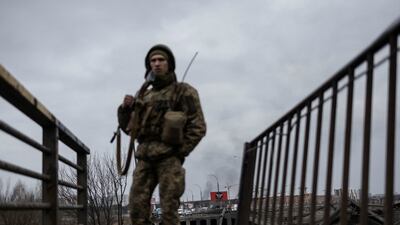
  • Smoke rises as a Ukrainian soldier stands by the only escape route used by locals to flee from the town of Irpin. Reuters
    Smoke rises as a Ukrainian soldier stands by the only escape route used by locals to flee from the town of Irpin. Reuters
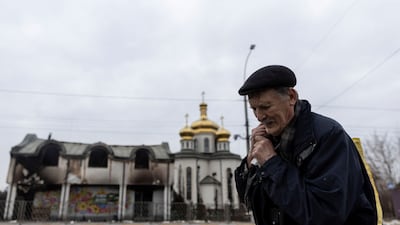
  • A man flees from Irpin. Reuters
    A man flees from Irpin. Reuters
  • A screengrab from footage released by the Russian Defence Ministry shows a purported Russian tank unit advancement in the Kyiv region. AFP
    A screengrab from footage released by the Russian Defence Ministry shows a purported Russian tank unit advancement in the Kyiv region. AFP
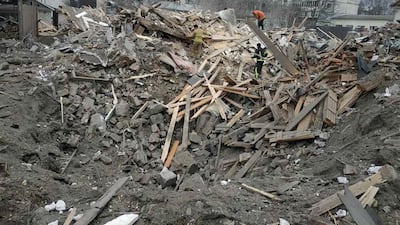
  • People walk on debris of residential buildings damaged by shelling in the Zhytomyr region. Reuters
    People walk on debris of residential buildings damaged by shelling in the Zhytomyr region. Reuters
  • A damaged residential building after Russian multiple rocket launchers shelled the area in the southern city of Mykolaiv. AFP
    A damaged residential building after Russian multiple rocket launchers shelled the area in the southern city of Mykolaiv. AFP
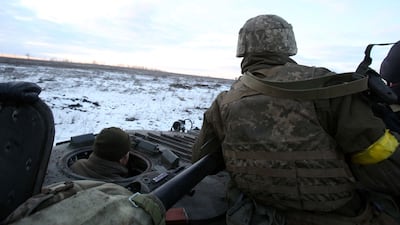
  • Ukrainian soldiers sit in their armoured vehicle after fighting against Russian troops and Russia-backed separatists near Zolote village, Luhansk region. AFP
    Ukrainian soldiers sit in their armoured vehicle after fighting against Russian troops and Russia-backed separatists near Zolote village, Luhansk region. AFP
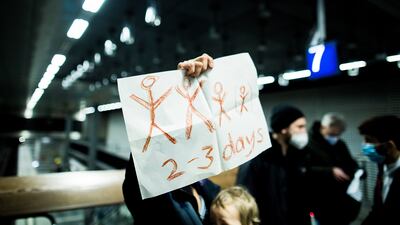
  • A woman offers accommodation for people fleeing Ukraine at the main railway station in Berlin, Germany. Getty Images
    A woman offers accommodation for people fleeing Ukraine at the main railway station in Berlin, Germany. Getty Images
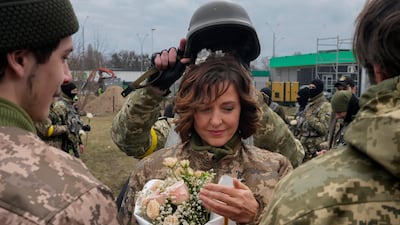
  • A soldier holds a helmet as a wedding crown during the ceremony for members of the Ukrainian Territorial Defence Forces Lesia Ivashchenko and Valerii Fylymonov, at a checkpoint in Kyiv. AP
    A soldier holds a helmet as a wedding crown during the ceremony for members of the Ukrainian Territorial Defence Forces Lesia Ivashchenko and Valerii Fylymonov, at a checkpoint in Kyiv. AP
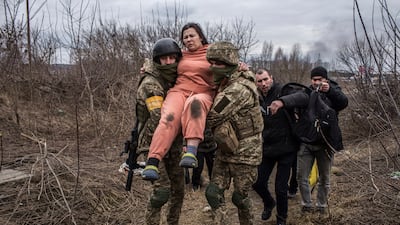
  • Ukrainian soldiers carry a woman fleeing the town of Irpin. AP
    Ukrainian soldiers carry a woman fleeing the town of Irpin. AP
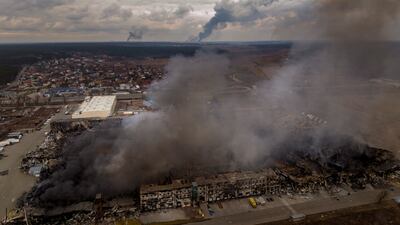
  • A factory and warehouse burn after being bombarded in Irpin. AP
    A factory and warehouse burn after being bombarded in Irpin. AP
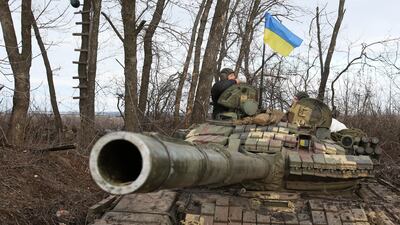
  • Ukrainian soldiers near Zolote. AFP
    Ukrainian soldiers near Zolote. AFP
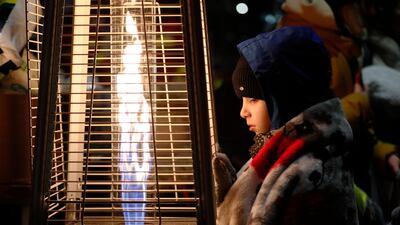
  • A Ukrainian refugee boy, wearing a blanket on his shoulders, warms his hands with a gas heater shortly after crossing the Siret border into northern Romania. EPA
    A Ukrainian refugee boy, wearing a blanket on his shoulders, warms his hands with a gas heater shortly after crossing the Siret border into northern Romania. EPA
  • People demonstrate against the Russian military operation in Ukraine in Buenos Aires, Argentina. EPA
    People demonstrate against the Russian military operation in Ukraine in Buenos Aires, Argentina. EPA
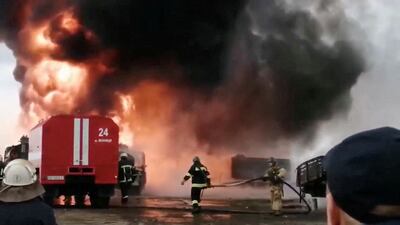
  • First responders work at the scene after a missile hit a building at Havryshivka Vinnytsia International Airport in Vinnytsia, Ukraine. Reuters
    First responders work at the scene after a missile hit a building at Havryshivka Vinnytsia International Airport in Vinnytsia, Ukraine. Reuters
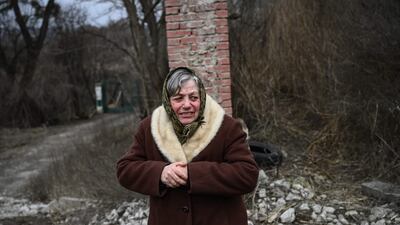
  • A woman at a checkpoint on the road to Kyiv after her evacuation from a nearby town. AFP
    A woman at a checkpoint on the road to Kyiv after her evacuation from a nearby town. AFP
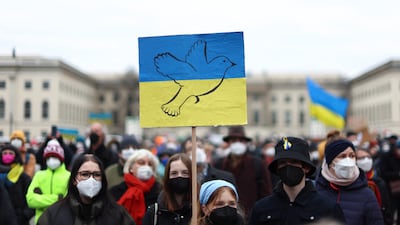
  • A placard in the Ukrainian colours is held up at an anti-war demonstration the Bebelplatz square in Berlin, Germany. Reuters
    A placard in the Ukrainian colours is held up at an anti-war demonstration the Bebelplatz square in Berlin, Germany. Reuters
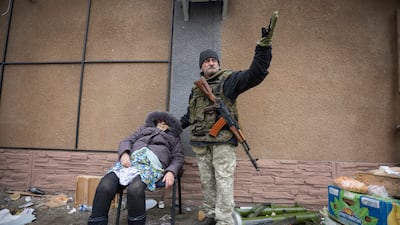
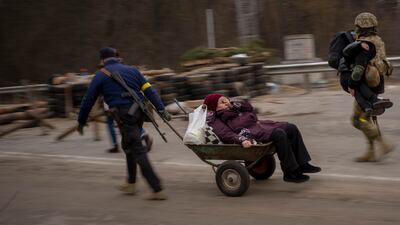
  • A Ukrainian serviceman helps an elderly woman in Irpin, 20 kilometres north-west of the capital Kyiv. AP Photo
    A Ukrainian serviceman helps an elderly woman in Irpin, 20 kilometres north-west of the capital Kyiv. AP Photo
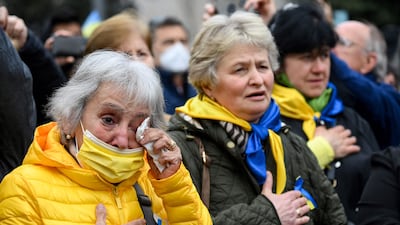
  • Protesters cry during a demonstration in support of Ukraine at the Plaza Catalunya square in Barcelona. AFP
    Protesters cry during a demonstration in support of Ukraine at the Plaza Catalunya square in Barcelona. AFP
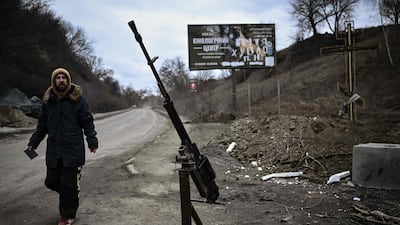
  • A man walks past a machine gun at a checkpoint next to the last bridge on the road that connects the town of Stoyanka to the outskirts of Ukraine's capital Kyiv. AFP
    A man walks past a machine gun at a checkpoint next to the last bridge on the road that connects the town of Stoyanka to the outskirts of Ukraine's capital Kyiv. AFP
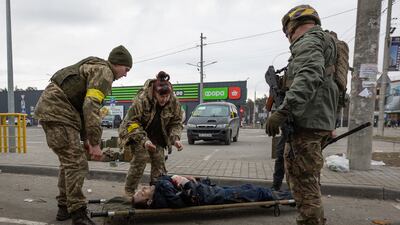
  • Ukrainian servicemen put a wounded man on a stretcher in Irpin. AP Photo
    Ukrainian servicemen put a wounded man on a stretcher in Irpin. AP Photo
  • People board a train to return to Ukraine after getting supplies in Zahony, Hungary. AP Photo
    People board a train to return to Ukraine after getting supplies in Zahony, Hungary. AP Photo
  • Balloons in the colors of Ukraine during a demonstration against the Russian attack on Ukraine, in Mainz, Germany. AP
    Balloons in the colors of Ukraine during a demonstration against the Russian attack on Ukraine, in Mainz, Germany. AP
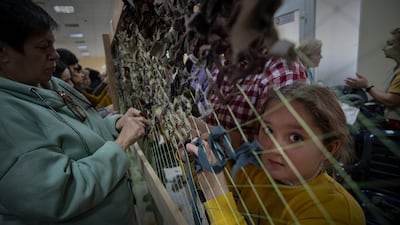
  • A Ukrainian girl helps to weave a camouflage net for the Ukrainian army, in Odesa. EPA
    A Ukrainian girl helps to weave a camouflage net for the Ukrainian army, in Odesa. EPA
  • Molotov cocktails prepared by a group of volunteers in Odesa. Hundreds are made every day. EPA
    Molotov cocktails prepared by a group of volunteers in Odesa. Hundreds are made every day. EPA
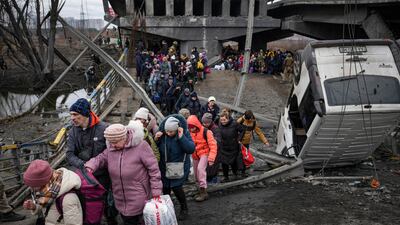
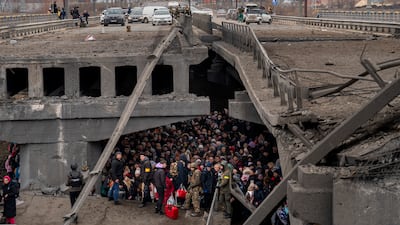
  • Ukrainian servicemen assist people fleeing the town of Irpin after crossing the Irpin River on an improvised path under a bridge that was destroyed by a Russian air strike. AP Photo
    Ukrainian servicemen assist people fleeing the town of Irpin after crossing the Irpin River on an improvised path under a bridge that was destroyed by a Russian air strike. AP Photo
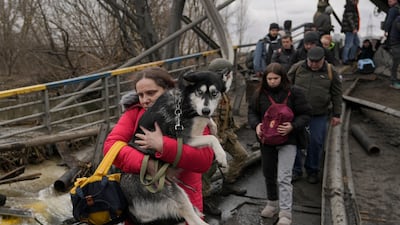
  • A woman holds a dog while crossing the Irpin River on an improvised path under a bridge that was destroyed by a Russian airstrike, while assisting people fleeing the town of Irpin, Ukraine. AP Photo
    A woman holds a dog while crossing the Irpin River on an improvised path under a bridge that was destroyed by a Russian airstrike, while assisting people fleeing the town of Irpin, Ukraine. AP Photo
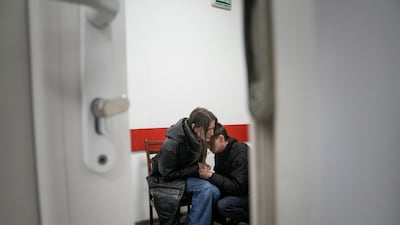
  • Marina Yatsko and her boyfriend Fedor comfort each other at a hospital in Mariupol after her 18-month-old son Kirill was killed by shelling. AP Photo
    Marina Yatsko and her boyfriend Fedor comfort each other at a hospital in Mariupol after her 18-month-old son Kirill was killed by shelling. AP Photo
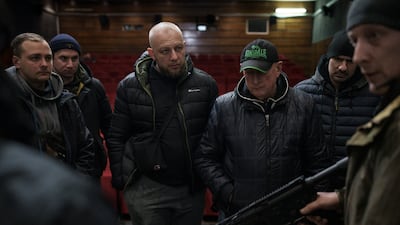
  • Ukrainian civilians receive weapons training in a cinema in Lviv, western Ukraine. AP Photo
    Ukrainian civilians receive weapons training in a cinema in Lviv, western Ukraine. AP Photo
  • Residents flee the town of Irpin, near Kyiv, Ukraine. AP Photo
    Residents flee the town of Irpin, near Kyiv, Ukraine. AP Photo
  • Ukrainian soldiers carry a sick woman as civilians flee Irpin, on the outskirts of Kyiv, after Russian attacks. AP Photo
    Ukrainian soldiers carry a sick woman as civilians flee Irpin, on the outskirts of Kyiv, after Russian attacks. AP Photo
  • Captured Russian soldiers at a press conference in the Interfax news agency in Kyiv, Ukraine. AP Photo
    Captured Russian soldiers at a press conference in the Interfax news agency in Kyiv, Ukraine. AP Photo
  • Ukrainians beneath a destroyed bridge in Irpin. AP Photo
    Ukrainians beneath a destroyed bridge in Irpin. AP Photo
  • A woman fleeing Ukraine on a bus near the border crossing in Korczowa, Poland. AP Photo
    A woman fleeing Ukraine on a bus near the border crossing in Korczowa, Poland. AP Photo
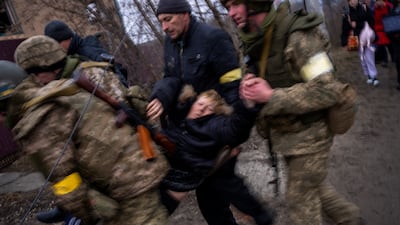
  • A Ukrainian soldier and a militia man help a fleeing family on the outskirts of Kyiv, Ukraine, on March 5, 2022. AP Photo
    A Ukrainian soldier and a militia man help a fleeing family on the outskirts of Kyiv, Ukraine, on March 5, 2022. AP Photo
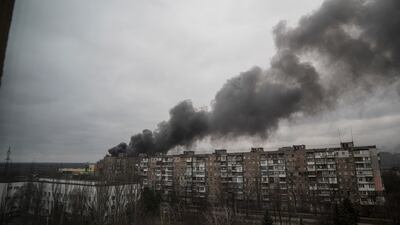
  • Smoke rises after shelling by Russian forces in Mariupol. AP Photo
    Smoke rises after shelling by Russian forces in Mariupol. AP Photo
  • People at a hospital during shelling by Russian forces in Mariupol. AP Photo
    People at a hospital during shelling by Russian forces in Mariupol. AP Photo
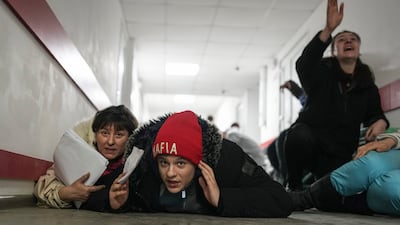
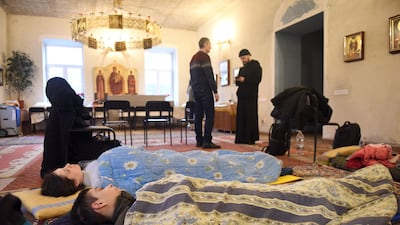
  • Displaced Ukrainians at the Resurrection New Athos Monastery in the western Ukrainian city of Lviv. AFP
    Displaced Ukrainians at the Resurrection New Athos Monastery in the western Ukrainian city of Lviv. AFP

Conservative former minister David Davis also tabled an amendment to enable the government to publish a “hit list” of people being considered for sanctions.

It also sought to deny the named people selling their assets or moving funds or assets out of the UK.

But this proposal was defeated by 300 votes to 234 despite the division list showing nine Conservative MPs rebelled to support it.

Speaking during committee stage of the Bill, Mr Scully told MPs that the government wanted to make sure the “drafting is right” for those backbench amendments that it has “sympathy” with.

“I am happy to work with colleagues who moved those amendments to make sure that we can get that right and see what more we can do in the Lords,” he said.

Pressed by Tory MP Mr Smith to confirm if the government would only seek to add measures from backbench amendments in the Lords rather than in the Commons, Mr Scully said: “Essentially, yes.”

MPs voted 306 to 225 to reject a Labour amendment that sought to compel the government to publish draft legislation on reforms to Companies House.

They also voted voted 303 to 229 to reject an amendment calling for a report on the funding of enforcement agencies linked with reforms to unexplained wealth orders.

Four Tory MPs rebelled to support this proposal, according to the division list.

Amendments to the legislation tabled by ministers in a bid to reduce the time given for overseas entities to comply with new rules, from 18 months to six, were approved by MPs.

Labour suggested the allowance should be cut to 28 days while Conservative former minister Sir Bob Neill said three months would “meet the balance very sensibly”.

Speaking during the Bill’s second reading, Home Secretary Priti Patel called Russian president Vladimir Putin a “gangster” and said: “Putin’s cronies have hidden dirty money in the UK and across the West and we do not want it here.

“Expediting this legislation, which I know this whole House supports, will mean that we can crack down on the people who abuse the UK’s open society.”

As MPs considered amendments, Mr Davis outlined why further action is needed to seize assets.

“What will we see during the months it takes to get these people sanctioned? We’ll see Russians scrambling to sell off their houses, disposing of their businesses, offloading their football clubs,” he said.

He said that by the time the sanctions take effect, the “horse will have well and truly bolted”.

Labour former minister Chris Bryant also pressed the government to go further, adding: “We also want seizure of assets.

“There’s not much point in sanctioning people if it’s not going to have any effect and this is also extremely timely, it has to happen rapidly because of all the things we’ve said about asset flight.”

Liberal Democrat MP Layla Moran welcomed the “long overdue” legislation, adding: “It’s a bit of a Swiss cheese Bill because there is a lot in this Bill that’s good but there are a lot of loopholes that we’re seeking to close.”


Mobile phone packages comparison
MATCH INFO

Uefa Champions League last-16, second leg:

Real Madrid 1 (Asensio 70'), Ajax 4 (Ziyech 7', Neres 18', Tadic 62', Schone 72')

Ajax win 5-3 on aggregate

Ten tax points to be aware of in 2026

1. Domestic VAT refund amendments: request your refund within five years

If a business does not apply for the refund on time, they lose their credit.

2. E-invoicing in the UAE

Businesses should continue preparing for the implementation of e-invoicing in the UAE, with 2026 a preparation and transition period ahead of phased mandatory adoption. 

3. More tax audits

Tax authorities are increasingly using data already available across multiple filings to identify audit risks. 

4. More beneficial VAT and excise tax penalty regime

Tax disputes are expected to become more frequent and more structured, with clearer administrative objection and appeal processes. The UAE has adopted a new penalty regime for VAT and excise disputes, which now mirrors the penalty regime for corporate tax.

5. Greater emphasis on statutory audit

There is a greater need for the accuracy of financial statements. The International Financial Reporting Standards standards need to be strictly adhered to and, as a result, the quality of the audits will need to increase.

6. Further transfer pricing enforcement

Transfer pricing enforcement, which refers to the practice of establishing prices for internal transactions between related entities, is expected to broaden in scope. The UAE will shortly open the possibility to negotiate advance pricing agreements, or essentially rulings for transfer pricing purposes. 

7. Limited time periods for audits

Recent amendments also introduce a default five-year limitation period for tax audits and assessments, subject to specific statutory exceptions. While the standard audit and assessment period is five years, this may be extended to up to 15 years in cases involving fraud or tax evasion. 

8. Pillar 2 implementation 

Many multinational groups will begin to feel the practical effect of the Domestic Minimum Top-Up Tax (DMTT), the UAE's implementation of the OECD’s global minimum tax under Pillar 2. While the rules apply for financial years starting on or after January 1, 2025, it is 2026 that marks the transition to an operational phase.

9. Reduced compliance obligations for imported goods and services

Businesses that apply the reverse-charge mechanism for VAT purposes in the UAE may benefit from reduced compliance obligations. 

10. Substance and CbC reporting focus

Tax authorities are expected to continue strengthening the enforcement of economic substance and Country-by-Country (CbC) reporting frameworks. In the UAE, these regimes are increasingly being used as risk-assessment tools, providing tax authorities with a comprehensive view of multinational groups’ global footprints and enabling them to assess whether profits are aligned with real economic activity. 

Contributed by Thomas Vanhee and Hend Rashwan, Aurifer

Company%20profile
%3Cp%3E%3Cstrong%3ECompany%20name%3A%20%3C%2Fstrong%3EHakbah%0D%3Cbr%3E%3Cstrong%3EStarted%3A%20%3C%2Fstrong%3E2018%0D%3Cbr%3E%3Cstrong%3EFounder%3A%20%3C%2Fstrong%3ENaif%20AbuSaida%0D%3Cbr%3E%3Cstrong%3EBased%3A%20%3C%2Fstrong%3ESaudi%20Arabia%0D%3Cbr%3E%3Cstrong%3ESector%3A%20%3C%2Fstrong%3EFinTech%0D%3Cbr%3E%3Cstrong%3ECurrent%20number%20of%20staff%3A%20%3C%2Fstrong%3E22%20%0D%3Cbr%3E%3Cstrong%3EInitial%20investment%3A%20%3C%2Fstrong%3E%24200%2C000%0D%3Cbr%3E%3Cstrong%3EInvestment%20stage%3A%20%3C%2Fstrong%3Epre-Series%20A%0D%3Cbr%3E%3Cstrong%3EInvestors%3A%20%3C%2Fstrong%3EGlobal%20Ventures%20and%20Aditum%20Investment%20Management%0D%3Cbr%3E%3Cbr%3E%3C%2Fp%3E%0A
Company%20profile%20
%3Cp%3E%3Cstrong%3EName%3A%20%3C%2Fstrong%3EYodawy%3Cbr%3E%3Cstrong%3EBased%3A%3C%2Fstrong%3E%20Egypt%3Cbr%3E%3Cstrong%3EFounders%3A%20%3C%2Fstrong%3EKarim%20Khashaba%2C%20Sherief%20El-Feky%20and%20Yasser%20AbdelGawad%3Cstrong%3E%3Cbr%3ESector%3A%20%3C%2Fstrong%3EHealthTech%3Cbr%3E%3Cstrong%3ETotal%20funding%3A%20%3C%2Fstrong%3E%2424.5%20million%3Cbr%3E%3Cstrong%3EInvestors%3A%20%3C%2Fstrong%3EAlgebra%20Ventures%2C%20Global%20Ventures%2C%20MEVP%20and%20Delivery%20Hero%20Ventures%2C%20among%20others%3Cstrong%3E%3Cbr%3ENumber%20of%20employees%3A%3C%2Fstrong%3E%20500%3Cbr%3E%3C%2Fp%3E%0A

Mercer, the investment consulting arm of US services company Marsh & McLennan, expects its wealth division to at least double its assets under management (AUM) in the Middle East as wealth in the region continues to grow despite economic headwinds, a company official said.

Mercer Wealth, which globally has $160 billion in AUM, plans to boost its AUM in the region to $2-$3bn in the next 2-3 years from the present $1bn, said Yasir AbuShaban, a Dubai-based principal with Mercer Wealth.

Within the next two to three years, we are looking at reaching $2 to $3 billion as a conservative estimate and we do see an opportunity to do so,” said Mr AbuShaban.

Mercer does not directly make investments, but allocates clients’ money they have discretion to, to professional asset managers. They also provide advice to clients.

“We have buying power. We can negotiate on their (client’s) behalf with asset managers to provide them lower fees than they otherwise would have to get on their own,” he added.

Mercer Wealth’s clients include sovereign wealth funds, family offices, and insurance companies among others.

From its office in Dubai, Mercer also looks after Africa, India and Turkey, where they also see opportunity for growth.

Wealth creation in Middle East and Africa (MEA) grew 8.5 per cent to $8.1 trillion last year from $7.5tn in 2015, higher than last year’s global average of 6 per cent and the second-highest growth in a region after Asia-Pacific which grew 9.9 per cent, according to consultancy Boston Consulting Group (BCG). In the region, where wealth grew just 1.9 per cent in 2015 compared with 2014, a pickup in oil prices has helped in wealth generation.

BCG is forecasting MEA wealth will rise to $12tn by 2021, growing at an annual average of 8 per cent.

Drivers of wealth generation in the region will be split evenly between new wealth creation and growth of performance of existing assets, according to BCG.

Another general trend in the region is clients’ looking for a comprehensive approach to investing, according to Mr AbuShaban.

“Institutional investors or some of the families are seeing a slowdown in the available capital they have to invest and in that sense they are looking at optimizing the way they manage their portfolios and making sure they are not investing haphazardly and different parts of their investment are working together,” said Mr AbuShaban.

Some clients also have a higher appetite for risk, given the low interest-rate environment that does not provide enough yield for some institutional investors. These clients are keen to invest in illiquid assets, such as private equity and infrastructure.

“What we have seen is a desire for higher returns in what has been a low-return environment specifically in various fixed income or bonds,” he said.

“In this environment, we have seen a de facto increase in the risk that clients are taking in things like illiquid investments, private equity investments, infrastructure and private debt, those kind of investments were higher illiquidity results in incrementally higher returns.”

The Abu Dhabi Investment Authority, one of the largest sovereign wealth funds, said in its 2016 report that has gradually increased its exposure in direct private equity and private credit transactions, mainly in Asian markets and especially in China and India. The authority’s private equity department focused on structured equities owing to “their defensive characteristics.”

Updated: March 08, 2022, 5:12 AM