

Nato needs to rapidly develop a new defence strategy to combat the reality of Russia being directly on its borders, a former US deputy defence secretary has said.
Jim Townsend said that if Russia conquers Ukraine along with controlling Belarus, the alliance will have to rip up its current defence doctrine and station heavy armour and troops on its eastern flank.
There will also have to be a considerable increase in European defence spending, potentially rising well above the current target, 2 per cent of GDP, set for Nato members, Mr Townsend and leading strategist Dr Jamie Shea told Britain’s Defence Committee.
European powers will also have to provide much of their own defensive power, with the US now more focused on the Pacific and the China threat.
Nato required a “whole new concept” to address President Vladimir Putin and it was no longer time to for “soft pedalling” by labelling Russia as a competitor rather than an enemy, said Mr Townsend, whose duties covered Russia and Nato policy during President Barack Obama’s administration.
“We’re going to have to really put the screws on all the allies to make sure we have what it takes to deter Putin,” he told MPs. “We have to assume he will be here, and that’s going to call for our allies to be doing a lot more than they’re doing now and Germany’s going to have to lead the way.”
But he said Nato had “played a great role” in demonstrating European unity against Russian aggression, although it would not put forces in Ukraine unless there was a “coalition of the willing”.

“There is nothing like fear to not only pull an alliance together but to get nations to do the right thing and the great example of that is Germany,” the former Pentagon official said. “Putin has done a great service to Nato and to the West by putting the fear of the wolf inside the house.”
Shortly after the Russian invasion, Germany announced it was increasing its defence budget to $100 billion a year and would exceed the requirement of 2 per cent GDP spending for Nato members.
With the extra funding Berlin is now expected to become a key Nato player in developing new weapons systems as well as increasing the size of its armed forces.
But there are deep concerns over the outcome of the war. If Russia loses, Mr Putin will be marginalised and perhaps resort to greater violence, including the use of nuclear weapons.
“What we don’t want to have is a Putin trapped if things don't go very well, we don't want him to be a wounded animal. We’ve got to figure out a way that we can help him to de-escalate,” said Mr Townsend, who is also of the Centre for a New American Security.
If the Russian leader conquers Ukraine, that will present other problems.
“If Ukraine collapses then it’s game over and we're going to deal with a rabid Putin on our hands.”
But even if Mr Putin did achieve his military objectives he will be left with a population incandescent at the needless deaths, Mr Townsend said.
“What will he do with a nation that is furious and has an armed insurgency? How does he expect to keep a puppet in Kiev? How does he go occupy that country and it not be very painful? It’s not just the fighting we have to worry about but what comes afterwards.”
The new Russian threat meant that Nato now had to “tear up” its post-Cold War defence strategy and make the “big choice” of stationing far more troops in the east, said Dr Jamie Shea, president of the Centre for War Studies at Southern Denmark University.
-

Damage after the shelling of buildings in central Kharkiv, Ukraine. EPA -
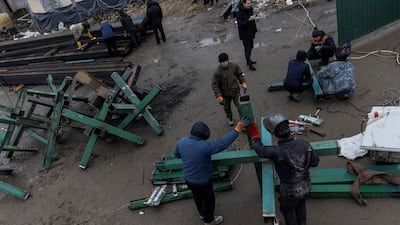
Workers from a local construction company weld anti-tank obstacles to be placed on roads around Kyiv as Russia's invasion of Ukraine continues. Reuters -
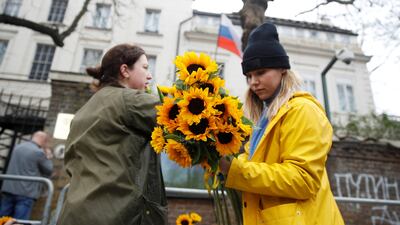
Anti-war protesters attach sunflowers to barriers in front of the Russian embassy. Reuters -
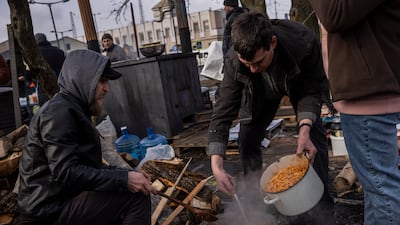
Ukrainian volunteers prepare food for displaced people outside Lviv railway station in western Ukraine. AP -
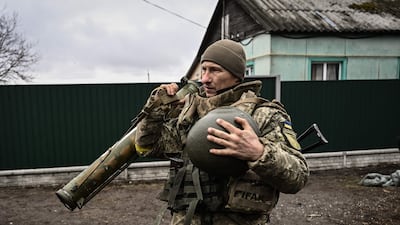
A Ukrainian soldier holds an anti-tank launcher north-east of Kyiv. AFP -
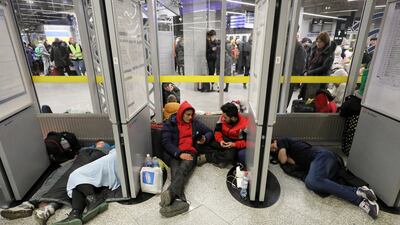
Ukrainian refugees rest at Warsaw East train station in Poland. EPA -
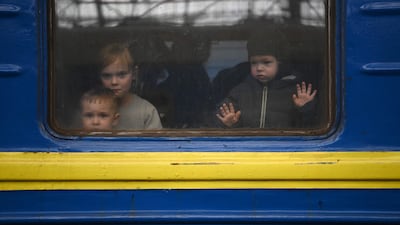
Children look out from a carriage window as a train prepares to depart from a station in Lviv to the town of Uzhhorod near the border with Slovakia. AFP -
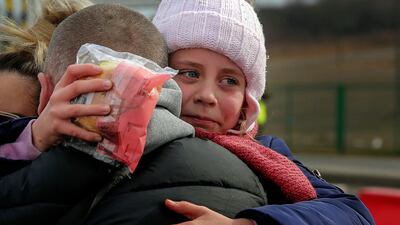
A girl who fled Ukraine is reunited with her father in Medyka, south-eastern Poland. AP Photo -
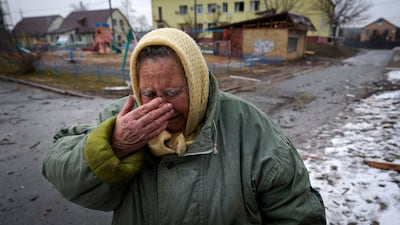
Tears outside a house damaged by a Russian airstrike in Gorenka, on the outskirts of Kyiv. AP Photo -
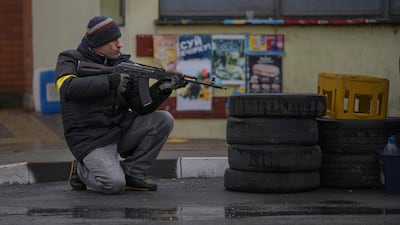
A civil defence member is poised to shoot as a vehicle approaches a checkpoint in Gorenka. AP Photo -

A Ukrainian civil defence member in the garden of a house damaged by a Russian airstrike. AP Photo -

Members of the US Army 3rd Infantry Division board a plane bound for Germany in Savannah, Georgia. EPA -
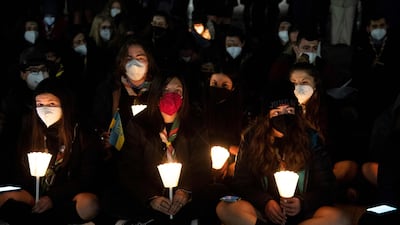
Prayers for peace in Ukraine at the Vatican's Saint Peter's Square. AFP -
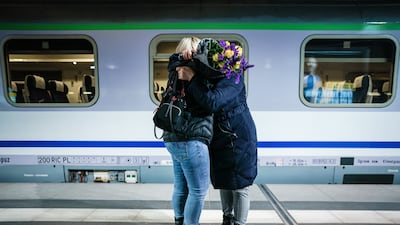
A woman (right) hugs an arriving passenger from a train carrying refugees at Berlin's central station. EPA -

Firefighters battle a blaze in a Kharkiv police building hit by shelling. AFP -
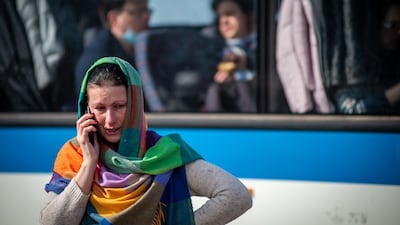
A Ukrainian woman makes a phone call after crossing the Slovakian border. AFP -

A doctor takes shelter in the basement of a Kyiv perinatal centre. Reuters -

Debris which locals say was caused by shelling in separatist-controlled Horlivka, Donetsk. Reuters -
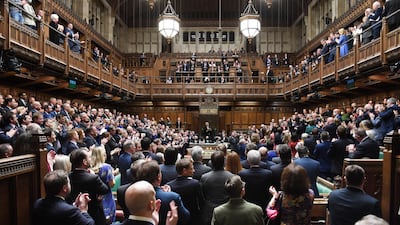
MPs in London give a standing ovation to Ukraine ambassador Vadym Prystaiko, who was in the public gallery. AP -
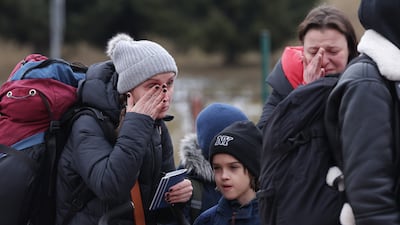
Distraught women and children fleeing Ukraine wait to enter Poland at the Korczowa crossing. Getty -
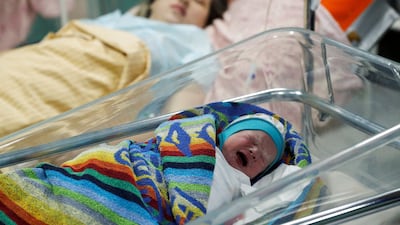
Newborn Ivan lies next to his mother as they shelter in the basement of a Kyiv perinatal centre. Reuters -
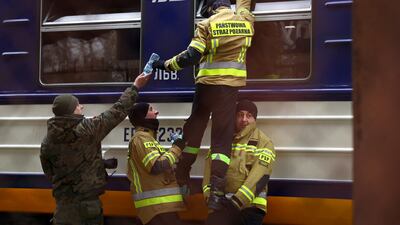
Firefighters hand water to people in a Ukrainian train full of refugees in Przemysl, Poland. Reuters -
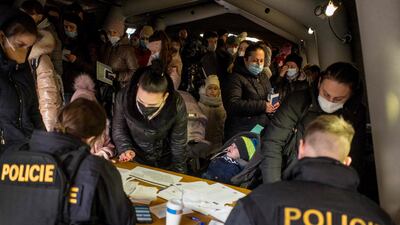
Ukrainian refugees queue to file for residency permits at Prague's police headquarters. AFP -
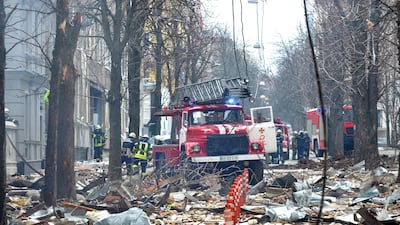
Firefighters work to contain a blaze in buildings housing the Kharkiv regional police department. AFP -
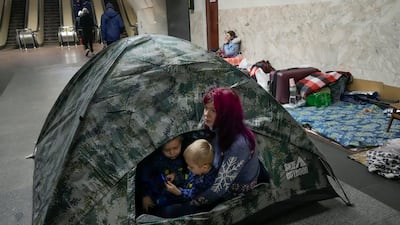
A woman and her children sit in a tent in the Kyiv subway, using it as a bomb shelter. AP -
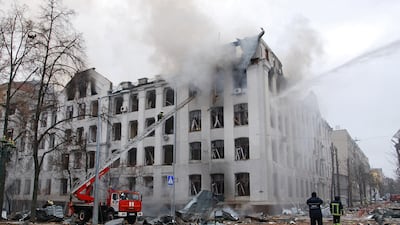
Firefighters work to extinguish a blaze at the Kharkiv National University building, which city officials said was damaged by Russian shelling. Reuters -
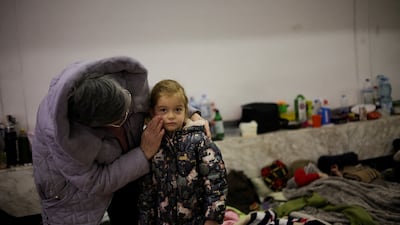
An elderly woman comforts a child as they take shelter inside an underground station in Kyiv. Reuters -
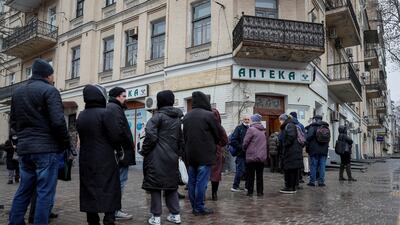
People queue at a pharmacy in central Kyiv. Reuters -
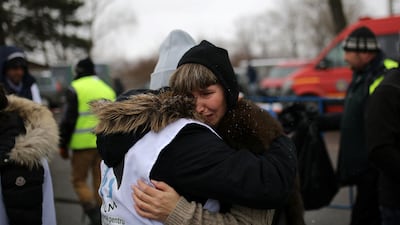
A woman is consoled by a volunteer after fleeing from Russia's invasion of Ukraine, at the border crossing in Siret, Romania. Reuters -

A Ukrainian civilian in the city of Zhytomyr practises throwing petrol bombs. Reuters -
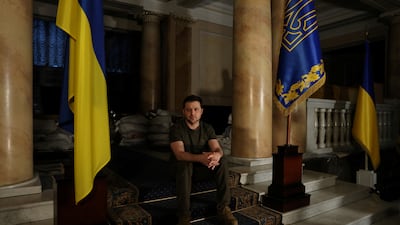
Ukrainian President Volodymyr Zelenskyy poses after an interview with Reuters in Kyiv. Reuters -
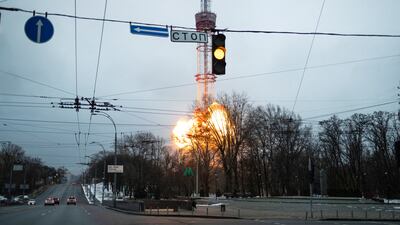
A blast is seen at Kyiv's TV tower. Reuters -
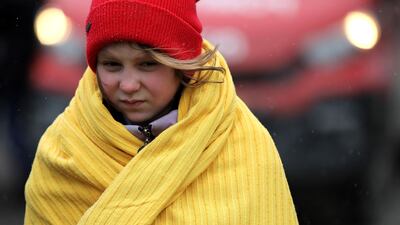
A girl in Siret, Romania, covers herself with a blanket after fleeing from Ukraine. Reuters -
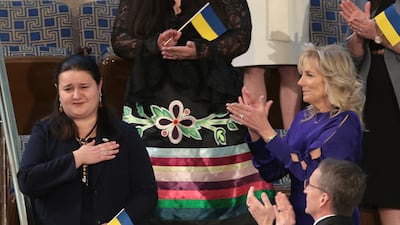
Ukraine's ambassador to the US, Oksana Markarova, acknowledges applause from US first lady Jill Biden as they attend President Joe Biden's first State of the Union address in Washington. AFP -
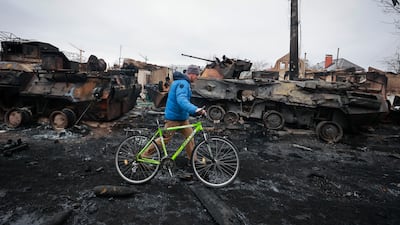
A man walks past the remains of Russian military vehicles in Bucha, close to Kyiv. AFP -
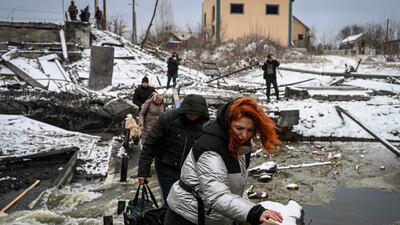
Civilians cross a river on a blown-up bridge on Kyiv's northern front. Defending the capital is a 'key priority', Ukraine's president has said. AFP -
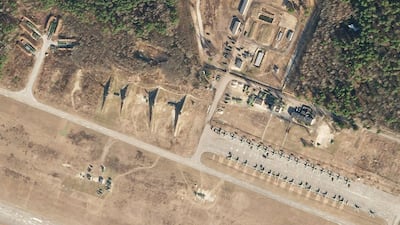
Russian aircraft on the ground at Luninets Airbase, Belarus, about 50 kilometres north of the Ukrainian border. AFP -
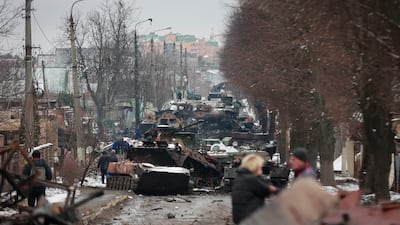
People look at the gutted remains of Russian military vehicles on a road in the town of Bucha. AP -
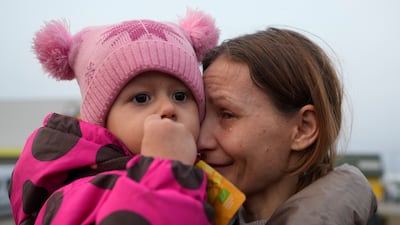
A woman with a child who fled from the war in Ukraine reunite with their family after crossing the border in Medyka, Poland. AP -
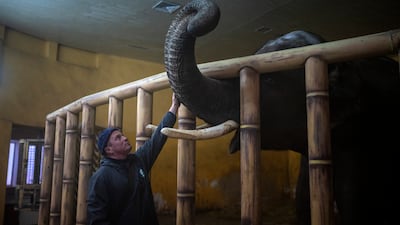
Animal keeper Kirilo Trantin comforts an elephant at Kyiv Zoo. AP -
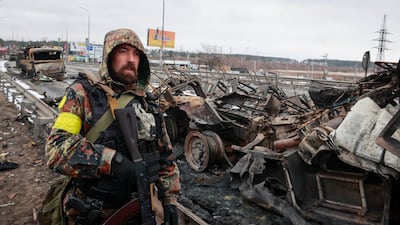
An armed man stands by the remains of a Russian military vehicle in Bucha. AP -
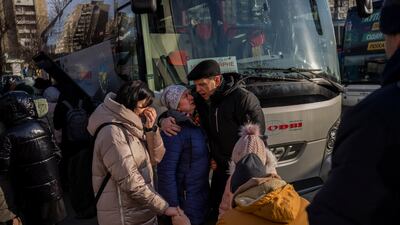
Ukrainian families say goodbye as they prepare to board a bus to Poland at Lviv, western Ukraine. AP -
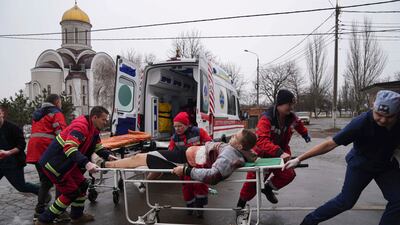
Paramedics move a man who was wounded by shelling in a residential area of Mariupol, south-eastern Ukraine. AP -
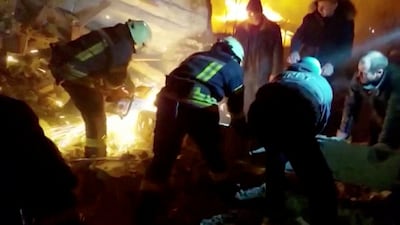
Rescuers work at the site of a Russian strike in Zhytomyr. Reuters -
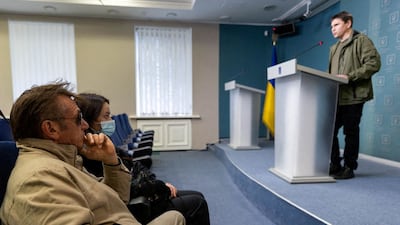
US actor and director Sean Penn attends a press briefing at the Presidential Office in Kyiv. Reuters -
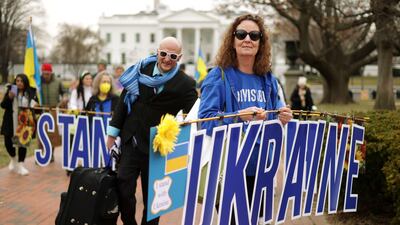
Demonstrators participate in a protest against Russia’s invasion of Ukraine at Lafayette Square in Washington. AFP -
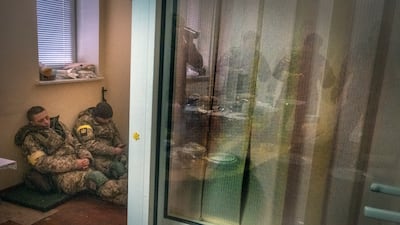
Ukrainian soldiers rest while others eat near the front line with Russian troops in northern Kyiv. AP -
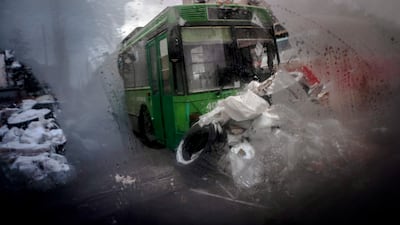
A barricade made of trams, buses and sand bags is seen through the window of car in the northern part of Kyiv. AP -
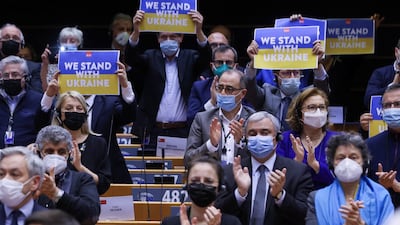
Members of the European Parliament applaud after Ukrainian President Volodymyr Zelenskyy's speech at a special session to debate its response to the Russian invasion of Ukraine. Reuters -
Ambassadors and diplomats walk out as Russia's Foreign Minister Sergey Lavrov (on screen) speaks during a recorded message at the 49th session of the UN Human Rights Council in Geneva. EPA


“The Russian threat to Nato has become so ominous that whatever the outcome of this crisis, substantial Russian forces are going to be in Belarus and in Ukraine with heavy armour,” he told MPs.
“They are going to be much closer to Nato, giving Nato far less warning time of a major attack.”
With Nato member Poland particularly under more pressure, the West must prepare “for a spill-over of the conflict on to Nato territory”.
Instead of having troops in home countries, with the flexibility to deal with civil emergencies such as flooding or Covid, they needed to be stationed in permanent bases in the east.
“Put the bulk of the armed forces on the front lines, as we did in the Cold War, with the understanding that we need a very heavy direct defence and that the best reinforcement is to have the troops already there,” Dr Shea said.
“This is the big choice that Nato has to make.”
Militaries must also accelerate production of new weaponry, such as drones, hypersonic missiles and space weapons, as well produce more tanks and rocket launchers to defeat the new Russia threat, he said.

