


Police came across the name, photo and phone number of Salman Abedi during an anti-terrorism investigation years before he carried out the Manchester Arena bombing, a public inquiry has heard.
But the information was not highlighted to an intelligence unit of counter-terrorist policing as it should have been, a retired detective told the hearing.
Frank Morris, a former senior investigating officer at North West Counter Terrorism Policing, came across the intelligence while running an investigation called Operation Oliban in 2014 into another Manchester terrorist, Abdalraouf Abdallah, who was a friend of Abedi.
Abdallah was convicted and jailed for terrorism in 2016 after being at the centre of a network helping British Muslims to go to Syria or Libya to fight.
During the police investigation a person named “Salman” was found to have exchanged about 1,300 mobile phone text messages with Abdallah in November 2014.
The pair shared an “extremist, Islamist mindset”, the hearing was told, with Abedi telling his friend: “Every day, on every kneeling, I ask my Lord for martyrdom.”
He also described non-Muslims as “dogs” and “khuffars”, and shared an image of the currency used by ISIS, “not under control of the West”.
Abedi also sent two photos of himself, his phone number was given and he had given his full name in the text exchanges – all available to police.
But police did not seek to find out who Salman was and identified him as Abedi only after the murder of 22 bystanders during the suicide bombing at the arena on May 22, 2017.
-
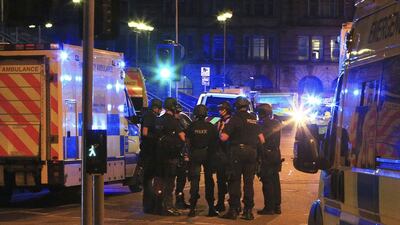
Armed police gather at Manchester Arena after an explosion at the venue during an Ariana Grande concert in Manchester on May 22, 2017. PA via AP -

The explosion caused panic inside and outside the venue. PA via AP -

A bomb disposal robot is unloaded outside the Manchester Arena. EPA -

A man is stretchered out of Manchester Arena after the explosion. Getty Images -
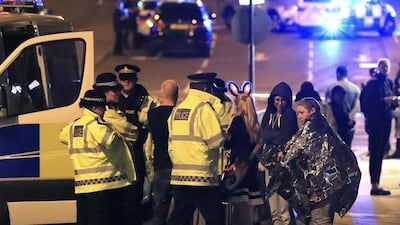
Police comfort young fans outside Manchester Arena. Most of those attending the Ariana Grande concert were young teenagers. PA via AP -
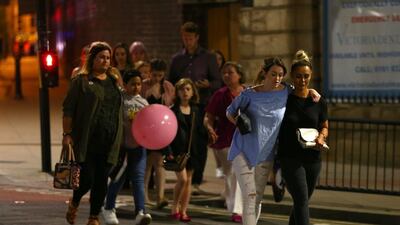
The explosion went off near the end of the concert. Getty Images -
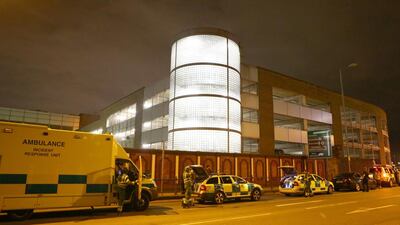
Dozens of ambulances rushed to the scene in Manchester to remove the wounded. Getty Images -
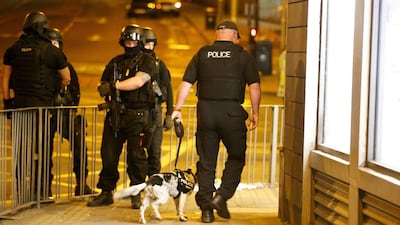
Armed police officers near the Manchester Arena. Reuters -
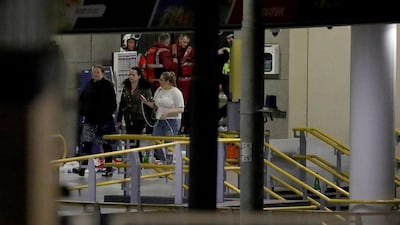
People leave Victoria Station adjacent to Manchester Arena. The explosion took place near a major transport hub for northern England. Getty Images -
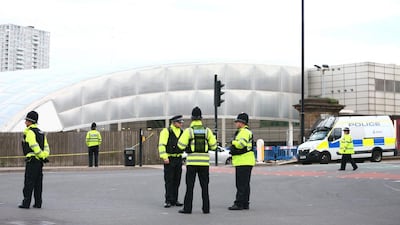
Police outside the Manchester Arena, which has a capacity of 21,000. Getty Images


While Abedi was not involved in helping extremists to fight abroad, which was the subject of the earlier police investigation, the information about him should have been highlighted to the intelligence unit for “development”, the inquiry was told.
Mr Morris, a former detective inspector, conceded this did not happen but should have.
“There’s nothing extraordinary in these text exchanges that we did not see in other operations," he said. “It went to the CPS [Crown Prosecution Service]. They did not ask. Nobody ever asked who this Salman was.
“So with hindsight, of course it should have been put in, but at the time I did not think it should have been.”
The inquiry was told “modest policing efforts” would have identified who “Salman” was and officers could have referred him to Prevent for de-radicalisation or for further investigation.
Mr Morris said four or five people, including detectives, intelligence analysts and himself, were aware of the information but did not flag it up for further inquiries.
The “Salman” exchanges were among 14,500 contacts on the phone and Mr Morris said that at that time he was running 10 to 14 operations, and the counter-terrorism unit up to 110 separate investigations.
“At that time this was commonplace and I know I keep saying it, this was not unusual," he said. “That’s the issue with intelligence, it’s very subjective.”
Sir John Saunders said that had police linked the phone number of Salman with his identity, this information could have “informed future decisions”.
Twice in the months before the attack intelligence was received by MI5 about Abedi but was assessed at the time to relate to possibly non-terrorist criminality.
In retrospect this intelligence was highly relevant to the planned attack, but the significance of it was not fully appreciated at the time, the inquiry has heard.
The hearing was adjourned until Tuesday morning.

