


A gene common in South Asian people has been identified as tied to an increased risk of catching Covid-19.
About 60 per cent of people with South Asian ancestry carry the genetic signal, researchers at the University of Oxford University said, while 15 per cent of Europeans carry it.
The gene doubles the chances of lung failure or death from Covid-19.
The gene partly explains some of the excess deaths seen in the UK and the effects of Covid in India.
But it does not affect all populations equally and a complicated mix of other factors, including age and socio-economic status, was involved, lead researcher Prof James Davies said.
Researchers found that the high-risk gene probably prevents cells in the inner lungs from correctly responding to the virus.
The university said that a relatively unstudied gene — LZTFL1 — was responsible for the doubling of risk.
“If you have the high-risk genotype and you get very unwell with Covid, there’s a 50 per cent chance that that wouldn’t have happened to you had you had the lower-risk genotype,” Prof Davies said.
The study, published in Nature Genetics, found that the gene did not alter immune cell function.
Because the effect is in the biology of the lungs, people with the higher-risk version of the genes should respond fully to vaccination, the scientists said.
-
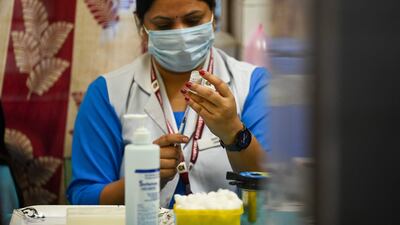
India administered its billionth Covid-19 vaccine dose on October 21, according to the health ministry, half a year after a devastating surge in cases brought the health system close to collapse. Prakash Singh / AFP -
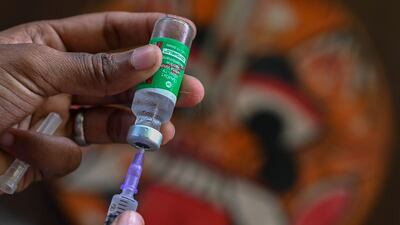
A health worker prepares to administer a Covishield vaccine in Chennai. Arun Sankar / AFP -
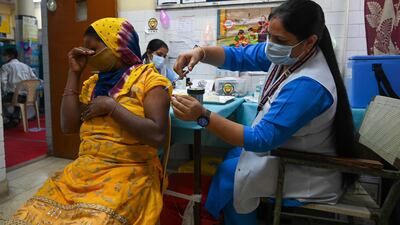
A health worker inoculates a woman with a dose of the Covaxin vaccine in New Delhi. Prakash Singh / AFP -
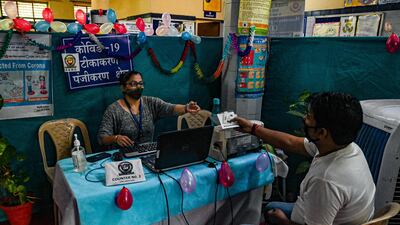
A health worker, left, registers a man for a dose of the Covaxin vaccine in New Delhi. Prakash Singh / AFP -
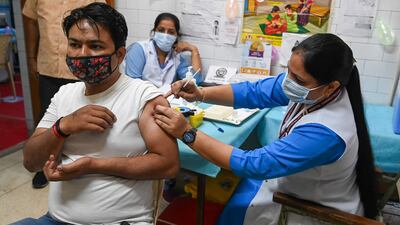
A health worker inoculates a man with a dose of the Covaxin vaccine in New Delhi. Prakash Singh/ AFP -

Volunteers decorate a vaccination centre to celebrate India administering its billionth Covid-19 vaccine. Prakash Singh / AFP


Previous research had identified a stretch of DNA, which doubled the risk of adults under the age of 65 from serious illness from Covid-19.
But it was not known how this genetic signal worked to increase the risk, nor the exact genetic change that was responsible.
Study co-leader Jim Hughes, professor of gene regulation at the University of Oxford, said: “The reason this has proved so difficult to work out, is that the previously identified genetic signal affects the ‘dark matter’ of the genome.
“We found that the increased risk is not because of a difference in gene coding for a protein, but because of a difference in the DNA that makes a switch to turn a gene on.
“It’s much harder to detect the gene which is affected by this kind of indirect switch effect.”
-
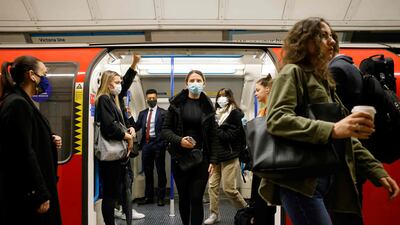
Not all commuters on the Underground in London choose to wear masks. UK government ministers are under pressure to implement 'Plan B' winter measures to address rising Covid-19 case numbers and a faltering booster vaccine programme. AFP -
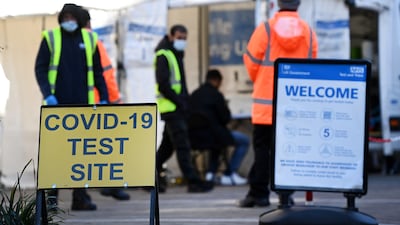
Health workers at a Covid-19 PCR test centre in London. Britain's daily coronavirus case numbers and the seven-day rolling average reached their highest level in three months in October. EPA -

A man receives a Covid-19 vaccine at Regent Pharmacy in Northampton. There are concerns over a sluggish booster shot programme for over-50s and low uptake of vaccines among 12 to 15-year-olds. Reuters -

Britain's Health Secretary Sajid Javid with UK Health Security Agency chief executive, Dr Jenny Harries, during a press conference at Downing Street. Getty Images -
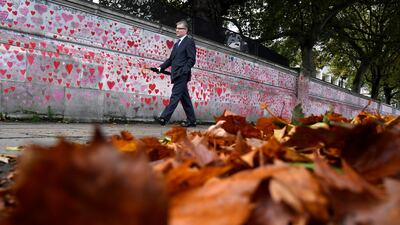
The National Covid Memorial Wall in London. Under UK Prime Minister Boris Johnson’s winter plan announced in September, Plan B would include a return to working from home for many, mandatory mask-wearing in some settings and vaccine certificates required at large indoor gatherings. Reuters -

A demonstration in Parliament Square, London, against Covid-19 vaccine passports and British government restrictions to curb the spread of coronavirus. AP Photo -
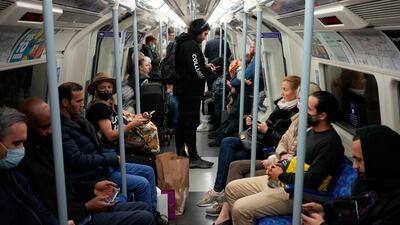
Passengers on a London Underground train on the Jubilee Line, where face coverings are required to be worn. AP Photo -
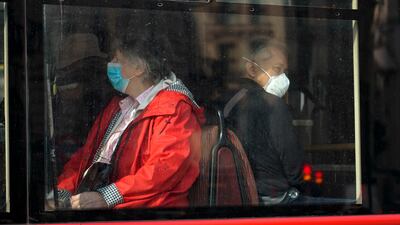
Bus passengers in London. Masks are not mandatory in indoor settings such as shops, restaurants and bars in England. AP Photo -

A section of the National Covid Memorial Wall – a dedication of thousands of hand-painted hearts and messages commemorating victims of the Covid-19 pandemic. Reuters -

An NHS Covid-19 vaccination campaign advertisement near a housing block in London. Reuters


The gene was identified using a combination of artificial intelligence and cutting-edge molecular technology, which visualises the structure of DNA inside cells in unprecedented detail.
Dr Damien Downes, who led the laboratory work, said: “Surprisingly, as several other genes were suspected, the data showed that a relatively unstudied gene called LZTFL1 causes the effect.”
The researchers hope drugs and other therapies could help the pathway preventing the lung lining from transforming to less specialised cells, raising the possibility of new treatments customised for those most likely to develop severe symptoms.
“The genetic factor we have found explains why some people get very seriously ill after coronavirus infection," Prof Davies said.
“It shows that the way in which the lung responds to the infection is critical.
“This is important because most treatments have focused on changing the way in which the immune system reacts to the virus.”
The study found that 2 per cent of people with African-Caribbean ancestry carried the higher-risk genotype, meaning this genetic factor does not completely explain the higher death rates reported for black and minority ethnic communities.
“Although we cannot change our genetics, our results show that the people with the higher-risk gene are likely to particularly benefit from vaccination," Prof Davies said.
“Since the genetic signal affects the lung rather than the immune system, it means that the increased risk should be cancelled out by the vaccine.”

