


Travel to and from the UK has been given a boost after major routes reopened and vaccine passports from a further 37 countries were accepted by UK authorities.
The changes, which came into effect at 4am on Monday, reduce the red list from 54 to just seven nations and winter sun destinations such as Mexico and South Africa are back on the cards for travellers.
Double-jabbed people from dozens of countries around the world can now enter the UK without having to quarantine in a hotel, or self-isolate upon arrival.
Four vaccines — AstraZeneca, Pfizer, Moderna and Janssen — are being accepted and people must have received their second dose at least 14 days before travel.
The travel industry has welcomed the moves and reported a surge in demand from customers. But industry leaders have called on the government to further roll back restrictions to help the ailing industry.
The UK government’s guidelines apply to England only, with Wales, Scotland and Northern Ireland setting their own rules, although they have followed suit on most issues.
John Holland-Kaye, chief executive of Heathrow Airport, said on Monday: “This is a great day for starting to get our lives back to normal.”
Speaking to Sky News, he called on ministers to follow in the direction of some European countries who have scrapped all testing requirements for travellers.
He also said the government should offer a date for when PCR tests can be swapped for the less expensive lateral flow tests so people could plan trips.
Passenger numbers at the UK’s busiest airport are about 60 per cent below pre-pandemic levels, Mr Holland-Kaye said.
“The UK is still taking a cautious approach, still requiring testing for anyone coming into the country, but this is a good step ahead and people can start to plan their business trips, their holidays, visiting the families they haven’t seen for a long time, with confidence, including going to wonderful places like South Africa,” he added.
Double-vaccinated people entering England and Wales from non-red list countries still have to take a PCR test on day two post-arrival.
Meanwhile, the Foreign, Commonwealth and Development Office lifted its advice against non-essential travel to a further 42 countries and territories due to the Covid pandemic.
This follows the removal of travel advisories to 41 locations last week.
The changes make it easier for people to obtain travel insurance for trips to those destinations.
-
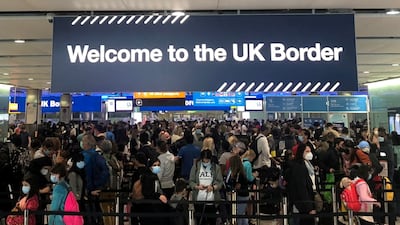
Passengers queue at Border Force desks at Heathrow. Reuters -
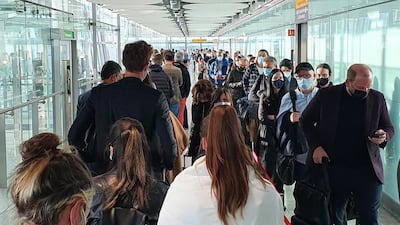
Passengers queue for the Arrival Hall at London Heathrow Airport's Terminal 5, due to a problem with the self-service passport gates. -
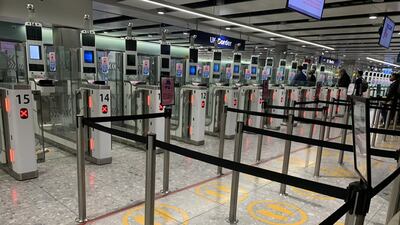
Picture take with permission from the twitter feed of @ChristianDJones of closed self-service passport gates as passengers arriving at Heathrow are being forced to wait in long queues or are being held on planes due to a problem with self-service passport gates. -
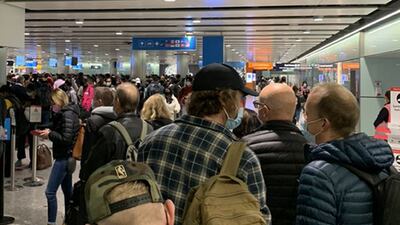
Picture take with permission from the twitter feed of @ChristianDJones of passengers queuing for the Arrival Hall at London Heathrow Airport's Terminal 5, due to a problem with the self-service passport gates. -
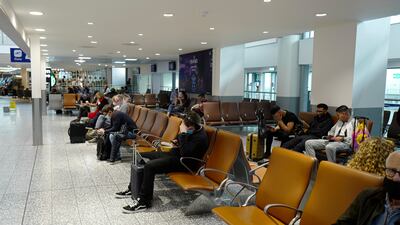
Passengers in a waiting lounge at Bristol Airport on October 3 ahead of the relaxation of travel rules in the UK. Getty Images -
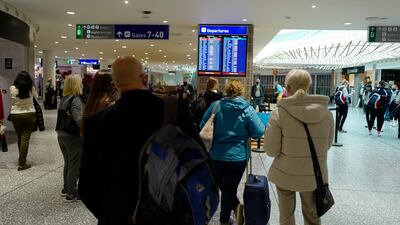
From October 4, the UK is simplifying its traffic-light system governing international travel, retaining only a "red list" from which arrivals must quarantine in government-designated hotels. Getty Images -
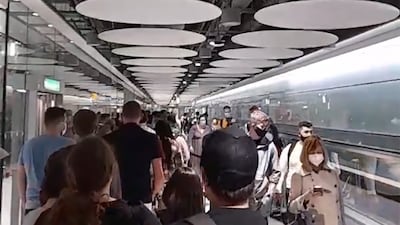
Heathrow Airport has in recent weeks been hit by delays for passengers arriving. Photo: Shona McCallin / Twitter -
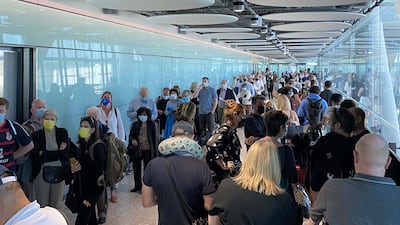
A glitch in e-gates at Heathrow Airport's Terminal 5 caused long delays for arrivals. Photo: @johnny_sutton / Twitter -
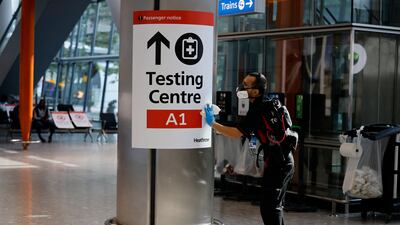
A member of staff cleans a sign at Heathrow's Terminal 5 in west London as quarantine restrictions ease. AFP -
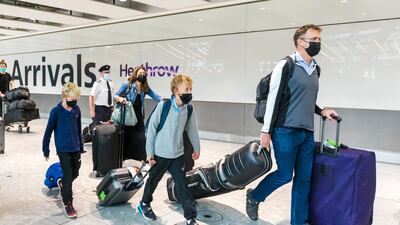
Passengers arrive at Heathrow. EPA -
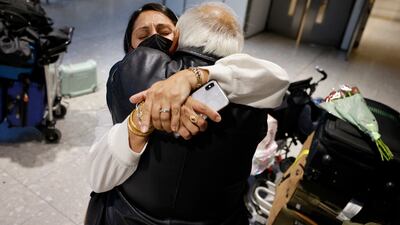
Greeted with an embrace at Heathrow Airport's Terminal 5. AFP -

Loved-ones arriving from the US at Heathrow. AFP -
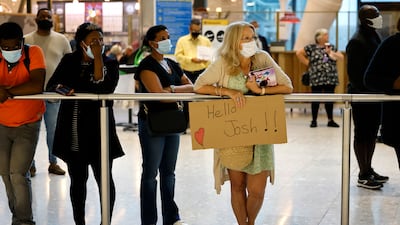
A mother holds a sign for her son as she waits for him at Terminal 5. AFP


They are part of a new policy to stop advising Britons to avoid all but essential travel to non-red list countries on coronavirus grounds, except in “exceptional circumstances”, such as if the local healthcare system is overwhelmed.
Foreign Secretary Liz Truss has said this allows people to “exercise personal responsibility”, while Transport Secretary Grant Shapps has said “restoring people’s confidence in travel is key to rebuilding our economy”.
Just seven countries — all in Latin America — remain on the red list. They are Colombia, Dominican Republic, Ecuador, Haiti, Panama, Peru and Venezuela.
People arriving from those locations will still be required to enter a quarantine hotel at a cost of £2,285 ($3,110) for solo travellers.
Mr Shapps said the easing of restrictions “mark the next step as we continue to open up travel and provide stability for passengers and industry, while remaining on track to keep travel open for good.”
UK travel red list reduced to seven countries:
- Colombia
- Dominican Republic
- Ecuador
- Haiti
- Panama
- Peru
- Venezuela

