


Abdul Rahim, a captain in the Afghanistan army, was only the second double-hand transplant ever carried out in India. All photos by Harsha Vadlamani for The National
-

-

In late 2014, he found the Amrita Institute of Medical Sciences in Kochi, and became the second person on the hospital’s registry. The surgery would cost 1.5 million rupees (Dh80,000) and would be paid for by the Afghanistan government. -
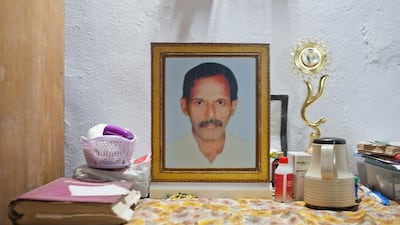
The portrait of TG Joseph, a 52-year-old construction worker in Kochi. On his way to work one day in April 2015, his motorcycle was hit by another vehicle and he was declared brain-dead on arrival at hospital. He would become Mr Rahim’s donor. -

Aleesha Joseph, 17, with her mother Fransisca Joseph. “The doctors told us about Abdul Rahim,” Aleesha says. “They said: ‘We have a patient who has lost his hands,’ and they asked if we wished to donate those also. As a family, we made the decision to do it.” -
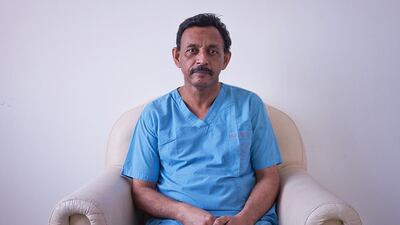
Subramania Iyer, the head of plastic and reconstructive surgery at the Amrita Institute. “You have to reattach a lot of small structures like nerves and blood vessels,” Dr Iyer said. “And the chances of a hand being rejected by a body is high, because skin is the part of the body that has the most potential to be rejected.” -
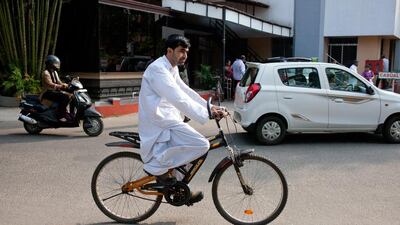
Almost a year on, Abdul Rahim’s body has not rejected his new hands. He is seen here riding bicycle as part of his rehabilitation programme. “All of this is remarkable,” he says. “I can eat by myself now, and I can drink water, and I can dress myself, and I can write,” -
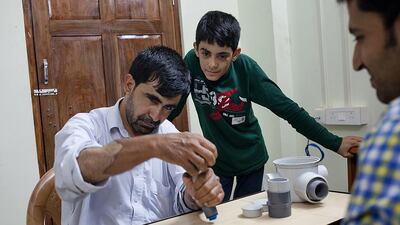
In two months, Abdul’s physiotherapy will come to an end. “I can finally go back home, to Afghanistan,” he said. “I am looking forward so much to beginning life again. For a long time, I thought I would remain without hands for the rest of my life. This still feels like a miracle every day.”
The story of an Afghan soldier’s double hand transplant in Kerala — in pictures
Most popular today

