Ethiopian government soldiers ride in the back of a truck in Tigray, where a new UN report says Somalian soldiers have joined the fighting. AP

UN report reveals presence of Somali fighters in Ethiopia’s Tigray region


Joyce Karam
  • English
  • Arabic

A UN report due to be submitted to the General Assembly this month says Somali soldiers are fighting alongside Eritrean troops in Ethiopia’s war-torn Tigray region.

The 17-page-document prepared by UN special rapporteur Mohamed Babiker discusses the presence of Somali troops in Tigray – an issue that adds another dimension to the continuing conflict and growing humanitarian crisis.

“In addition to reports of the involvement of Eritrean troops in the Tigray conflict, the special rapporteur also received information and reports that Somali soldiers were moved from military training camps in Eritrea to the front line in Tigray, where they accompanied Eritrean troops as they crossed the Ethiopian border,” the report said.

It also mentions the presence of Somali fighters near the Ethiopian city of Aksum, a Unesco World Heritage site that has been indiscriminately shelled since the fighting started last November.

The governments of Somalia and Eritrea have denied the participation of Somali soldiers in the conflict.

The UN report also points to grave abuses of human rights committed by Ethiopian and Eritrean troops in Tigray, including the looting of Saint Mary's Hospital and Aksum University Referral Hospital.

The report says the Eritrean military has committed “deliberate attacks against civilians and summary executions, indiscriminate attacks, sexual and gender-based violence, arbitrary detention, destruction and looting of civilian property and displacement and abduction of Eritrean refugees and asylum seekers".

The report makes recommendations to the Eritrean government that includes providing information on the presence of its troops in Tigray and answering the allegations of human rights abuses.

It asks Asmara “to ensure that protective measures are taken in areas under its effective territorial control to ensure respect for international humanitarian law and international human rights law by Eritrean troops present in Tigray".

The fighting in Tigray began eight months ago when Ethiopian and Eritrean troops alongside allied militias began an offensive against the Tigray People's Liberation Front.

The conflict has displaced about two million civilians and left 5.2 million in urgent need, the US said.

Human rights organisations including Doctors Without Borders and Amnesty International have documented incidents of sexual violence, extrajudicial killings and massacres in Tigray.

David Beasley, executive director of the UN World Food Programme, said on Tuesday that “time is running out” and called on all parties to allow free humanitarian access to the region to avert a catastrophe.

Cameron Hudson, senior fellow with the Atlantic Council's Africa Centre, said there had been rumours of a Somali military presence in the region for a while, but this was the first time the UN has mentioned them.

He said the allegations could not be fully investigated because the UN was unable to gain full access to the region.

Mr Hudson said the more concerning issue in the UN report was Eritrea’s defiance and desire to increase its political and military influence in the area.

This pointed to "behind-the-scenes efforts of [Eritrean President] Isaias Afwerki to increase his influence across the region and the talk of a formal confederation between Ethiopia, Eritrea and Somalia", Mr Hudson told The National.

“If this proves true, then it would demonstrate the dangerous power Isaias has to organise allies and direct them against his enemies, in this case the TPLF.”

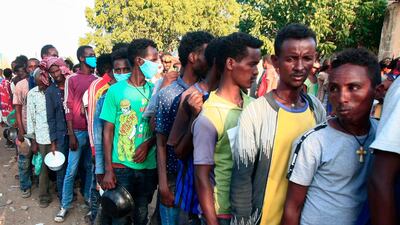
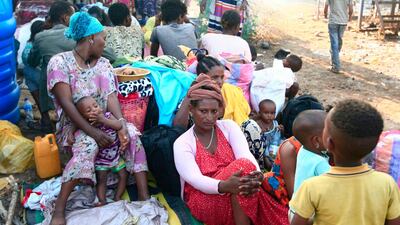
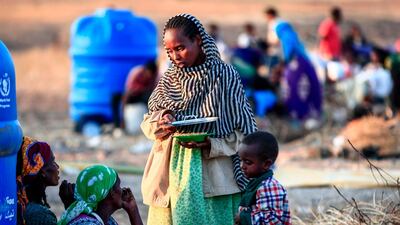
  • Ethiopian migrants who fled intense fighting in their homeland of Tigray, wait for their ration of food in the border reception center of Hamdiyet, in the eastern Sudanese state of Kasala, AFP
    Ethiopian migrants who fled intense fighting in their homeland of Tigray, wait for their ration of food in the border reception center of Hamdiyet, in the eastern Sudanese state of Kasala, AFP
  • Ethiopians who fled the ongoing fighting in Tigray region prepare to cross the Setit River on the Sudan-Ethiopia border in Hamdait village in eastern Kassala state, Sudan. Reuters
    Ethiopians who fled the ongoing fighting in Tigray region prepare to cross the Setit River on the Sudan-Ethiopia border in Hamdait village in eastern Kassala state, Sudan. Reuters
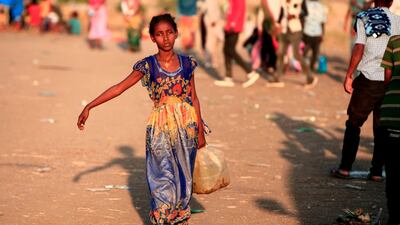
  • A young refugee from the Tigray region of Ethiopia waits to register at the UNCHR center at Hamdayet, Sudan. AP
    A young refugee from the Tigray region of Ethiopia waits to register at the UNCHR center at Hamdayet, Sudan. AP
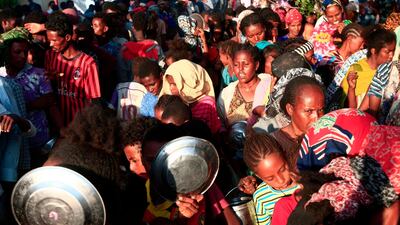
  • Ethiopian migrants who fled intense fighting in their homeland of Tigray, gather in the border reception center of Hamdiyet, in the eastern Sudanese state of Kasala. AFP
    Ethiopian migrants who fled intense fighting in their homeland of Tigray, gather in the border reception center of Hamdiyet, in the eastern Sudanese state of Kasala. AFP
  • Ethiopian migrants who fled intense fighting in their homeland of Tigray, wait for their ration of food in the border reception center of Hamdiyet, in the eastern Sudanese state of Kasala. AFP
    Ethiopian migrants who fled intense fighting in their homeland of Tigray, wait for their ration of food in the border reception center of Hamdiyet, in the eastern Sudanese state of Kasala. AFP
  • Ethiopian migrants who fled intense fighting in their homeland of Tigray, gather at the border reception center of Hamdiyet, in the eastern Sudanese state of Kasala. AFP
    Ethiopian migrants who fled intense fighting in their homeland of Tigray, gather at the border reception center of Hamdiyet, in the eastern Sudanese state of Kasala. AFP
  • An Ethiopian migrant who fled intense fighting in their homeland of Tigray, walks with jerricans of water at the border reception centre of Hamdiyet, in the eastern Sudanese state of Kasala. AFP
    An Ethiopian migrant who fled intense fighting in their homeland of Tigray, walks with jerricans of water at the border reception centre of Hamdiyet, in the eastern Sudanese state of Kasala. AFP
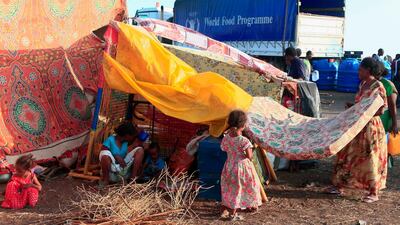
  • Ethiopian migrants who fled intense fighting in their homeland of Tigray, gather at the border reception centre of Hamdiyet, in the eastern Sudanese state of Kasala. AFP
    Ethiopian migrants who fled intense fighting in their homeland of Tigray, gather at the border reception centre of Hamdiyet, in the eastern Sudanese state of Kasala. AFP
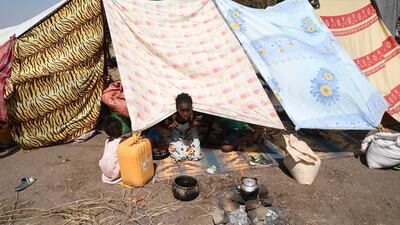
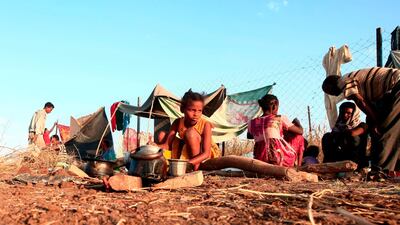
  • Ethiopian migrants who fled intense fighting in their homeland of Tigray, gather in a makeshift shelter at the border reception centre of Hamdiyet, in the eastern Sudanese state of Kasala. AFP
    Ethiopian migrants who fled intense fighting in their homeland of Tigray, gather in a makeshift shelter at the border reception centre of Hamdiyet, in the eastern Sudanese state of Kasala. AFP
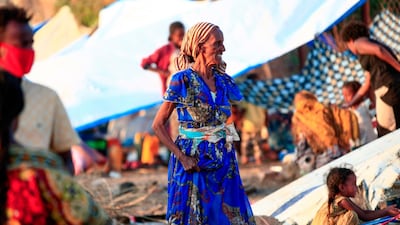
  • An Ethiopian migrant who fled intense fighting in their homeland of Tigray, speaks to a fellow refugee at the border reception centre of Hamdiyet, in the eastern Sudanese state of Kasala. AFP
    An Ethiopian migrant who fled intense fighting in their homeland of Tigray, speaks to a fellow refugee at the border reception centre of Hamdiyet, in the eastern Sudanese state of Kasala. AFP

He said such a development “would be very unsettling to Sudan, Djibouti and Kenya, specifically, all of whom are concerned by growing Eritrean influence in the region".

Despite outside pressure and pledges by Ethiopia's Prime Minister Abiy Ahmed that Eritrean troops would withdraw from Tigray, Asmara has not pulled its fighters.

But the UN could exert pressure on Mogadishu to withdraw its forces.

“Somalia is the most susceptible to outside pressure given the budget support and security assistance it continues to get,” Mr Hudson said.


'Skin'

Dir: Guy Nattiv

Starring: Jamie Bell, Danielle McDonald, Bill Camp, Vera Farmiga

Rating: 3.5/5 stars

ASIAN%20RUGBY%20CHAMPIONSHIP%202024
%3Cp%3E%3Cstrong%3EResults%3C%2Fstrong%3E%3Cbr%3EHong%20Kong%2052-5%20UAE%3Cbr%3ESouth%20Korea%2055-5%20Malaysia%3Cbr%3EMalaysia%206-70%20Hong%20Kong%3Cbr%3EUAE%2036-32%20South%20Korea%3Cbr%3E%3Cbr%3E%3Cstrong%3EFixtures%3C%2Fstrong%3E%3Cbr%3EFriday%2C%20June%2021%2C%207.30pm%20kick-off%3A%20UAE%20v%20Malaysia%3Cbr%3EAt%20The%20Sevens%2C%20Dubai%20(admission%20is%20free).%3Cbr%3ESaturday%3A%20Hong%20Kong%20v%20South%20Korea%3Cbr%3E%3C%2Fp%3E%0A
About Tenderd

Started: May 2018

Founder: Arjun Mohan

Based: Dubai

Size: 23 employees 

Funding: Raised $5.8m in a seed fund round in December 2018. Backers include Y Combinator, Beco Capital, Venturesouq, Paul Graham, Peter Thiel, Paul Buchheit, Justin Mateen, Matt Mickiewicz, SOMA, Dynamo and Global Founders Capital

T20 World Cup Qualifier

October 18 – November 2

Opening fixtures

Friday, October 18

ICC Academy: 10am, Scotland v Singapore, 2.10pm, Netherlands v Kenya

Zayed Cricket Stadium: 2.10pm, Hong Kong v Ireland, 7.30pm, Oman v UAE

UAE squad

Ahmed Raza (captain), Rohan Mustafa, Ashfaq Ahmed, Rameez Shahzad, Darius D’Silva, Mohammed Usman, Mohammed Boota, Zawar Farid, Ghulam Shabber, Junaid Siddique, Sultan Ahmed, Imran Haider, Waheed Ahmed, Chirag Suri, Zahoor Khan

Players out: Mohammed Naveed, Shaiman Anwar, Qadeer Ahmed

Players in: Junaid Siddique, Darius D’Silva, Waheed Ahmed

Mercer, the investment consulting arm of US services company Marsh & McLennan, expects its wealth division to at least double its assets under management (AUM) in the Middle East as wealth in the region continues to grow despite economic headwinds, a company official said.

Mercer Wealth, which globally has $160 billion in AUM, plans to boost its AUM in the region to $2-$3bn in the next 2-3 years from the present $1bn, said Yasir AbuShaban, a Dubai-based principal with Mercer Wealth.

Within the next two to three years, we are looking at reaching $2 to $3 billion as a conservative estimate and we do see an opportunity to do so,” said Mr AbuShaban.

Mercer does not directly make investments, but allocates clients’ money they have discretion to, to professional asset managers. They also provide advice to clients.

“We have buying power. We can negotiate on their (client’s) behalf with asset managers to provide them lower fees than they otherwise would have to get on their own,” he added.

Mercer Wealth’s clients include sovereign wealth funds, family offices, and insurance companies among others.

From its office in Dubai, Mercer also looks after Africa, India and Turkey, where they also see opportunity for growth.

Wealth creation in Middle East and Africa (MEA) grew 8.5 per cent to $8.1 trillion last year from $7.5tn in 2015, higher than last year’s global average of 6 per cent and the second-highest growth in a region after Asia-Pacific which grew 9.9 per cent, according to consultancy Boston Consulting Group (BCG). In the region, where wealth grew just 1.9 per cent in 2015 compared with 2014, a pickup in oil prices has helped in wealth generation.

BCG is forecasting MEA wealth will rise to $12tn by 2021, growing at an annual average of 8 per cent.

Drivers of wealth generation in the region will be split evenly between new wealth creation and growth of performance of existing assets, according to BCG.

Another general trend in the region is clients’ looking for a comprehensive approach to investing, according to Mr AbuShaban.

“Institutional investors or some of the families are seeing a slowdown in the available capital they have to invest and in that sense they are looking at optimizing the way they manage their portfolios and making sure they are not investing haphazardly and different parts of their investment are working together,” said Mr AbuShaban.

Some clients also have a higher appetite for risk, given the low interest-rate environment that does not provide enough yield for some institutional investors. These clients are keen to invest in illiquid assets, such as private equity and infrastructure.

“What we have seen is a desire for higher returns in what has been a low-return environment specifically in various fixed income or bonds,” he said.

“In this environment, we have seen a de facto increase in the risk that clients are taking in things like illiquid investments, private equity investments, infrastructure and private debt, those kind of investments were higher illiquidity results in incrementally higher returns.”

The Abu Dhabi Investment Authority, one of the largest sovereign wealth funds, said in its 2016 report that has gradually increased its exposure in direct private equity and private credit transactions, mainly in Asian markets and especially in China and India. The authority’s private equity department focused on structured equities owing to “their defensive characteristics.”

Results

6.30pm: The Madjani Stakes (PA) Group 3 Dh175,000 (Dirt) 1,900m

Winner: Aatebat Al Khalediah, Fernando Jara (jockey), Ali Rashid Al Raihe (trainer).

7.05pm: Maiden (TB) Dh165,000 (D) 1,400m

Winner: Down On Da Bayou, Royston Ffrench, Salem bin Ghadayer.

7.40pm: Maiden (TB) Dh165,000 (D) 1,600m

Winner: Dubai Avenue, Fernando Jara, Ali Rashid Al Raihe.

8.15pm: Handicap (TB) Dh190,000 (D) 1,200m

Winner: My Catch, Pat Dobbs, Doug Watson.

8.50pm: Dubai Creek Mile (TB) Listed Dh265,000 (D) 1,600m

Winner: Secret Ambition, Tadhg O’Shea, Satish Seemar.

9.25pm: Handicap (TB) Dh190,000 (D) 1,600m

Winner: Golden Goal, Pat Dobbs, Doug Watson.

The five pillars of Islam

1. Fasting

2. Prayer

3. Hajj

4. Shahada

5. Zakat 

Day 2, Dubai Test: At a glance

Moment of the day Pakistan’s effort in the field had hints of shambles about it. The wheels were officially off when Wahab Riaz lost his run up and aborted the delivery four times in a row. He re-measured his run, jogged in for two practice goes. Then, when he was finally ready to go, he bailed out again. It was a total cringefest.

Stat of the day – 139.5 Yasir Shah has bowled 139.5 overs in three innings so far in this Test series. Judged by his returns, the workload has not withered him. He has 14 wickets so far, and became history’s first spinner to take five-wickets in an innings in five consecutive Tests. Not bad for someone whose fitness was in question before the series.

The verdict Stranger things have happened, but it is going to take something extraordinary for Pakistan to keep their undefeated record in Test series in the UAE in tact from this position. At least Shan Masood and Sami Aslam have made a positive start to the salvage effort.

New process leads to panic among jobseekers

As a UAE-based travel agent who processes tourist visas from the Philippines, Jennifer Pacia Gado is fielding a lot of calls from concerned travellers just now. And they are all asking the same question.  

“My clients are mostly Filipinos, and they [all want to know] about good conduct certificates,” says the 34-year-old Filipina, who has lived in the UAE for five years.

Ms Gado contacted the Philippines Embassy to get more information on the certificate so she can share it with her clients. She says many are worried about the process and associated costs – which could be as high as Dh500 to obtain and attest a good conduct certificate from the Philippines for jobseekers already living in the UAE. 

“They are worried about this because when they arrive here without the NBI [National Bureau of Investigation] clearance, it is a hassle because it takes time,” she says.

“They need to go first to the embassy to apply for the application of the NBI clearance. After that they have go to the police station [in the UAE] for the fingerprints. And then they will apply for the special power of attorney so that someone can finish the process in the Philippines. So it is a long process and more expensive if you are doing it from here.”

Rainbow

Kesha

(Kemosabe)

If you go:
The flights: Etihad, Emirates, British Airways and Virgin all fly from the UAE to London from Dh2,700 return, including taxes
The tours: The Tour for Muggles usually runs several times a day, lasts about two-and-a-half hours and costs £14 (Dh67)
Harry Potter and the Cursed Child is on now at the Palace Theatre. Tickets need booking significantly in advance
Entrance to the Harry Potter exhibition at the House of MinaLima is free
The hotel: The grand, 1909-built Strand Palace Hotel is in a handy location near the Theatre District and several of the key Harry Potter filming and inspiration sites. The family rooms are spacious, with sofa beds that can accommodate children, and wooden shutters that keep out the light at night. Rooms cost from £170 (Dh808).