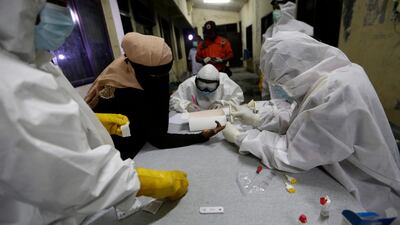
The global Covid-19 pandemic has accelerated the suffering of refugees, the internally displaced and asylum seekers already in the midst of a global humanitarian crisis, the head of a prominent international NGO has said.
Speaking via video link on Thursday, CEO of the International Rescue Committee David Miliband said the coronavirus outbreak had placed a “significant accelerator on the suffering people are facing”.
The NGO head explained there were worrying trends across the world as Covid-19 entered vulnerable populations with the spread of Covid-19 in Latin America and its growth in Africa and south Asia.
He said statistics from Pakistan, India and Afghanistan in particular were “very worrying”.
“We went into this Covid crisis with a humanitarian situation around the world, specifically associated with conflict and violence that was already breaking records for all the wrong reasons,” Mr Miliband said.
“What we are seeing now is it is hitting vulnerable countries not just vulnerable communities in richer countries and what they are being hit with is a health crisis obviously,” he explained.
Mr Miliband painted a grim picture for displaced people across the world, with 29.5 million refugees, 4.5 million asylum seekers and 45 million internally displaced by conflict.

According to trends over the last decade the UN has confirmed one percent of the world’s total population has now been forcibly displaced.
“That was the situation before Covid, you could well call that a crisis because less than three per cent of the world's refugees went home last year, because half of the world's refugees are children and only three per cent of the global humanitarian budget goes on education” he said.
More than 9 million people around the world have been infected by the coronavirus with 476,823 deaths. After hitting the developed and western nations following the first outbreak in China, Latin America has now become the global hotspot for the disease.
In the region deaths surpassed 100,000 this week and cases have tripled from 690,000 one month ago to 2 million. By October, the death toll from the coronavirus in Latin America is expected to skyrocket to 388,300 with Brazil and Mexico seen accounting for two-thirds of fatalities, researchers have said.
In the developing world generally, Mr Miliband said the potential for the disease to spread was high.
“Because underlying health conditions are weak the conditions for spread of the disease in densely packed populations is high not just in refugee camps but in urban areas,” he said.
“If you don't take prevention seriously, if you don't take primary care seriously then people are not going to be able to survive,” Mr Miliband added.

