

A top Canadian official on Friday declared Iran’s Islamic Revolutionary Guard Corps a terrorist organisation, as she unveiled sweeping travel sanctions on the group's members.
“The IRGC leadership are terrorists, the IRGC is a terrorist organisation,” Canadian Deputy Prime Minister and Minister of Finance Chrystia Freeland said.
Canadian Prime Minister Justin Trudeau said the federal government will be imposing immigration restrictions on the Iranian regime.
About half of the organisation's members — some 10,000 people — “will be inadmissible to Canada forever”, he said.
“We will be pursuing a listing of the Iranian regime, including the IRGC leadership, under the most powerful provision of the Immigration and Refugee Protection Act,” Mr Trudeau said.
He added that the decision was permanent.
The US listed the IRGC as a terrorist organisation in 2019 under Donald Trump. President Joe Biden's administration has declined Tehran's request to delist the force as a condition of reviving the nuclear deal.
The Canadian government's move falls short, however, of a terrorist designation.
Instead, the government is using provisions under the Immigration and Refugee Protection Act (Irpa) to target members of the regime and the IRGC, the CBC reported.
A majority in the Canadian Parliament passed a motion in 2018 calling on the government to designate the IRGC as a terrorist organisation, but Mr Trudeau remains reluctant to do so, reportedly over security fears.
This week, conservative leader Pierre Poilievre urged the government again to make the designation.
-
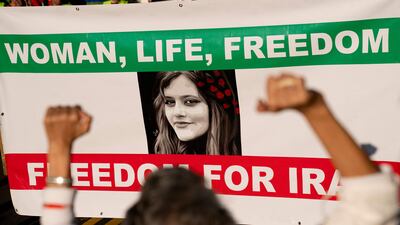
Demonstrators chant slogans during the March of Solidarity for Iran in Washington. AFP -
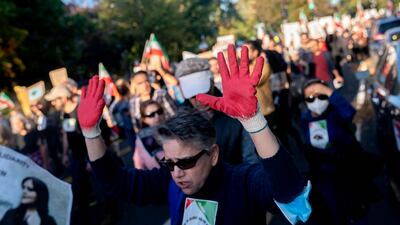
Another group of demonstrators at the march. AFP -
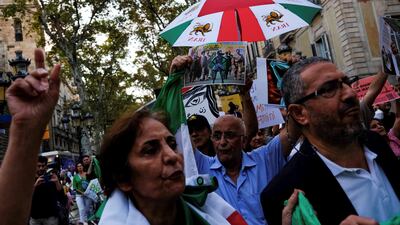
A protest in support of Iranian women in Barcelona. Reuters -
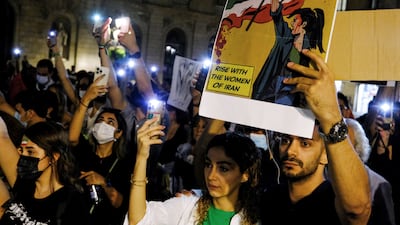
Iranian citizens and locals joined in the Barcelona protest. Reuters -
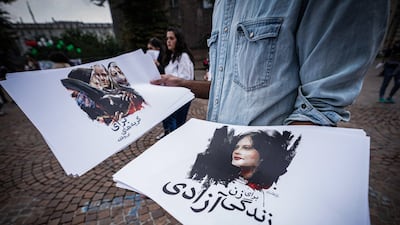
People attend a demonstration in solidarity with Mahsa Amini and other Iranian women in Castello Square, Turin. EPA -
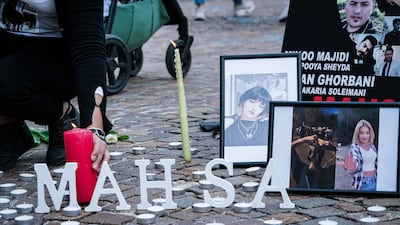
A person places a candle during the demonstration in Turin. EPA -
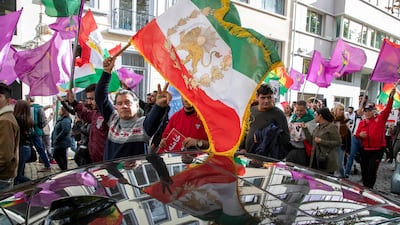
A protester holds a pre-Islamic Revolution Iranian flag during a demonstration in Brussels in support of the Iranians fighting for their freedom. AFP -
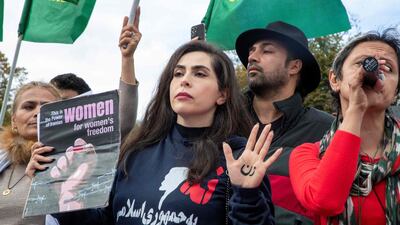
A protester wearing a top with a logo that reads 'No to an Islamic state" as she takes part in a rally in support of the Iranian people, in Brussels. AFP -
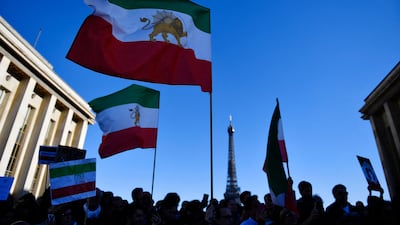
People wave the Shah-era Iranian flag during a protest in Paris. AFP -
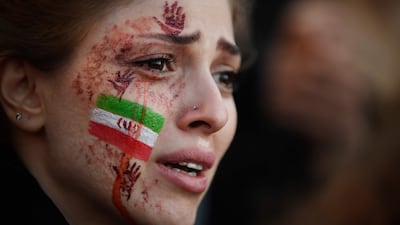
A woman shows her true colours in the protest against the Iranian government, in Paris. AFP -
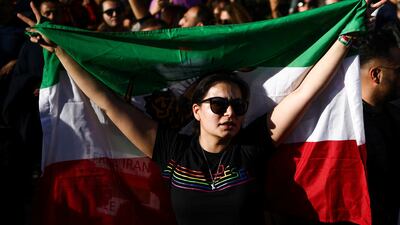
A woman holds a flag, as people protest against the Iranian regime outside Iran's embassy in central London. Reuters -
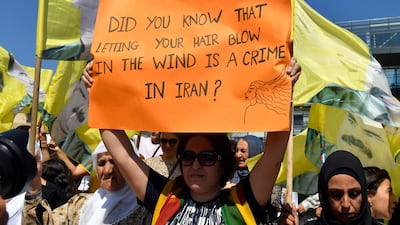
Supporters of the Kurdistan Workers' Party (PKK) carry placards and wave party flags in Beirut, during a protest against the death of Ms Amini. EPA -
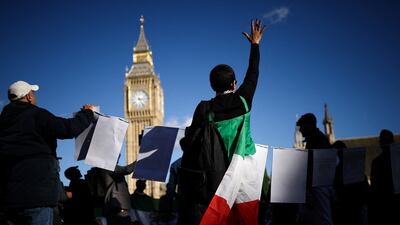
People demonstrate against the Iranian government outside the Houses of Parliament in London following the death of Amini. Reuters -
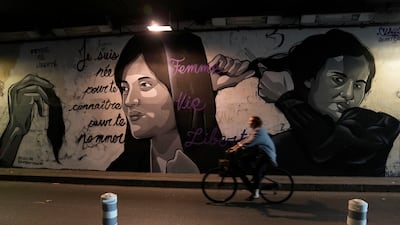
A mural in Paris depicts women cutting their hair to show support for Iranian protesters. AP -
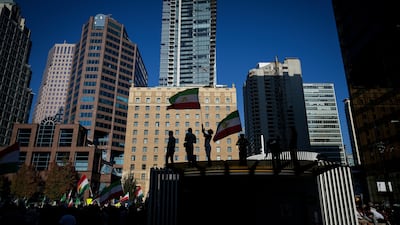
People take part in a rally against the Iranian government in Vancouver, Canada, on Saturday. AP -
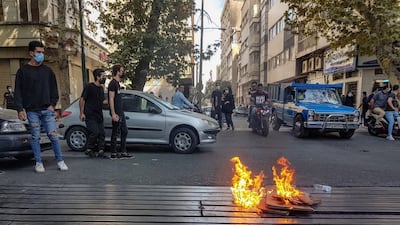
Protesters take to the streets of Tehran. EPA -
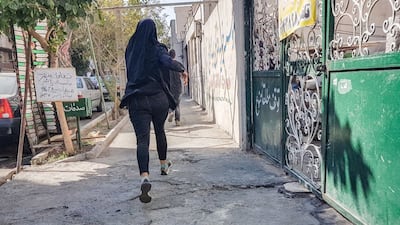
Iranian protesters run after clashing with with police. EPA -
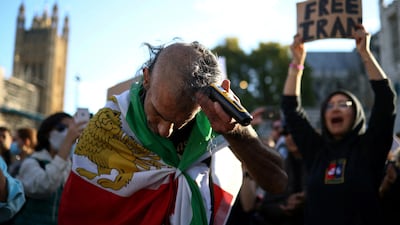
A protester shaves their head outside the Houses of Parliament in London. Reuters -
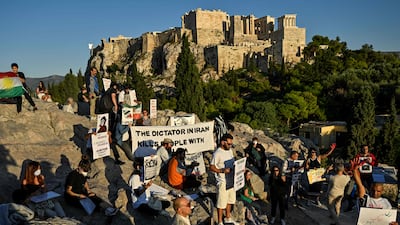
Iranians living in Athens hold a protest in solidarity. AFP -
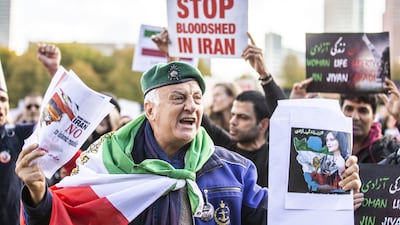
People take part in a rally in The Hague. AFP -
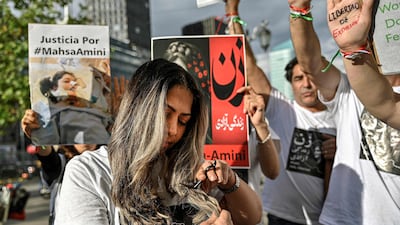
A woman cuts her hair during a demonstration in Santiago, Chile, by feminist groups and Iranian migrants in support of Iranian women following the death of Amini. AFP -
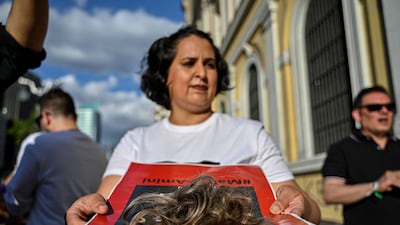
Members of feminist groups and Iranian migrants during the protests in Santiago. AFP -
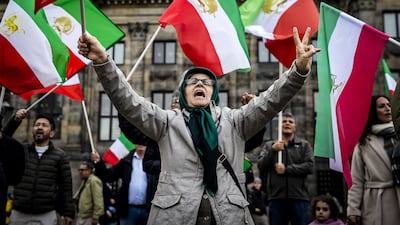
Iranian activists shout slogans during a protest against the government in Tehran, in Amsterdam, The Netherlands. EPA -
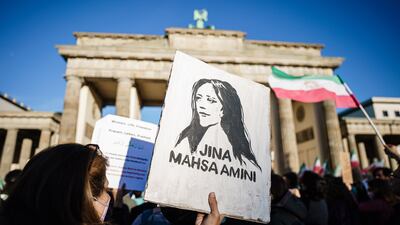
A protester holds a painted portrait of Mahsa Amini in Berlin, Germany. EPA -
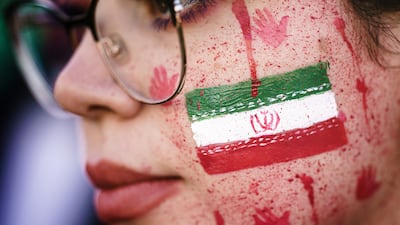
A protester shows red paint on her face, resembling blood splatters and bloody handprints next to the national Iranian emblem, during a rally in Berlin. EPA -
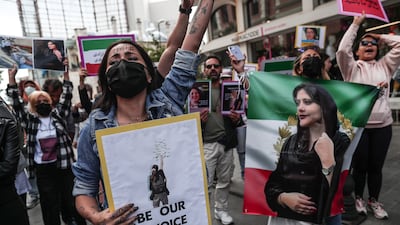
Iranian protesters shout slogan during a protest in Istanbul, Turkey. EPA -
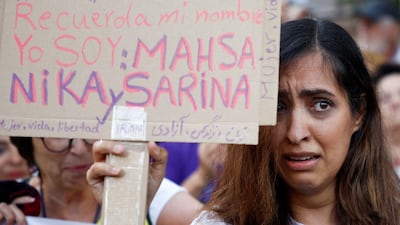
A woman holds a sign during a protest against the Iranian government, in front of the country's embassy in Madrid, Spain. The protests were triggered by the death of a young Iranian woman, Mahsa Amini, in police custody. Reuters -
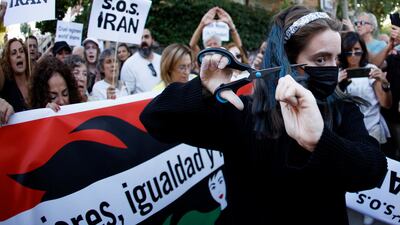
A woman cuts her hair during the protest in front of the Iranian embassy in Madrid. Reuters -
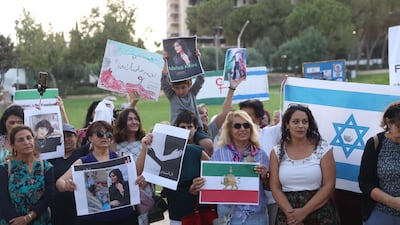
Israelis show their support for women in Iran as they hold up placards of Amini during a protest in Jerusalem. EPA -
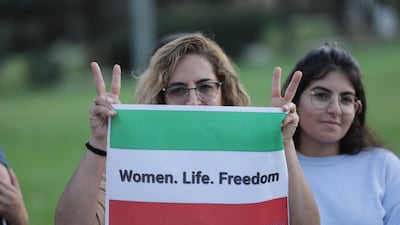
Amini, 22, was arrested in Tehran on September 13, 2022, by the morality police. She fell into a coma while in police custody and was declared dead on September 16. EPA -
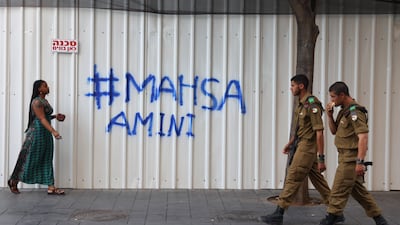
People walk by graffiti in support of the protests triggered by Amini's death, in Jerusalem. EPA -
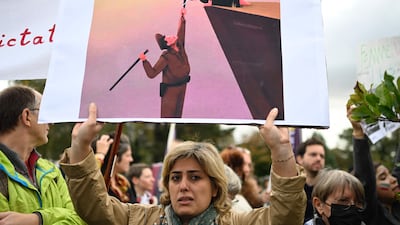
A protest in Nantes, western France, after the death of Amini in Iranian police custody. AFP -
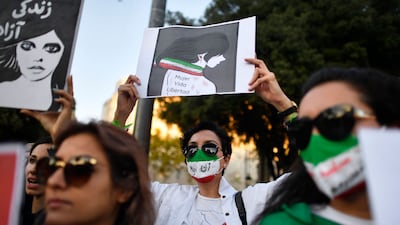
Women gather for a demonstration in Barcelona, Spain. AFP -
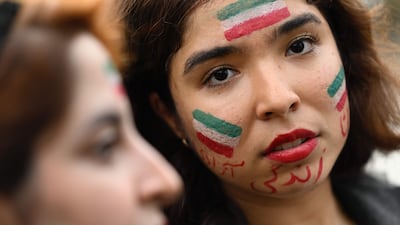
Demonstrators in Nantes. Amini's death has sparked a global protest movement. AFP -
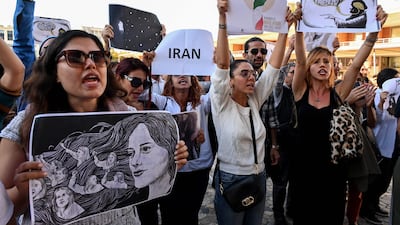
Women protest outside the town hall in in Montpellier, southern France. AFP -
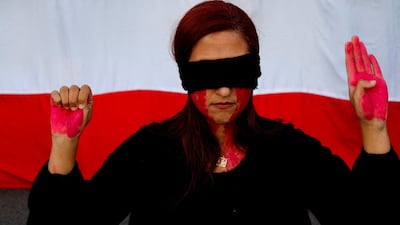
A woman at a protest in Catalunya Square, Barcelona. Reuters -
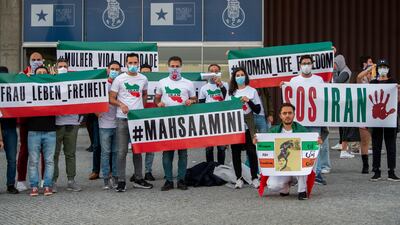
Campaigners and football fans protest at a Champions League match between Porto and Bayer Leverkusen at the Dragao stadium in Portugal. EPA -
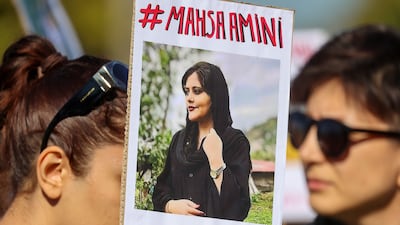
People hold placards during a demonstration in solidarity with the Iranian people near the European Parliament in Strasbourg, France. EPA -
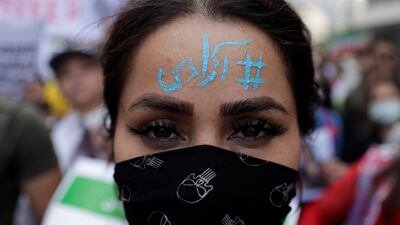
An Iranian woman living in Turkey with 'Freedom' written on her forehead takes part in a protest near the Iranian consulate in Istanbul. Reuters -
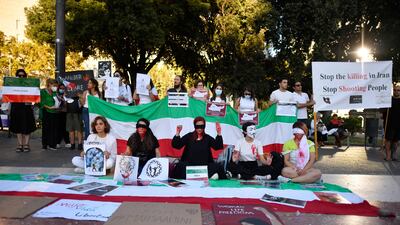
In Barcelona, protesters take part in a demonstration in support of Iranian women. AFP -
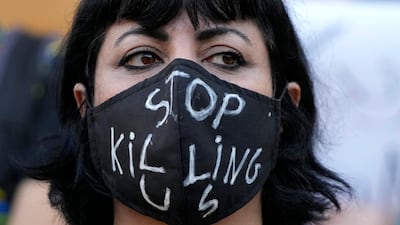
A Lebanese activist takes part in a protest in Beirut, triggered by the death of Amini, 22. AP -
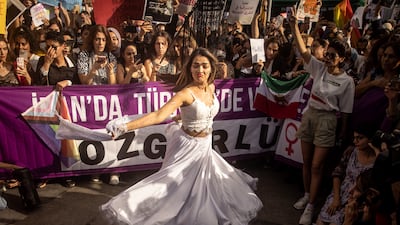
A Turkish protester takes off her head scarf while giving a performance in Instanbul during a protest against Iran over Amini's death. Getty -
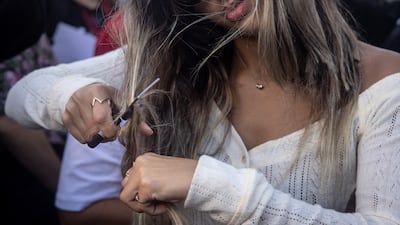
A woman in Istanbul cuts her hair during a protest against Iran. Getty -
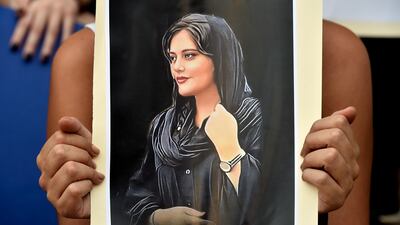
A Lebanese activist holds a poster depicting Amini during a protest in Beirut organised by feminist groups in support of women protesters in Iran. EPA -
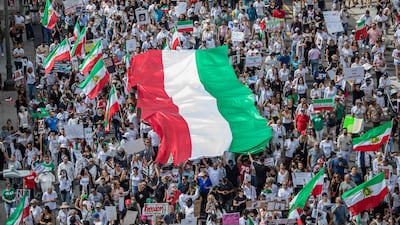
Demonstrators in Los Angeles, California, hold the Iranian flag during a protest against the government in Tehran. AFP -
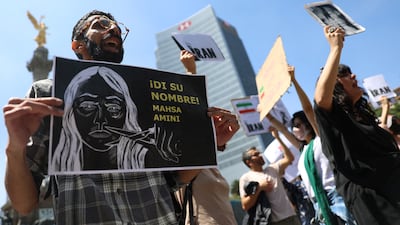
Demonstrators hold placards in Mexico City during a protest against Iran. Reuters -
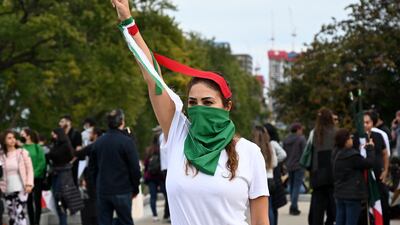
People demonstrate in Montreal, Canada, during a protest triggered by Amini's death. AFP -
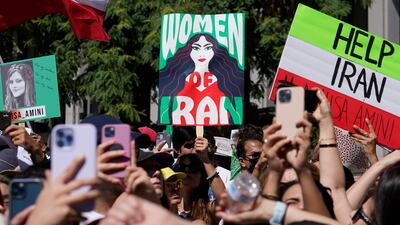
Iranian Americans participate in a rally in central Los Angeles, in solidarity with women in Iran. AP -
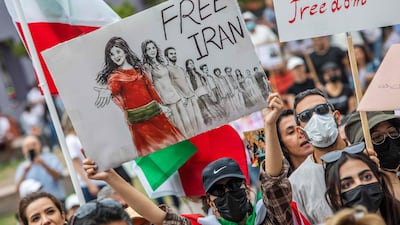
Demonstrators march during a protest in Los Angeles, California. AFP -
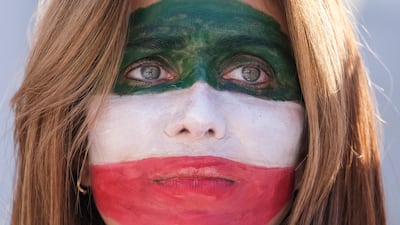
A woman with the colours of the Iranian flag painted on her face participates in a rally as thousands demonstrate in support of Iranian women in Los Angeles. EPA -
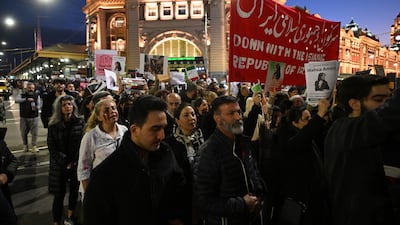
Australians protest over Amini's death in Melbourne. EPA -
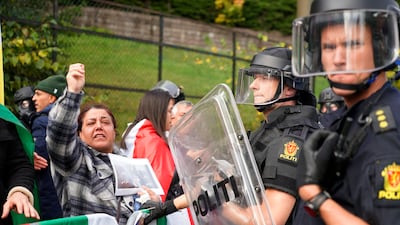
Police block protesters from entering Iran's embassy in Oslo, Norway. EPA -
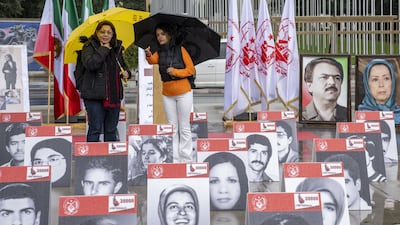
Demonstrators in front of the European headquarters of the UN in Geneva, Switzerland, during a rally against Iran. EPA -
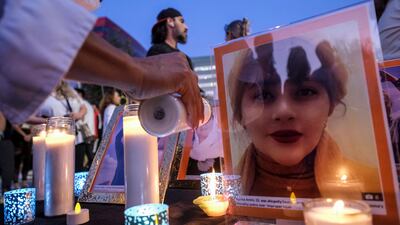
A candlelight vigil for Amini in Los Angeles. AFP -
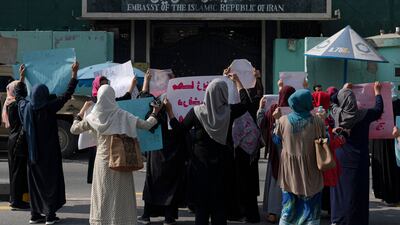
Afghan women hold placards as they take part in a protest in front of the Iranian embassy in Kabul. AFP -
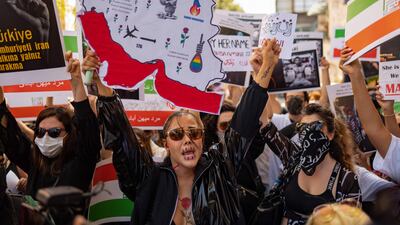
Protestors take part in a rally outside the Iranian consulate in Istanbul. AFP -
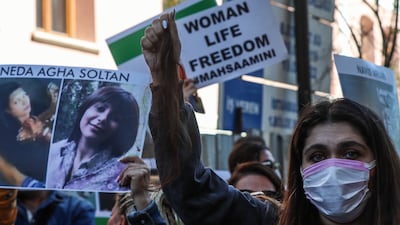
An Iranian woman shows a lock of hair she cut off during a protest outside the Iranian consulate in Istanbul. EPA -
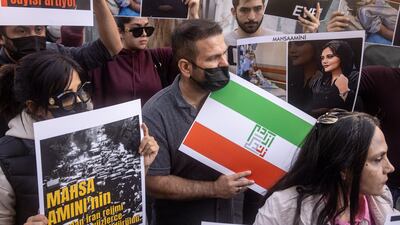
Demonstrators outside the Iranian consulate in Istanbul. Getty -
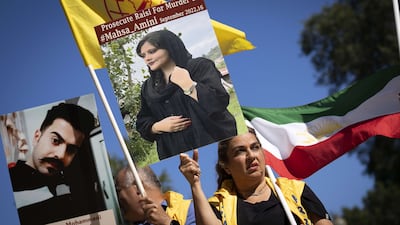
Iranian Americans rally on Capitol Hill in Washington to show support for protesters in Iran. AFP -
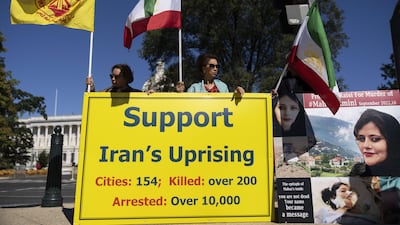
Protesters on Capitol Hill hold a sign condemning the crackdown by Tehran. AFP -
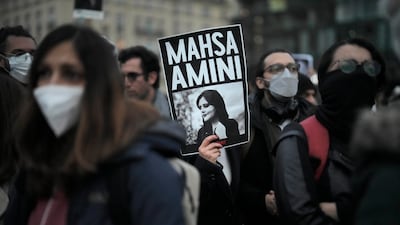
German demonstrators gather in Berlin after the death of Amini in Iranian police custody. AP -
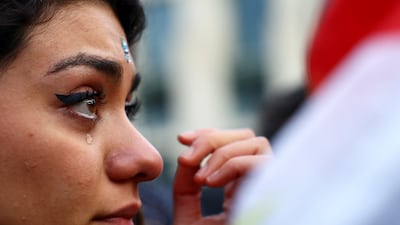
A protester cries during a rally in Berlin. Reuters -
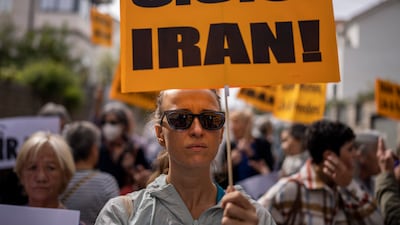
A demonstration in Madrid, Spain. Thousands have gathered in cities across Europe to support protests in Iran. AP -
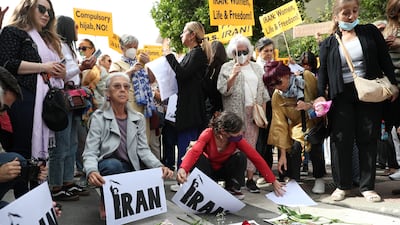
Demonstrators gather outside the Iranian embassy in Madrid. Reuters -
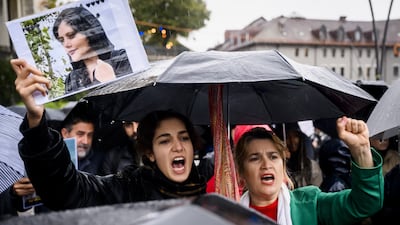
People take part in a protest in Lausanne, Switzerland. EPA -
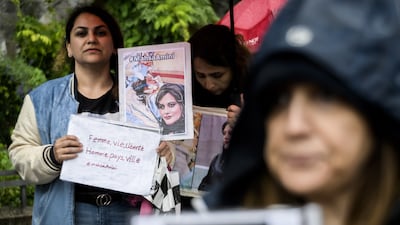
Protesters hold signs featuring images of Amini during the protest in the western Swiss city. EPA -
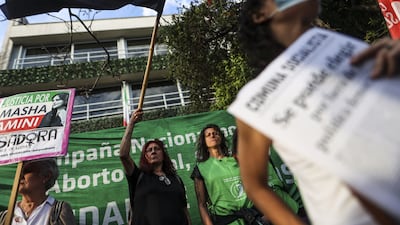
Demonstrators in front of the Iranian embassy in Buenos Aires, Argentina. EPA -
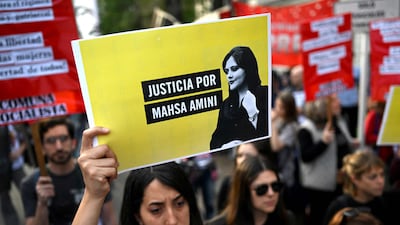
An activist outside the Iranian embassy in Buenos Aires, Argentina, with a sign that reads 'Justice for Mahsa Amini'. AFP -
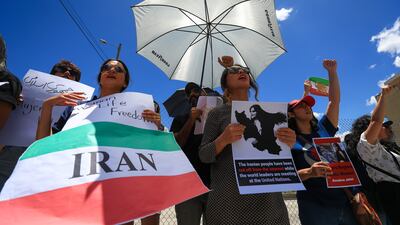
A demonstration against violence in Iran is held in Quito, Ecuador. The Iranian community in Ecuador protested outside the Iranian embassy. EPA -
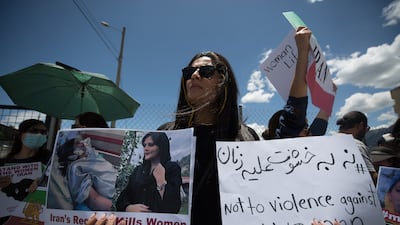
Protesters at a demonstration outside the Iranian embassy in Quito, Ecuador. EPA


Friday's sanctions come as protests in Iran approach their fourth week over the death of Mahsa Amini, who died in police custody after improperly wearing her headscarf.
Human rights organisations have reported that hundreds may have been killed or injured in the protests.
On Thursday, Amnesty International accused Iranian security forces of killing at least 66 people, including children, and injuring “hundreds of others after firing live ammunition, metal pellets and teargas at protesters, bystanders and worshippers during a violent crackdown” after Friday prayers in Zahedan, as well as Sistan and Baluchestan provinces.

