
The Prince of Wales and the Duchess of Cornwall honoured Canada’s war dead in a poignant wreath-laying ceremony on Wednesday on the second day of their tour of the Commonwealth country.
Charles and Camilla are in Canada as Queen Elizabeth II celebrates seven decades on the throne during her platinum jubilee year.
The couple solemn wreath-laying event at the National War Memorial in the capital Ottawa.
In brilliant sunshine, the couple stood motionless as a bugler played the last post. Before them was the imposing memorial, symbolising the sacrifice of all Canadian military in the cause of freedom in all conflicts.
Charles’s grandfather, King George VI, unveiled the memorial in May 1939 and the Tomb of the Unknown Soldier was added in 2000, the resting place of a Canadian serviceman from a war cemetery near Vimy Ridge, a First World War battle site in France.
At each corner of the tomb a member of the Armed Forces stood on guard facing outwards, head bowed with their arms resting on a rifle.
Charles laid a wreath of poppies while Camilla left a bouquet. Both floral tributes featured handwritten cards from the couple with the words “in grateful remembrance“.
Earlier, Charles was invested as an Extraordinary Commander of the Order of Military Merit by the Governor General of Canada, Mary Simon.
The prince holds several honorary appointments and ranks with the Canadian military and the order recognises exceptional service by the men and women of the Canadian Armed Forces.
-
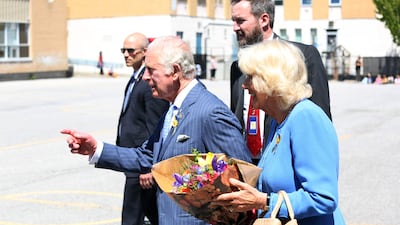
Britain's Prince Charles and Camilla, Duchess of Cornwall greets students during a visit at Assumption Catholic school May 18, 2022 in Ottawa. AFP -
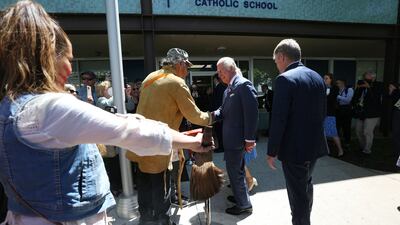
Britain's Prince Charles greets member of the public during a visit at Assumption Catholic school May 18, 2022 in Ottawa. AFP -
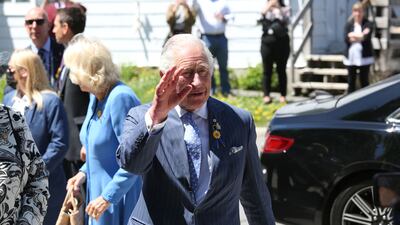
Britain's Prince Charles and Camilla, Duchess of Cornwall waves during a visit at Assumption Catholic school May 18, 2022 in Ottawa. AFP -
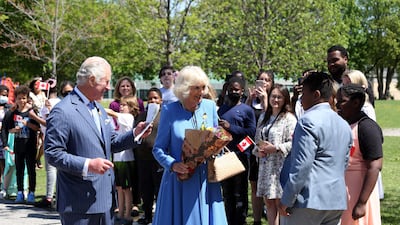
Britain's Prince Charles and Camilla, Duchess of Cornwall greet students during a visit at Assumption Catholic school in Ottawa. AFP -
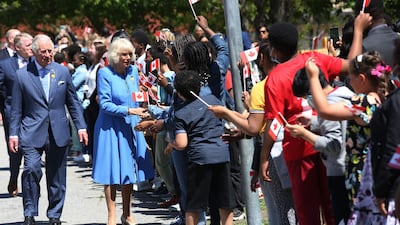
The Royal couple greet students during a visit at Assumption Catholic school on May 18, 2022 in Ottawa. AFP -
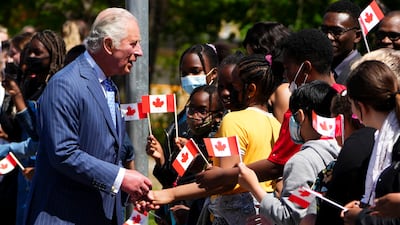
Prince Charles and Camilla, Duchess of Cornwall, visit Assumption Catholic School in Ottawa, while on their 2022 Royal Tour to Canada on Wednesday May 18, 2022. The Canadian Press/AP -
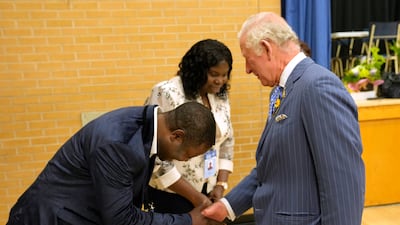
Samuel Awoyem bows to Prince Charles as his wife Toyin Awoyem looks on during a visit to the Assumption Elementary School in Ottawa, Wednesday, May 18, 2022. The Canadian Press/AP -
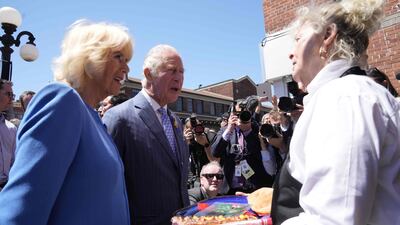
Britain's Prince Charles and Camilla, Duchess of Cornwall, are served beaver tail pastries at the Byward Market in Ottawa on May 18, 2022. AFP -
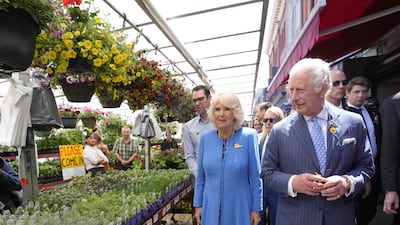
Britain's Prince Charles and Camilla, Duchess of Cornwall, tour the Byward Market in Ottawa on May 18, 2022. AFP -
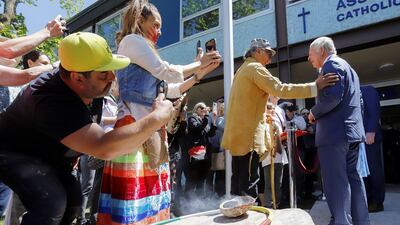
People react as Britain's Prince Charles speaks with indigenous drummer, Okimajd Anderson, during a visit to Assumption Elementary School, on the second day of the Canadian 2022 Royal Tour, in Vanier, Ottawa. Reuters -
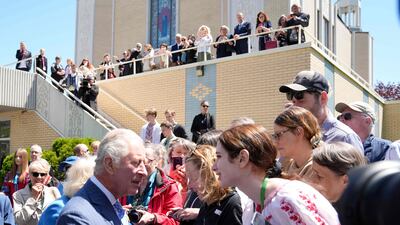
Britain's Prince Charles greets a well-wishers after leaving a Ukrainian church in Ottawa on their Canadian Royal Tour, on May 18, 2022. AFP -
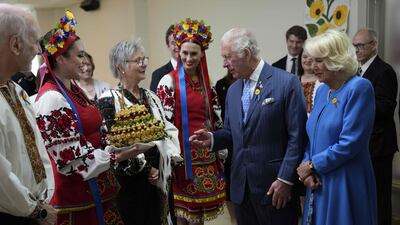
Britain's Prince Charles and Camilla, Duchess of Cornwall, are presented with bread and salt during a visit to a Ukrainian church in Ottawa on their Canadian Royal Tour, May 18, 2022. AFP -
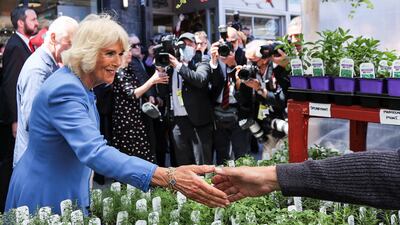
Britain's Camilla, Duchess of Cornwall visits an outdoor market stall at ByWard Market, on the second day of the Canadian 2022 Royal Tour, in Ottawa. Reuters -
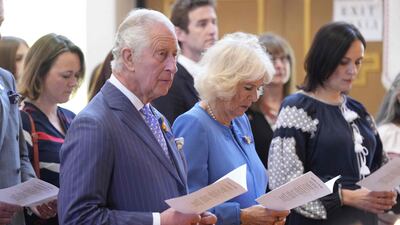
Britain's Prince Charles and Camilla, Duchess of Cornwall, take part in a traditional prayer service at a Ukrainian church in Ottawa on their Canadian Royal Tour, May 18, 2022. AFP -
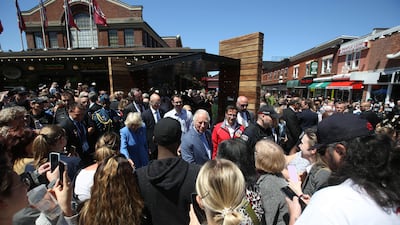
Britain's Prince Charles and Camilla Duchess of Cornwall greet well-wishers at ByWard Market on May 18, 2022 in Ottawa. AFP -
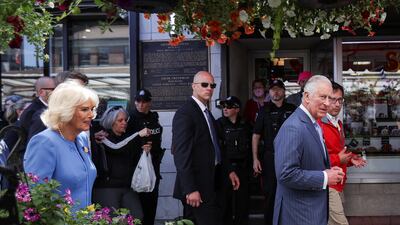
Britain's Prince Charles and Camilla, Duchess of Cornwall walk along a street, on the second day of the Canadian 2022 Royal Tour, in Ottawa. Reuters -
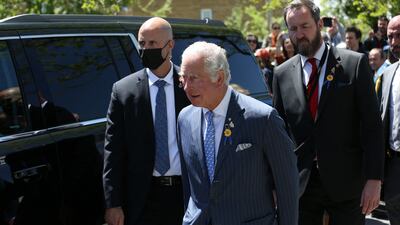
Britain's Prince Charles walks to his car after visiting Ukrainian Orthodox Cathedral Assumption of the Blessed Virgin on May 18, 2022 in Ottawa. AFP -
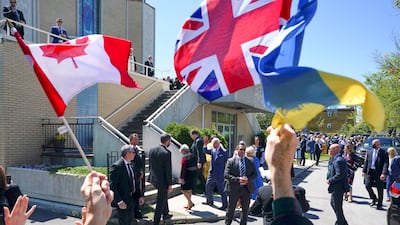
Britain's Prince Charles and Camilla, Duchess of Cornwall, visit the Ukrainian Orthodox Cathedral, Assumption of the Blessed Virgin, in Ottawa, Ontario, while on their Canadian Royal tour, Wednesday May 18, 2022. The Canadian Press/AP -
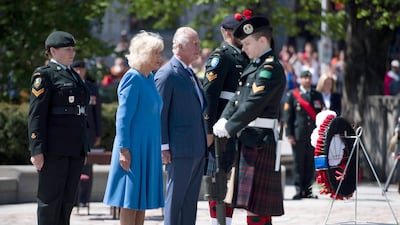
Prince Charles and Camilla, Duchess of Cornwall participate in a wreath laying ceremony at the National War Memorial in Ottawa, while on their Canadian Royal tour, Wednesday May 18, 2022. The Canadian Press/AP -
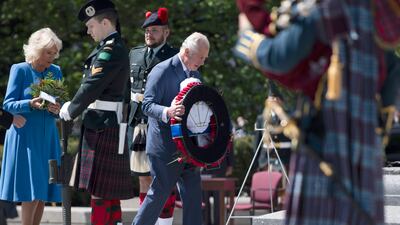
Prince Charles and Camilla, Duchess of Cornwall participate in a wreath laying National War Memorial in Ottawa, during their Canadian Royal tour, on Wednesday, May 18, 2022. AP -
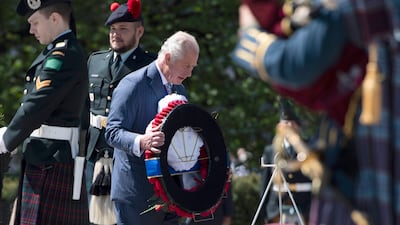
Prince Charles and Camilla, Duchess of Cornwall participate in a wreath laying ceremony at the National War Memorial in Ottawa, during their Canadian Royal tour, on Wednesday, May 18, 2022. AP -
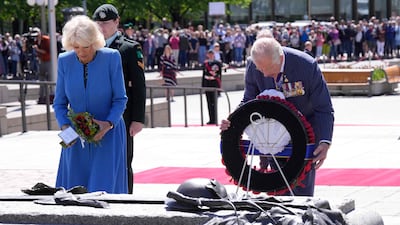
Britain's Prince Charles and Camilla, Duchess of Cornwall, lay a wreath at the National War Memorial in Ottawa on May 18, 2022. AFP -
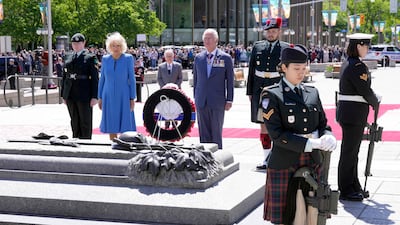
Britain's Prince Charles and Camilla, Duchess of Cornwall, lay a wreath at the National War Memorial in Ottawa on May 18, 2022. AFP -
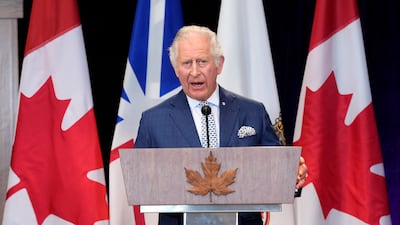
Britain's Prince Charles speaks during a welcome ceremony in St John's, Canada, as he and Camilla, Duchess of Cornwall, begin a three-day tour of the country. It is taking place at a time when affinity for the British Crown is waning among many in the Commonwealth member. AP -
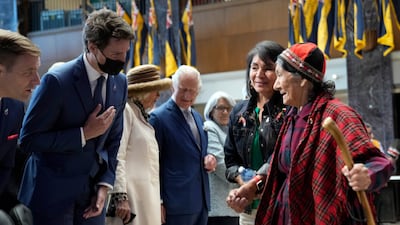
Canadian Prime Minister Justin Trudeau greets indigenous leaders as Prince Charles and Camilla, Duchess of Cornwall, are welcomed. AP -
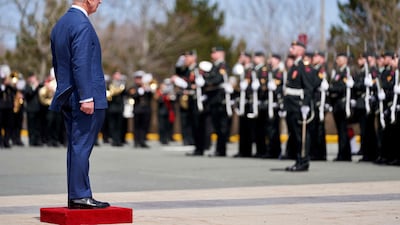
Prince Charles outside the Confederation Building in St John’s, Newfoundland and Labrador. AFP -
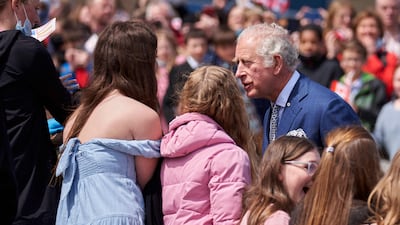
Britain's Prince Charles greets people as he arrives at the Confederation Building in St John’s. AFP -

A spectator reacts as Britain's Prince Charles arrives at the Confederation Building in St John’s. AFP -
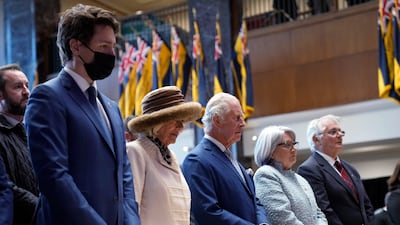
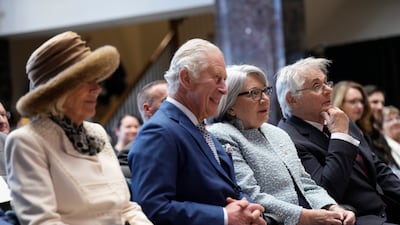
Prime Minister Justin Trudeau, left, stands next to Camilla, Duchess of Cornwall, Prince Charles, Governor General Mary Simon and her husband Whit Fraser, as they attend a welcoming ceremony in St John's. AP -
Prince Charles and his wife Camilla arrived in Canada on Tuesday to embark on a three-day tour of the country. AP -
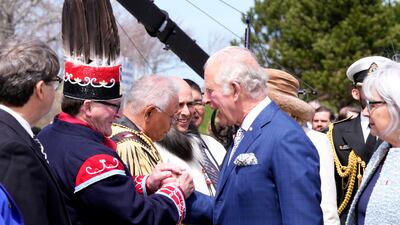
Indigenous leaders greet Prince Charles and Camilla, Duchess of Cornwall. AP -
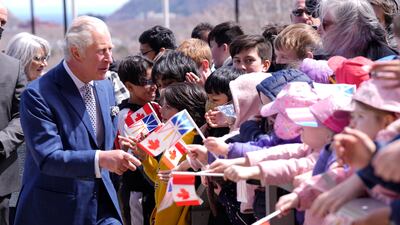
Prince Charles is greeted by well-wishers in St John's. AP -
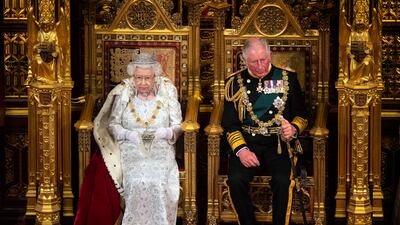
Britain's Queen Elizabeth II sits with Prince Charles in October 2019 at the state opening of Parliament. According to a recent poll, which surveyed 1,607 Canadians, 50 per cent say the royal family is no longer relevant to them. AFP -
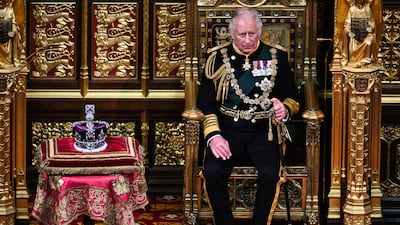
Prince Charles pictured during the state opening of Parliament on May 10. Even if public opinion continues to sour on the royals, it is unlikely that relations between Canada and the monarchy will change much in the near term. AFP -
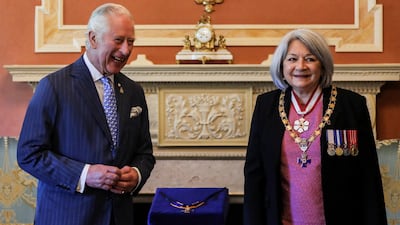
Britain's Prince Charles stands next to Canada's Governor General Mary Simon, while attending the Order of Military Merit Investiture Ceremony, on the second day of the Canadian 2022 Royal Tour, in Ottawa. Reuters -
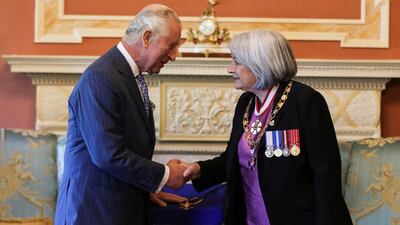
Britain's Prince Charles shakes hands with Canada's Governor General Mary Simon, while attending the Order of Military Merit Investiture Ceremony, on the second day of the Canadian 2022 Royal Tour, in Ottawa. Reuters -
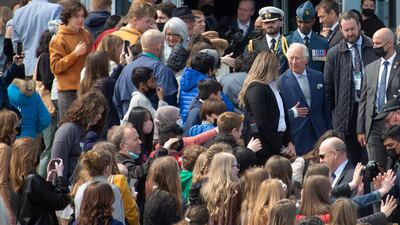
Camilla, Duchess of Cornwall, and Prince Charles are greeted by well-wishers in St. John's as they arrive for a Royal visit to Canada on Tuesday, May 17, 2022. The Canadian Press/AP


The couple are on a three-day tour with stops in Newfoundland and Labrador, Ottawa and the Northwest Territories.
Clarence House said the purpose of the tour was to learn and hear from indigenous Canadians as the country continues to deal with the discovery of unmarked graves at the sites of former residential schools across the country.
It also comes as support for the monarchy appears to be on the wane.
A recent online poll by the Angus Reid Institute shows that half of Canadians feel the royal family is no longer relevant to them.
And while most Canadians view the Queen in high regard, the same is not true for the rest of her family.
Fifty-one per cent of those surveyed want Canada to become a republic, something Barbados achieved in November.
"It's the 21st century and there's no reason why we should still be sharing our head of state with the United Kingdom," said Tom Freda, national director of Citizens for a Canadian Republic.
PA contributed to this report

