
The UN envoy to Iraq on Wednesday called for calm in Basra after authorities opened fire on civilians, killing six and wounding others, in the bloodiest day to hit the southern city in two months of protests.
In a statement, Jan Kubis, the UN's special representative, urged security forces "to avoid using disproportionate, lethal force against the demonstrators, provide the necessary protection for the people of Basra, ensure human rights while protecting law and order, and investigate and hold accountable those responsible for the outbreak of the violence."
Prime Minister Haider Al Abadi ordered a probe into Tuesday's unrest after the situation spiralled out of control, following the funeral procession for 26-year-old Mekki Yasser Ashur, a demonstrator killed the day before. Security forces guarding the provincial council building fired tear gas and live ammunition on stone-throwing protesters, wounding 20.
They "directly opened fire on protesters," said Mehdi Al Tamimi, head of the government's human rights council in Basra province.
Medical sources earlier said two demonstrators were killed on Tuesday as thousands of people rallied outside the local government headquarters in Basra.
During the protests, some people in the crowd hurled Molotov cocktails and fireworks at the building, while security forces responded with tear gas and by firing shots into the air.
_______________
Video:
_______________
Around 15 members of the security forces were injured in the clashes, the medical sources said.
Addressing his weekly press conference in the capital Baghdad, Mr Abadi reasserted he had ordered "no real bullets...to be fired in the direction of protesters or in the air".
Mekki Yasser Ashur died after being shot during protests, his family said on Tuesday during his funeral march.
Protesters accompanied his coffin through the streets of Basra to the government building, before being dispersed by tear gas.
During the procession some armed civilians fired shots into the air and hailed Ashur as a "martyr".
Meanwhile in Baghdad a symbolic funeral procession was organised in memory of Ashur.
______________
Read more:
Basra burns as Iraqi politicians bicker over government formation
Iraqi protesters threaten to invade Basra oilfield
Basra health crisis: 17,000 admitted to hospitals for water poisoning
_______________
In Basra city police and military cordons were put in place, blocking numerous roads, while hospitals were filled with protesters bringing in people wounded in the clashes.
Basra's human rights council chief said tensions were high in the city and that shops had shut earlier than usual.
Mr Al Tamimi warned of further escalation "if the government doesn't respond to the demands of demonstrators".
The government has announced an emergency plan in response to the protests, while promising billions of dollars in investment for southern Iraq.
-

Armed Iraqi civilians attend the funeral of Yasser Makki who was killed during protests in Basra. AFP -

Iraq has been gripped by protests over power outages, unemployment, state mismanagement and a lack of clean water. AFP -

Mourners carried Makki's body to the site where he was wounded, chanting "Yasser's blood will not be lost". EPA -
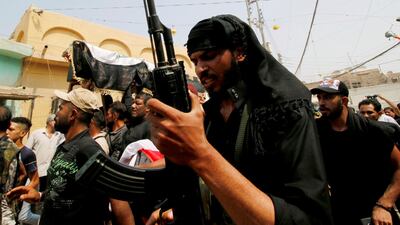
Demonstrations have swept cities in the country's neglected south. Reuters -

The local head of Iraq's Human Rights Commission, Mahdi Al Tamimi, called for an investigation into Makki's death. AFP -
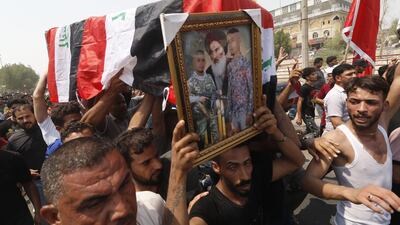
Iraqi protesters carry the coffin of Yasser Makki. AFP -

Iraqi protesters demonstrate against their government and the lack of basic services, in Basra. AFP -
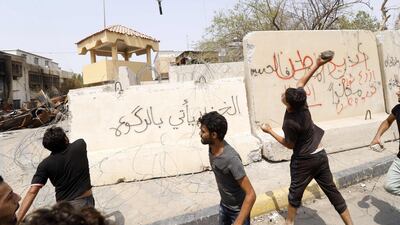
Iraqi protesters demonstrate against their government and the lack of basic services, in Basra. AFP -

Iraqi protesters demonstrate against their government and the lack of basic services, in Basra. AFP -
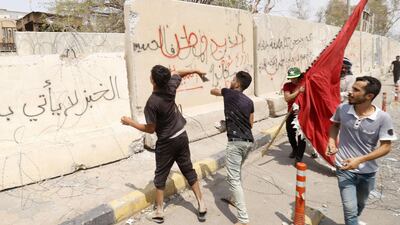
AFP -
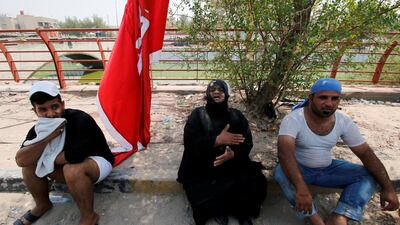
Mourners react during the funeral. Reuters


But residents are wary of such pledges from the outgoing government, as Iraqi politicians are in the process of forming a new government after May's election.
Political corruption has also fuelled protests, which erupted in Basra on July 8 before spreading across southern Iraq and reaching the capital.
A litany of social problems – from unemployment to electricity cuts – have also been a central complaint of demonstrators.
Iraqis have called on authorities to clean up the water supply, with pollution blamed for putting 20,000 people in hospital in Basra province alone.
Since early July, 21 people have been killed in protests across Iraq. At least one of those was shot dead by security forces. Authorities have accused "vandals" of infiltrating the rallies.

