


When she heard Lebanese banks would limit cash withdrawals, Rita, a doctor, rushed out to buy a $10,000 (Dh 36,730) Rolex watch on her credit card, anxious to protect some of her savings. "It's better than keeping my money in the bank," she said.
Every week, account holders line up for their quota of cash – for some less than $200 (Dh 734) – from their banks, which have also blocked foreign money transfers as Lebanon sinks deep into economic crisis.
-

Hundreds of Lebanese gathered outside the central government building to reject the newly formed Cabinet, while some protesters breached tight security erected around it, removing a metal gate and barbed wire prompting a stream of water cannons from security forces. AP -
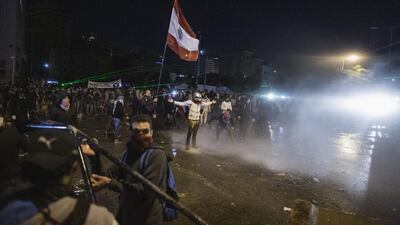
Security forces fire a water cannon at anti-government protester near the Grand Serail on January 25, 2020 in Beirut, Lebanon. Getty Images -
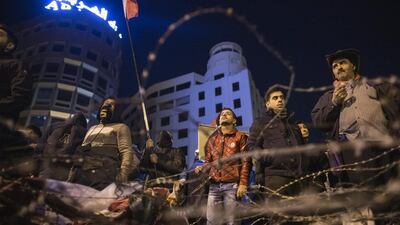
Anti-government protesters stand behind a razor wire barricade near the Grand Serail on January 25, 2020 in Beirut, Lebanon. Getty Images -
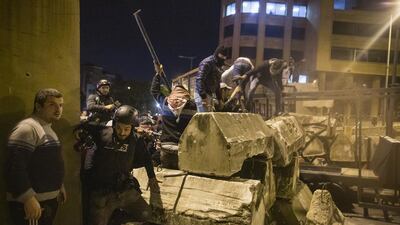
A number of marches were planned to convene on Parliament and the Union of Banks on what is the 101st day of unrest in the country. Getty Images -
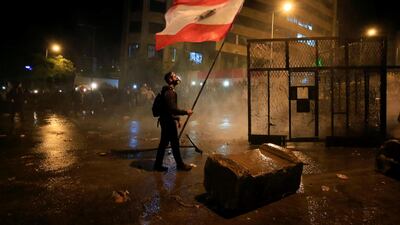
A demonstrator holds the Lebanese flag during a protest against the newly formed government outside the prime minister’s office in downtown Beirut. Reuters -
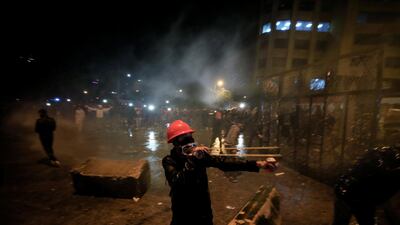
A demonstrator uses a slingshot to throw a stone during a protest against the newly formed government. Reuters -
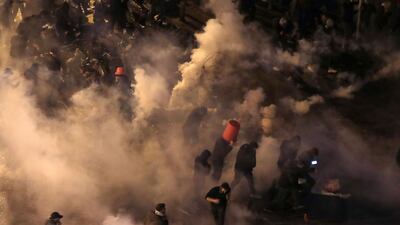
Lebanese anti-government protesters run to avoid tear gas. AFP -
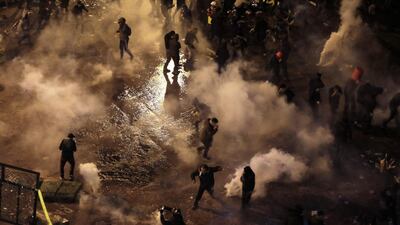
Lebanese anti-government protesters run to avoid tear gas as security forces attempt to disperse their rally near the Grand Serail in downtown Beirut. AFP -
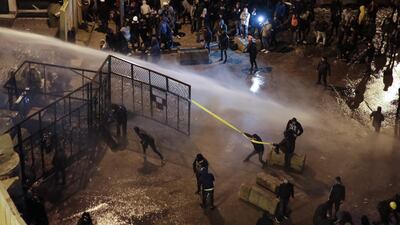
Lebanese anti-government protesters attempt to break through a barricade as security forces uses a water canon to disperse their rally near the government headquarters at the Grand Serail. AFP -
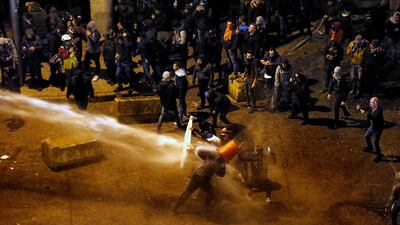
Riot police sprayed anti-government protesters with water cannons as they try to cross to the central government building during ongoing protests in Beirut, Lebanon, Saturday, Jan. 25, 2020. AP -

Anti-government demonstrators fire slingshots toward the Lebanese riot police during ongoing protests in Beirut. AP -
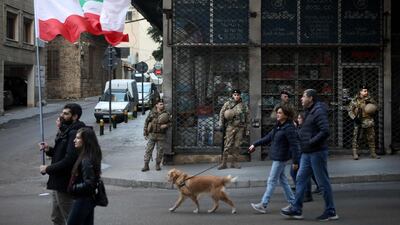
Army soldiers look on as Lebanese anti-government protesters march toward the capital Beirut's downtown district. AFP -
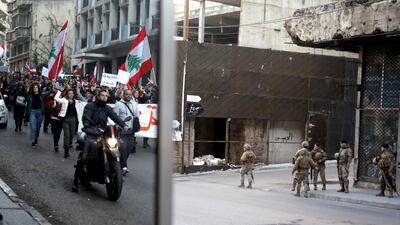
An image reflected in a shop window shows Lebanese anti-government protesters marching down a road on Beirut’s civil war demarcation line between the city's east and west as army soldiers look on from across the road. AFP -
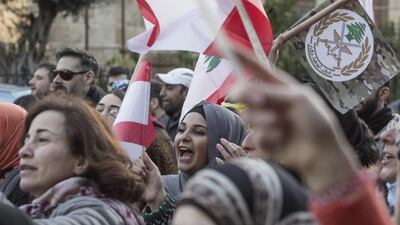
Anti-government protesters chant as they march toward the Parliament on January 25, 2020. Getty Images -
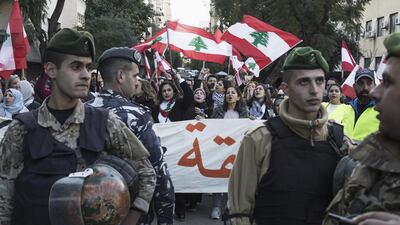
Lebanese security forces walk in front of anti-government protesters as they march toward the Parliament on January 25, 2020 in Beirut. Getty Images -
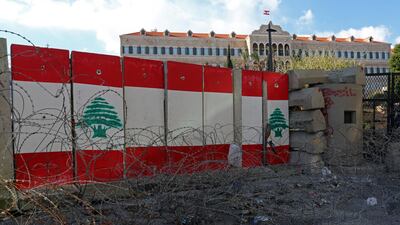
A view shows concrete barriers erected by authorities near the government palace, during ongoing protests in Beirut. Reuters -
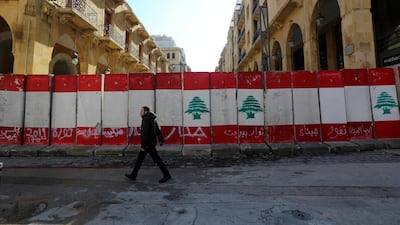
A man walks past concrete barriers erected by authorities to block a street leading to the parliament building in Beirut, Lebanon January 24, 2020. Reuters -
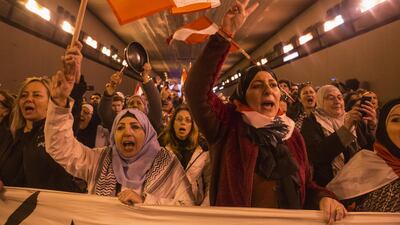
A number of marches were planned to convene on Parliament and the Union of Banks on what is the 101st day of unrest in the country. Getty Images -
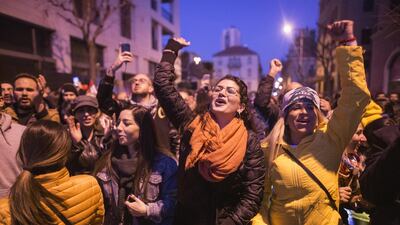
Anti-government protesters chant as they march toward the Parliament on January 25, 2020. Getty Images -

A view shows damaged tiles of a store facade in Beirut, Lebanon January 23, 2020. Reuters -
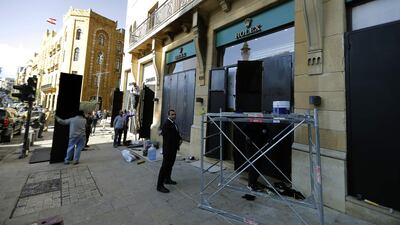
Workers fix iron shields on the windows of shops to protect them from damage during anti-government riots in the Lebanese capital Beirut's downtown district, on January 24, 2020. AFP


Dollar shortages have pushed up prices, the Lebanese pound has slumped on the parallel market and confidence in the banking system has collapsed.
People with savings in the bank are scrambling to get the money out, buying jewellery, cars and land with credit cards or cashier's checks.
Several people told Reuters they feared even tighter controls, a haircut on their deposits, bank failure or a devaluation of the Lebanese pound, which has been pegged to the US dollar for 22 years.
They asked not to be fully identified due to safety concerns.
The central bank says deposits are safe and pledges to maintain the dollar peg, while the head of the country's banking association said the limits on withdrawals and other measures aimed "to keep the wealth of Lebanon" in the country.
Many ordinary Lebanese had already started stashing cash at home months before protests erupted in October against the ruling elite that plunged Lebanon into its worst crisis in decades.
In Beirut, staff at several jewellery stores said customers had poured in recently looking to buy gold and diamonds, sometimes to sell them abroad, though most jewellers are now only accepting cash.
At a Rolex store in the city, sales will only be made if half the payment is in cash in US dollars, an employee said.
When the crisis first began to bite, Lucy, a housewife in her 60s, worried about the money her late husband had left her. She and her daughters pooled all the cash they could get and bought $50,000 worth of gold, hiding it at home.
"It's my father's life savings. I don't want to keep a single penny in the bank," one of the daughters said.
An advisor at a Beirut auction house, who asked to remain anonymous, said she was fielding daily calls from people who want to "put their money into paintings instead of in the bank."
"For the first time, I'm getting calls from people who don't know anything about art," she said.
Abdallah, a doctor in his 50s, bought three cars worth more than $80,000 with a cashier's check.
His bank only allows him to withdraw $100 a week and he fears the controls could be further tightened. "I have no trust in the bank," he said.

