
At least 14 million pebbles will be thrown at the devil today, but the number will likely to be higher as some pilgrims toss a few extra for good measure.
Early on Tuesday morning at Muzdalifah on the outskirts of Mina, millions of Hajj pilgrims were squatting on the ground meticulously picking the pebbles for the day’s ritual - Ramy Al Jamarat.
"I want them to feel good when I throw them," says a boy at one of the nearby Mina camps. His dad encourages him, but tells him to keep the pebbles small.

Today, many of the pilgrims walking from Muzdalifah continued their trek through a convoluted network of walkways to the ritual site. The paths funnel thousands of pilgrims hourly, each clutching seven pebbles in their hand and keeping one target in mind: Satan.
As they approach the ramp to the first floor of the multi-levelled building, the pace quickens. The clicks as pebbles shift in thousands of hands can be heard even far back from the long oval wall that represents the devil.
The throwing distance is a personal preference. Some stand far back and toss them from more than 10 metres, others get as close as possible to the railings.
Unlucky taller pilgrims who move towards the front often get a pebble to the head, but it doesn’t stop the flurry of chucks.
“Allahu Akbar, Allahu Akbar,” an Egyptian man screams as he rapid-fires his seven pebbles at the Jamarat wall.
-

Pilgrims pray on Mount Arafat, or the mountain of forgiveness, during Hajj. AP Photo -
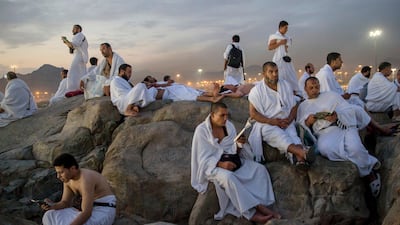
Many pilgrims also read the Quran at the top of Mount Arafat. AP Photo -
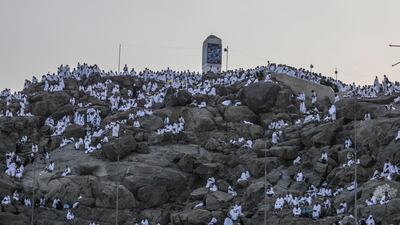
The hill is believed to be where the Prophet Mohammed gave his final sermon. EPA -
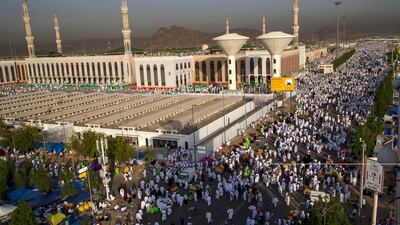
Muslim pilgrims walk past the Namirah mosque on Mount Arafat. AP Photo -
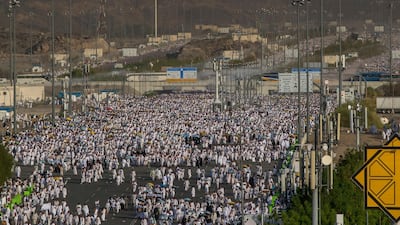
Pilgrims arrive at Mount Arafat. AP Photo -
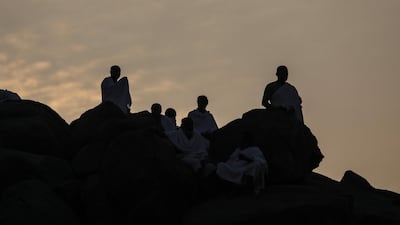
Standing and praying on Mount Arafat is considered the peak of the pilgrimage. EPA -
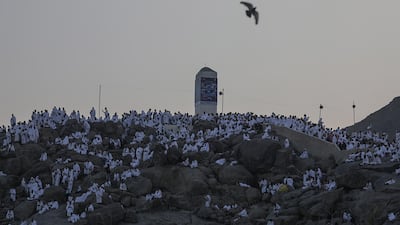
Mount Arafat is just outside of Makkah. EPA -
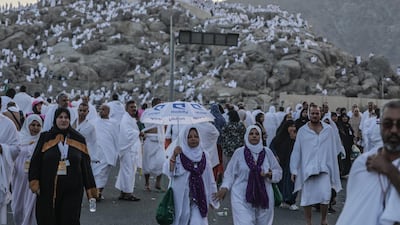
Millions of pilgrims will spend time on Mount Arafat. EPA -
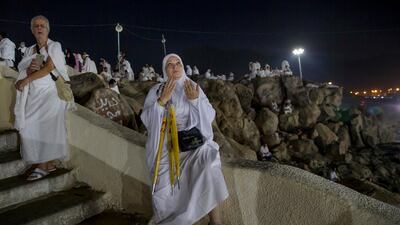
A Muslim woman prays. AP Photo -
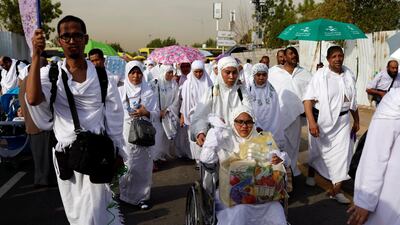
Muslims arrive to reach the summit of Mount Arafat. AP Photo -
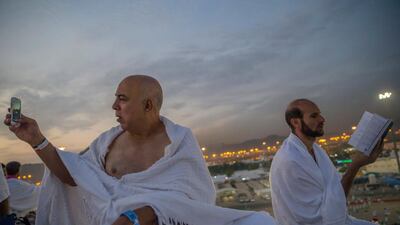
A Muslim pilgrim reads the Quran as another pilgrim takes a photo. AP Photo -
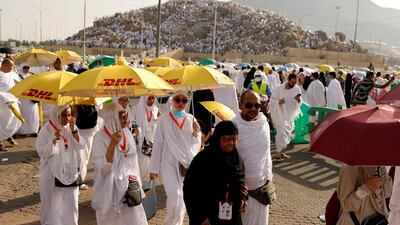
Muslims gather at the foot of Mount Arafat. Reuters -
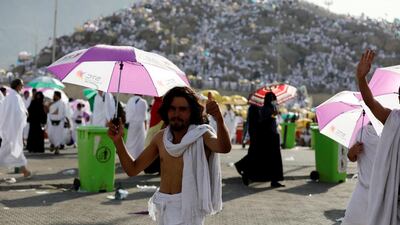
A man shades himself from the sun during his visit to Mount Arafat. Reuters


Rage can be seen in some, others appear overwhelmed with vengeance, but all are highly emotional.
Pilgrims will return several more times over Eid to continue the stoning.
After tossing the pebbles, pilgrims descend from the Ramy Al Jamarat, having accomplished one of the great steps of the pilgrimage.
Tossing the pebbles is a transformative experience, both spiritually and physically, as pilgrims are now required to cut their hair.
On the ramp that stretches down from Ramy Al Jamarat, clumps of every colour of hair lay discarded on the floor.
But there isn’t a barber in sight but many have come prepared.
With heads hanging over garbage bins, other pilgrims take blades to the tufts of hair of the willing.

Although it’s only mandatory for men to cut hair short, most opt to shave it to signify their coming transformation into becoming a Hajji. For many, it’s a feeling of being born anew.
A man holds his newly shaved head, it’s not pinpoint work as patches of longer hair are still visible but he rubs his hand on his scalp.
“It feels good,” he jokes with his friends.

At this point, pilgrims are getting closer to having completed Hajj. As part of the pilgrimage, many will offer a sacrifice in celebration of Eid Al Adha. This is typically a lamb.
However, as the scale of Hajj has increased, the logistics of each pilgrim slaughtering their own animal have become unworkable so across Mina today there are kiosks where the sacrifice is done for the pilgrim.
Pilgrims simply get a voucher – costing between 400 and 500 Saudi riyals (Dh 390 to Dh 490) - from the kiosk guaranteeing that a sacrifice will be made on their behalf.
At this point, the homogenous unison of Hajj is broken up the last rituals are flexible in order.
Some will travel to Makkah, to perform Tawaf and Sa’e, or circumambulation of the Kaaba and the walking between Al Safa Al Marwa where pilgrims re-enact the journey of Hagar, wife of Prophet Ibrahim, looking for water.
They will also return to Muzdalifah to stone the devil over the next three days of Eid. Those in a rush, or are with families, can be exempt from the third day.
Spiritual reflection and prayer reach an all-time high, with the final phase being very important to the pilgrimage.
“You don’t want to take any risks, you want to do everything you possibly can to ensure you are performing proper Hajj,” said Ayoub from Morocco.
He said that for many, this will be their one and only time doing Hajj and that they must make their best effort to ensure it counts.

