


For Layla Abbas Hussein, getting justice for her slain son seems a distant dream.
Mohammed Habib Abbas was the first demonstrator to fall in Iraq’s unprecedented pro-reforms protest movement that began on October 1 last year. A tear gas canister became lodged in his right shoulder and he bled to death.
"He was only holding the Iraqi flag and chanting 'we want a country' along with others," Ms Hussein, 51, told The National before bursting into tears.
“A year has passed now and there is no clue that could lead us to the killer, each government faction blames the other,” she said.
Ms Hussein's son Abbas, then 21, was one of the thousands of young people who took to the streets in Baghdad and southern cities to protest over the lack of jobs, poor public services and endemic corruption in Iraq.
-

Mustafa Abd painting one of his artworks in Al Sadoon tunnel next to Baghdad's Tahrir square preparing for the anniversary of the protests. Haider Husseini for The National -
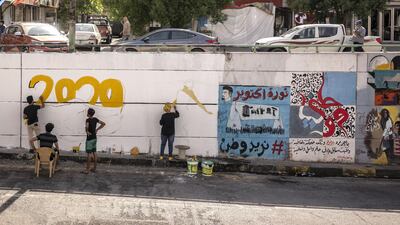
A group of volunteers help to fix artworks and paint new ones in Al Sadoon tunnel next to Tahrir square preparing for the anniversary of the protests. Haider Husseini for The National -
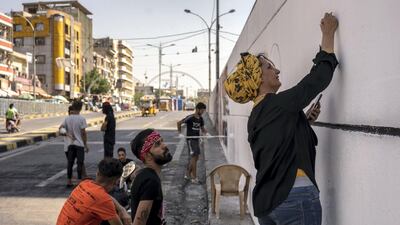
A group of volunteers help to fix artworks and paint new ones in Al Sadoon tunnel next to Tahrir square preparing for the anniversary of the protests. Haider Husseini for The National -

Mustafa Abd painting one of his artworks in Al Sadoon tunnel next to Tahrir square preparing for the anniversary of the protests. Haider Husseini for The National -
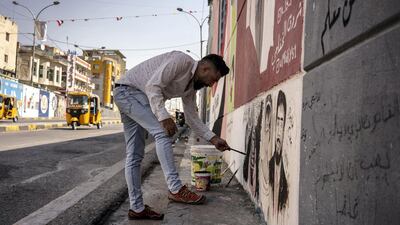
Mustafa Abd painting one of his artworks in Al Sadoon tunnel next to Tahrir square preparing for the anniversary of the protests. Haider Husseini for The National -
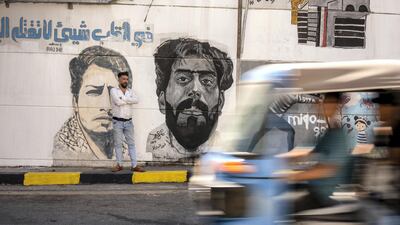
Mustafa Abd standing next to a portrait of one of the icons of the revolution Safa Alsaray. Haider Husseini for The National -
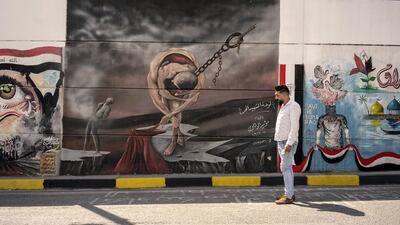
Mustafa Abd standing next to the Painting of the free martyr in Al Sadoon tunnel next to Tahrir square. Haider Husseini for The National -
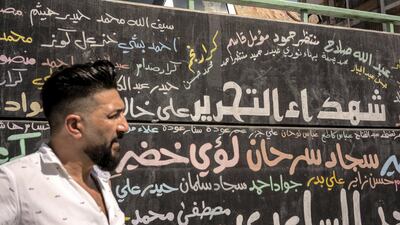
Mustafa Abd at Al Sadoon tunnel with an artwork showing the names of the martyrs that died during the protests. Haider Husseini for The National -
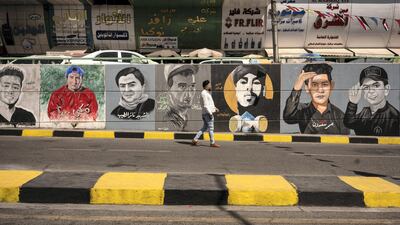
Mustafa Abd walking down Al Sadoon tunnel next to Tahrir square in the background portrait paintings of the martyrs. Haider Alhusseini for The National


According to government statistics released on July 30, at least 560 protesters and members of security forces have been killed, while thousands of others were wounded.
Most were protesters killed or wounded by security forces and state-backed militias firing live rounds and military-grade grenades. Some were assassinated – including two young activists in Basra last month – or disappeared.
The government has failed to hold anyone accountable, offering only promises of investigation and financial aid.
Ms Hussein says she is still devastated by the death of her son, who was to be married just a few weeks later, and that a fire rages inside her.
“We have zero trust in the government to bring us justice,” she said.
“All I need now from the government is to identify the killer of my son and his tribe will take revenge.”
The government led by Adel Abdul Mahdi, which was forced to resign a few weeks after the protests began, denied it had ordered the use of lethal ammunition against the protesters, blaming a “third party” for the killing.
The current prime minister, Mustafa Al Kadhimi, promised a thorough investigation after his government was installed in early May.
This month, Mr Al Kadhimi announced that the first stage of listing the names of victims had been completed. The next stage involving the launch of investigations and bringing those involved to justice will start “soon”, he said.
Also this month, Iraq’s top Shiite cleric Grand Ayatollah Ali Al Sistani joined the calls for justice to the victims.
-
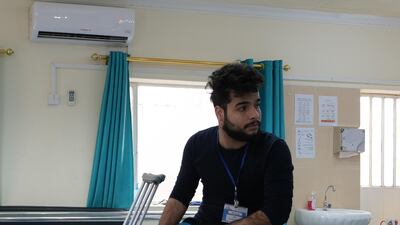
Seif Salman awaits a physiotherapist for treatment ahead of having a prosthetic leg fitted. Ameer Hazim for The National -
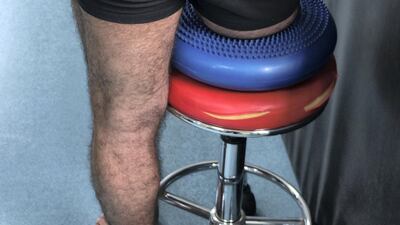
Seif Salman has been receiving physio to strengthen his thighs since having his right leg below the knee amputated. Ameer Hazim for The National -
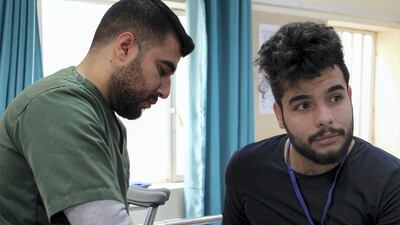
A nurse bandages Seif Salman's leg as he prepares to be measured for a prosthetic limb at a clinic run by Medicine Sans Frontiers in Baghdad. Ameer Hazim for The National -
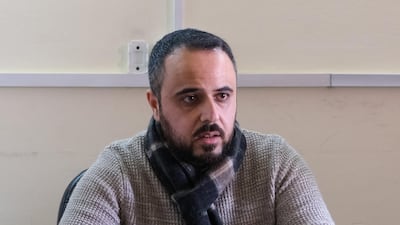
Dr Saad Suleiman describes treating a "gush" of patients when protests reached their peak in November. Ameer Hazim for The National -
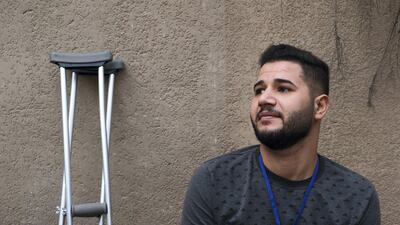
Ali Salam Jassem describes is leg as hanging "like a feather" after being shot during protests late last year. Ameer Hazim for The National -
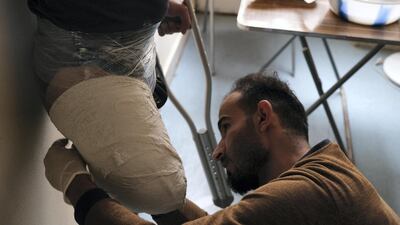
Seif Salman is measured for a prosthetic limb at the Baghdad Medical Rehabilitation Center run by Medicines Sans Frontiers. Ameer Hazim for The National -
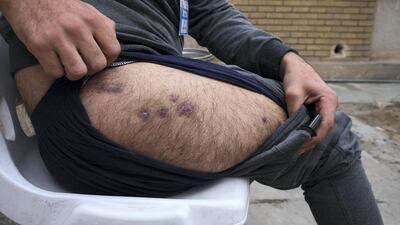
Ali Salam Jassem shows of the exit wounds for gunshots he was hit by in protests last year. Ameer Hazim for The National -
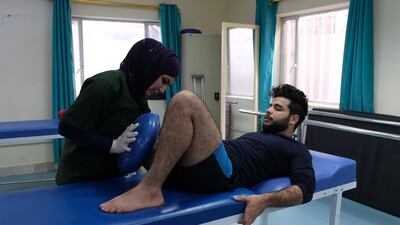
Physiotherapist Ashar Hassan attempts to insensitive Seif Salman's stump, without these exercises, he may be unable to use a prosthetic leg. Ameer Hazim for The National -

Seif Salman receives physiotherapy ahead of being cast for a prosthetic limb, after loosing his leg in protests in Baghdad last year. Ameer Hazim for The National -
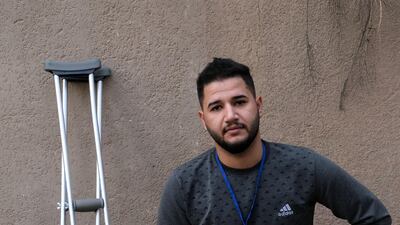
From Sadr City, Ali Salam Jassem drove a Tuk Tuk before the revolution broke out, now he uses his Tuk Tuk to ferry the injured to field hospitals. Ameer Hazim for The National -
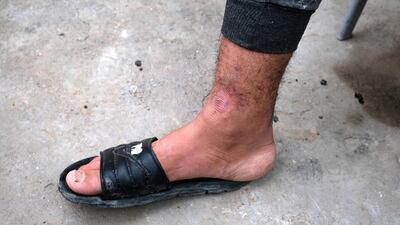
Ali Salam Jassem says is proud of the scars he has attained since he began participating in protests. Ameer Hazim for The National -
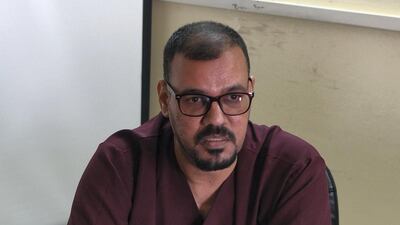
Ali Ghanem is the nursing activity manager at the Baghdad Medical Rehabilitation Center run by Medicines Sans Frontiers in Baghdad. Ameer Hazim for The National


The government needs “to seriously work to reveal all those who committed criminal acts that killed and wounded protesters and security forces … especially parties that are behind kidnappings and assassinations," he said.
Days later, Mr Al Kadhimi placed a travel ban on Iraqi army Lt Gen Jamil Al Shammari over his involvement in the deaths of dozens of protesters in the southern city of Nasiriyah in a single day last November.
Thousands of protesters who survived their injuries are living with scars.
Haider Hassan Alwan was one of seven people who escaped with injuries when security forces opened fire on protesters in Baghdad’s Hafidh Al Gadhi square last November. Twenty others died.
But he also paid a price: the loss of his right eye.
“We were waving Iraqi flags and chanting slogans when security forces took us by surprise and attacked us from three directions,” Mr Alwan, 30, recalled.
“All of a sudden, a tear gas canister hit my forehead and penetrated about 2 centimetres, smashing the bone above my eye.”
Nearly two months ago, he lost his job driving a taxi when the car's owner took it back after an accident caused by his impaired vision.
“What hurts a lot is that we achieved nothing and the government doesn’t hold anyone accountable and doesn’t compensate us,” Mr Alwan said.
Desperate for justice, families have taken to social media to voice their complaints.
A mother launched a Facebook page dedicated to her son, Mohanad Al Qaisi, who was killed in February in the southern city of Najaf.
“We have been in the courts for seven months now and have offered the court evidence and witnesses, but to no avail,” the mother says in a video as she sits next to a picture of her son.
-
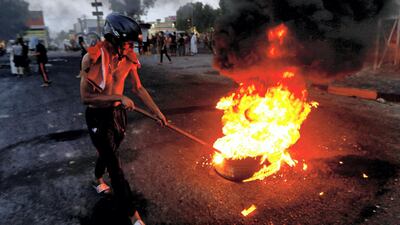
An Iraqi demonstrator burns tyres to block the road during a protest over poor public services in Najaf, Iraq. Reuters -
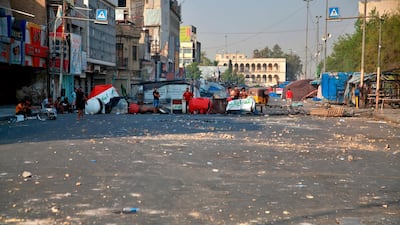
Anti-government protesters gather by barriers near Tahrir square, Baghdad on Monday. AP -
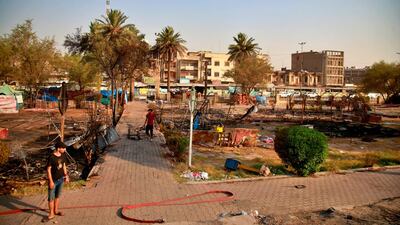
Protesters inspect burned tents near Tahrir Square, Baghdad. AP -

Iraqi demonstrators gesture during a protest over poor public services, in Najaf, Iraq. Reuters -
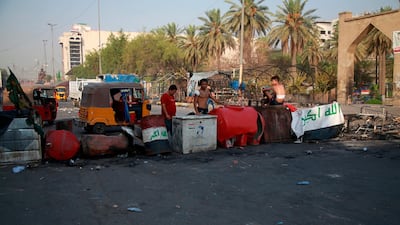
Fresh violence erupted between demonstrators and Iraqi security forces in central Baghdad on Monday, following months of quiet in the wake of the coronavirus pandemic. AP -
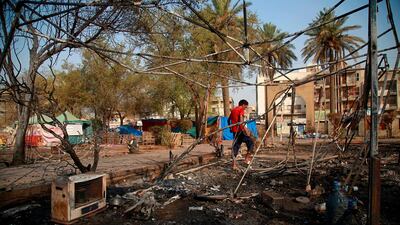
A protester inspects burned tents near Tahrir Square, Baghdad, Iraq. AP -
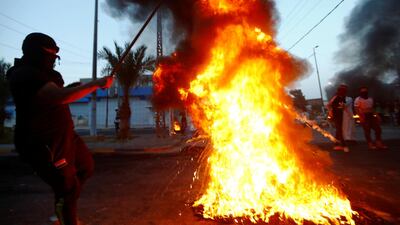
An Iraqi demonstrator burns tyres to block the road during a protest over poor public services in Najaf, Iraq. Reuters -
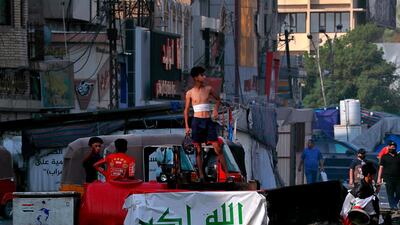
Fresh violence erupted between demonstrators and Iraqi security forces in central Baghdad on Monday. AP -
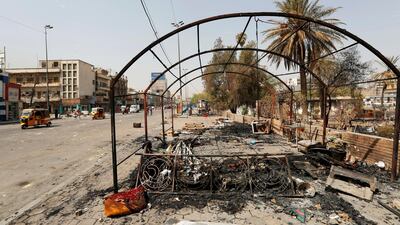
Two protesters died during the demonstrations. Reuters -
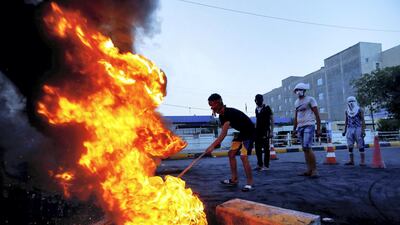
Iraqi demonstrators burn tyres to block the road during a protest over poor public services in the holy city of Najaf. Reuters


“I have not seen any of the committees Al Kadhimi formed and none called me… tell us what’s wrong with our case, why is it stalled?” she says.
Addressing the government, she adds: “If you don't see this case as a big one and you can’t proceed with it, tell us and I’ll go to the international courts.”

