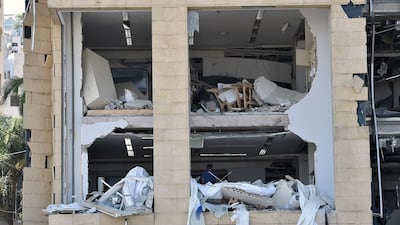
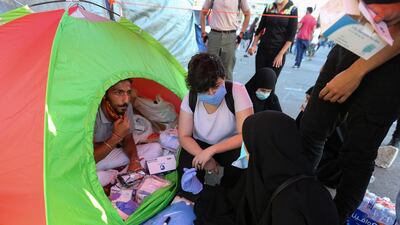
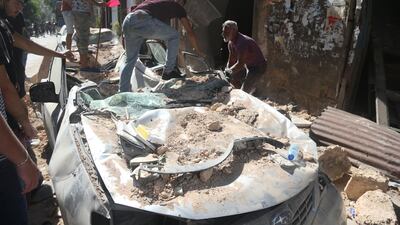
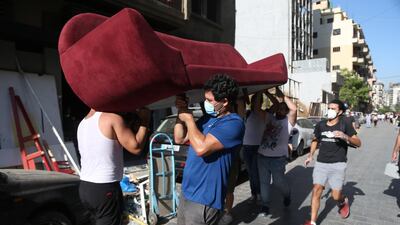
Estephan Saeed Rohanna has been missing since the explosion. Courtesy of family

Beirut explosion: from hospital to hospital, one family's search for their missing son


  • English
  • Arabic

The family of a Lebanese soldier have described racing around Beirut trying to find their son, who has been missing since a massive explosion destroyed the port area and killed at least 137 people.

Estephan Saeed Rohanna, who was billeted in a military base next to the site of the explosion, has been missing since the blast and resulting shock wave ripped through the city, shattering windows and crumbling parts of buildings.

"We lost contact with him over 40 hours ago," his sister Monica Rohanna told The National on Thursday.

“We know nothing about his fate or whereabouts. We have no clue if he survived … the last person he communicated with was his female friend who got in contact with Estephan when he sent her a video of the fire at the warehouse.”

Ms Rohanna said rescue teams had recovered her brother's bag near the explosion site and his black BMW car was found parked 500 metres away.

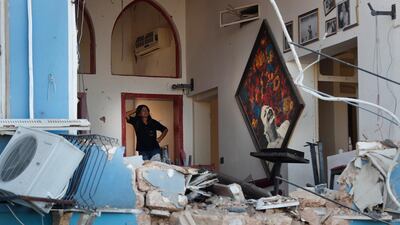
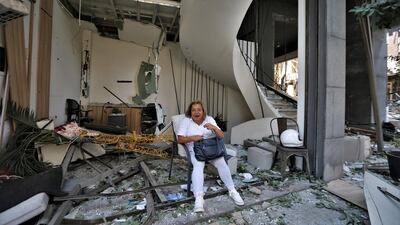
  • A woman stands inside a damaged restaurant. AP Photo
    A woman stands inside a damaged restaurant. AP Photo
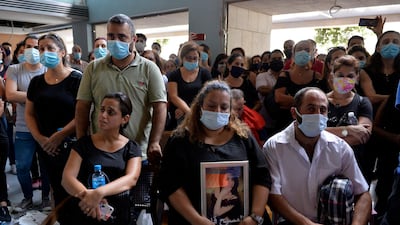
  • People and employees attend a mass over the victims who were killed in the blast, at the Al-Roum hospital at Ashrafieh area in Beirut. EPA
    People and employees attend a mass over the victims who were killed in the blast, at the Al-Roum hospital at Ashrafieh area in Beirut. EPA
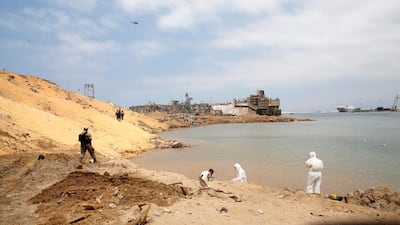
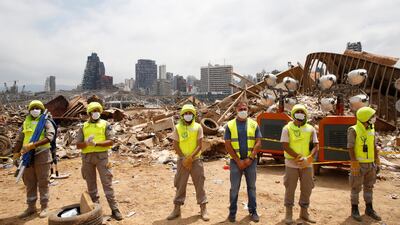
  • Workers are pictured at the devastated site of the explosion at the port of Beirut. EPA
    Workers are pictured at the devastated site of the explosion at the port of Beirut. EPA
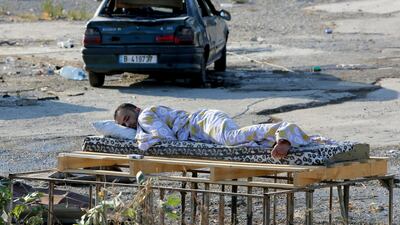
  • A man sleeps near a damaged car near the site of Tuesday's blast in Beirut's port area. REUTERS
    A man sleeps near a damaged car near the site of Tuesday's blast in Beirut's port area. REUTERS
  • Workers line at the devastated site of the explosion at the port of Beirut. EPA
    Workers line at the devastated site of the explosion at the port of Beirut. EPA
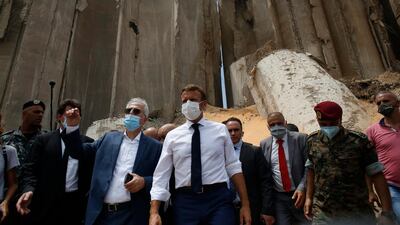
  • French President Emmanuel Macron visits the devastated site of the explosion at the port of Beirut. EPA
    French President Emmanuel Macron visits the devastated site of the explosion at the port of Beirut. EPA
  • People and employees attend a mass over the victims who were killed in the blast, at the Al-Roum hospital at Ashrafieh area in Beirut. EPA
    People and employees attend a mass over the victims who were killed in the blast, at the Al-Roum hospital at Ashrafieh area in Beirut. EPA
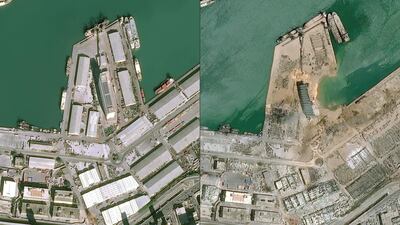
  • A view of the port of Beirut on January 25, 2020, left, and on August 5, 2020, a day after the explosion. AFP
    A view of the port of Beirut on January 25, 2020, left, and on August 5, 2020, a day after the explosion. AFP
  • Bride Israa Seblani poses for a picture in the same place where she was taking her wedding photos at the moment of the explosion. Reuters
    Bride Israa Seblani poses for a picture in the same place where she was taking her wedding photos at the moment of the explosion. Reuters
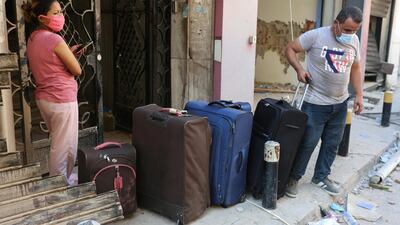
  • People stand with their belongings as they leave their damaged homes. Reuters
    People stand with their belongings as they leave their damaged homes. Reuters
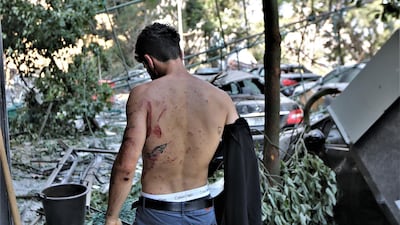
  • A Lebanese man shows injuries on his back after the massive explosion in Beirut. EPA
    A Lebanese man shows injuries on his back after the massive explosion in Beirut. EPA
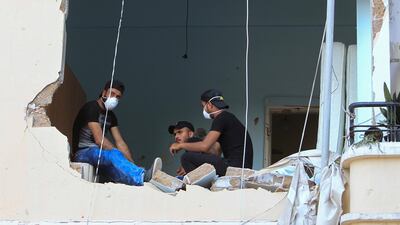
  • Men are seen sitting inside a damaged home, following Tuesday's blast in Beirut's port area. Reuters
    Men are seen sitting inside a damaged home, following Tuesday's blast in Beirut's port area. Reuters
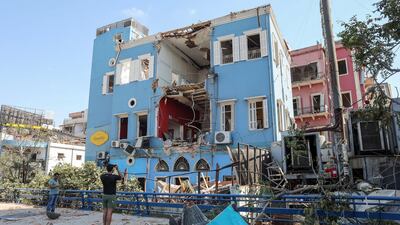
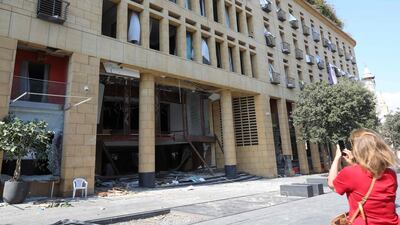
  • A pedestrian takes photos of a badly damaged building in Beirut. Bloomberg
    A pedestrian takes photos of a badly damaged building in Beirut. Bloomberg
  • Lebanese Druze clerics check damaged cars. AP Photo
    Lebanese Druze clerics check damaged cars. AP Photo
  • A statue representing the Lebanese expatriate is seen in front of a building that was damaged by the explosion. AP Photo
    A statue representing the Lebanese expatriate is seen in front of a building that was damaged by the explosion. AP Photo
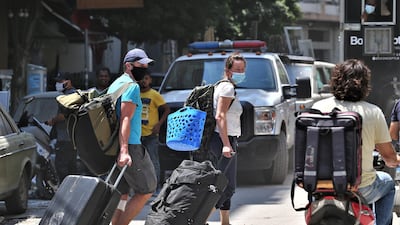
  • People walk with their belongings in the area of Mar Mikhael and Gemayzeh. EPA
    People walk with their belongings in the area of Mar Mikhael and Gemayzeh. EPA
  • The curtains in the rooms of the Le Gray hotel in the Lebanese capital Beirut swaying in the wind. AFP
    The curtains in the rooms of the Le Gray hotel in the Lebanese capital Beirut swaying in the wind. AFP
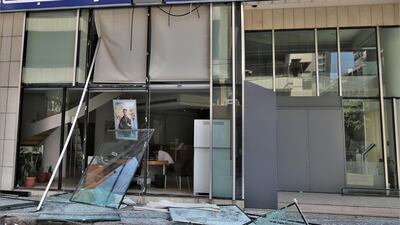
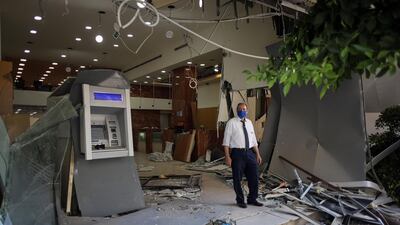
  • A view of a damaged Fransa Bank. EPA
    A view of a damaged Fransa Bank. EPA
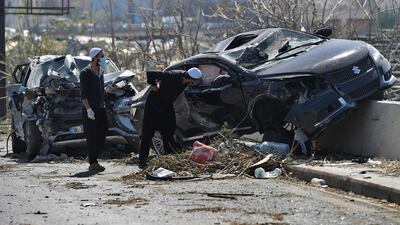
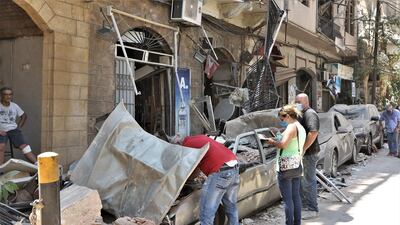
  • People check damaged vehicles. EPA
    People check damaged vehicles. EPA
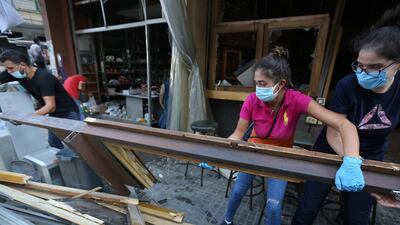
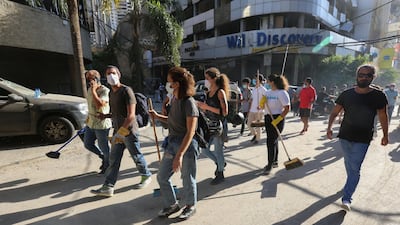
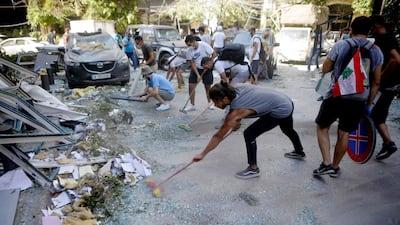
  • Volunteers clean the streets amid the wreckage. Reuters
    Volunteers clean the streets amid the wreckage. Reuters
  • People carry belongings after evacuating their damaged housing units at area of Mar Mikhael and Gemayzeh. EPA
    People carry belongings after evacuating their damaged housing units at area of Mar Mikhael and Gemayzeh. EPA
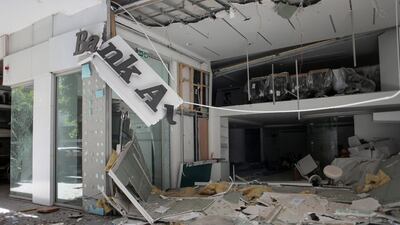
  • A destroyed Bank Audi SAL branch stands in Beirut. Bloomberg
    A destroyed Bank Audi SAL branch stands in Beirut. Bloomberg
  • A worker wearing a protective face mask stands at the entrance to a destroyed Fransabank SAL branch in Beirut. Bloomberg
    A worker wearing a protective face mask stands at the entrance to a destroyed Fransabank SAL branch in Beirut. Bloomberg
  • Volunteers carry brooms as they walk to clean the streets. Reuters
    Volunteers carry brooms as they walk to clean the streets. Reuters
  • A woman sits in front of a damaged building. EPA
    A woman sits in front of a damaged building. EPA
  • A general view of the Beirut port area after the massive explosion. EPA
    A general view of the Beirut port area after the massive explosion. EPA
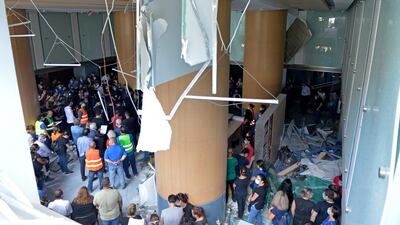
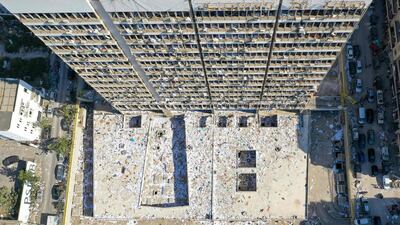
  • An aerial view shows the massive damage done to the Electricity of Lebanon building. AFP
    An aerial view shows the massive damage done to the Electricity of Lebanon building. AFP
  • A view of the damaged building of the Lebanese fashion designer Zuhair Murad. EPA
    A view of the damaged building of the Lebanese fashion designer Zuhair Murad. EPA
  • Volunteers gather aid supplies to be distributed for those affected by Tuesday's blast. Reuters
    Volunteers gather aid supplies to be distributed for those affected by Tuesday's blast. Reuters
  • Lebanese men clears rubble, one day after the explosion at the Beirut Port, in the Gemayzeh area. EPA
    Lebanese men clears rubble, one day after the explosion at the Beirut Port, in the Gemayzeh area. EPA
  • Lebanese youth salvage a velvet sofa from a destroyed apartment in the Gemayzeh area of Beirut. EPA
    Lebanese youth salvage a velvet sofa from a destroyed apartment in the Gemayzeh area of Beirut. EPA
  • Lebanese activists take part in a campaign to clean the damaged neighbourhood of Mar Mikhael. AFP
    Lebanese activists take part in a campaign to clean the damaged neighbourhood of Mar Mikhael. AFP
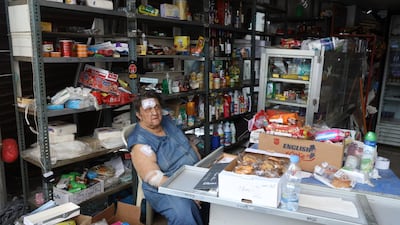
  • An injured Lebanese shop owner sits at her desk selling her wares. EPA
    An injured Lebanese shop owner sits at her desk selling her wares. EPA

“Not a single official contacted us regarding his fate or whereabouts. We have been crazily searching for him around Beirut hospitals or looking for any information that could help lead us to something or tell us if he is still alive,” Ms Rohanna said.

Hailing from Batroon in the north of Beirut, the Rohanna family took their search wider by posting a photo of their 26-year-old son across social media with a contact number for tips on his whereabouts.

The family has searched at the American University of Beirut Medical Centre, Geitaoui Hospital, Al Zahra Hospital and Al Rasoul Al Aazam Hospital and found no trace.

They are still holding out hope of finding him, heading to check if he had been admitted to Rafik Hariri University Hospital.


The biog

Name: Marie Byrne

Nationality: Irish

Favourite film: The Shawshank Redemption

Book: Seagull by Jonathan Livingston

Life lesson: A person is not old until regret takes the place of their dreams

PROFILE OF HALAN

Started: November 2017

Founders: Mounir Nakhla, Ahmed Mohsen and Mohamed Aboulnaga

Based: Cairo, Egypt

Sector: transport and logistics

Size: 150 employees

Investment: approximately $8 million

Investors include: Singapore’s Battery Road Digital Holdings, Egypt’s Algebra Ventures, Uber co-founder and former CTO Oscar Salazar

Ten tax points to be aware of in 2026

1. Domestic VAT refund amendments: request your refund within five years

If a business does not apply for the refund on time, they lose their credit.

2. E-invoicing in the UAE

Businesses should continue preparing for the implementation of e-invoicing in the UAE, with 2026 a preparation and transition period ahead of phased mandatory adoption. 

3. More tax audits

Tax authorities are increasingly using data already available across multiple filings to identify audit risks. 

4. More beneficial VAT and excise tax penalty regime

Tax disputes are expected to become more frequent and more structured, with clearer administrative objection and appeal processes. The UAE has adopted a new penalty regime for VAT and excise disputes, which now mirrors the penalty regime for corporate tax.

5. Greater emphasis on statutory audit

There is a greater need for the accuracy of financial statements. The International Financial Reporting Standards standards need to be strictly adhered to and, as a result, the quality of the audits will need to increase.

6. Further transfer pricing enforcement

Transfer pricing enforcement, which refers to the practice of establishing prices for internal transactions between related entities, is expected to broaden in scope. The UAE will shortly open the possibility to negotiate advance pricing agreements, or essentially rulings for transfer pricing purposes. 

7. Limited time periods for audits

Recent amendments also introduce a default five-year limitation period for tax audits and assessments, subject to specific statutory exceptions. While the standard audit and assessment period is five years, this may be extended to up to 15 years in cases involving fraud or tax evasion. 

8. Pillar 2 implementation 

Many multinational groups will begin to feel the practical effect of the Domestic Minimum Top-Up Tax (DMTT), the UAE's implementation of the OECD’s global minimum tax under Pillar 2. While the rules apply for financial years starting on or after January 1, 2025, it is 2026 that marks the transition to an operational phase.

9. Reduced compliance obligations for imported goods and services

Businesses that apply the reverse-charge mechanism for VAT purposes in the UAE may benefit from reduced compliance obligations. 

10. Substance and CbC reporting focus

Tax authorities are expected to continue strengthening the enforcement of economic substance and Country-by-Country (CbC) reporting frameworks. In the UAE, these regimes are increasingly being used as risk-assessment tools, providing tax authorities with a comprehensive view of multinational groups’ global footprints and enabling them to assess whether profits are aligned with real economic activity. 

Contributed by Thomas Vanhee and Hend Rashwan, Aurifer

The specs: 2018 Mercedes-Benz E 300 Cabriolet

Price, base / as tested: Dh275,250 / Dh328,465

Engine: 2.0-litre four-cylinder

Power: 245hp @ 5,500rpm

Torque: 370Nm @ 1,300rpm

Transmission: Nine-speed automatic

Fuel consumption, combined: 7.0L / 100km

What sanctions would be reimposed?

Under ‘snapback’, measures imposed on Iran by the UN Security Council in six resolutions would be restored, including:

  • An arms embargo
  • A ban on uranium enrichment and reprocessing
  • A ban on launches and other activities with ballistic missiles capable of delivering nuclear weapons, as well as ballistic missile technology transfer and technical assistance
  • A targeted global asset freeze and travel ban on Iranian individuals and entities
  • Authorisation for countries to inspect Iran Air Cargo and Islamic Republic of Iran Shipping Lines cargoes for banned goods

Mercer, the investment consulting arm of US services company Marsh & McLennan, expects its wealth division to at least double its assets under management (AUM) in the Middle East as wealth in the region continues to grow despite economic headwinds, a company official said.

Mercer Wealth, which globally has $160 billion in AUM, plans to boost its AUM in the region to $2-$3bn in the next 2-3 years from the present $1bn, said Yasir AbuShaban, a Dubai-based principal with Mercer Wealth.

Within the next two to three years, we are looking at reaching $2 to $3 billion as a conservative estimate and we do see an opportunity to do so,” said Mr AbuShaban.

Mercer does not directly make investments, but allocates clients’ money they have discretion to, to professional asset managers. They also provide advice to clients.

“We have buying power. We can negotiate on their (client’s) behalf with asset managers to provide them lower fees than they otherwise would have to get on their own,” he added.

Mercer Wealth’s clients include sovereign wealth funds, family offices, and insurance companies among others.

From its office in Dubai, Mercer also looks after Africa, India and Turkey, where they also see opportunity for growth.

Wealth creation in Middle East and Africa (MEA) grew 8.5 per cent to $8.1 trillion last year from $7.5tn in 2015, higher than last year’s global average of 6 per cent and the second-highest growth in a region after Asia-Pacific which grew 9.9 per cent, according to consultancy Boston Consulting Group (BCG). In the region, where wealth grew just 1.9 per cent in 2015 compared with 2014, a pickup in oil prices has helped in wealth generation.

BCG is forecasting MEA wealth will rise to $12tn by 2021, growing at an annual average of 8 per cent.

Drivers of wealth generation in the region will be split evenly between new wealth creation and growth of performance of existing assets, according to BCG.

Another general trend in the region is clients’ looking for a comprehensive approach to investing, according to Mr AbuShaban.

“Institutional investors or some of the families are seeing a slowdown in the available capital they have to invest and in that sense they are looking at optimizing the way they manage their portfolios and making sure they are not investing haphazardly and different parts of their investment are working together,” said Mr AbuShaban.

Some clients also have a higher appetite for risk, given the low interest-rate environment that does not provide enough yield for some institutional investors. These clients are keen to invest in illiquid assets, such as private equity and infrastructure.

“What we have seen is a desire for higher returns in what has been a low-return environment specifically in various fixed income or bonds,” he said.

“In this environment, we have seen a de facto increase in the risk that clients are taking in things like illiquid investments, private equity investments, infrastructure and private debt, those kind of investments were higher illiquidity results in incrementally higher returns.”

The Abu Dhabi Investment Authority, one of the largest sovereign wealth funds, said in its 2016 report that has gradually increased its exposure in direct private equity and private credit transactions, mainly in Asian markets and especially in China and India. The authority’s private equity department focused on structured equities owing to “their defensive characteristics.”