
Preparations are underway in Qatar’s capital Doha for the signing of a peace deal between the US and the Taliban on Saturday.
If it goes ahead, the deal would see the beginning of US troop withdrawal in Afghanistan and pave the way for peace after almost two decades of war.
Both the Taliban and the Afghan government said that a week-long reduction in violence throughout Afghanistan ahead of the signing had been a success.
Taliban spokesperson Zabiullah Mujahid said the past week had gone exceptionally well. “We honoured our commitment by reducing our operations exceptionally and our assessment of it is rather positive.”
Afghanistan’s Minister of Defence Massoud Andarabi claimed that violence had been reduced by up to 80 percent. “We hope the Taliban will continue the reduction in violence,” he said. “The Afghan National Defence Forces are ready to defend the people of Afghanistan in case they choose not to.”
While several attacks were recorded throughout the week, fighting has largely been kept to a minimum. Two attacks in the capital Kabul this week killed one person and injured a further 19, but the Taliban was quick to deny involvement.
“It is the malicious work of intelligence networks trying to create distrust,” Taliban spokesperson Zabiullah Mujahid said in a Twitter post.
Sporadic fighting throughout the provinces occurred, but large-scale attacks were avoided. Afghanistan’s National Army has switched to a defensive position towards the Taliban, while offensively fighting Al Qaeda and ISIS in the country, according to the Ministry of Defence.
“If the Taliban keeps the reduction in violence up, our operations will remain defensive only,” said the Ministry of Defence’s spokesperson Fawad Aman.
Today’s signing ceremony is to be attended by senior Taliban officials and the US’s Special Representative Zalmay Khalilzad, who has largely been leading negotiations between Washington and the militants.
-
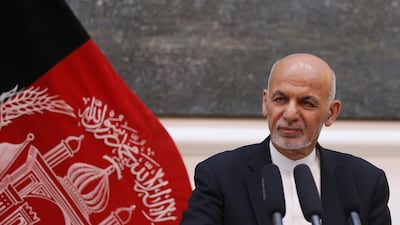
Ashraf Ghani, a former professor and World Bank employee, was declared President this week after disputed results dragged out the final election outcome for months. He narrowly secured his win in the contested race by garnering 50.6 per cent of the disputed vote. He will serve five more years as President. After being excluded from last year’s failed US-Taliban peace negotiations, the Pashtun politician demanded to play a bigger role in this year’s talks. But at the behest of the Taliban he was not invited to participate in the discussions. The reasons for his exclusion are two-fold, first, the Taliban does not recognise the legitimacy of the Afghan government. Second, the Taliban’s priority in the negotiations is the removal of foreign forces from the country, which can only be promised by American negotiators. As a result, Mr Ghani remains sceptical of the deal’s success. Being one step removed from the process, and having few other options available to him, Mr Ghani finds himself in a position where he must acquiesce to the final deal without providing much input into the terms. Mr Ghani's position is shaky going into the proposed intra-Afghan negotiations as both the Taliban and Mr Ghani's opponent Abdullah Abdullah are refusing to accept his presidential win. Photo: EPA -
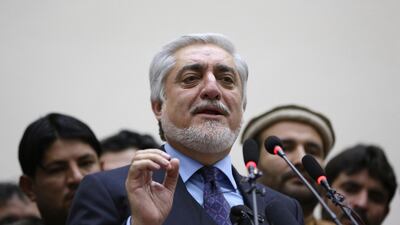
Abdullah Abdullah, a former eye surgeon, serves as the country’s Chief Executive. He is the only person to ever hold the title, which brings with it prime ministerial duties. The newly created post was the result of the US mediating an awkward power-sharing deal after the 2014 elections. Dr Abdullah has unsuccessfully sought the presidency three times. After losing the election to Mr Ghani this week, Dr Abdullah decried that he would form his own government and boycott the election results. He went so far as to call the country’s independent election commissions “unlawful.” With the peace deal aiming to ending a tense political stand-off between the Afghan government and the Taliban, it seems frictions within the Afghan government could lead to a new stand-off, one between Mr Ghani and his opponents, putting at risk the intra-Afghan discussions that are baked into the trade agreement. Photo: AP -
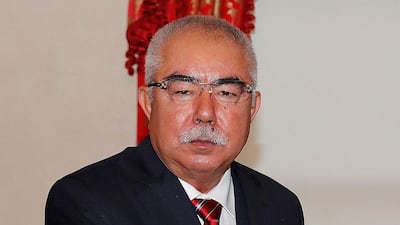
Gen Abdul Rashid Dostum was controversially chosen as Mr Ghani’s vice-president in the 2014 election. But after a falling out, Gen Dostum decided to put his support behind Mr Ghani’s opponent Dr Abdullah in the latest election. The Uzbek former warlord has been the target of several assassination attempts and faces a litany of human rights accusations against him, which include claims of torture and rape. The Afghan army general has fleed to Turkey when accusations mounted against him in the past. In 2017, Gen Dostum's political rival Ahmad Ishchi said he had been abducted, tortured and raped by Gen Dostum. Several people came forward to say they witnessed the abuse, prompting Gen Dostum to flee to Turkey. Gen Dostum could interfere in the pending intra-Afghan talks, as he's expressed discontent with the election results and threatened to form a “parallel government.” No stranger to extremity, his erratic behaviour threatens the stability of Afghanistan’s government during this crucial peace process. Photo: Getty Images -
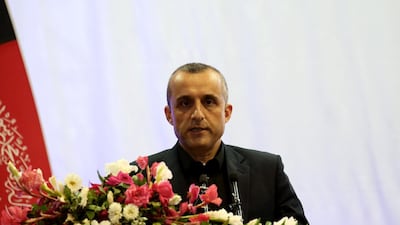
Amrullah Saleh was Mr Ghani’s running mate in the 2019 election, and is set to take on the role of vice-president. Mr Saleh is an ex-intelligence chief who has not shied away from doling out fierce criticisms against the president. The Tajik politician enjoys grass roots support among young people, which provided an advantage to Mr Ghani’s campaign. Mr Saleh was the target of an attack against his office within the Kabul headquarters of the Green Trend party during the summer of 2019. The attack killed 20 people and injured 50, resulting in a six-hour operation to rescue more than 150 civilians trapped in the aftermath of the blast. The attack came just hours after Mr Ghani and Mr Saleh launched their election campaign. Photo: REUTERS -
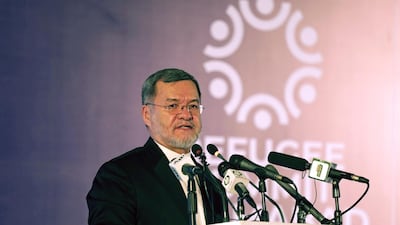
Sarwar Danish, a Hazara politician, was chosen for the role of second vice-president during Mr Ghani’s 2014 campaign. He retained the position in the latest election. Mr Danish has been strongly critical of the peace negotiations, emphasising that peace cannot be achieved by sidelining the government from talks. He called the reduction in violence agreement a “vague proposal” intended to deceive citizens and the international community. Photo: REUTERS -
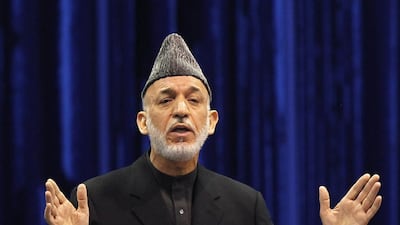
Hamid Karzai was the first elected President of Afghanistan and held the role for almost 10 years, reigning during much of the US war in Afghanistan. The Pashtun tribal leader was the first Afghan official to work alongside the Americans in attempting to forge a peace deal with the Taliban. In 2010, during his presidency, Mr Karzai made peace negotiations a priority. Unlike today’s negotiations, Mr Karzai attempted to negotiate directly with the Taliban, and invited a wide range of actors to the table, including the Americans, the Taliban, tribal leaders and other influential members of Afghan society. Photo: Reuters -
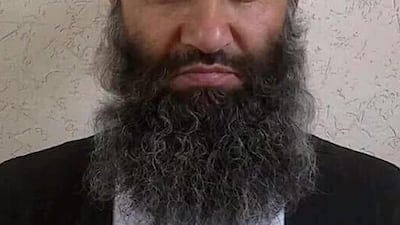
As the leader of the Taliban, Mawlawi Hibatullah Akhundzada agreed to bring the insurgent group to the negotiation table. He is acting in an advisory role throughout the discussions, serving as the steering force for chief negotiator Mr Baradar. But it falls upon Mawlawi Akhundzada to make the final decision when it comes to whether the Taliban will accept the final deal. Last week, he threatened to pull out of the negotiations if the Americans did not respond formally to the Taliban’s seven-day offer for a reduction of violence. AFP PHOTO / AFGHAN TALIBAN -
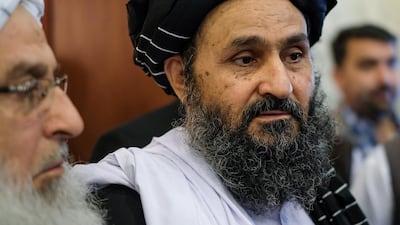
Abdul Ghani Baradar runs the Taliban’s political office in Doha and has taken on the role of chief negotiator for the insurgent group during these negotiations. He’s credited with helping to establish the group’s strong position in the country, having served as the number two in command for the group’s founding leader Mohammed Omar. He was a key senior operative for the group, who once held a reputation for being even-keeled, before he fled to Pakistan when the Americans arrived in 2001. Mr Baradar was arrested in a 2010 raid and remained in a Pakistani prison for eight years. His release is believed to have been a part of a deal struck between the Americans and the Taliban. Photo: AFP -
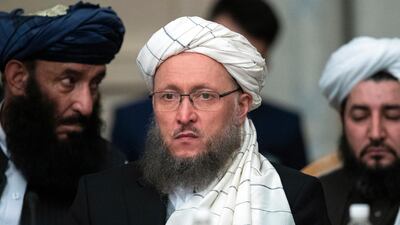
Abdul Salam Hanafi is one of the central negotiators at the table representing the Taliban. He serves as deputy head of the group’s political office in Doha. On Monday, he said the Americans and the Taliban were already drafting the final peace agreement. He added that representatives from all neighbours of Afghanistan, the United Nations Security Council, Islamic countries and European Union would be invited to the ceremony that would be held in Doha if the deal is finalised. Mr Hanafi previously served as the Taliban’s deputy minister of education and held leadership positions in the country’s northern territories. As a senior member of the group, he was added to the United Nations sanctions list in 2001, accused of being involved in drug trafficking. Photo: AP -
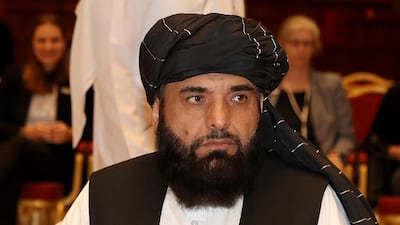
Suhail Shaheen has served as a public figurehead for the insurgent group throughout the negotiations. He is a fluent English speaker known to give interviews to international media outlets. During the Taliban’s rule in the country, which lasted from 1996 to 2001, Mr Shaheen served as the editor of the English-language Kabul Times newspaper. He's also held senior roles within the Taliban, such as deputy ambassador at the Afghan embassy in Pakistan. Many of the statements regarding the Taliban’s position in the negotiations are delivered through Mr Shaheen. Photo: AFP -
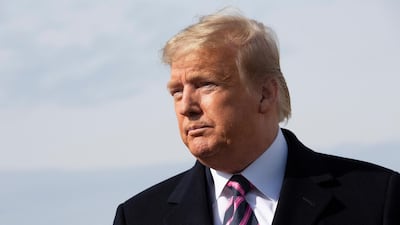
US President Donald Trump is serving as the “closer” in the negotiations. In 2019’s negotiations, he took on a similar role by inviting the Taliban to Camp David to close the deal. Amid strife between his top advisers and the death of an American soldier in Afghanistan, Mr Trump abruptly declared the peace talks "dead." Mr Trump has proven to be more patient and flexible during this round of negotiations. If the withdrawal is accomplished, the American negotiators would have fulfilled a Trump campaign promise to withdraw US troops from Afghanistan, well-timed before the presidential election in November. Photo: EPA -
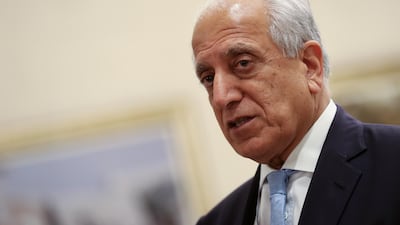
US envoy Zalmay Khalilzad is the chief negotiator on the American side, colloquially referred to as “Zal,” he was the only Afghan working in the White House during the September 11 attacks. This is his second attempt to help US President Donald Trump finalise a peace deal with the Taliban. The Afghan-born diplomat, who serves as the main intermediary between the Americans and the Taliban, nearly finalised a peace agreement last year, before Trump abruptly cancelled the deal. While the heavy lifting of the negotiations is being led by Mr Khalilzad, the diplomat is working on behalf of the White House, the Pentagon and the US intelligence community, who must all agree to the final terms of the deal. Photo: AFP -
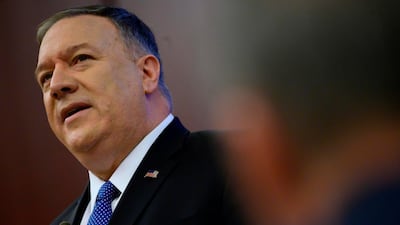
US Secretary of State Mike Pompeo has served in many capacities throughout the negotiations, most notably acting as the US spokesman, delivering major updates about the US position to both the public and to Afghan officials. At the Munich Security Conference in February, Mr Pompeo held sideline meetings with key Afghan officials, including Mr Ghani and Mr Abdullah to discuss the negotiation process that appeared close to finalisation. Photo: AFP -
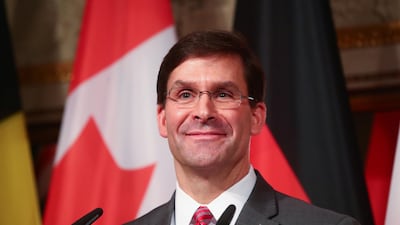
US Defence Secretary Mark Esper has operated throughout these discussions on behalf of the 3,500 American and Nato service members that have been killed since 2001. His position remains cautiously optimistic. He called the reduction in violence proposal “very promising,” but holds on to scepticism regarding the success of its implementation. “The best if not the only way forward in Afghanistan is through a political agreement and that means taking some risk,” he said. Photo: REUTERS -
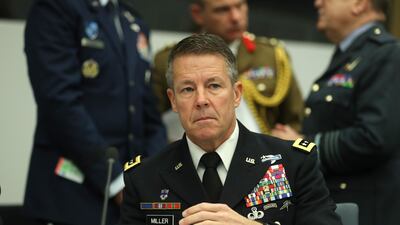
US Army General Austin Scott Miller took over the post of commander of American and coalition forces in Afghanistan in 2018. During his tenure, Mr Miller ramped up air strikes in the country in the hopes of forcing the Taliban to the negotiation table. But it’s led to a further escalation as the Taliban responded with increasing violence in the country. Gen Miller has previously advocated for a smaller American presence in Afghanistan, stating that he does not require tens of thousands of US troops in the country to successfully fulfill the US combat and training operations. Photo: AFP -
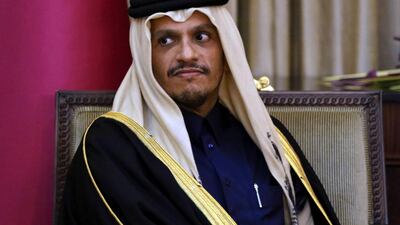
Qater is hosting the peace talks, with Sheikh Mohammed bin Abdulrahman Al Thani, the deputy prime minister and minister of foreign affairs, playing a mediating role in the negotiations. Sheikh Al Thani has been a liaison between the Americans and the Taliban from the beginning of the negotiations, sitting in on several of the key discussions. When the Taliban’s chief negotiator Mr Baradar delivered an ultimatum to the Americans, demanding they accept the offered seven-day reduction in violence, rather than the American’s requested 10-days, it was Sheikh Al Thani that mediated the deadlock, according to pro-Taliban media. Photo: AFP


US Defence Secretary Mark Esper and Nato Chief Jens Stoltenberg are due to visit Kabul on Saturday. A joint declaration after the signing will be announced in Doha and Kabul simultaneously.
Throughout the capital, tensions have eased over the past week. US general Austin Scott Miller strolled the streets of Kabul on Wednesday, accompanied by Afghanistan’s Minster of Defence Asadullah Khalid. Both took the time to speak to pedestrians and to visit shops.
“There has been a positive feeling among Afghans,” said the Afghan Analysts Network’s researcher Ali Adili, adding however that many were worried about the next steps.
Afghanistan has seen more than four decades of war - including almost 20 years of conflict between the US and the Taliban - with the Taliban now holding about half of Afghanistan once again.
The week’s reduction in violence has been overshadowed by the outcomes of the Afghan presidential elections that saw President Afghan Ghani win another five year term in office - after election results had been delayed since last September due to complaints and fraud claims.
Mr Ghani’s main rival, Dr Abdullah Abdullah called the results inaccurate and fraudulent, declared himself a winner too and proceeded to form his own government.
Mr Ghani’s inauguration, planned for Thursday - just two days ahead of the signing of the U.S.-Taliban deal, was postponed to March 9.
US Special Representative Zalmay Khalilzad, who has been leading peace negotiations from the American side, welcomed the decision.
The US State Department issued a statement thanking “the Afghan government for agreeing to postpone the presidential inauguration.”
Disputes between the Ghani administration and Dr Abdullah - for the past give years the Chief Executive of the Islamic Republic, brokered in a power-sharing deal between the two rivals - have contributed to people’s worries.
Both a divided government and the presence of other militant groups in the country could hinder lasting peace in Afghanistan, and the reduction of US troops - possibly down to 8,600 in the coming months already - has raised questions about maintaining enough security. “There is both fear and hope,” Mr Adili said.
The signing of the US-Taliban deal would lead to direct negotiations between the Taliban and the Afghan government – despite the former not recognising the legitimacy of the latter - to lay out a future peace plan for Afghanistan.
The Afghan government has been largely left out of negotiations between the US and the Taliban, but a brokered deal would see the two sides take up direct negotiations, with the potential of the two groups agreeing to establish a joint interim government if such direct talks deem successful.

