

Lebanon is no stranger to Israeli breaches of its airspace. Yet, the intensifying frequency of low-altitude Israeli flights in recent weeks caused jitters across the country, particularly among Beirut's residents who survived a huge explosion in August.
The UN Interim Force in Lebanon – Unifil – a peacekeeping team in southern Lebanon, recorded a daily average of 12.6 airspace breaches between June 17 and October 20.
These came to a total of 61 hours and 51 minutes in overflight time – a “significant increase from the previous reporting period” the peacekeepers said.
Israel has frequently entered Lebanese airspace to carry out strikes in Syria against the regime’s forces and allied Iran-backed militias and to monitor Hezbollah’s operations in Lebanon.
But despite Israel's efforts, Hezbollah doubled its number of precision guided missiles, its leader, Hassan Nasrallah, said in an interview with Al Mayadeen TV late last year.
Nasrallah said that Hezbollah could strike anywhere in Israel and reiterated promises that Iran and its allies would retaliate for the assassination of Qassem Suleimani, the former leader of Iran’s Islamic Revolutionary Guard Corps.
Last year's killing of Suleimani in a US strike in Iraq fuelled regional tensions and sparked concerns over the potential outbreak of armed conflict in the last days of US President Donald Trump's tenure.
Early on Wednesday, Israeli fighters bombed areas in Syria believed to be the sites of Iranian arms depots. The air strikes were carried out with intelligence provided by the US, the Associated Press quoted a senior US intelligence official as saying.
Rising regional tensions and intensifying Israeli reconnaissance operations over Lebanon, however, do not justify flights at the low altitudes recorded in recent weeks in Lebanon, Lebanese military experts said.
-

Hezbollah supporters look at a statue of Iranian general Qassem Suleimani, head of Iran's Quds force, installed in Ghobeiry, a southern suburb of Beirut, Lebanon, to commemorate the first anniversary of his killing in a US drone strike in Baghdad. AP Photo -
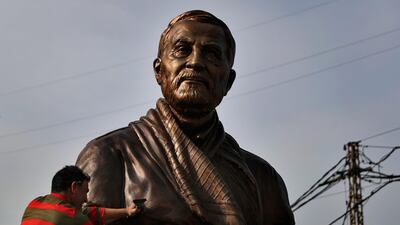
A worker cleans a statue of Iranian general Qassem Soleimani in Ghobeiry, a southern suburb of Beirut, Lebanon. AP Photo -
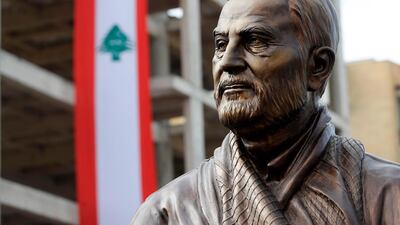
The statue of Iranian commander Qassem Suleimani in Ghobeiry was donated by Iranian artist Ali Rida Haqqani. AFP -

Two women pose next to the newly unveiled statue of Iranian general Qassem Suleimani in Ghobeiry, Beirut. AFP -

The statue of Qassem Suleimani was installed on a roundabout near Imam Khomeini avenue in Ghobeiry, Beirut. AP Photo -
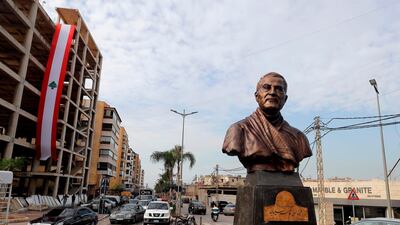
A Lebanese flag hangs from a building under construction behind the newly unveiled statue of Qassem Suleimani in the predominantly Shiite Beirut suburb of Ghobeiry. AFP


The overflights evoked memories of the devastating month-long 2006 war that pitted Israel against Hezbollah, fuelling a wave of comments on social media from concerned Lebanese.
“Checking flight trackers compulsively every hour for the past few days cause of these … Israeli jets. It’s really crippling me emotionally,” one Twitter user wrote.
A retired Lebanese army general told The National the flights are part of Israel's long-running psychological warfare against Lebanon. He said they could serve to fuel anti-Hezbollah sentiment among those who blame the party for dragging Lebanon into the regional confrontation between Iran and the US.
That said, Israel is risking its jets, when flying at such low altitudes, being hit by anti-aircraft weapons that might be in Hezbollah's possession, the former general said.
“Israel could be trying to draw Hezbollah into a conflict or to provoke the party to reveal information relating to its anti-aircraft arsenal,” he said.

The extent of Hezbollah’s anti-aircraft capabilities has been long shrouded in secrecy with Nasrallah saying in August 2019 that his party would start targeting Israeli drones. His warning followed the explosion of an Israeli drone near Hezbollah’s media offices in Beirut’s southern suburbs.
A year later, on August 22, Hezbollah said it downed an Israeli drone that crossed the UN-demarcated border between the two countries. Israel, which confirmed only that one of its drones “crashed inside Lebanese territories”, had announced two weeks earlier that it downed a drone that entered its airspace from Lebanon.
The incidents followed the killing a Hezbollah fighter in an Israeli strike in Syria in July last year, which Nasrallah vowed to avenge in his recent interview.
Nasrallah, however, downplayed the threat of an imminent conflict with Israel but cautioned that Hezbollah and its allies should remain vigilant in the final days of Mr Trump’s tenure.
"When you hear the media hype by the Israelis, know that there are no real actions behind it," Nasrallah said.

