

A UN tribunal investigating the 2005 assassination of former Lebanese prime minister Rafik Al Hariri said on Wednesday that it expected to close its main case against Hezbollah operatives in the next 12 months.
The Special Tribunal for Lebanon has been largely ceremonial since the case started nine years ago.
Most of the tribunal’s initial supporters, particularly European powers, focused on accommodating Iran, with Hezbollah refusing to hand over four suspects in the main case.
The case against the four suspects of Hezbollah, one of whom is dead, is being tried in their absence by the tribunal in the Netherlands.
The 11th annual report of the tribunal said it expected by February next year to finish all work in the case, “following the rendering of the trial judgment, including the sentencing phase before the trial chamber and any appellate proceedings".
-
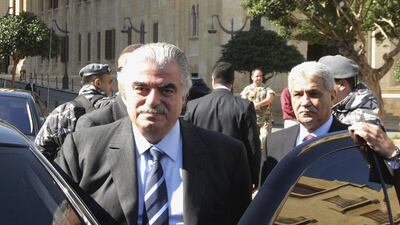
Rafik Hariri, left, and his bodyguard Yahya Arab, leave the Parliament in Beirut, Lebanon in 2005. Minutes later, Hariri and several of his bodyguards were killed in a massive bomb explosion. AP -
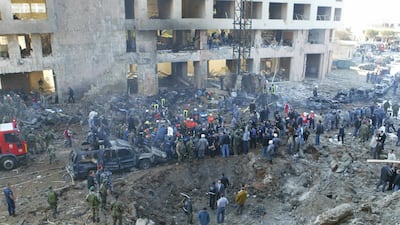
The site of devastation where former Lebanon prime minister Hariri was assassinated in the blast in Beirut on February 14, 2005. AFP -
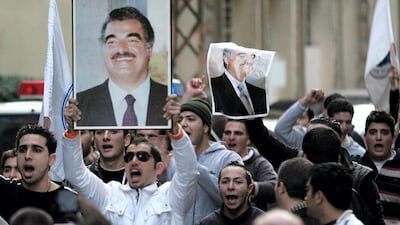
Supporters of former Lebanese prime minister Hariri after Hariri's death outside his house in Beirut. AFP -
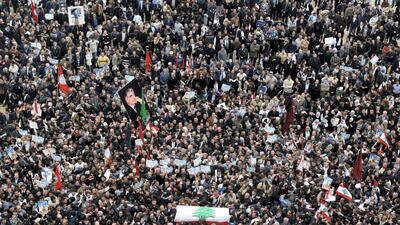
The national flag-draped coffin of Hariri is carried to his final resting place in central Beirut two days after the killing. AFP -
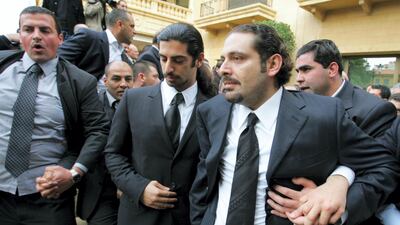
Saad Hariri and other family members leave their family home to join the funeral procession. AFP -
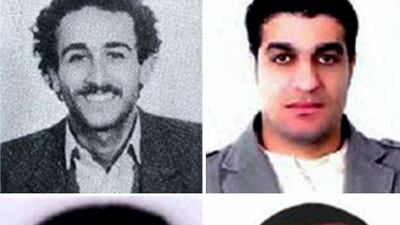
A combination of handout pictures obtained on July 29, 2011 from the website of the Special Tribunal for Lebanon shows four Hezbollah suspects indicted in the assassination case of Hariri, (from top left to right) Mustafa Amine Badreddine, Assad Hassan Sabra, Hussein Hassan Oneissi and Salim Jamil Ayyash. AFP -
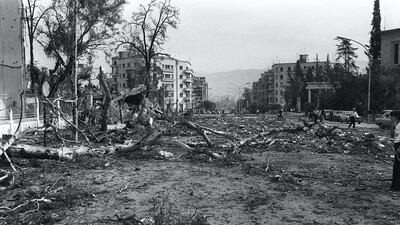
An avenue in central Beirut destroyed by 18 months of civil war is pictured, November 15, 1976. AFP -
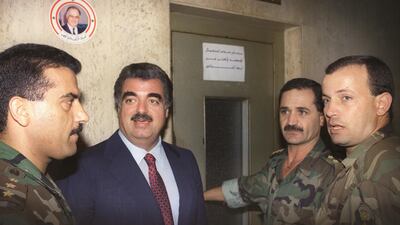
Hariri on October 22, 1992 in Beirut, after being nominated as prime minister by then president Elias Hrawi. AFP -

Hariri and his wife Nazic on September 1, 1996 in their villa in Beirut. AFP -
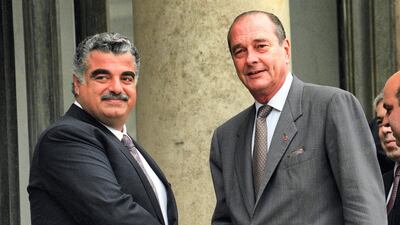
Then French president Jacques Chirac greets Hariri at the Elysee Palace in Paris, September 28, 1996. AFP -
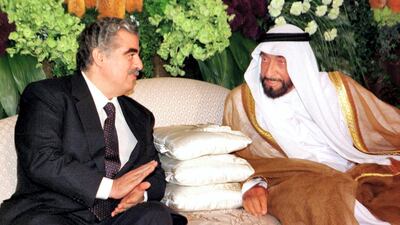
Sheikh Zayed, the Founding Father, meets Hariri in Dubai on March 17, 1999. Hariri was in Dubai for a three-day official visit. AFP -
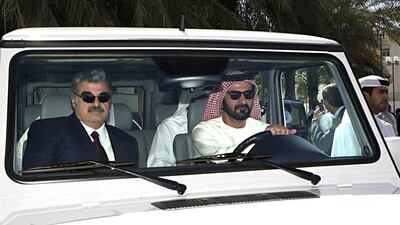
Sheikh Mohammed bin Rashed, then Crown Prince of Dubai, drives Hariri in Dubai on March 6, 2000. AFP -
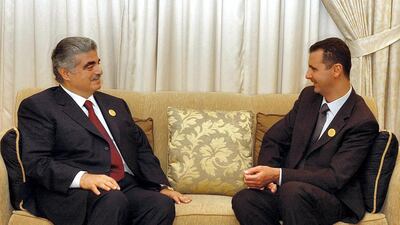
Hariri meets Syrian President Bashar al Assad on the sidelines of the Arab summit in Beirut, March 27, 2002. AFP -
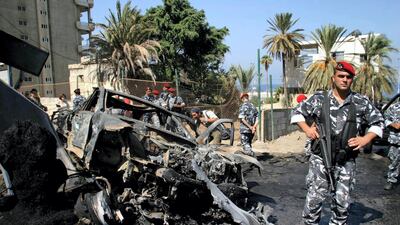
Lebanese policemen gather at the site where outgoing economy and trade minister Marwan Hamadeh's car was targeted by a bomb in Beirut on October 1, 2004. AFP -
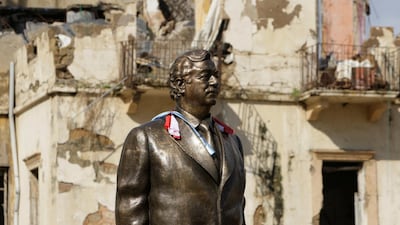
The Hariri monument in Beirut. Reuters


“To this end, the appeals chamber has already devoted substantial effort to ready itself for appeals that may be filed in order to promote its expeditious resolution,” the report said.
The tribunal indicted four Hezbollah operatives in mid-2011 for the February 2005 lorry-bomb blast near Beirut’s seafront, which killed Mr Hariri and 21 others.
It charged all four with conspiracy aimed at committing a terrorist act.
The tribunal, which opened in January 2014, also indicted a fifth suspect in July 2015, Hezbollah supporter Hassan Merhi, on similar charges.
Demonstrations broke out against the Syrian regime after the killing, setting the scene for the Cedar Revolution, and the international pressure that forced Syrian regime forces out of Lebanon in April 2005.
The tribunal also charged the two most senior Hezbollah operatives among the five suspects, Mustafa Badreddine and Salim Ayyash, with committing a terrorist act by means of an explosive device, and with intentional homicide.
Badreddine was jailed in Kuwait for attacks in 1983 on the French and US embassies there but escaped in 1990.
In 2016, he was killed in Syria. A year later, the Israeli chief of staff said Badreddine’s killing was an inside job carried out by Hezbollah. Hezbollah said that was a lie.
In September 2019, the tribunal indicted Ayyash on new charges related to bomb attacks that took place between 2004 and 2005 on Druze politician Marwan Hamadeh, veteran leftist Georges Hawi, and Elias Al Murr, who was defence minister at the time.
Mr Hamadeh and Mr Al Murr survived but Mr Hawi was killed.
The tribunal said it would be “advancing the proceedings” in the case of the three politicians within the next 12 months.
“The pre-trial judge will oversee the preparation of the case for trial,” the report said.
It said other chambers would “adjudicate any preliminary motions and interlocutory appeals, respectively.”

