
The first medical worker in Oman has died of coronavirus, the health ministry said on Tuesday as case numbers rose again when lockdown measures were eased.
An Indian nurse from the state of Kerala, identified as Blessy Sam, 37, died on Tuesday after battling with Covid-19 for the past month. She was infected while on duty in a government-owned hospital in the eastern region.
She is survived by her husband, George Sam, and two young children.
Health Minister Dr Ahmed Al Saeedi expressed his “deep condolences to her family for her selfless work and sacrifice”.
Mr Sam said his wife knew the risk involved in working on the frontline battling the pandemic, but she went to work every day without any complaints.
“She saw her work, not as a duty but part of a humanitarian gesture, and until her last days, Blessy never regretted being a nurse or working with corona infected patients,” Mr Sam said.
Coronavirus around the Middle East
-
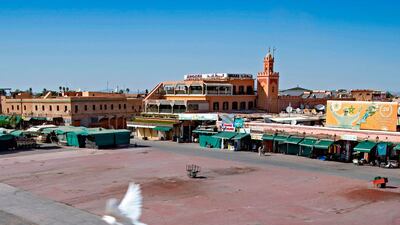
A man walks by mostly-closed stalls at the Jemaa El Fna square in Marrakesh, Morocco. AFP -

A delivery man wearing a protective face mask is seen on his rounds at the Barsha Heights in Dubai. Pawan Singh / The National -
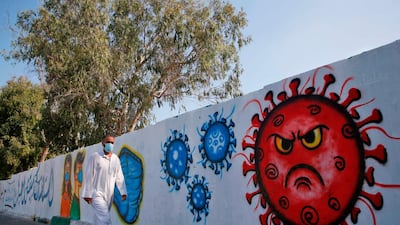
A Palestinian man walks past a coronavirus mural in Deir Al-Balah in the Gaza Strip. AFP -

Palestinian cooks, wearing a protective face masks, work at a resturant amid the ongoing coronavirus pandemic in Gaza City, Gaza Strip. EPA -
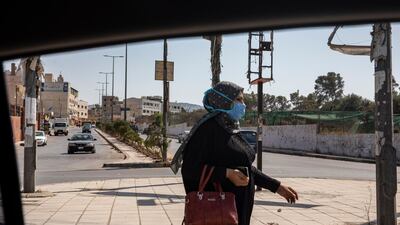
A woman wears a protective face mask as she walks in the Baqa'a Palestinian refugee urban camp, near Amman, Jordan. EPA -
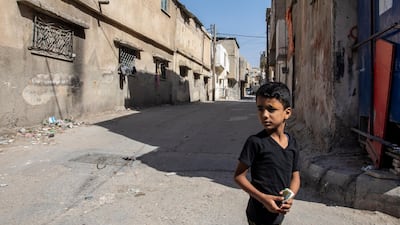
A young refugee looks on as he walks in a street at the Baqa'a Palestinian refugee urban camp, near Amman. EPA -

Members of the Cairo Celebration Choir sing "The Day," a song written by choir founder and artistic director Nayer Nagui, seen conducting in the centre in Cairo. AP -
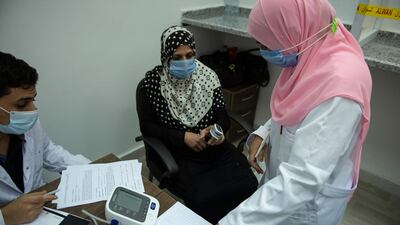
Doctors check a volunteer for the coronavirus vaccine after Egypt's Health and Population Ministry announced that it would start to open volunteer registration for the third phase of the coronavirus vaccine clinical trials, in cooperation with the Chinese government and the UAE health care company G42, in Cairo, Egypt. EPA -
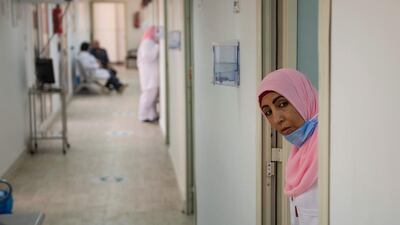
A nurse waits for volunteers after Egypt's Health and Population Ministry announced that it would start to open volunteer registration for the third phase of the coronavirus vaccine clinical trials, in cooperation with the Chinese government and the UAE health care company G42, in Cairo, Egypt. EPA -

Camels carrying child jockeys on their backs, run on a dirt track during a race in Egypt's South Sinai desert. AFP -
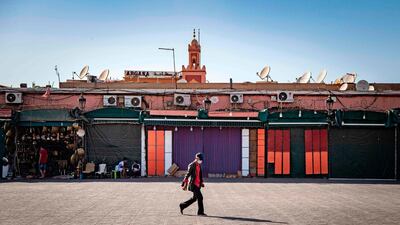
A man walks by mostly-closed stalls at the Jemaa El Fna square in Marrakesh, Morocco. AFP


For the past 10 days, Oman has reported a sharp rise in cases with several spikes above 400 new infections. The sultanate brought new infections down from a July 14 peak of 2,164 new cases to zero between July 31 and August 4. But cases soared again on August 6, with more than 1,200 new infections and several days since have recorded new cases in the hundreds. On Tuesday, Oman recorded 438 more infections and seven deaths.
The health ministry blamed the rise in cases on people for “relaxing and thinking corona is under control”.
The total number of infected people is 90,660, while 84,113 have recovered and 797 people have died from Covid-19 so far.
While Oman followed many in shutting borders and implementing strict rules on movement, it has been easing restrictions and is set to allow foreign travel again. But with the new rise in cases, some are asking whether the rules have been eased too fast.
“Perhaps we should not have been hasty in easing up the quarantine,” said Salim Al Khamis, 41, a father of two primary school children. “Shopping malls and restaurants are crowded. They already said the schools will be opened in November [but] the number of cases are going up again.”

