
A large increase in migrants and asylum seekers trying to cross the English Channel from France has sparked safety fears in one of the world's busiest shipping lanes and started a heated debate about migration.
Since Thursday, more than 600 people have been intercepted crossing the Channel. The highest number of attempted crossings in a single day so far has been 235, last Thursday. A record high number of children arrived on Friday with 23 youngsters taken into local authority care after their rescue. The figure for all of July was 70 children.
More than 4,000 people are estimated to have made the crossing this year, although the UK Home Office does not publish a running total.

The number of people returned from Britain since January 2019 stands at 155.
In the first three months of 2020 there were 463 migrants intercepted crossing the Channel, and during that time most people intercepted were from Iran (266), Iraq (119) and Syria (47).
While the near decade long Syria conflict has forced millions to flee, Iraq and Iran are not war-zones. However, millions of Iraqis are still living in the shattered remains of the war against ISIS and thousands of Iranians are fleeing persecution and economic desperation.
Here's an overview of why people are fleeing:
Iran
Protesting has "dramatically increased" in recent months as Iran faces ever tougher sanctions imposed by the United States and its allies.
Only last month Iranian authorities cut internet access in Khuzestan province and deployed security forces in several cities before fresh anti-government protests broke out against the regime on Thursday.
Security forces fired teargas on protesters in Behbahan city. Videos posted on social media from inside Iran showed protesters chanting: "Fear not, fear not, we are in this together."
Iranian President Hassan Rouhani said in June that the country faces its toughest year with sanctions and Covid-19 casing economic devastation.
International monitors also highlight state repression on everything from freedom of expression to academic freedom to religious freedoms and point to the draconian state security agencies and arbitrary detention.
Iraq
-
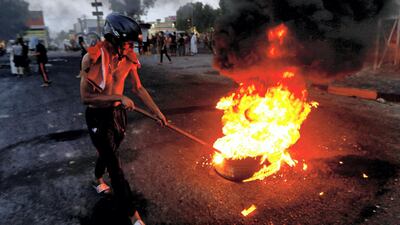
An Iraqi demonstrator burns tyres to block the road during a protest over poor public services in Najaf, Iraq. Reuters -
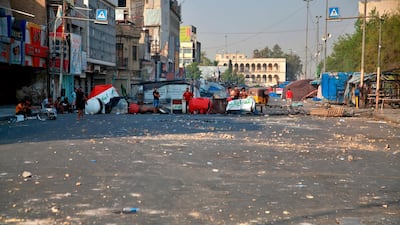
Anti-government protesters gather by barriers near Tahrir square, Baghdad on Monday. AP -
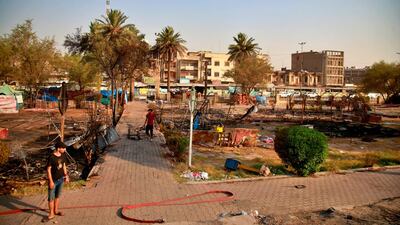
Protesters inspect burned tents near Tahrir Square, Baghdad. AP -

Iraqi demonstrators gesture during a protest over poor public services, in Najaf, Iraq. Reuters -
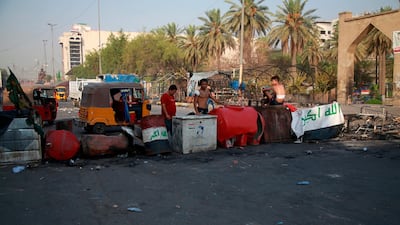
Fresh violence erupted between demonstrators and Iraqi security forces in central Baghdad on Monday, following months of quiet in the wake of the coronavirus pandemic. AP -
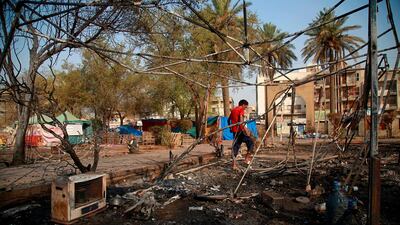
A protester inspects burned tents near Tahrir Square, Baghdad, Iraq. AP -
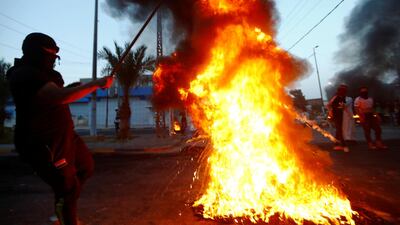
An Iraqi demonstrator burns tyres to block the road during a protest over poor public services in Najaf, Iraq. Reuters -
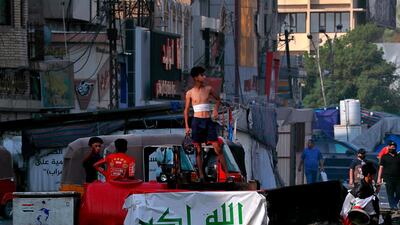
Fresh violence erupted between demonstrators and Iraqi security forces in central Baghdad on Monday. AP -
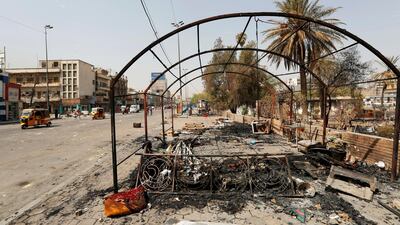
Two protesters died during the demonstrations. Reuters -
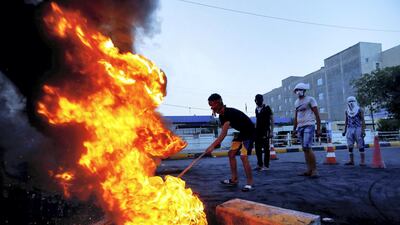
Iraqi demonstrators burn tyres to block the road during a protest over poor public services in the holy city of Najaf. Reuters


Oil-rich Iraq, with a population of 37 million people, has not recovered from years of war and dictatorship.
Since Saddam Hussein's overthrow in 2003, successive governments have failed to bring stability to the country.
As violence continues, the economy has failed to revive, creating hardships amid a lack of services such as electricity and water.
In July, as temperatures peaked at 51.7°C, protesters rallied in the streets against power shortages.
"Starting in October 2019 security forces have responded to protests in Baghdad and other cities with excessive force, killing hundreds," Human Rights Watch reported.
"Other violations of freedom of assembly and expression and women's rights persisted, as well as the right to water."
Territory was taken back from ISIS in a grinding, bloody campaign but it left shattered cities, a huge civilian and military death toll and tens of thousands remain displaced three years on.
Iraq ranks 17th on the Fragile States Index.
Syria
-
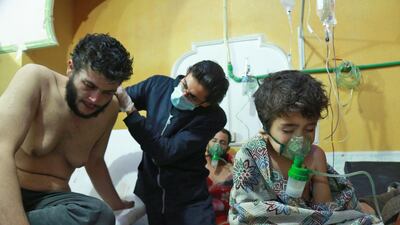
Syrian children and adults receive treatment for a suspected chemical attack at a makeshift clinic on the outskirts of Damascus on February 25, 2018. AFP -

Members of a family from Douma, Syria, who fled after enduring weeks of bombing, near-starvation from a crippling siege and a suspected chemical attack, stand outside a tent in a northern Syrian displaced-persons camp on May 29, 2018. AP -
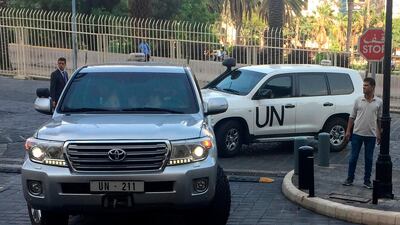
UN vehicles carrying the team of the Organization for the Prohibition of Chemical Weapons arrive at a hotel in Damascus on April 14, 2018, hours after the U.S., France and Britian launched an attack on Syrian facilities for suspected chemical attack against civilians. AP -

Syrian authorities distributed bread, vegetables and pasta to residents of Douma, the site of a chemical weapons attack suspected to have been carried out by the Syrian government, on April 16, 2018. AP Photo -
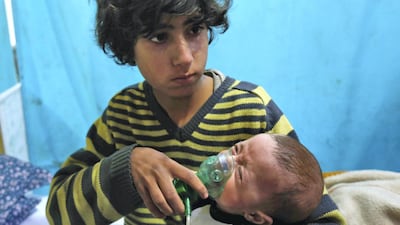
A Syrian boy holds an oxygen mask over the face of an infant at a make-shift hospital following a reported gas attack on the town of Douma, Syria, on January 22, 2018. AFP -
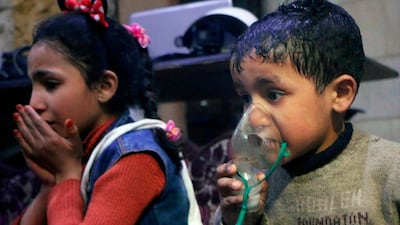
A child receiving oxygen through a respirator following an alleged poison gas attack in Douma on April 8, 2018. Syrian Civil Defense White Helmets via AP -
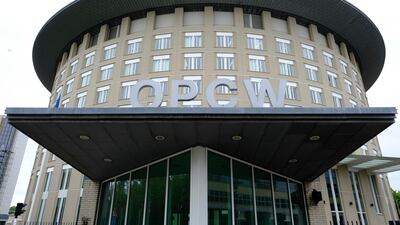
The headquarters of the Organisation for the Prohibition of Chemical Weapons, The Hague, Netherlands. AP -
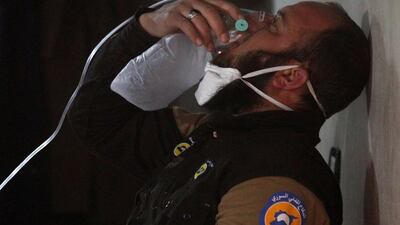
A civil defence member breathes through an oxygen mask after the sarin gas attack on Khan Sheikhoun on April 4, 2017. Reuters


The regime of President Bashar Al Assad has clung on through eight years of war in Syria. The present is dangerous and the future uncertain.
Syria is also enduring an economic meltdown that has left citizens hungry and impoverished.
Three other factors are weighing heavily on Syria and its people – Lebanon's economic collapse – even before the explosion that tore apart Beirut – the coronavirus pandemic and new US sanctions.

