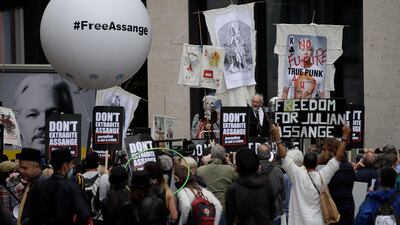

Julian Assange appeared in a London court on Monday to fight extradition to the United States in a keenly awaited case delayed because of the coronavirus pandemic.
The US has accused Mr Assange, 49, of espionage and computer misuse over the publication by his WikiLeaks organisation of secret US military documents a decade ago. The charges carry a maximum jail term of 175 years.
Mr Assange, whose public appearances in the past decade have been limited by his self-imposed exile and prison, appeared in court wearing a dark suit and close-cropped hair to confirm his intention to fight extradition.
The hearing, which is expected to continue into October, is the latest chapter in a 10-year court fight for the founder of the whistle-blowing organisation against sexual assault allegations in Sweden and the more recent US charges.
He skipped bail eight years ago to avoid being sent to Sweden over the sexual abuse case, and fears he would eventually end up in the US court system, by holing up in Ecuador’s London embassy.
Mr Assange was carried out of the embassy by British police officers in April 2019 after his relationship with the authorities in Ecuador soured with a change of president.
He spent a year in prison for the bail offence and remains in London’s top-security Belmarsh prison while fighting extradition to the United States.
He is accused of conspiring with former US army intelligence analyst Chelsea Manning to hack into a Pentagon computer and release hundreds of thousands of secret diplomatic cables and military files on the wars in Iraq and Afghanistan.
His lawyers say he is a journalist who is entitled to protection under American laws of freedom of speech and that the leaked information exposed US military wrongdoing.
The files released by Wikileaks included a video of a 2007 Apache helicopter attack by US forces in Baghdad that killed 11, including two Reuters journalists.
A vocal group of supporters gathered outside London’s Old Bailey court to call for his release from custody. They included his partner and father, as well as the fashion designer Vivienne Westwood. She is a long-term supporter and carried out a previous protest at the court.
-

British fashion designer Vivienne Westwood poses in a cage to protest the extradition of Wikleaks founder Julian Assange at the Central Criminal Court, commonly known as The Old Bailey in London on Tuesday. EPA -
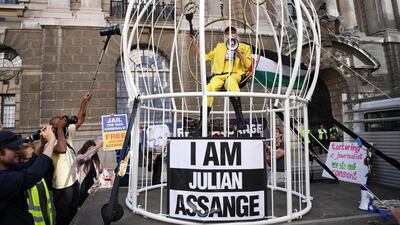
Ms Westwood sat in a bird cage pretending to be a canary to highlight perceived injustices over the extradition. EPA -
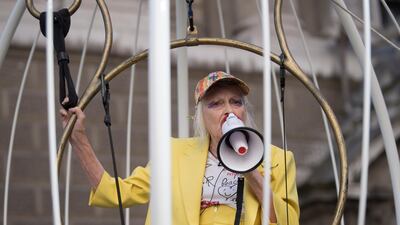
Mr Assange is wanted on a series of charges relating to leaking US government secrets. EPA -
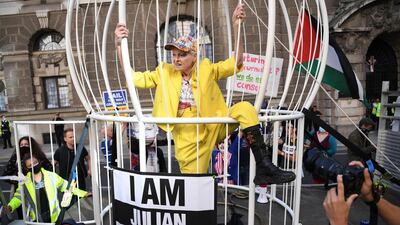
The British fashion designer is an activist and often supports protest movements in the country. EPA -
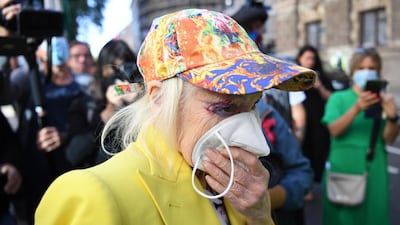
Vivienne Westwood arrives at The Old Bailey on Tuesday. EPA -

Julian Assange's extradition hearings began after he was dragged from the Ecuadorian embassy, in which he had lived for seven year. AFP


Rights group Amnesty has also called on the US to drop the charges against Mr Assange or for the UK not to extradite him because he would face a “real risk of serious human rights violations”.
Sweden dropped the sex crimes investigations last year because of the length of time since the allegations were made.

