
Covid-19 cases were very low in schools that reopened after the end of England's first lockdown, a study found.
The research, published in The Lancet medical journal, found there was a link between the level of virus found in schools and the rate of community transmission, meaning schools are safer when the overall infection rate is low.
There were 113 coronavirus cases from 55 outbreaks recorded over the summer half-term, researchers found.
During that time, there were 1.6 million pupils in school.
Covid-19 cases in the UK reached a low ebb over the summer before sharply rising again as the weather became cooler.
Shamez Ladhani of Public Health England said the data showed the importance of controlling the disease outside the school gate.
“The strong correlation with rates in the wider community also emphasises the importance of controlling transmission outside the school gates to protect educational settings,” he said.
Of the 113 positive cases, 55 (49 per cent) were pupils and 58 (51 per cent) staff, while 69 (61 per cent) of cases occurred in primary schools.
Of the 55 outbreaks identified, 27 were in primary schools, with 16 in nurseries, seven in secondary schools, and five in schools of mixed age groups.
The risk of an outbreak in schools rose by 72 per cent for every increase of five cases per 100,000 in the community, the research said.
Infection rates were higher in staff than pupils, with 27 cases per 100,000 a day compared with 18 for children in nurseries, six in primary school students, and nearly seven in secondary school students.
Dr Sharif Ismail, researcher at the London School of Hygiene and Tropical Medicine, said: “While staff did have higher infection rates, it’s important to note that the overall number of cases was very small and the vast majority of staff were completely fine and able to protect themselves and their students.
“Teachers were very cautious with physical distancing and infection control practices when they were in class with their students, but this was more difficult to maintain outside the classroom.
“Teachers are also more likely to develop symptoms than students and are, therefore, more easily identified, which almost certainly contributed to their higher infection rate.”
The researchers said the results could not be applied to all secondary schools because very few were open in the summer half-term. It is also likely that the children of key workers are over-represented.
The authors also suggested that it was rare for children to display coronavirus symptoms so some cases may have been missed.
-
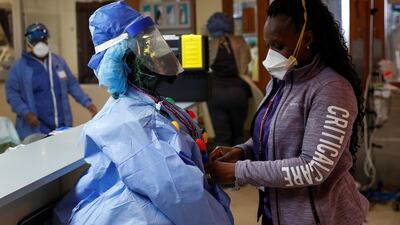
Nataya Gresham-Trotter applies lights, as the global outbreak of the coronavirus disease (COVID-19) continues, on a dressed Christmas tree in the intensive care unit at Roseland Community Hospital on the South Side of Chicago, Illinois, US. Reuters -

A couple pose for photos commemorating their marriage with seasonal illumination in Tokyo, Japan. EPA -

South Korean police officers wearing face masks and face shields to help protect against the spread of the coronavirus stand guard as protesters wait for the arrival of US Deputy Secretary of State Stephen Biegun in front of Foreign Ministry in Seoul, South Korea. AP Photo -

People wait to pick up their food at a deli during a partial lockdown in Los Angeles, California, US. Reuters -
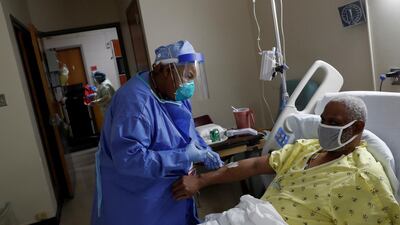
Registered nurse Trina Owens tends to Andre Johnson, a coronavirus positive patient, in his isolation room on the acute care unit at Roseland Community Hospital on the South Side of Chicago, Illinois, US. Reuters -
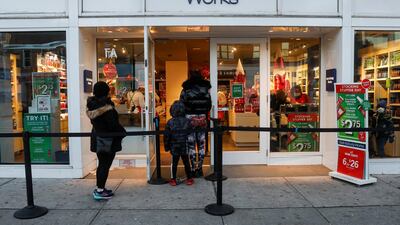
Shoppers wait in line outside a Bath and Body Works retail store in Brooklyn, New York, US. Reuters -

A customer wearing a protective mask picks up a take-out order from a restaurant in San Francisco, California. Bloomberg -

A pedestrian shopping street stands empty during an evening curfew during the second wave of the coronavirus pandemic in Mannheim, Germany. Getty Images -
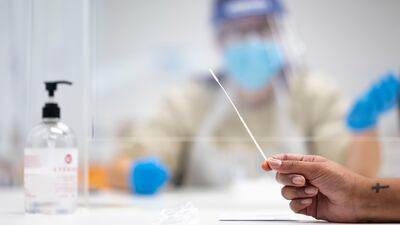
A student holds a swab which is part of a lateral flow test at Swansea University in Swansea, Wales. Getty Images



