
French President Emmanuel Macron will visit Beirut following the devastating explosions that have shattered the Lebanese capital, as Europe rushes aid to the stricken city.
The Elysee Palace announced the French president would travel to Beirut on Thursday where he would meet his Lebanese counterpart Michel Aoun and Prime Minister Hassan Diab.
The trip was announced as France and the European Union mount an aid response to the enormous twin explosions that have brought death and destruction to Lebanon, a country already reeling from the Covid-19 pandemic and economic chaos.
France’s Minister for the Armed Forces, Florence Parly, announced two French military aircraft carrying 20 tonnes of aid and personnel from the French interior, foreign and health ministries were to leave for Beirut on Wednesday.
The French emergency workers travelling to Lebanon include members of a special unit with chemical and other technological expertise trained to intervene in damaged industrial sites.
-
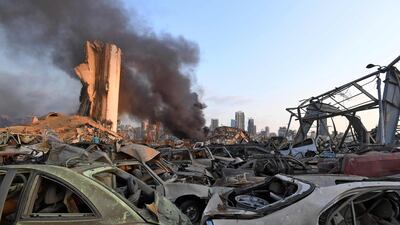
Damaged cars are pictured in front of billowing smoke behind the grain silos at the port of Beirut. AFP -

A drone picture shows smoke from the scene of an explosion at the seaport of Beirut. AP Photo -
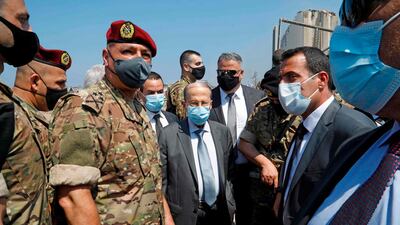
Lebanon's President Michel Aoun wears a protective face mask as he visits the scene of Tuesday's explosion in Beirut. AFP -
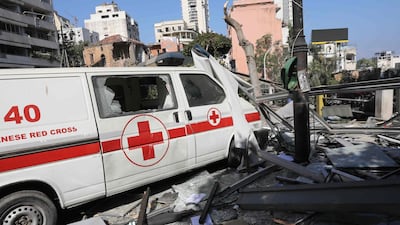
An emergency command vehicle of the Lebanese Red Cross is pictured in the aftermath of yesterday's blast. AFP -

A man inspects the damage of yesterday's blast. AFP -
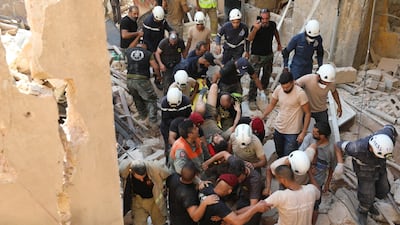
A survivor is taken out of the rubble after a massive explosion in Beirut. AP Photo -
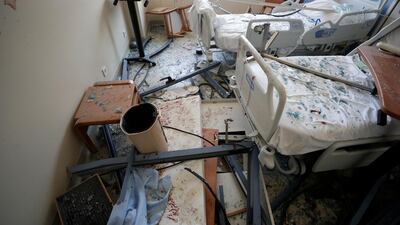
A damaged hospital is seen after a massive explosion in Beirut. AP Photo -
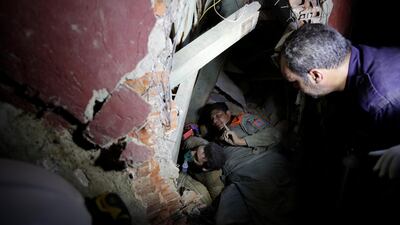
Lebanese soldiers search for survivors after a massive explosion in Beirut.AP Photo -
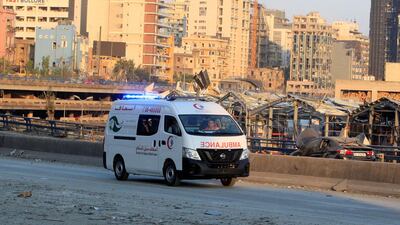
An ambulance drives near the site of Tuesday's blast in Beirut's port area. Reuters -
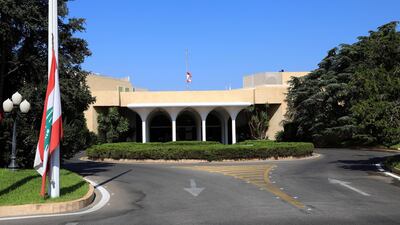
Lebanese national flags fly at half-mast outside the presidential palace in Baabda, following Tuesday's blast in Beirut's port area. Reuters -
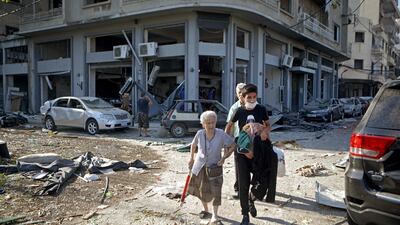
A woman is evacuated from the partially destroyed Beirut neighbourhood of Mar Mikhael. AFP -
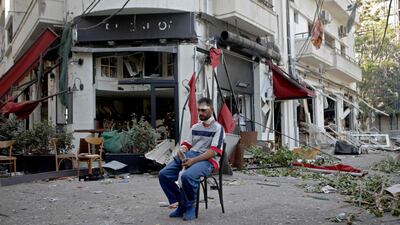
An injured man sits next to a restaurant in the trendy partially destroyed Beirut neighbourhood of Mar Mikhael. AFP -
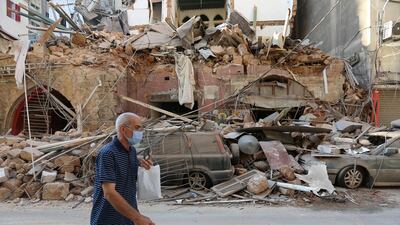
A man walks past damaged building and vehicles near the site of Tuesday's blast in Beirut's port area. Reuters -
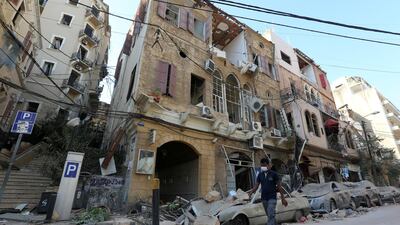
A man wearing a protective face mask walks past damaged buildings and vehicles near the site of Tuesday's blast in Beirut's port area. Reuters -
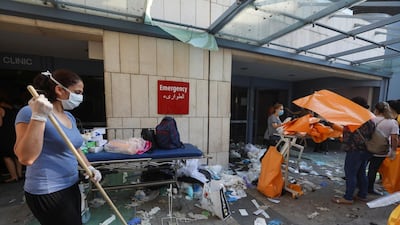
A woman sweeps at a damaged hospital following Tuesday's blast, in Beirut. Reuters -
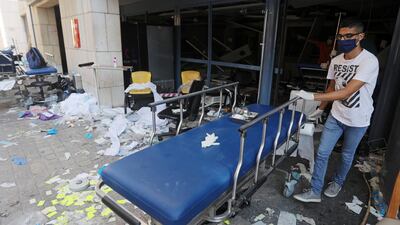
A man wearing a face mask moves a gurney at a damaged hospital following Tuesday's blast in Beirut. Reuters -
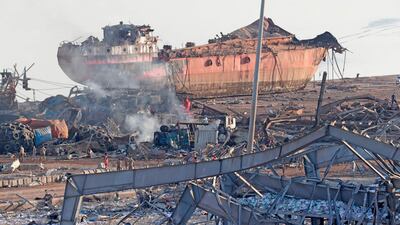
The wreckage of a ship is seen following yesterday's blast at the port of Lebanon's capital Beirut. AFP -
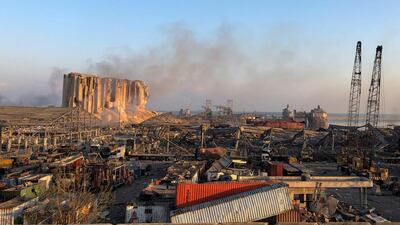
A view shows the aftermath at the site of Tuesday's blast in Beirut's port area. Reuters -

Lebanese soldiers and people gather outside American University of Beirut medical centre following the explosion in Beirut. Reuters -

An injured man sits outside American University of Beirut medical centre following an explosion in Beirut. Reuters -
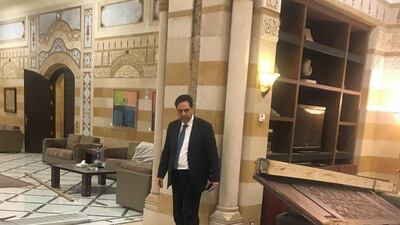
The explosion caused damage to Lebanon's PM Hassan Diab's office -
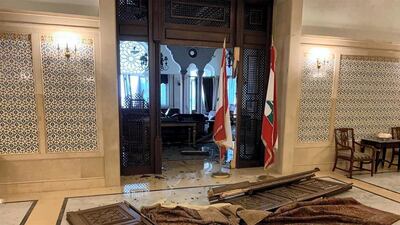
The damage at Lebanon's PM Hassan Diab's office following the blast. -

Pictures of the damage at Lebanon's PM Hassan Diab's office -
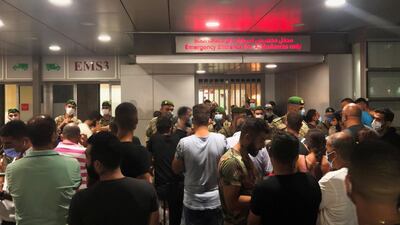
People gather outside American University of Beirut medical centre following the explosion in Beirut. Reuters -
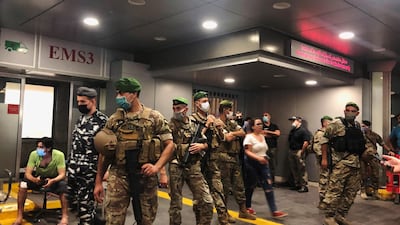
Lebanese soldiers stand outside American University of Beirut medical centre following the explosion in Beirut. Reuters -
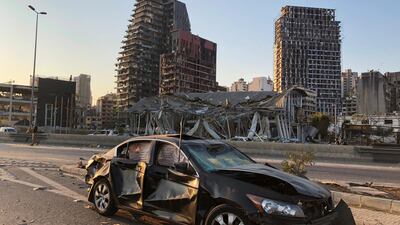
Damaged vehicle and buildings near the scene of Tuesday's blast in Beirut's port area. Reuters -
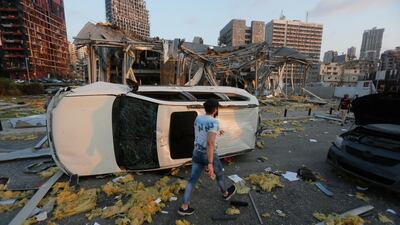
A man walks by an overturned car and destroyed buildings. Getty Images -
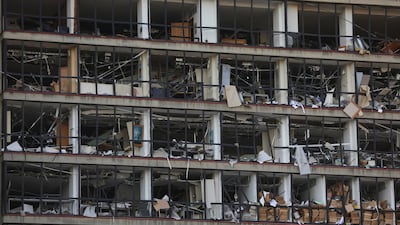
A view shows the damaged facade of a building following Tuesday's blast in Beirut's port area. Reuters -

A view shows the aftermath of yesterday's blast at the port of Beirut. AFP -
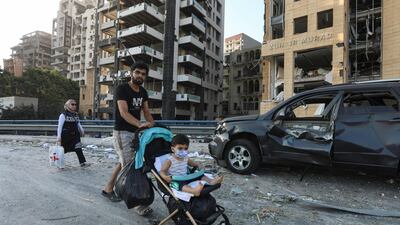
A man pushes a buggy with a child on Wednesday past a damaged vehicle near the scene of overnight blast in Beirut's port area. Reuters -
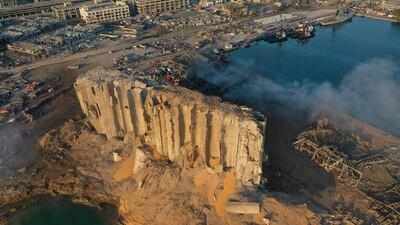
In this drone picture, the destroyed silo sits in rubble and debris. AP Photo -
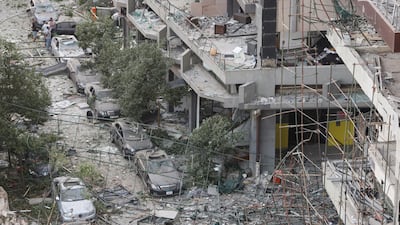
People inspect the damage near the scene of Tuesday's blast in Beirut's port area. Reuters -
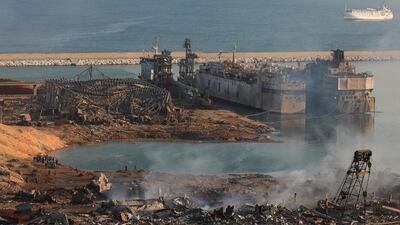
People inspect the scene of Tuesday's blast in Beirut's port area. Reuters -
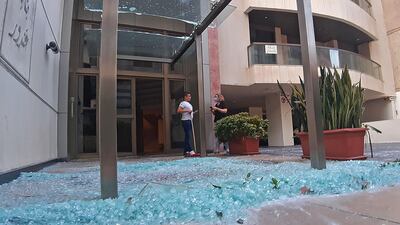
Shattered glass lies in front of a building following a blast in the Lebanese capital Beirut. AFP -

Lebanese army troops carry a wounded man evacuated from a ship at Beirut's port. AFP -

This picture shows damage at Beirut-Rafic Hariri International Airport. Courtesy Lebanese Plane Spotters / Facebook


Among their tasks will be to identify specific risks for products stored in the area and other dangers resulting from the explosion.
Others have experience in dealing with the aftermath of earthquakes, forest fires and other major disasters.
French Prime Minister Jean Castex was also due to chair a meeting organising aid from France to Lebanon.
France, the former colonial power in the Middle Eastern country, has retained close political and economic ties with Beirut. French presidents have, following some of the darkest incidents in Lebanon's past, travelled to the country to show solidarity.
In 2005, following the assassination of Lebanese prime minister Raffik Hariri, French president Jacques Chirac travelled to the country, and after the 1983 bombings in Beirut French president Francois Mitterrand visited.
The EU commission in Brussels has said it plans is to urgently dispatch over 100 firefighters with vehicles, sniffer dogs and equipment designed to find people trapped in urban areas.
The Czech Republic, Germany, Greece, Poland and the Netherlands, as well as France, are taking part in the effort and other countries are expected to join.
The EU's satellite mapping system will be used to help Lebanese authorities to establish the extent of the damage.
According to the Lebanese Red Cross, more than 4,000 individuals have been injured in the explosion and 100 people killed. Some 300,000 people have been left homeless by blasts.
A number of European embassies were also badly hit. According to the Dutch Ministry of Foreign Affairs, the wife of the Dutch Ambassador to Lebanon was seriously injured in Tuesday’s explosion. It is not clear if her injuries are life threatening.
Five other Dutch citizens were slightly injured in the explosions, four of whom work at the embassy.
The German Ministry of Foreign Affairs has said some of its employees had been wounded but did not say how many.
The Finnish embassy in Beirut was severely damaged by the blast, the government in Helsinki said on Twitter. No employees appear to have been injured, however.
Prosecutors in France opened an investigation after 21 French citizens were wounded in the explosions.
The prosecutors opened a probe into "involuntary injury" using their jurisdiction to investigate acts committed abroad.
In Britain, Queen Elizabeth has she was “deeply saddened” by the news of the explosion. “Our thoughts and prayers are with the families and friends of those who have been injured or lost their lives and all those whose homes and livelihoods have been affected,” she said.
The British government has said it is in discussions over what aid to send to Lebanon. A UK Foreign Office spokesman confirmed an announcement would be made.

