
Russia launched its largest drone attack yet on Ukraine, targeting Kyiv on Saturday, the day Ukrainians commemorated the 1932-1933 Holodomor famine.
The attack, which began in the early hours, involved 75 drones – 71 of which were shot down by Ukraine.
President Volodymyr Zelenskyy has described it as “wilful terror”.
It led Ukraine to retaliate and launch a "massive attack" on Russia overnight into Sunday, with the Russian Defence Ministry reporting it had shot down at least 24 drones and two missiles across four regions, including Moscow.
It also said Russian air defences had shot down two Ukrainian S-200 surface-to-air missiles that had been adapted to hit land targets. The missiles were shot down over the Sea of Azov, the ministry said.
Sergei Sobyanin, mayor of the Russian capital, said on his Telegram channel several drones had targeted Moscow, calling it a “massive attack”. Three airports in the Moscow area were forced to impose flight restrictions that were later lifted.
In Tula region, south of the capital, one person was injured when a drone hit an apartment in a residential building.
The overnight strikes were the heaviest in Russia in two months and the first time Moscow has been targeted since the summer.
The attacks followed Russian strikes against Ukraine on Saturday as the nation marked the 90th anniversary of the year-long Soviet-era famine known as the Holodomor, orchestrated by Josef Stalin.
The intensity of the Russian attacks receded early on Sunday, with another nine drones reported to have been shot down by Ukraine’s Air Force.
-
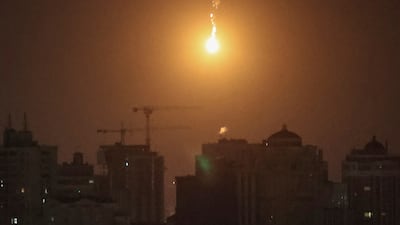
An explosion in the sky over Ukraine's capital, Kyiv, during a Russian drone strike on Saturday. Reuters -
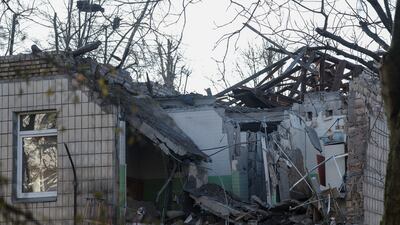
A kindergarten damaged during the drone strikes in Kyiv. EPA -

Ukraine said it downed 71 of 75 drones launched by Russia in an overnight attack. EPA -
Kyiv authorities described the attack as the most intense on the capital since the start of the invasion. EPA -
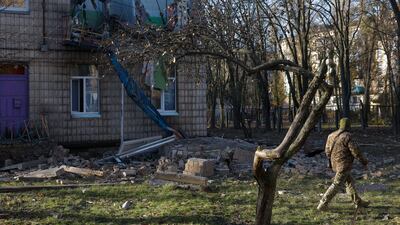
A police officer inspects a kindergarten damaged during the strikes in Kyiv. EPA -
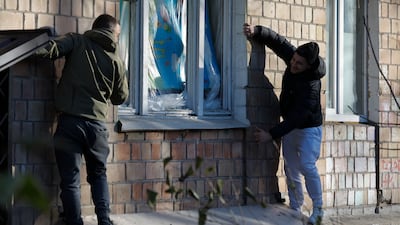
The attack came as Ukrainians marked the 1932-33 Holodomor famine, a national tragedy. EPA -
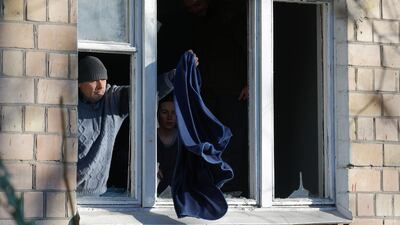
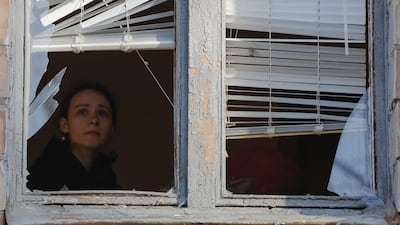
A man shakes out a blanket from a window broken during the explosions. EPA -
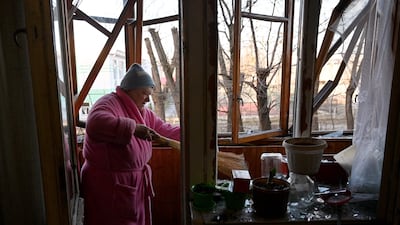
An elderly woman sweeps glass broken from windows in her flat after the explosion of a downed Russian drone in a yard between residential buildings in Kyiv. AFP -
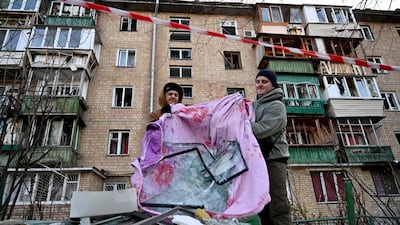
Residents remove debris after the explosion of a downed Russian drone. AFP -

The victims of the Holodomor, Ukrainian for 'death by starvation', are traditionally commemorated in Ukraine on the last Saturday of November. EPA -
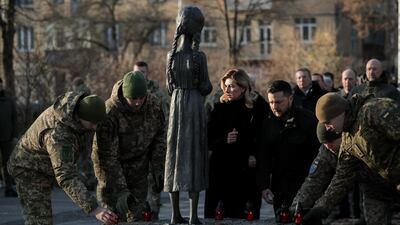
The Holodomor in the former Soviet-era Ukraine in 1932-1933, killed millions of Ukrainians. EPA


Kyiv mayor Vitali Klitschko said five people were injured, including an 11-year-old girl, during the attack on Saturday and the city suffered severe damage.
In a post shared on Telegram, he said a children's nursery was also on fire after being hit drone fragments.
Serhii Popko, head of the Kyiv city administration, said it was "the most massive air attack by drones on Kyiv" in the war so far.
The Ukrainian Energy Ministry said the drone attack cut off power to an overhead line.
“As a result, 77 residential buildings and 120 facilities in the central part of the city lost power,” it said in a statement, adding that work was under way to restore service.
-
An explosion in the sky over Ukraine's capital, Kyiv, during a Russian drone strike on Saturday. Reuters -
A kindergarten damaged during the drone strikes in Kyiv. EPA -
Ukraine said it downed 71 of 75 drones launched by Russia in an overnight attack. EPA -
Kyiv authorities described the attack as the most intense on the capital since the start of the invasion. EPA -
A police officer inspects a kindergarten damaged during the strikes in Kyiv. EPA -
The attack came as Ukrainians marked the 1932-33 Holodomor famine, a national tragedy. EPA -
A man shakes out a blanket from a window broken during the explosions. EPA -
An elderly woman sweeps glass broken from windows in her flat after the explosion of a downed Russian drone in a yard between residential buildings in Kyiv. AFP -
Residents remove debris after the explosion of a downed Russian drone. AFP -
The victims of the Holodomor, Ukrainian for 'death by starvation', are traditionally commemorated in Ukraine on the last Saturday of November. EPA -
The Holodomor in the former Soviet-era Ukraine in 1932-1933, killed millions of Ukrainians. EPA
Air force chief Mykola Oleschuk praised the defensive role of “mobile fire” units, which accounted for nearly 40 per cent of the downed drones.
The Ukrainian military destroyed eight of nine attack drones launched overnight by Russia, the air force said on Sunday.
There were no immediate reports of damage or about where the remaining drone had struck.
The overnight attack was launched from the south-east.
In a Telegram post, Mr Zelenskyy condemned the attacks.
“The Russian leadership is proud of the fact that it can kill,” he said.
He drew parallels between the Holodomor and Russia's current invasion.
More than 30 countries and international organisations recognise the famine, during which at least seven million people died, as genocide committed by the Soviet Union. Russia denies this, attributing the famine to drought.
The target of Saturday's drone attack remains unclear, but Ukraine has been warning of potential Russian efforts to destroy its energy system.
“It looks like tonight we heard the overture. The prelude to the winter season,” Serhiy Fursa, a prominent Ukrainian economist, wrote on Facebook.

