


Nato's nuclear deterrent is working because Russia has not threatened the alliance's borders, Britain's Defence Secretary Ben Wallace said on Friday.
Speaking at the Munich Security Conference, Mr Wallace said the war in Ukraine had reminded Nato of the importance of the nuclear weapons that three of its members — the US, Britain and France — possess.
Russia's President Vladimir Putin has alarmed diplomats with repeated hints that he could use nuclear weapons in the conflict in Ukraine.
Mr Wallace said the crisis in Ukraine was “a reminder that Nato is a nuclear alliance”.
“There really is an adversary out there who is ready to evoke nuclear weapons,” he continued.
“Having nuclear weapons in this environment, when you have a Russia probably with the greatest arsenal on Earth in size, is important to maintain that deterrence.
“I'm proud that we have a nuclear alliance as part of Nato. I think Russia knows that. Russia is respectful of Nato's border because of that.”
Ukraine is not a member of Nato. Russia has complained about Nato expansion near its borders but has not attacked alliance members such as Lithuania, Estonia or Latvia.
Mr Wallace mentioned a new threat from pro-Kremlin TV presenter Vladimir Solovyov that London could be “turned to dust” by Russian weapons.
He said any Russian nuclear escalation in Ukraine would bring a “very severe response”, but would not give details.
“Russia is probably watching and they would love to know what we would do if they were to use a tactical nuclear weapon, which is exactly why we're not going to say,” he said.
Munich Security Conference — in pictures
-
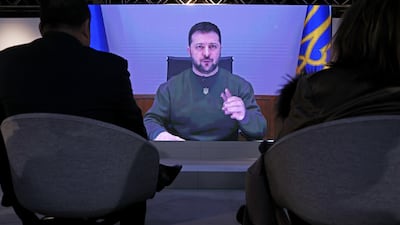
Ukrainian President Volodymyr Zelenskyy speaks via video link to the Munich Security Conference. Getty Images -
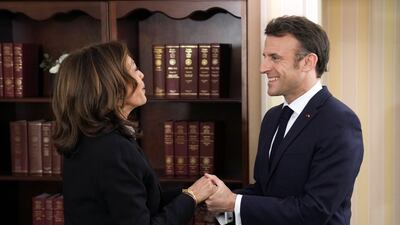
US Vice President Kamala Harris meets with French President Emmanuel Macron. Reuters -
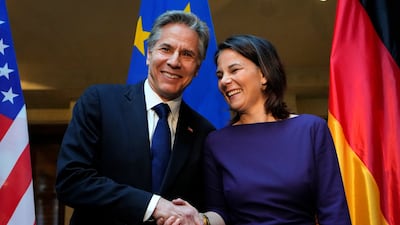
US Secretary of State Antony Blinken meets German Foreign Minister Annalena Baerbock. Reuters -
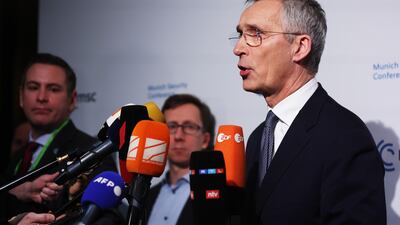
Jens Stoltenberg, secretary general of NATO, talks to the media. Getty Images -
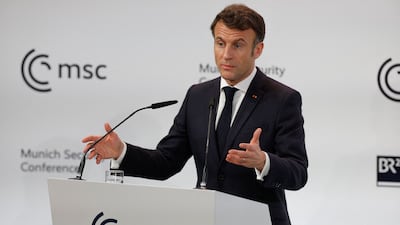
Mr Macron delivers a speech. AFP -
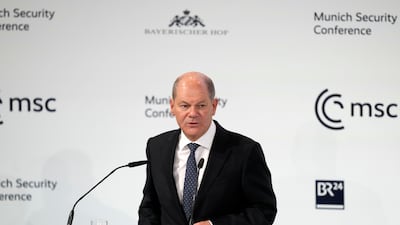
Germany's Chancellor Olaf Scholz gives a speech. AP -

Chairman of the Munich Security Conference Christoph Heusgen opens the conference. AFP -
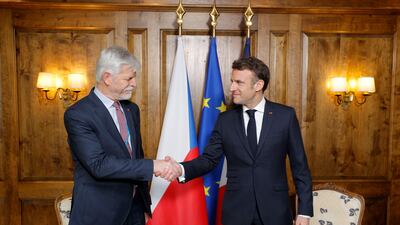
Mr Macron shakes hands with the Czech Republic's President-elect Petr Pavel, during a bilateral meeting. AFP -
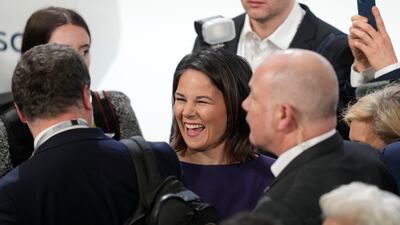
Annalena Baerbock arrives. AP -
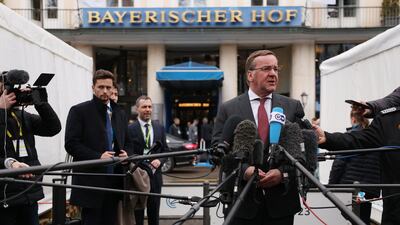
German Defence Minister Boris Pistorius speaks to journalists before the conference. Getty Images -
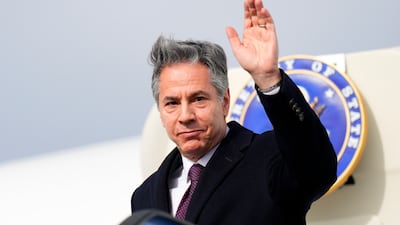
Antony Blinken arrives at the airport. AP -
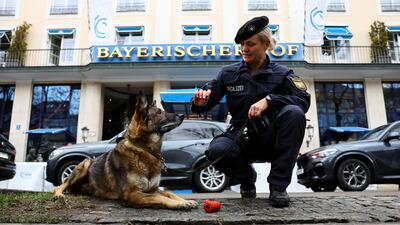
Police dog Basco searches the area outside the Bayerischer Hof hotel, before the start of the conference. Reuters -
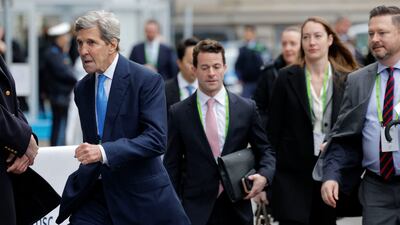
US Special Presidential Envoy for Climate John Kerry arrives. AFP -
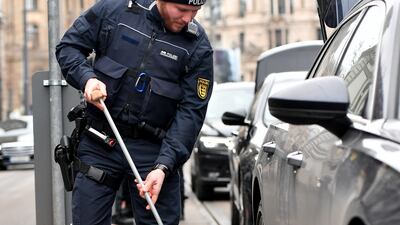
A police officer uses a mirror to check a car's undercarriage near the Bayerischer Hof hotel. EPA


Yao Yunzhu, a retired Chinese major general, said the nuclear order was under threat from the breakdown of Cold War-era arms control treaties and the Iran nuclear deal.
“We should be very careful not to think that we are talking about democratic nuclear weapons versus autocratic nuclear weapons. We should be talking about nuclear weapons versus all of us, the whole of humanity,” she said.
Announcing the invasion on February 24 last year, Mr Putin warned any threats against Russia would be met with consequences “you have never seen in your entire history”.
As Russia moved to annex four regions of Ukraine last autumn, Mr Putin said Moscow would use “all means at its disposal” to defend its territory and warned that “this is not a bluff”.
UN Secretary General Antonio Guterres called for an end to “nuclear sabre-rattling”, while Mr Putin's rhetoric also drew a rare rebuke from Chinese President Xi Jinping.
“For the first time since the end of the Cold War, it's actually quite plausible that nuclear weapons will be used in Europe,” said Claudia Major, a researcher at the German Institute for International and Security Affairs.
“A Russian victory in the shadow of nuclear weapons would fundamentally change the nuclear order we have, and it might actually incentivise other countries to do the same.”
There has also been much concern about a possible nuclear disaster linked to fighting near the Zaporizhzhia nuclear plant and the site of the 1986 Chernobyl accident in Ukraine.

