


Poland’s acquisition of short and medium-range air defence systems from Nato partners is speeding up and it is seeking to deploy additional Patriot missile launchers near its border with Ukraine.
The country is looking to position itself as ahead of the game, compared to other nations in the region, in deterring missile threats, a senior Warsaw official and analysts have told The National.
“Our primary focus is the acquisition of a medium-range air defence system with ballistic missile defence capabilities,” Poland’s permanent representative to Nato, Tomasz Szatkowski, told The National. “Poland possesses the most advanced VSHORAD [very short air defence systems] at Nato.
“These systems are of domestic production and many allies, including the US, are interested in our solutions and achievements in this field.”
Two US Patriot batteries, which Poland bought in 2018, will be delivered by the end of the year and become fully operational in the next two years, said Mr Szatkowski. Poland's Defence Minister Mariusz Blaszczak said on Monday that the country was opening talks with Germany over the deployment of additional Patriot missile launchers near its border with Ukraine.
“During today's conversation with the German side, I will propose that the system be stationed at the border with Ukraine,” he wrote on Twitter. Germany's Defence Minister Christine Lambrecht offered Warsaw the Patriot missile defence system to help it to secure its airspace after a stray missile crashed in Poland last week.
Unlike many European Nato allies, Poland had been preparing for war for years before Russia’s all-out invasion of Ukraine in February and is currently working on building up its own defence industry.
Within Ukraine a senior UN official issued a stark warning Monday after more than a dozen powerful blasts in the area of Ukraine’s Zaporizhzhia nuclear power plant at the weekend. Rafael Grossi, director general of the International Atomic Energy Agency, said commanders were gambling with people's lives.
“We were fortunate a potentially serious nuclear incident did not happen. Next time, we may not be so lucky,” Mr Grossi said.
Repeated shelling of the plant during the war has raised concerns about a grave disaster in the country that suffered the world's worst nuclear accident, the 1986 Chernobyl meltdown.
Poland had in fact spurned a recent initiative to separately fund increases in Europe’s air defence capabilities.
The launch in mid-October on the sides of a Nato defence summit in Brussels of a German-led initiative to pool money among 14 Nato allies, including the Baltic states, to buy air defence systems collectively, is widely viewed in Poland as too little too late.
The European Sky Shield Initiative is nothing more than an attempt by allies to acquired ground-based air defence capability in a “cost effective way and as quickly as possible,” said Mr Szatkowski.
Mr Szatkowski said that Poland had already taken “important decisions in terms of acquiring air and missile defence systems” before the European Sky Shield Initiative’s establishment in October.
The need to bolster Europe’s air defence became increasingly apparent after two civilians were killed on Tuesday in Poland in what has been described by Nato leaders as a stray missile strike from Ukraine. The incident is under investigation.
Major investments
Air defence systems across Europe’s Eastern flank — which is designated as Poland, the Baltic states, and countries further south, such as Slovakia — have dwindled since the end of the Cold War.
Slovakia was left without an air defence system after donating its Soviet-produced S300 to Ukraine at the start of the war. Germany and the Netherlands deployed three Patriot batteries to Slovakia for extra protection. One was withdrawn last month.
There are many reasons why Poland’s air defence systems are stronger than its neighbours'.
One of the largest countries in central Europe, it has the financial resources to make major investments into its armed forces, said Rafael Loss, co-ordinator of pan-European data projects at the European Council on Foreign Relations think tank.
“Poland has long identified Russia as an existential threat and oriented its national defence posture accordingly,” said Mr Loss.
-
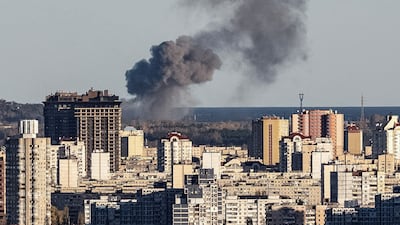
Smoke rises on the outskirts of the city during a Russian missile attack in Kyiv. Reuters -

Workers surround the Monument to the Heroes of the Heavenly Hundred with sandbags against damage from shelling in Mykolaiv. EPA -
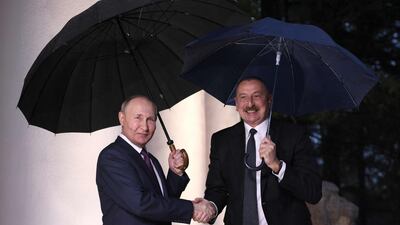
Russian President Vladimir Putin welcomes Azerbaijan President Ilham Aliyev for talks before a meeting between the Russian president and the leaders of Armenia and Azerbaijan in the Black Sea resort city of Sochi, Russia. AFP -

People take water from a water pump in Kyiv. EPA -
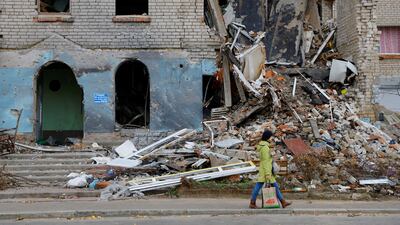
A woman walks past a damaged building in the town of Nova Kakhovka. Reuters -
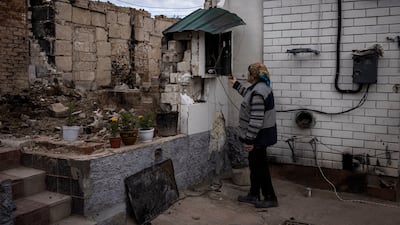
A woman outside her home, which was destroyed during battles at the start of the conflict, in Yahidne, Chernihiv. Getty Images -

People shelter inside a subway station during a Russian missile attack in Kyiv. Reuters -
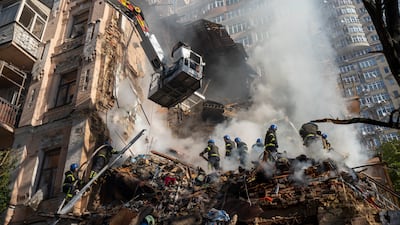
Firefighters at the site of a drone attack in Kyiv, Ukraine. AP -
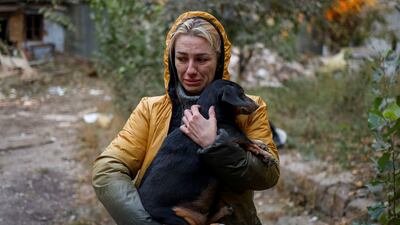
A woman walks past the site of a Russian missile strike in the southern Ukrainian city of Mykolaiv. Reuters -
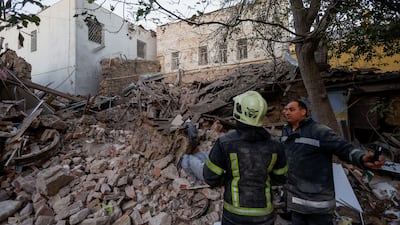
Rescuer workers at a building destroyed in an attack in Mykolaiv. Reuters -
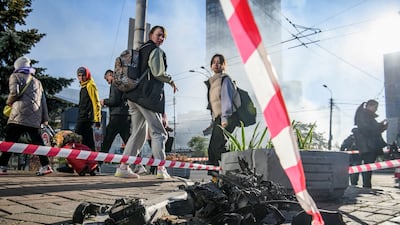
Parts of a drone lie on a street in Kyiv. Reuters -
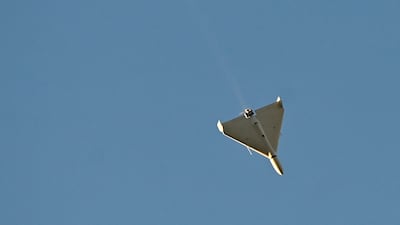
A drone flies over the Ukrainian capital during an attack. AFP -
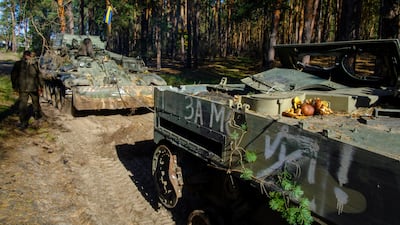
Ukrainian servicemen tow a captured Russian armoured vehicle in Rudneve village, Kharkiv. EPA -
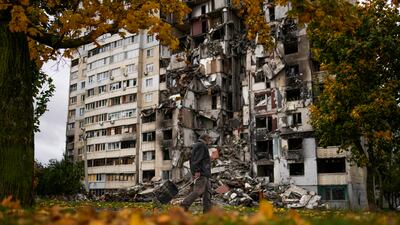
A partially destroyed residential building in Saltivka, in Kharkiv. AP -
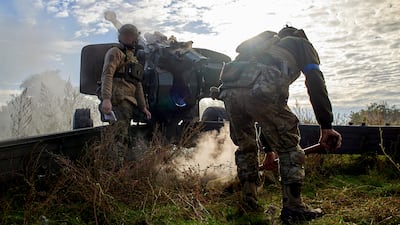
Ukrainian servicemen fire a captured Russian howitzer on a front line near Kupyansk city, Kharkiv. EPA -
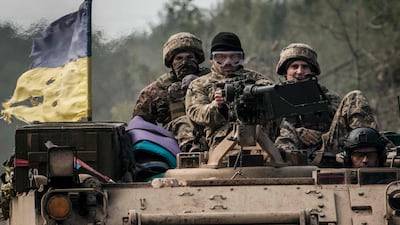
Ukrainian servicemen near the recently retaken town of Lyman in Donetsk region. AFP -
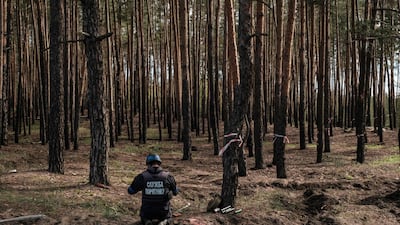
An officer from a Ukrainian national police emergency demining team prepares to detonate collected anti-tank mines and explosives near Lyman, in the Donetsk region. AFP -
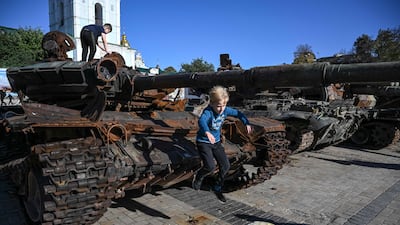
A boy playing on a destroyed Russian tank on display in Kyiv. AFP -

A young couple hiding underground during an air alert in Zaporizhzhia. AFP -
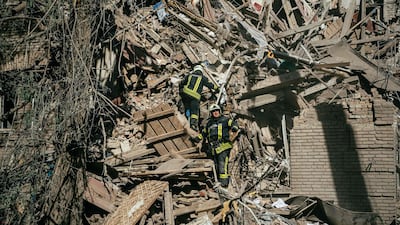
Ukrainian firefighters looking for survivors after a strike in Zaporizhzhia. AFP -
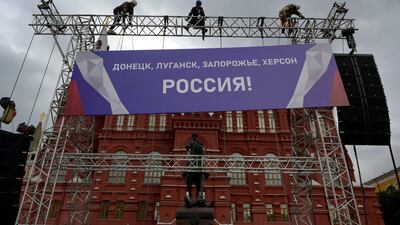
Workers fix a banner reading 'Donetsk, Luhansk, Zaporizhzhia, Kherson - Russia!' to the State Historical Museum near Red Square in Moscow. AFP -

Residents try to cross a destroyed bridge in the Kharkiv region of Ukraine. AFP -
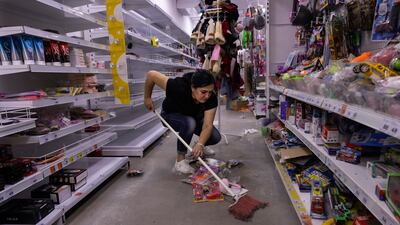
Alyona Kishinskaya helps to clean up a shop as it prepares to reopen in Balakiya, Ukraine, after a six-month Russian occupation. Getty Images -
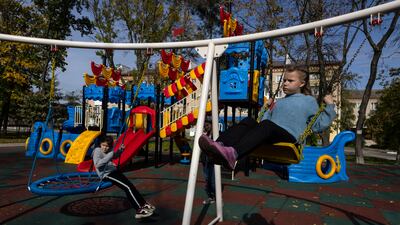
Alla, 12, has a swinging time in Balakiya, Ukraine, as life goes on despite the war. Getty Images -
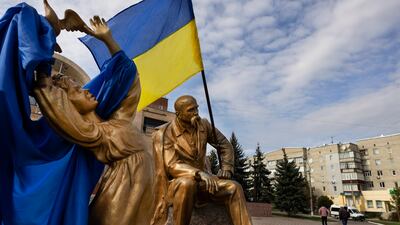
Ukrainian flags in the town square in Balakiya. Getty Images -
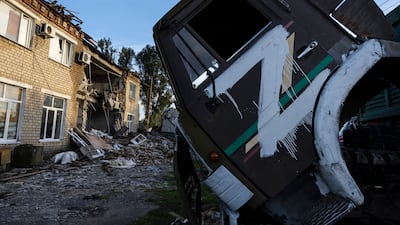
A destroyed Russian command centre in Izium, Ukraine. Getty Images -

In what may be a final farewell, young Russian recruits - escorted by their wives - walk to a train station in Volgograd before being sent to war in Ukraine. AP -
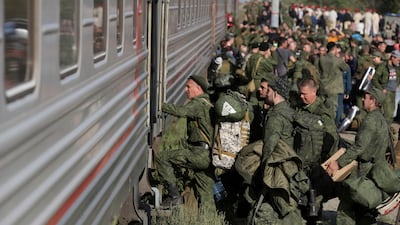
Russian recruits board the train to Ukraine in Volgograd. AP -
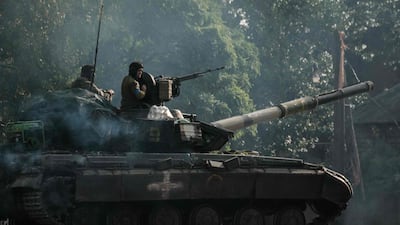
Ukrainian soliders drive a tank at the recently retaken eastern side of the Oskil River in Kharkiv region, Ukraine. AFP -
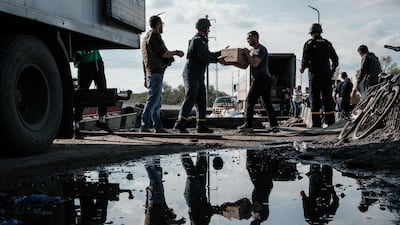
Volunteers pass boxes of food aid on a destroyed bridge over the Oskil River. AFP -
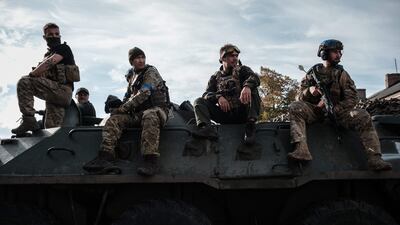
Ukrainian soliders rest on an armoured personnel carrier. AFP -
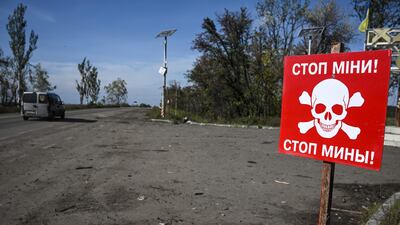
A sign warns of landmines in Izyum, eastern Ukraine. AFP -
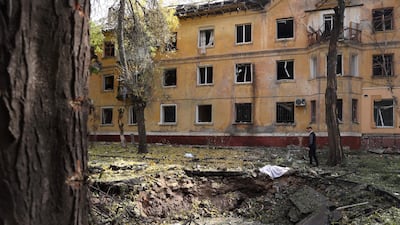
This crater was left after a missile strike in the Donetsk region of Ukraine. AFP


Mr Loss said that Poland also sees itself “as somewhat of an advocate for Central and Eastern European security interests within the EU and Nato”.
“These factors have made it possible for Warsaw to take certain decisions fairly early that are now bearing fruit, and that it can build on to accelerate its military modernisation going forward,” he added.
“Other Western European countries are only now pursuing adaptation with any seriousness.”
Poland has for several years signalled that it has ambitious military targets.
In 2019, Poland’s Defence Ministry decided to modernise its military at a cost of 524 billion zlotys (around $115 billion) between 2021 and 2035.
Law and Justice party leader Jaroslaw Kaczynski in July said that his country, which spends 2.2 per cent of its GDP on defence, aims to bring that figure up to 5 per cent but did not give a specific deadline. That would be the highest ratio among Nato allies, in front of the US.
In May, Poland ordered a further six Patriot batteries, which are expected to arrive between 2026 and 2028.
Technology transfers
Poland’s defence industry has also collaborated with the UK to push forward the modernisation of its short-range air defence systems.
The UK delivered 23 such systems last month and further deliveries are expected in early 2023, said Mr Szatkowski.
This modernisation programme aims to ultimately replace what is left of Soviet-era surface-to-air missile systems in Poland, such as the 2K12 Kub, with western-produced military equipment.
Poland is also the only country outside the US to implement the US Army’s Integrated Air and Missile Defence System Battle Command System, which shoots down short and medium- range ballistic missiles, said Mr Szatkowski.
“Poland is ahead of the curve in acquiring modern, networked air and missile defences,” said Mr Loss.
The IBCS connects as many sensor platforms as possible to identify and track incoming missiles, explained Mr Loss. It can then automatically select whichever interceptor has the greatest chance of eliminating the threat. This could be a Patriot missile, or an F-35 combat aircraft with an air-to-air missile.
Polish pilots are set to start receive training on US-produced F-35s starting 2024, five years after Warsaw bought 32 of the jets for $6.5 billion.
Poland is also examining technology transfer from South Korea, daily The Korea Herald reported last month, following massive military purchases by Warsaw from the East Asian state.
Mr Loss said that on the long run, such transfers may strengthen Poland’s own defence industry, signalling it has not only ambitious military acquisition goals but also sales targets.
“Poland wants to become one of the strongest military powers in Europe and a major player in the global arms trade,” he said.

