

Norway will put its military on a raised level of alert from Tuesday, moving more personnel on to operational duties and enhancing the role of a rapid mobilisation force in response to the war in Ukraine, its government said on Monday.
It will also seek to bring its new fleet of US-made P-8 Poseidon submarine-hunting maritime patrol aircraft into regular operation at a faster pace than originally planned, defence chief Gen Eirik Kristoffersen said.
The scale of alert on which the military operates is classified, however, and the government declined to give details of the level.
There were no concrete threats against Norway now triggering the decision, Gen Kristoffersen told Reuters, but rather the sum of “the uncertainties” was leading authorities to raise the country's military preparedness.
“We have seen an escalation [in the war] in Ukraine, we [Norway] are training Ukrainian forces, the Ukraine war has changed with the Russian mobilisation,” he said an interview.
“And at the same time, we have had a gas explosion in the Baltic Sea and drone activity at North Sea platforms.”
The raised level is expected to last a year, “possibly more”, Gen Kristoffersen said.
Russian conscription complete
The Russian mobilisation to which he alluded was completed on Monday, Russia's defence ministry said.
“All activities related to the conscription … of citizens in the reserve have been stopped,” the ministry said, and no further call-up notices would be issued.
Russian President Vladimir Putin announced the country's first mobilisation since the Second World War in September, one of a series of escalatory measures in response to Ukrainian gains on the battlefield.
Defence Minister Sergey Shoigu said at the time that about 300,000 additional personnel would be drafted, and that they would be specialists with combat experience.
But the mobilisation has proceeded chaotically, with many highly publicised cases of call-up notices going to the wrong men. Hundreds of thousands have fled Russia to avoid being drafted.
Mr Putin has publicly acknowledged mistakes were made, and he has set up a new co-ordination council to boost the military effort and ensure that men being sent to the front are properly armed and equipped.
The announcement on Monday — day 250 of the war — did not give a final figure for the number of men called up.
Putin the peacemaker?
At the same time, as ramping up war efforts in Ukraine in the shape of a missile barrage on critical infrastructure, Mr Putin on Monday hosted the leaders of Armenia and Azerbaijan to try to broker a settlement to a long-standing conflict between the two ex-Soviet neighbours.
In an initial meeting with Armenian Prime Minister Nikol Pashinyan at the Black Sea resort city of Sochi, Mr Putin said the goals would be to ensure peace and stability, and unblock transport infrastructure to help Armenia’s economic and social development. He also held a separate meeting with Azerbaijani President Ilham Aliyev before the three-way summit.

Armenia and Azerbaijan have been locked in a decades-old conflict over Nagorno-Karabakh, which is part of Azerbaijan but has been under the control of ethnic Armenian forces backed by Armenia since a separatist war there ended in 1994.
“We see the approaches of our colleagues to what is happening on the Armenian-Azerbaijani border and around Karabakh,” Mr Putin. “This conflict has been going on for a decade so we still need to end it.”
Mr Putin’s talks with Mr Pashinyan and Mr Aliyev concern the implementation of a 2020 peace deal that Russia brokered.
During a six-week war in 2020, Azerbaijan reclaimed broad parts of Nagorno-Karabakh and adjacent territories. More than 6,700 people died in the fighting.
Moscow deployed about 2,000 troops to the region to serve as peacekeepers.
Mr Pashinyan said on Monday that he would press for Azerbaijan to withdraw its troops from the Russian peacekeeping zone in Nagorno-Karabakh and seek freedom for Armenian prisoners of war.
An extension of the Russian peacekeeping mandate was also under discussion, Russian state news agencies reported.
A new round of hostilities erupted in September, when more than 200 troops were killed on both sides. Armenia and Azerbaijan traded blame for triggering the fighting.
Russia is Armenia’s top ally and sponsor. In a delicate balancing act, it maintains a military base in Armenia but has also developed warm ties with Azerbaijan.
Russia-Ukraine war latest — in pictures
-
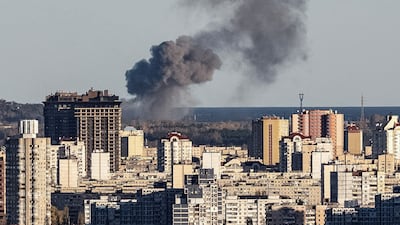
Smoke rises on the outskirts of the city during a Russian missile attack in Kyiv. Reuters -

Workers surround the Monument to the Heroes of the Heavenly Hundred with sandbags against damage from shelling in Mykolaiv. EPA -
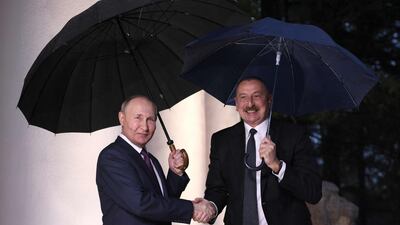
Russian President Vladimir Putin welcomes Azerbaijan President Ilham Aliyev for talks before a meeting between the Russian president and the leaders of Armenia and Azerbaijan in the Black Sea resort city of Sochi, Russia. AFP -
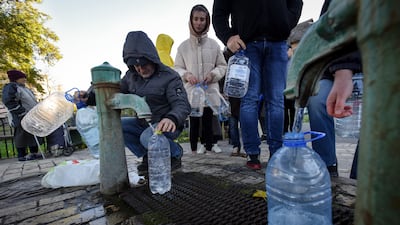
People take water from a water pump in Kyiv. EPA -
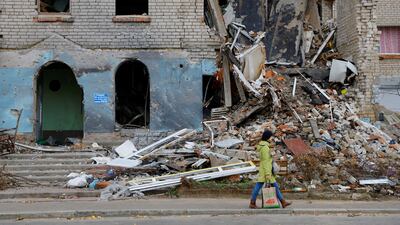
A woman walks past a damaged building in the town of Nova Kakhovka. Reuters -
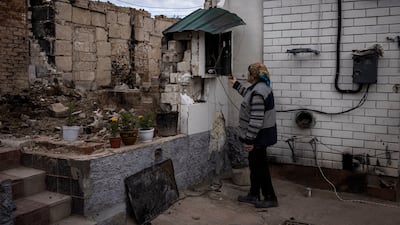
A woman outside her home, which was destroyed during battles at the start of the conflict, in Yahidne, Chernihiv. Getty Images -
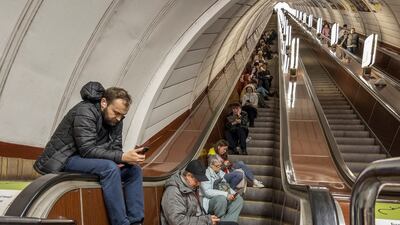
People shelter inside a subway station during a Russian missile attack in Kyiv. Reuters -
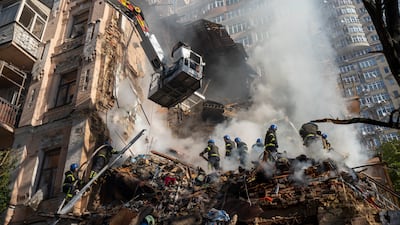
Firefighters at the site of a drone attack in Kyiv, Ukraine. AP -
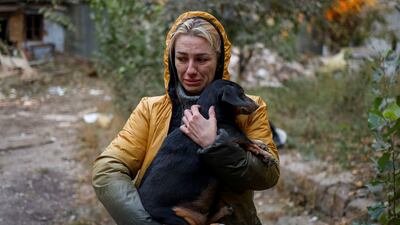
A woman walks past the site of a Russian missile strike in the southern Ukrainian city of Mykolaiv. Reuters -
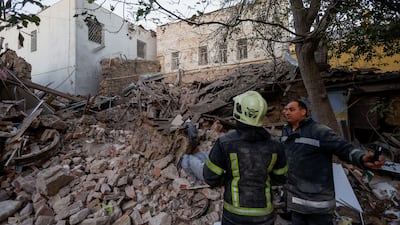
Rescuer workers at a building destroyed in an attack in Mykolaiv. Reuters -
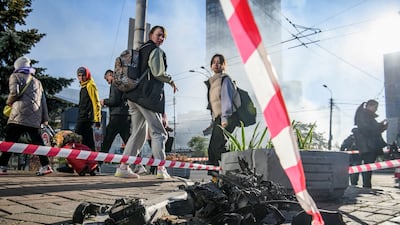
Parts of a drone lie on a street in Kyiv. Reuters -
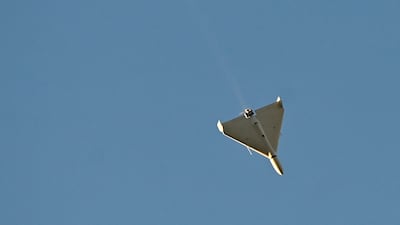
A drone flies over the Ukrainian capital during an attack. AFP -
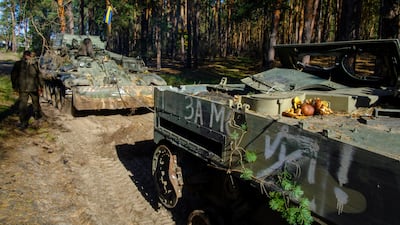
Ukrainian servicemen tow a captured Russian armoured vehicle in Rudneve village, Kharkiv. EPA -
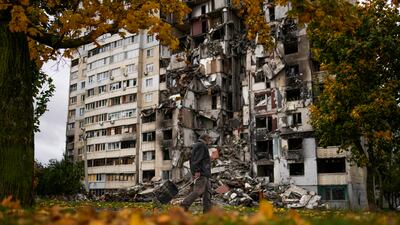
A partially destroyed residential building in Saltivka, in Kharkiv. AP -
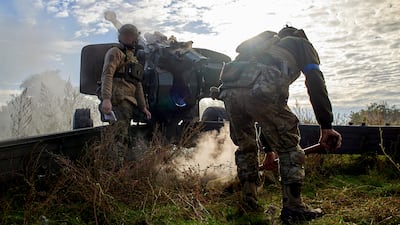
Ukrainian servicemen fire a captured Russian howitzer on a front line near Kupyansk city, Kharkiv. EPA -
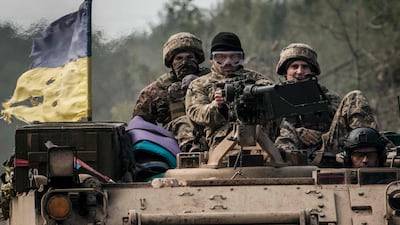
Ukrainian servicemen near the recently retaken town of Lyman in Donetsk region. AFP -
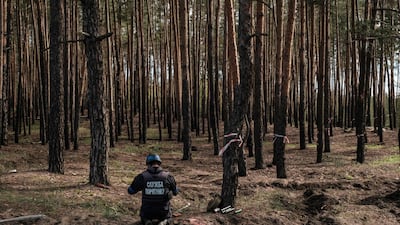
An officer from a Ukrainian national police emergency demining team prepares to detonate collected anti-tank mines and explosives near Lyman, in the Donetsk region. AFP -
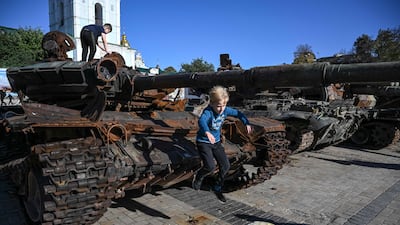
A boy playing on a destroyed Russian tank on display in Kyiv. AFP -
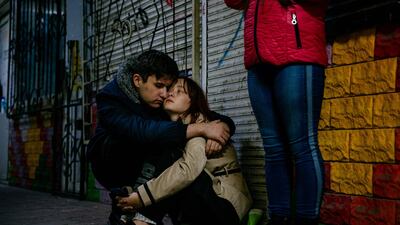
A young couple hiding underground during an air alert in Zaporizhzhia. AFP -
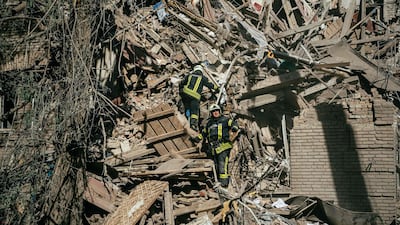
Ukrainian firefighters looking for survivors after a strike in Zaporizhzhia. AFP -
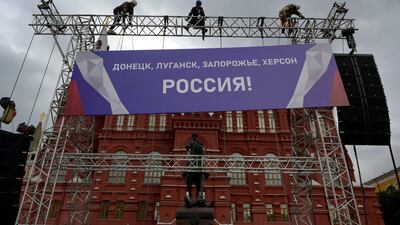
Workers fix a banner reading 'Donetsk, Luhansk, Zaporizhzhia, Kherson - Russia!' to the State Historical Museum near Red Square in Moscow. AFP -

Residents try to cross a destroyed bridge in the Kharkiv region of Ukraine. AFP -
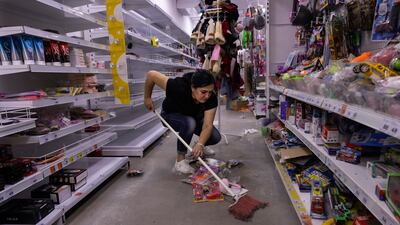
Alyona Kishinskaya helps to clean up a shop as it prepares to reopen in Balakiya, Ukraine, after a six-month Russian occupation. Getty Images -
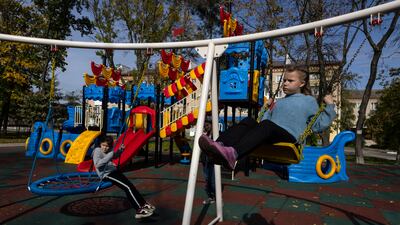
Alla, 12, has a swinging time in Balakiya, Ukraine, as life goes on despite the war. Getty Images -
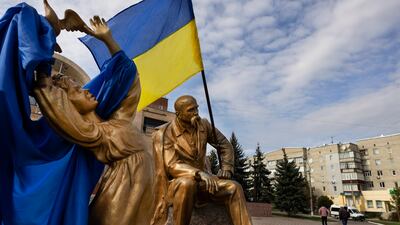
Ukrainian flags in the town square in Balakiya. Getty Images -
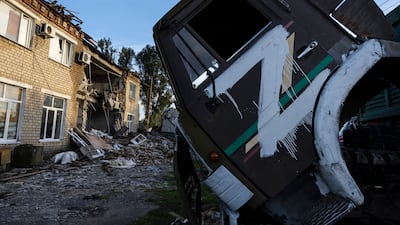
A destroyed Russian command centre in Izium, Ukraine. Getty Images -

In what may be a final farewell, young Russian recruits - escorted by their wives - walk to a train station in Volgograd before being sent to war in Ukraine. AP -
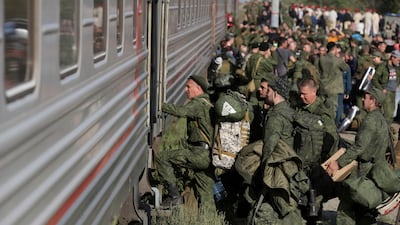
Russian recruits board the train to Ukraine in Volgograd. AP -
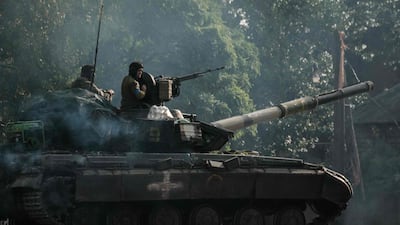
Ukrainian soliders drive a tank at the recently retaken eastern side of the Oskil River in Kharkiv region, Ukraine. AFP -
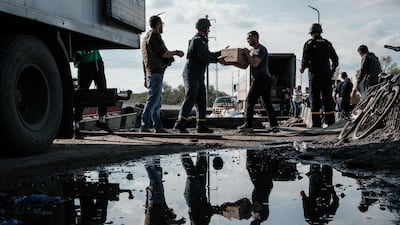
Volunteers pass boxes of food aid on a destroyed bridge over the Oskil River. AFP -
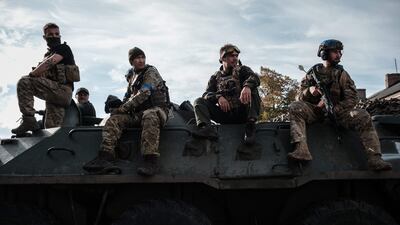
Ukrainian soliders rest on an armoured personnel carrier. AFP -
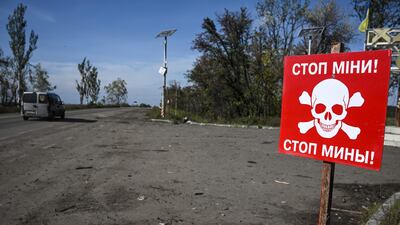
A sign warns of landmines in Izyum, eastern Ukraine. AFP -
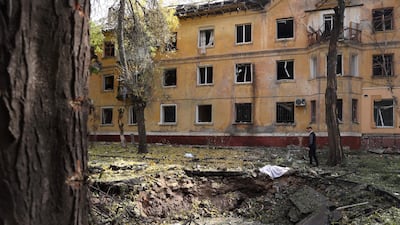
This crater was left after a missile strike in the Donetsk region of Ukraine. AFP



